
Why Cooks Love Saucier Pans? What are They Used For?

Disclosure: As an Amazon Associate, I earn from qualifying purchases. Learn more
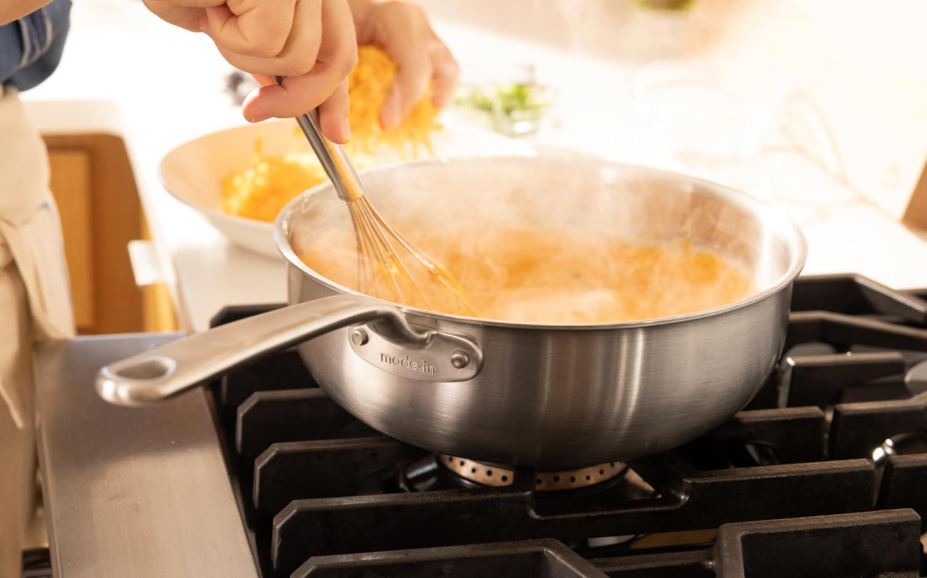
A saucier pan is a rounded, flared pan built for smooth stirring and fast blending. It supports sauce making, reduction, custards, risotto, and any task needing constant motion.
A saucier pan features CURVED SIDES and a WIDE OPEN TOP, letting you whisk without ingredients hiding in sharp corners. You use it for sauces, gravy, pudding bases, risotto, polenta, and gentle reheating. If you ask what is a saucier pan used for in daily cooking, the answer sits in tasks that need CONTROL, EVEN HEAT, and FLUID MOVEMENT. I usually reach for it anytime texture matters more than searing.
If you wonder what is a saucier used for compared with a saucepan, the key difference shows up in shape. A saucepan has straight walls that trap thick mixtures. A saucier pan keeps everything moving. In a saucier pan vs saute pan comparison, saute pans focus on browning, not whisking. Saucier pan vs saucepan comes down to how often you stir and reduce. Windsor pan vs saucier highlights depth versus curve, as the Windsor runs taller with flat angles.
A stainless steel saucier pan stands out for FAST RESPONSE and EASY CLEANUP. Many cooks like a saucier pan with lid to hold heat during gentle simmering. A made in saucier pan often showcases thicker bases for stable performance. You and I benefit from consistent results, smoother textures, and less effort during finishing steps.
What Is Saucier Pan? Why a Saucier Pan Used For?
A saucier pan is a rounded cookware piece designed to keep food moving without interruption. Its curved sides flow inward, preventing sauces and liquids from sticking in corners. That shape explains its role in kitchens that demand smooth textures and even cooking. You reach for this pan during moments that require constant motion, steady heat, and precise timing. Think creamy pasta sauces, silky custards, glossy reductions, or risotto stirred until tender.
Well, imagine trying to whisk gravy in a sharp cornered pot. Thick bits collect, heat builds unevenly, and frustration grows fast. A saucier pan avoids that scenario. The wide opening allows quick evaporation while the sloped walls guide your spoon naturally. Movement feels effortless, almost intuitive. This pan suits cooks who prefer control rather than reaction. You guide texture instead of fixing it late.
Home kitchens benefit just as much as professional spaces. A small batch sauce, reheated soup, or chocolate melt stays smooth because the pan supports continuous motion. The saucier style bridges sauce work and light sautéing without forcing compromise. One vessel handles delicate prep with calm consistency, saving time and cleaning. That simplicity explains why experienced cooks keep one close at all times.
Key Design Features That Make a Saucier Pan Different From Standard Cookware
Curved interior walls define the identity of a saucier pan. Straight corners disappear, allowing spatulas and whisks to sweep every surface without resistance. This design reduces hotspots where food can cling or thicken unevenly.
Wide cooking surface plays a quiet role in performance. Liquid spreads naturally, encouraging faster reduction without aggressive heat. Steam escapes freely, helping sauces thicken through gentle evaporation rather than scorching.
Tapered sides support controlled pouring. Sauces land precisely without drips sliding down outer edges. That detail saves mess and keeps plating clean, especially during service.
Heavier base thickness supports even heat flow. Sauciers often carry clad layers that distribute warmth across the entire pan floor. Temperature shifts respond quickly, giving you confidence during sensitive steps.
Balanced handle placement improves comfort. Stirring for several minutes stays easy because wrist strain stays low. Grip angle allows control while lifting, tilting, or transferring contents.
A saucier pan focuses on motion, balance, and consistency rather than brute heat. Every design choice supports smooth results without constant correction.
What Is a Saucier Pan Used For in Everyday and Advanced Cooking
Everyday cooking benefits start with sauces. Cream sauces hold emulsions better. Tomato bases reduce evenly without sticking. Gravy thickens smoothly while whisking never pauses. Tasks feel calmer because texture develops gradually.
Rice dishes gain precision. Risotto cooks evenly while stirring keeps starch balanced. Polenta stays creamy instead of clumpy. Oatmeal reheats without scorching, turning leftovers into comfort instead of compromise.
Advanced techniques also rely on this pan. Pastry cream, lemon curd, and custards demand steady heat and nonstop motion. Curved walls keep eggs from scrambling prematurely. Chocolate melts evenly without sudden heat shock.
Protein finishing works beautifully too. Pan sauces formed after searing meat gain silkiness through steady reduction. Butter mounting feels easier because emulsions stay stable instead of breaking apart.
Actually, reheating soups and stews shines here as well. Gentle warmth spreads through thick mixtures without scorching the base. You stir calmly, watch texture improve, and serve without stress.
This pan supports cooks who care about refinement, patience, and control rather than speed alone.
Made In (Cookware 3 Quart Stainless Steel) Saucier Pan Review
Made In Cookware presents a 3 quart stainless steel saucier pan crafted in Italy with five ply stainless clad construction. The build focuses on performance and durability rather than decorative extras. Right out of the box, weight distribution feels balanced and reassuring.
The interior surface supports smooth whisking without drag. Stirring sauces feels fluid, letting tools glide effortlessly. Heat responds quickly, reducing the lag common in thinner cookware. That responsiveness helps during emulsions and reductions requiring attention.
Induction compatibility expands flexibility across cooktops. The pan transitions smoothly from gas to induction without losing consistency. Oven safety supports finishing sauces or holding temperature during service moments.
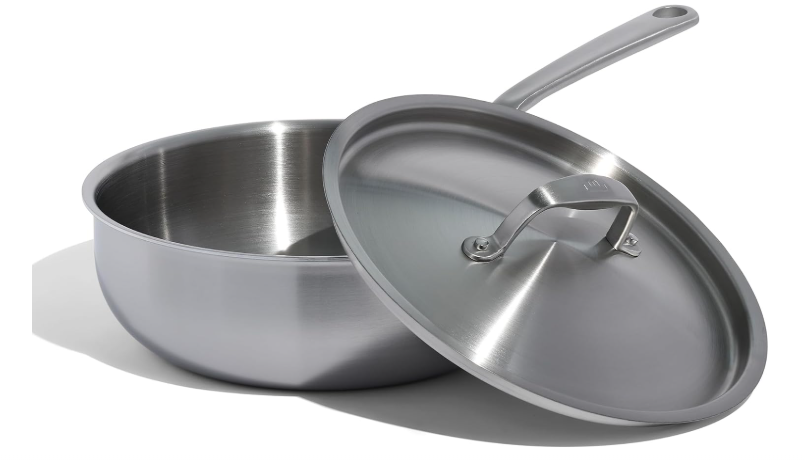
Pros include strong heat control, clean pouring edges, and long term durability. Stainless steel resists staining and handles acidic ingredients without reacting. The ergonomic handle stays comfortable during extended stirring sessions.
Cons lean toward price and learning curve. Beginners adjusting to stainless steel may need practice managing preheat and moisture.
This pan fits cooks seeking professional level consistency at home without excess weight or gimmicks.
Stainless Steel Saucier Pan Construction and Why It Matters for Heat Control
Stainless steel construction paired with layered cores defines how a saucier pan behaves under heat. Multi layer cladding spreads warmth evenly across the base and walls. That results in fewer hotspots and better predictability.
Heat responsiveness improves dramatically with quality layering. Adjustments register quickly, allowing fine control during delicate cooking. Sauces reduce steadily rather than racing toward scorching.
Durability ranks high. Stainless steel resists warping over time and handles repeated heating cycles without fatigue. Acidic ingredients remain safe without metallic taste transfer.
- Even temperature distribution across cooking surface
- Fast response to heat adjustments
- Non reactive surface for sauces and reductions
- Long lifespan with consistent performance
- Smooth interior aiding cleaning and stirring
Well built stainless steel allows the saucier pan to act as an extension of your hands rather than a fight against physics.
Saucier Pan vs Saucepan vs Saute Pan: Shape, Function, and Best Use Cases
Saucier pan
- Curved sides with wide opening
- Best for sauces reductions risotto custards
Saucepan
- Straight sides and narrower opening
- Best for boiling soup heating liquids
Saute pan
- Wide flat base with short straight sides
- Best for searing vegetables proteins
The saucier pan favors motion over searing. Saucepans focus on containment and volume. Saute pans prioritize surface contact and browning. Shape directly guides usage. Trying to whisk thick sauce in a saucepan creates resistance, while reducing sauces in a saute pan risks uneven spots.
Windsor Pan vs Saucier
Windsor pan
- Tall sides with angled interior
- Efficient reduction with smaller footprint
Saucier pan
- Rounded flowing sides
- Superior stirring and emulsions
Windsor pans excel at fast reduction while occupying less burner space. Their angles pull liquid down efficiently. Saucier pans prioritize movement and whisk access. Both support sauce making, yet technique preference matters.
If stirring constantly defines your workflow, the saucier pan feels friendlier. If space saving and rapid evaporation matter more, Windsor pans perform well. Many kitchens keep both for flexibility.
How to Properly Use a Saucier Pan for Smooth Sauces and Consistent Results
Step 1
Preheat gently over medium heat. Stainless steel responds best to gradual warming.
Step 2
Add fat before liquids. Butter or oil coats the surface, aiding motion and reducing sticking.
Step 3
Introduce ingredients slowly while stirring. Constant movement keeps texture uniform.
Step 4
Adjust heat as texture develops. Small reductions in temperature maintain control.
Step 5
Finish off heat if needed. Residual warmth completes emulsions without breaking.
Maintenance and Care Tips for a Stainless Steel Saucier Pan
- Cool naturally before washing to protect structure
- Use warm water and mild soap for routine cleaning
- Baking soda handles stubborn residue safely
- Avoid metal scouring that scratches interior
- Dry immediately to prevent water marks
Stainless steel rewards simple care. With gentle handling and mindful cleaning, performance stays consistent for years. Over time, the pan develops familiarity rather than wear, becoming a reliable kitchen partner that responds exactly as you expect.
Read More:
Discover New Articles: See Our Latest Updates
