
Saute Pan Vs. Saucier – Pros & Cons

Disclosure: As an Amazon Associate, I earn from qualifying purchases. Learn more
A saute pan vs saucier comparison highlights shape and surface as the key differences for daily cooking. A saute pan uses straight sides and a wide base that supports searing proteins, browning vegetables, and shallow frying with steady contact. A saucier pan vs saute pan design favors curved walls that guide liquids toward the center supporting smooth stirring steady reduction, and consistent sauces. Both heat evenly, yet each serves a distinct rhythm at the stove.
Choosing between a Saucier Pan Vs a Saute Pan depends on tasks and motion. A saute pan suits tossing and controlled evaporation for pan sauces after browning. A saucier supports whisking gravies, custards, and risotto with less splashing and cleaner edges.
Capacity feels different too, since curved sides change usable volume. The saute pan vs saucier choice balances surface access against fluid control for confident results.
Saute Pan and Saucier Design Dynamics
The difference in shape between a saute pan and a saucier is immediately noticeable. A saute pan features tall, straight sides and a wide flat base, giving it an edge for searing, browning, and cooking larger portions evenly.
The straight walls also allow lids to fit snugly, controlling moisture for long-cooked dishes. Handles are sturdy, offering balance during tossing or stirring. In contrast, a saucier has rounded sides that flow smoothly into the base, making it perfect for whisking, stirring, and creating uniform sauces without food getting stuck in corners.
Its slightly smaller footprint fits easily on crowded stovetops. The physical differences alone guide how these pans feel and behave in everyday cooking, like choosing between a reliable workhorse and a tool built for finesse.
Saute Pan and Saucier Performance Insights
Each pan excels in different cooking scenarios. The saute pan’s straight walls and flat base allow for even heat distribution and consistent browning, perfect for proteins, vegetables, and one-pan meals. It also handles transitions to the oven well, giving flexibility for finishing dishes.
The saucier, with its curved interior, shines at constant motion tasks, such as stirring sauces or preparing risotto. Ingredients move naturally with every whisk or spoon, preventing sticking or clumping.
It encourages control rather than brute force. In practical terms, the saute pan is a steady, versatile performer, while the saucier is more responsive and delicate, rewarding attention and technique. Both are powerful tools but designed for distinct culinary styles.
Saute Pan High-Heat Capabilities
- Wide flat base provides rapid, even searing
- Straight sides reduce oil splatter
- Roomy interior accommodates large cuts of meat or vegetables
- Oven-safe design allows seamless stovetop-to-oven cooking
- Heavier weight ensures consistent heat retention
Picture a busy dinner with sizzling chicken or pork chops. The saute pan handles high heat like a pro, maintaining steady temperatures even as cold ingredients hit the surface. This predictability is a huge advantage for home cooks aiming for professional results without guesswork.
Saucier Sauce and Reduction Advantages
A saucier feels almost interactive while cooking. The curved walls let a spoon or whisk glide continuously, making it ideal for sauces, reductions, and creamy dishes. Risotto or polenta cooks evenly, as grains move freely instead of sticking in corners.
The gentle spread of heat minimizes scorching, while the shape encourages smooth, consistent stirring. For anyone who enjoys precision, the saucier rewards patience with a silky, uniform result. It feels responsive, turning ordinary ingredients into elevated dishes with minimal effort.
Saute Pan and Saucier Material and Build Quality
- Stainless steel ensures durability and neutral flavor
- Aluminum or bonded cores provide even heat distribution
- Fully clad walls allow heat to spread up the sides
- Riveted handles give long-term stability
- Polished interiors make cleanup easier after sticky sauces
High-quality lines, like the Made In stainless steel options, bring these elements together. Good construction translates directly to predictable cooking performance, reducing frustration and increasing the success of each recipe.
Best Saute Pan and Saucier Pan Recommendations
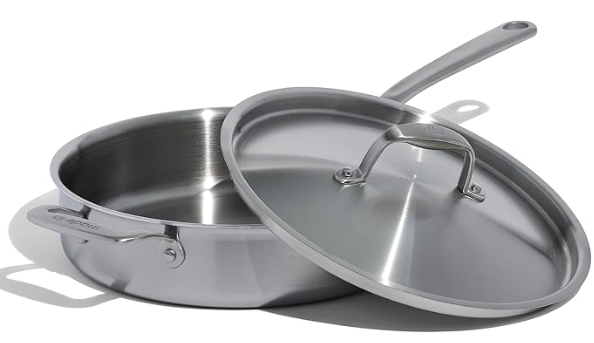
Made In 3.5 Quart Stainless Steel Saute Pan
The Made In 3.5 Quart Stainless Steel Saute Pan delivers professional-level performance for home and commercial kitchens. Crafted with 5-ply stainless clad construction, this pan ensures rapid and even heat distribution across the base and up the sides, making it ideal for searing meats, sautéing vegetables, and creating rich pan sauces. Its wide flat base and straight sides allow ingredients to cook evenly without crowding, while the sturdy riveted handles provide perfect balance and control. The pan’s polished interior makes cleaning effortless, and it maintains its shape and heat retention over time. Designed in Italy with induction compatibility, it blends elegance with practical functionality, allowing seamless use on various stovetops and in the oven.
Key Benefits
- Even heat distribution
- Sturdy riveted handles
- Oven safe
- Polished easy-clean interior
- Professional-grade construction
Compatible For
- Gas stoves
- Electric cooktops
- Induction surfaces
- Oven use
- Pan sauces and searing
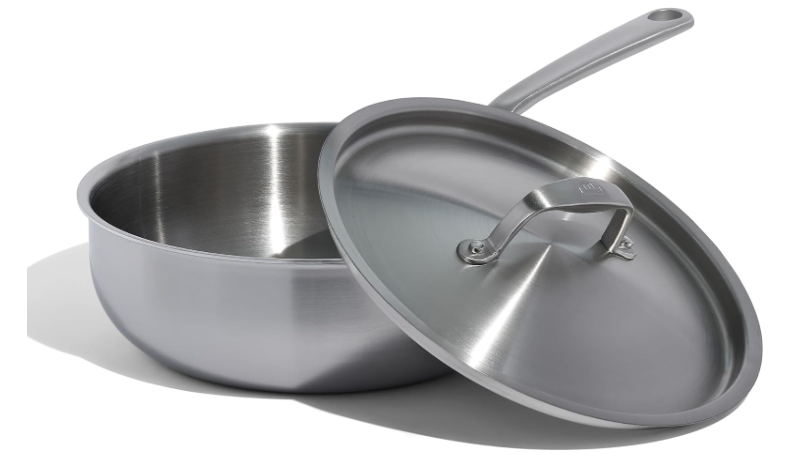
Made In 3 Quart Stainless Steel Saucier Pan
The Made In 3 Quart Stainless Steel Saucier Pan features a rounded interior that allows for effortless stirring and smooth sauce preparation. Constructed with 5-ply stainless clad layers, it guarantees consistent heat across the base and walls, minimizing hot spots and preventing scorching during delicate reductions. Its elegant design includes lightweight, ergonomic handles that provide precise control while whisking, stirring, or simmering. Crafted in Italy for durability and professional results, this saucier is induction compatible, giving versatility for a variety of cooking setups. Ideal for risotto, polenta, cream sauces, and delicate reductions, it supports both attention-intensive and everyday cooking tasks, making it a reliable tool for passionate cooks.
Key Benefits
- Smooth rounded interior
- Consistent heat distribution
- Induction compatible
- Ergonomic handles
- Professional construction
Compatible For
- Gas stoves
- Electric cooktops
- Induction surfaces
- Oven safe
- Sauces, risotto, reductions
Saute Pan and Saucier Practical Limitations
No pan is flawless. A saute pan can feel heavy and unwieldy during delicate tasks, and extended stirring may fatigue the wrist. The saucier lacks the surface area for browning multiple portions at once, which can cause meat to steam instead of caramelize.
Rounded sides also resist neat stacking, making storage slightly tricky. Recognizing these limitations allows cooks to select the right tool for the task and avoid mismatched expectations in the kitchen.
Saute Pan and Saucier Pan: Ideal Uses and Recipes
- Sear chicken, pork, or large vegetables in a saute pan
- Make one-pan dinners with controlled moisture retention
- Finish dishes in the oven without changing cookware
- Prepare creamy sauces, risotto, or polenta in a saucier
- Reduce stocks, wine, or pan sauces evenly
- Use constant stirring for smooth, uniform textures
Matching each pan to the right recipe saves time and effort, making the cooking experience feel more intuitive and enjoyable.
Saute Pan and Saucier Kitchen Selection Criteria
| Cooking Style | Recommended Pan | Reasoning |
|---|---|---|
| High-heat searing | Saute Pan | Straight sides and flat base give browning control |
| Sauce preparation | Saucier | Rounded walls allow smooth stirring |
| Small cooktop | Saucier | Compact design fits crowded stovetops |
| Batch cooking | Saute Pan | Large base accommodates multiple portions |
| Frequent stirring | Saucier | Encourages fluid wrist movement |
| Browning multiple items | Saute Pan | Flat base ensures even contact |
Premium options like the Made In lines offer durability, even heating, and professional-quality construction, making either choice a long-term investment.
Discover New Articles: See Our Latest Updates
