4 Best Ceramic Dutch Ovens Guide To Heat And Care

Disclosure: As an Amazon Associate, I earn from qualifying purchases. Learn more
A ceramic Dutch oven is just a lighter version of cast iron. Fact: most pots sold under that name are aluminum with a ceramic nonstick coating, and that changes how you cook with them. The best ceramic dutch oven for you depends on maximum oven temperature, pot weight and size, and how gently you plan to treat the coating.
If you bake sourdough, the Gotham Steel and Caraway pots stand out for their heat ratings and bread-friendly shape. If you want one lightweight pot for daily cooking, the Our Place pot is a strong fit.
Below, you will find how coated pots differ from enameled cast iron, four picks with honest limits, and a quick self-test to settle the choice before you order.
Best Choice
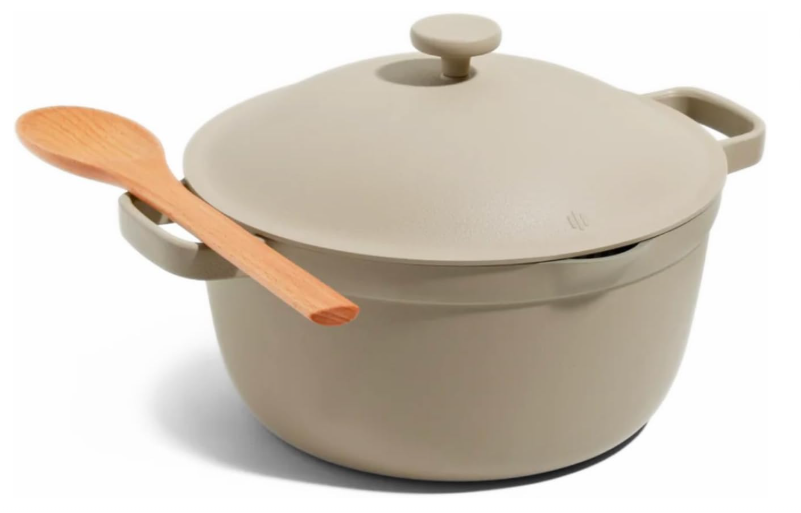
Our Place Perfect Pot
- Lightweight ceramic nonstick build
- Built-in strainer lid
- Induction compatible
Top Pick
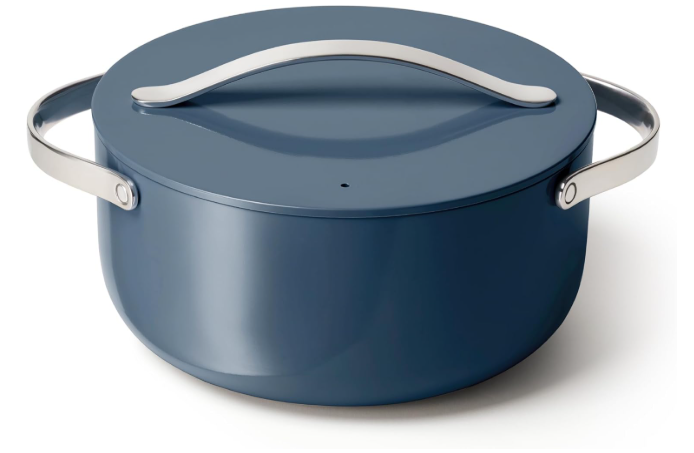
Caraway Ceramic Dutch Oven
- Oven safe up to 550 degrees
- Works on gas, electric, induction
- Generous 6.5 quart capacity
What A Ceramic Dutch Oven Really Means Today
The label ceramic dutch oven covers two very different products. Some are solid ceramic or stoneware pots. Most nonstick options sold under this name, including the four picks here, use an aluminum body with a ceramic nonstick coating.
That coated style is light, heats quickly, and releases food with little oil. It is not the same as enameled cast iron, which is a heavy iron pot with a glass-like enamel layer.
Because the coating is the working surface, care matters. Moderate heat, soft utensils, and hand washing help it perform longer.
Keep that in mind as you compare the picks. A coated pot is a different tool from a traditional cast iron one, so judge it for what it does well.
Ceramic Coated Versus Enameled Cast Iron Dutch Ovens Compared
Weight is the most obvious difference. The coated pots here weigh roughly 3.5 to 5.7 pounds, while enameled cast iron Dutch ovens often weigh well over 10 pounds.
Heat is the next one. Cast iron holds heat longer and usually tolerates hotter ovens, while the coated pots here are rated from 450 to 550 degrees.
Stickiness favors the coated style. Enameled cast iron is not nonstick, so it needs preheating and a little fat, while a coated pot releases food easily.
Lifespan favors cast iron. It can last for decades, while a nonstick coating wears with use.
So choose a coated pot for light weight and easy cleanup, and choose enameled cast iron for hard searing and long-term durability.
Our Place Lightweight Ceramic Dutch Oven For Daily Cooking
This lightweight ceramic nonstick pot pairs a self-basting lid with a built-in strainer, so it boils pasta, braises, and roasts in one vessel. It is induction compatible and oven safe to 450°F, and a spatula comes in the box with it.
Users often praise easy cleanup and light weight, while heat retention and value draw mixed comments.
Image: Amazon
Fast Facts
Our Place Perfect Pot
Ceramic nonstick coatingBuilt-in strainer lidInduction compatible450°F oven limit
Works Best For: Cooks who want a light, all-in-one pot for pasta, soups, and braises.
Look Elsewhere If: Bakers who need hotter than 450 degrees, or anyone searing at high heat.
Caraway Ceramic Dutch Oven For Even Heat And Style
If you bake sourdough or braise on weekends, this 6.5 quart nonstick ceramic pot works on gas, electric, and induction and is oven safe up to 550°F. The coating is free of PTFE, PFOA, and PFAS, and the listing asks for low to medium heat on the stovetop.
Users praise cleanup and heat distribution, with mixed notes on durability.
Image: Amazon
Fast Facts
Caraway Ceramic Dutch Oven
Ceramic nonstick coating550°F oven limitGas, electric, induction6.5 quart capacityPTFE and PFAS free
Works Best For: Sourdough bakers and braisers who want a higher oven rating.
Look Elsewhere If: Anyone who uses metal utensils or cooks on high heat.
Gotham Steel Hammered Dutch Oven For Sourdough Baking
Sourdough bakers who want something light will like this 5 quart hammered ceramic pot, which weighs about 3.5 lb with its lid. It is oven safe up to 500°F, includes grip holders, and its self-basting lid returns moisture to the pot.
Users like the weight and sourdough results, though some report chipping and scratches.
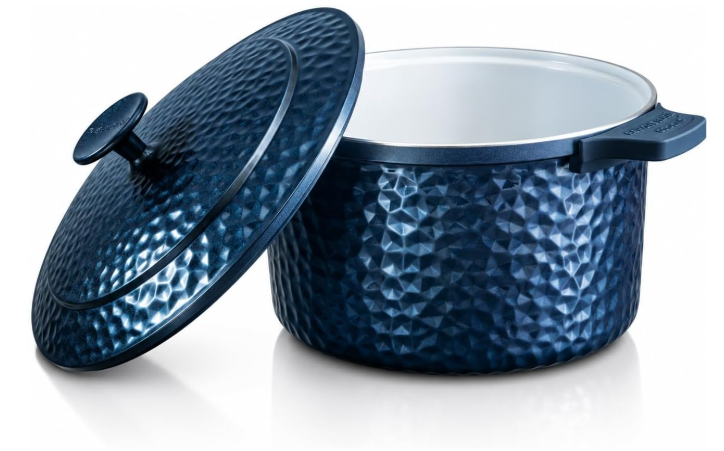
Image: Amazon
Fast Facts
Gotham Steel Hammered Dutch Oven
5 quart capacityHammered ceramic finish500°F oven limitHandle holders included
Works Best For: Bread bakers who want a light pot with grip holders included.
Look Elsewhere If: Anyone hard on cookware, since some users report chipping.
DaTerra Cucina Ceramic Dutch Oven For Big Batches
Cooking for a crowd is easier with this 8 quart ceramic nonstick pot, made in Italy and built to hold soups, stews, and roasts.
It is oven safe to 450°F, weighs about 5.7 lb, and comes with a matching lid for moisture retention.
Users often mention easy release, even cooking, and solid quality.
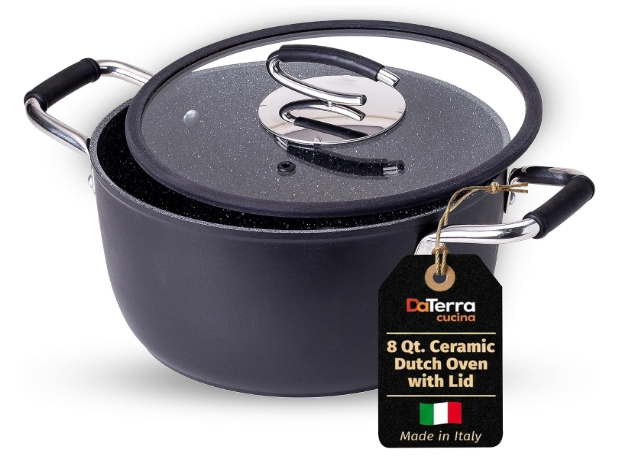
Image: Amazon
Fast Facts
DaTerra Cucina Dutch Oven
8 quart capacityCeramic nonstick coating450°F oven limitMade in ItalyMatching lid included
Works Best For: Families and meal-preppers cooking large soups, stews, and braises.
Look Elsewhere If: Small kitchens, or anyone who needs a lighter, smaller pot.
Which Ceramic Dutch Oven Features Matter Most Before Buying?
Start with the maximum oven temperature. It decides whether the pot can handle your bread, roasts, and finishing recipes, and the four picks here range from 450 to 550 degrees.
Weight and handles come next. A light pot is easier to lift and pour, but check that the handles feel secure and that you have a way to grip a hot lid.
Look at the lid. A self-basting lid keeps moisture in the pot, and a built-in strainer saves a colander.
Check stove compatibility, especially for induction, and read the care instructions, because heat limits for the stovetop are often lower than the oven rating.
Finally, read what the maker says the coating is free of, and treat that list as the starting point for how you use and maintain the pot.
Oven Safe Temperature Limits For Ceramic Dutch Ovens
Are ceramic dutch ovens oven safe? Yes, within each pot’s own rating, and that rating varies. The listings here show 450 degrees for Our Place and DaTerra, 500 for Gotham Steel, and 550 for Caraway.
On the stovetop, coated pots are meant for gentler heat. Extension guidance for nonstick pans [favors low or medium-low heat], and the Caraway listing asks for low to medium.
A colleague once asked me about this, which is why I read the maximum temperature on the listing before anything else. Keep in mind that a hot pot should not go straight onto a cold or wet surface, since a sudden change can crack ceramic.
Lid knobs and handle holders can have their own limits, so check the manual before you push a recipe to the top of the range.
Can You Bake Sourdough Bread In A Ceramic Dutch Oven?
Yes, if the pot’s oven rating covers your recipe. Many bread recipes call for high heat, so a 500 or 550 degree rating, like the Gotham Steel and Caraway listings, gives you room to work.
Coated pots help in a few ways. The lid traps steam, the nonstick surface releases the loaf, and the pot is light to lift in and out of a hot oven.
One caution: many care guides discourage heating an empty nonstick pot, so read your manual before preheating the pot the way some recipes suggest. A parchment sling helps you lower the dough and keeps tools off the coating.
If you bake at the hottest temperatures every week, a cast iron pot is the better match.
How To Clean A Ceramic Dutch Oven Without Damage
Cleaning a coated pot is simple, but the details protect the nonstick layer. Follow this order each time:
- Let the pot cool completely before it touches water.
- Wash it by hand with warm water, mild soap, and a soft sponge or cloth.
- For stuck food, fill the pot with warm soapy water and let it soak.
- Skip steel wool, scouring pads, and abrasive powders.
- Rinse and dry the pot fully before storing it.
- Store it with a cloth or pad between the pot and its lid or other cookware.
Common Mistakes That Shorten The Life Of Ceramic Dutch Ovens
Using metal utensils: Metal can scratch the coating, so choose wood, silicone, or nylon.
Cooking on high heat: Heat is the fastest way to wear a nonstick surface.
Heating the pot empty: Add food or a little fat first, and follow your care guide.
Moving a hot pot to cool water: Sudden temperature change can damage the pot.
Scrubbing with abrasive pads: They remove the layer that makes the pot nonstick.
Ignoring the oven rating: A recipe is not a reason to exceed the number on the listing.
Is A PFAS Free Ceramic Dutch Oven Automatically Safer?
A PFAS-free label tells you something specific, not everything. Our Place and Caraway say their coatings are free of PFAS, Gotham Steel lists PFOA and PFOS free, and DaTerra lists PTFE and PFOA free. Read each list rather than assuming they match.
Since the 1960s, [the FDA has authorized certain PFAS substances] for nonstick coating applications, and it evaluates them based on expected exposure. So a PFAS-free coating is a choice some people prefer, and following the maker’s instructions still matters either way.
The condition of the coating matters too. A pot with a scratched or flaking surface has stopped doing its job and should be retired.
In practice, check the free-from list, use soft utensils, cook at moderate heat, and replace a pot whose coating is failing.
Who Should Skip A Ceramic Dutch Oven?
Skip it if you sear steaks at very high heat or reach for metal utensils out of habit. Coated pots do best with gentler cooking.
Skip it if you want a single pot to last for decades. A nonstick coating wears with use, and cast iron is the better long-term choice.
Skip it if you bake at the hottest temperatures often, since enameled cast iron commonly offers higher headroom.
Best Ceramic Dutch Oven Sizes For Family Meals
A 5 quart pot, like the Gotham Steel, suits two to four people and standard sourdough loaves. It is also the lightest of the group.
A 6.5 quart pot, like the Caraway, covers most family braises, soups, and roasts, and it is the size many households find easiest to live with.
An 8 quart pot, like the DaTerra, makes sense for big soups and meal prep, though it weighs about 5.7 pounds and needs more storage room.
Remember that a larger pot also needs a bigger burner and a clear shelf in your oven.
Three Question Self-Test For Choosing A Ceramic Dutch Oven
Answer these three questions to narrow your choice quickly.
- Do you bake bread or roast above 450 degrees?
Yes: look at the Caraway (550) or Gotham Steel (500).
No: any pick here works. - Do you want the lightest pot for daily use?
Yes: look at the Gotham Steel or Our Place.
No: the Caraway or DaTerra are fine. - How many people do you cook for?
One to three: the 5 quart Gotham Steel.
Four to six: the 6.5 quart Caraway.
Large batches: the 8 quart DaTerra.
Two matching answers usually settle the choice.
Other Uses For Your Ceramic Dutch Oven Beyond Bread
Soups, stews, and braises are the natural fit, since the lid keeps moisture in and the nonstick surface makes cleanup easy.
Pasta works well too, especially with a built-in strainer lid like the one on the Our Place pot.
Some owners roast a whole chicken in a coated pot, and others cook big batches of oatmeal or rice that would stick to a plain pot.
The same pot can go from the oven to the table for serving, which suits family dinners and gatherings.
FAQs
Does A Ceramic Dutch Oven Need To Be Seasoned?
Coated ceramic nonstick pots do not need seasoning the way bare cast iron does. The nonstick layer is applied at the factory, so you wash and dry the pot and start cooking. Follow your care guide for any first-use step. A small amount of oil or butter still helps food release and protects the coating over time.
Can A Ceramic Dutch Oven Go On The Stove?
Yes, most coated models can. Caraway lists gas, electric, and induction, and Our Place lists induction compatibility. Always check your pot’s own listing, because compatibility differs. Use low to medium heat, match the pot to the burner size, and avoid heating the pot empty so the coating lasts longer.
Can You Use A Dutch Oven On A Ceramic Cooktop?
Yes, if the pot has a flat, smooth base. Lift it instead of sliding it so neither the pot nor the glass surface gets scratched. Keep the burner size close to the base, and use moderate heat. Check the manual for both the cooktop and the pot, since a rough or warped base can mark the glass.
Can You Fry In A Ceramic Dutch Oven?
Shallow pan-frying at low to medium heat is usually fine for coated pots. Deep frying is a poorer match, because hot oil pushes temperatures that coatings tolerate badly and can stain or wear the surface. Check your care guide for oil limits, and choose enameled cast iron or stainless steel if deep frying is your main use.
Which Suits You, A Stainless Steel Or Ceramic Dutch Oven?
Stainless steel is durable, tolerates metal utensils and high heat, and sears well, but food can stick without enough fat. A ceramic nonstick pot is lighter and releases food easily, but its coating wears and needs gentler care. Pick stainless for longevity and searing, and ceramic for easy cleanup and lighter handling.
Are Ceramic Dutch Ovens Dishwasher Safe?
It depends on the model. Gotham Steel lists its pot as dishwasher safe, while many care guides still favor hand washing to protect nonstick coatings. Harsh detergent and high heat can wear the surface over time. Check your pot’s label, and hand wash when in doubt.
Weigh The Limits Before You Choose Your Pot
A coated ceramic Dutch oven trades some durability and heat headroom for light weight and easy cleanup. If you bake at very high heat, sear hard, or want a pot for decades, enameled cast iron suits you better. If you value a light pot, easy release, and gentle everyday cooking, the picks above fit well. Match the oven rating to your recipes, treat the coating gently, and the pot will serve you better for longer.
