
5 Best Diesel Heaters (All-In-One) Reviews and Setup Guide

Disclosure: As an Amazon Associate, I earn from qualifying purchases. Learn more
Cold air finds every gap in a van floor long before the sun goes down. For most people, the VEVOR Bluetooth Diesel Heater is the quickest decision, while the LF Bros Diesel Heater makes more sense when you want to plug into a wall outlet at home.
An all-in-one diesel heater puts the tank, fuel pump, controls, and burner in one box, so you skip the kit install entirely. The real choice comes down to where your power comes from, how long one tank needs to last, and how quietly the heater runs while you sleep.
Picture a weekend split between a campsite and a garage project. You want one heater that moves with you, starts fast, and vents safely in both places. The picks and setup notes below help you match a unit to that kind of week without guesswork.
The VEVOR Bluetooth Diesel Heater brings app preheating and automatic altitude handling for van trips, while the LF Bros Diesel Heater adds a wall-power transformer for garages and home shops.
Overall Best
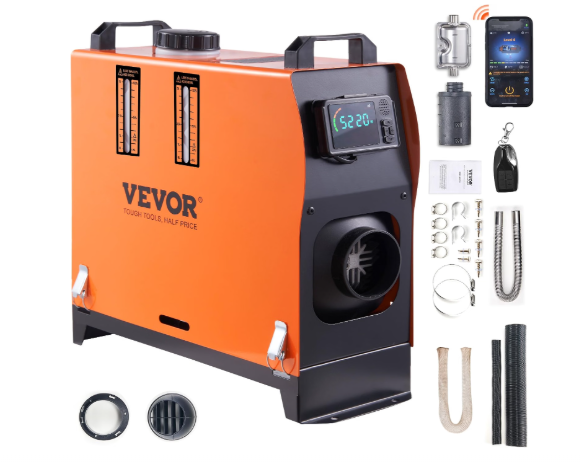
VEVOR Bluetooth Diesel Heater
- Bluetooth app up to 98 ft
- Altitude compensation to 18,045 ft
- Installation-free 5L tank design
Our Choice
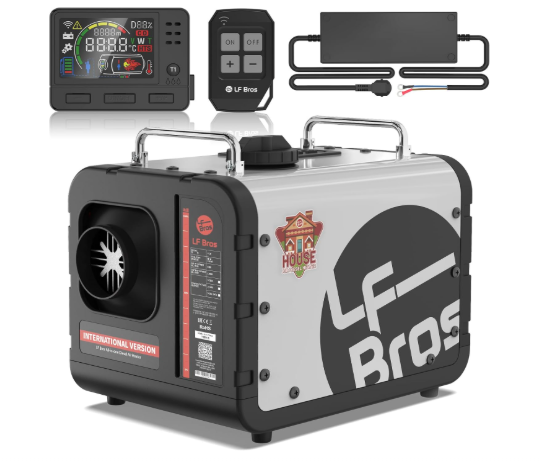
LF Bros Diesel Heater
- 12V, 24V, and 110V power
- 4,700 to 17,000 BTU output
- Spill-resistant threaded fuel cap
Why All-In-One Diesel Heaters Win for Mobile Heat
A split diesel heater kit asks you to mount a burner, run fuel lines to a separate tank, and wire a controller. An all-in-one unit puts all of that inside one housing, so you set it down, route the exhaust outside, add fuel, and connect power.
That design makes the heater easy to move. You can warm a van on Friday, a campsite on Saturday, and a garage on Sunday without unbolting anything.
Diesel units burn fuel in a sealed combustion chamber and push exhaust out through a pipe. Room air passes over a heat exchanger and never mixes with combustion gases when the heater is set up as the manual describes.
The trade-offs are real. These heaters need an exhaust path to the outdoors, they make some fan and pump noise, and the built-in tank sets how long one night can run before you refill.
Six Heaters Reviewed for Tents, RVs and Garages
We picked these heaters on their match to the all-in-one design, flexible power options, listed fuel use, control choices, and built-in safety features. Each one carries its tank on board, so no separate kit is needed.
1. VEVOR Bluetooth Diesel Heater for Vans and High Altitudes
Preheating a cold van from outside is the main draw here. Bluetooth app control works from up to 98 ft, and a 32 ft remote plus an LCD give you two more ways to set the temperature between 46.4°F and 96.8°F.
The 8kW heater runs on 12V and lists coverage of 215 to 269 ft² in about 10 minutes. Automatic altitude compensation supports use up to 18,045 ft, and fuel use runs 0.16 to 0.62 L/h from a 5L tank.
Real-Use Fit: The listed timer, voice prompts, and preheat function suit people who like warming a vehicle before stepping inside.
What Sets It Apart:
- App, remote, and LCD control
- Self-adjusting operation up to 18,045 ft
Core Strengths:
- No installation needed for outdoor use
- Sandblasted aluminum heat exchanger for fast transfer
- Overheat protection listed at 518°F
- Constant temperature and timing functions
Suited To:
- Vans, RVs, and trucks
- Cars and boats
- 12V vehicle power systems
Before You Choose: Rated voltage is 12V, so it fits vehicle power rather than a wall outlet. Route the exhaust outdoors and use a CO alarm.
2. LF Bros Diesel Heater With Plug-In Power for Home
If you want to plug into a wall outlet, this 5kW unit ships with a 110V transformer alongside 12V and 24V support. Because a standard socket can run it with no extra parts, it also counts among the best diesel heaters for home shops, basements, and garages.
Output is listed at 4,700 to 17,000 BTU, with fuel use of 0.18 to 0.53 L/h from a 5L tank. An internal-thread fuel cap limits spills, and the pre-paired remote lists a 100 ft range.
Real-Use Fit: The listing stresses a simple first setup, with printed instructions, a QR code tutorial, and a remote that is ready out of the box.
What Sets It Apart:
- Three-way power with transformer included
- Foldable handle for carrying
Core Strengths:
- Runs from a standard household outlet
- LCD shows working status
- Spill-resistant threaded fuel cap
- Wide listed working temperature range
Suited To:
- Garages, shops, and basements
- RVs, campers, and trailers
- Cars and home workspaces
Before You Choose: Wall power does not remove the exhaust requirement. The pipe still needs a clear path outdoors, even in a garage.
3. VEVOR Remote Diesel Heater as an All-In-One RV Option
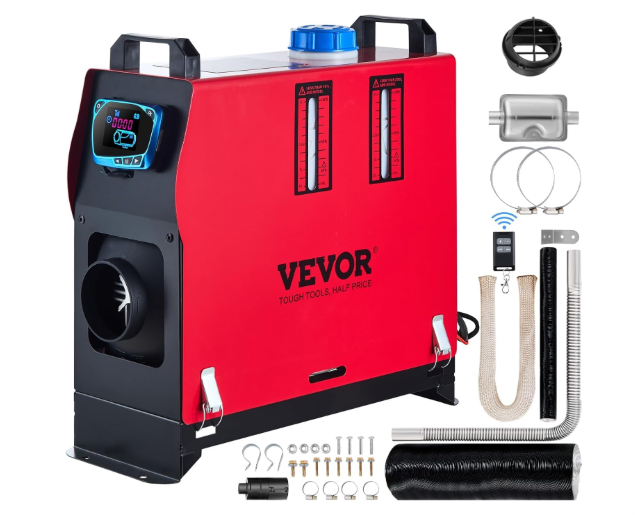
People who skip phone apps will like the straightforward controls here. A 98 ft remote handles preheating from outside, and the LCD screen adjusts temperature up close. The listing names RVs, trucks, campers, vans, boats, and trailers, so it also makes a strong case as a diesel heater for RV travel.
The 8kW unit runs on DC 12V to 24V and covers about 161 to 215 sq ft. A low-noise fuel pump keeps fuel use at 0.18 to 0.36 L/h, or roughly a gallon a night from the 5L tank.
Real-Use Fit: The fuel gauge and leak-proof cap help on rough roads, where you need to see the fuel level at a glance.
What Sets It Apart:
- Heat-insulated exhaust pipe shield
- Ceramic igniter for cold starts
Core Strengths:
- Fuel gauge helps prevent dry burning
- Leak-proof cap for bumpy travel
- Low listed fuel draw overnight
- Works on 12V or 24V systems
Suited To:
- RVs, campers, and trailers
- Trucks, vans, and boats
- DC 12V to 24V power
Before You Choose: There is no app or wall-power option listed. Choose another model if you need 110V operation or phone control.
4. GEARLASSO Diesel Heater for Garages and Workshops
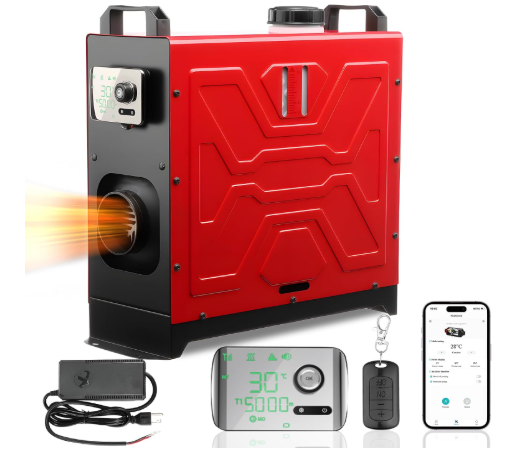
Three ways to control the heat set this 8kW unit apart. You get an app with a 98 ft range, a 164 ft remote, and an LCD, all adjusting temperature from 46.4°F to 104°F.
It accepts 12V, 24V, and 110V and lists 4,700 to 17,000 BTU for a 215 to 269 ft² area. Since the listing names garages, homes, and tents among its uses, it is a practical pick as a diesel heater for garage projects with outlet access.
Real-Use Fit: The included muffler silencer and long remote range suit a shop where you move around while working.
What Sets It Apart:
- App, 164 ft remote, and LCD
- Muffler silencer in the box
Core Strengths:
- Listed fuel use of 0.15 to 0.45 L/h
- Thermostatic control with shutdown protection
- Ceramic spark plug for ignition
- Three-way power input
Suited To:
- Garages, shops, and greenhouses
- Campers, RVs, and trailers
- Homes and tents
Before You Choose: The 5L tank is listed for about one night on the maximum setting, so long jobs need a refill plan.
5. Hcalory TB MAX2 Diesel Heater for Long Tent Nights
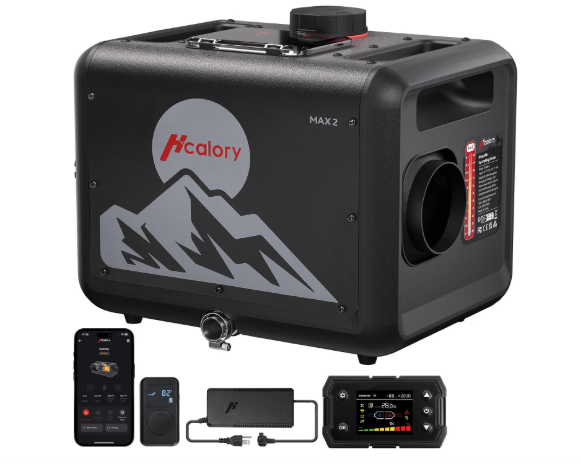
A 7.9L fuel tank stretches this 8kW heater to a listed 65 hours on its minimum 0.12 L/h setting. That makes refills rare over a full weekend off the grid.
It runs on 12V, 24V, or 110V and lists coverage of 215 to 289 sq ft, naming RVs, garages, tents, and campers. That coverage and the quiet pump make it a good diesel heater for tent camping when the unit sits outside the sleeping area. The listing states warmth in about 3.5 minutes.
Real-Use Fit: The remote senses actual room temperature, and the listed 54.6 dBA pump and muffler aim at quieter nights.
What Sets It Apart:
- IPX4 splash-resistant housing
- Remote that works as a room thermostat
- Exhaust heat wrap included
Core Strengths:
- Up to 65 hours on low
- Overheat, overvoltage, and flame-out cut-off
- Dual-valve fuel cap limits leaks
- Panel, remote, or app control
Suited To:
- RVs and campers
- Garages and workshops
- Tents with outdoor heater placement
Before You Choose: This is a 2026 model with limited long-term owner history so far. Confirm the seller and warranty details before ordering.
6. BougeRV Portable Diesel Heater for Quick Camping Setups
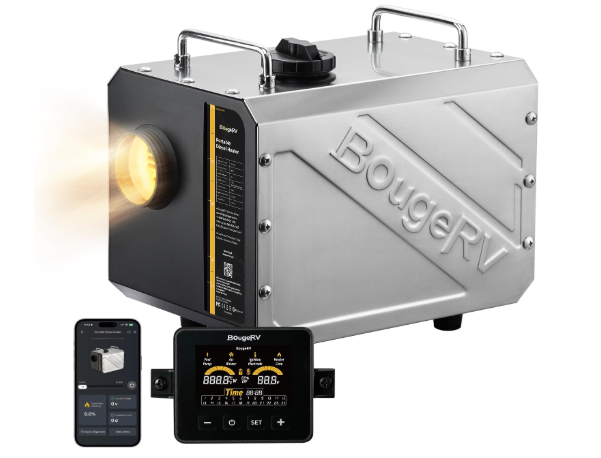
Setup takes about a minute with a snap-and-lock side connection that needs no clamps or tools. In brand testing, this 5kW unit warmed a 307 cu. ft. tent for four to six people from 32°F to 68°F in 8 minutes, a strong sign it suits cold-weather camping.
It operates at elevations up to 9,842 ft and connects to vehicle DC ports or portable power stations. The app adjusts heat, sets timers, and preheats from up to 33 ft away.
Real-Use Fit: The compact all-in-one layout reduces loose lines, which helps when trunk and campsite space are tight.
What Sets It Apart:
- Tool-free one-minute setup
- Works with portable power stations
Core Strengths:
- Listed runtime of up to 3 nights
- Low-noise pump and muffler
- IPX4 water-resistant control panel
- App timer and preheat
Suited To:
- Tents and campsites
- Vehicle DC ports rated 15A or higher
- Portable power stations
Before You Choose: The XT60 adapter needs a 12V port rated 15A or more. Runtime varies with heat setting and weather.
How Long a Diesel Heater Tank Really Lasts
Runtime comes down to simple division. Take the tank size in liters, divide it by the burn rate in liters per hour, and you have a rough number of hours.
Going by the listed specifications, a 5L tank at the 0.18 L/h low setting lasts close to 28 hours, while the same tank at 0.53 L/h runs only about 9 hours.
Larger tanks change the picture. A 7.9L tank at 0.12 L/h is listed for up to 65 hours, which covers a long weekend without a refill.
Plan around the middle of the burn range, not the low end. Cold, windy nights keep the heater working harder, so carry a small spare container of diesel for the first trip.
Power and Altitude Checks for Any Diesel Heater
Run through this short list before you plug in or load a heater into your vehicle.
- Power input. Confirm whether the unit runs on 12V, 24V, 110V, or a mix, and whether a transformer ships in the box.
- Wall power. A 110V transformer lets a garage or basement outlet run the heater, which keeps your vehicle battery out of the picture.
- DC port rating. Some adapter cables call for a 12V port rated 15A or higher, so check the manual first.
- Altitude limit. Some models list a ceiling near 9,842 ft, while others adjust automatically up to 18,045 ft.
- Cold starts. Compare the listed ignition and working temperatures with your coldest expected nights.
- Missing specs. If a figure is not listed, ask the maker or read the manual before relying on it.
Choosing the Right All-In-One Diesel Heater Size
Start with the space, not the wattage. A heater that is too large spends most of its time on low, which can lead to more carbon buildup and wasted fuel.
A 5kW unit fits tents, compact vans, and small sheds. An 8kW unit fits larger RVs, garages, and workshops, especially when doors open often or insulation is thin.
| Space | Typical Size | Watch For |
|---|---|---|
| Tent | 5kW | Heater outside sleeping area |
| Camper van | 5kW or 8kW | Insulation and DC power |
| RV or caravan | 8kW | Exhaust away from vents |
| Garage or shop | 8kW | 110V option and fuel storage |
| Small shed | 5kW | Clearance from combustibles |
Treat listed coverage as a starting point. A drafty garage in January needs more output than a sealed van of the same size.
Next, match the controls to your habits. An app helps if you preheat from bed or a cabin, while a plain remote and LCD suit people who want fewer steps.
Setting Up Your Heater in Seven Careful Steps
Because the tank and pump are built in, setup is shorter than with a split kit. Follow your manual first, and use these steps as a general outline.
- Pick a stable spot. Set the heater on a flat, secure surface where it cannot tip or slide.
- Connect the exhaust. Attach the exhaust pipe and route it outdoors, away from doors, windows, and the heater’s air intake.
- Add fuel. Fill the tank with the fuel your manual names and tighten the cap fully.
- Connect power. For 12V or 24V, red goes to positive and black to negative. For wall power, use the supplied transformer.
- Set up the controls. Pair the remote or app and confirm the LCD shows the heater’s status.
- Run a test. Watch the first few minutes for unusual sounds, fuel leaks, or heavy smoke at the exhaust.
- Check the air. Confirm fresh air is available and place a working carbon monoxide alarm nearby.
If any step feels uncertain, ask a qualified installer before the first overnight run.
Diesel Heater or Electric Heat for Your Space
Diesel and electric heaters solve different problems, so the right choice depends on power and location.
A diesel heater shines where outlets are scarce. It runs from a vehicle battery or a small transformer and burns fuel you can carry, which suits vans, campers, tents, and off-grid work.
Electric heaters need a reliable outlet but produce no combustion exhaust. They fit finished rooms and shops with steady power and fewer venting concerns.
| Factor | Diesel Heater | Electric Heater |
|---|---|---|
| Power needed | Small DC or 110V draw | Steady outlet |
| Exhaust | Must vent outdoors | None |
| Off-grid use | Strong fit | Limited |
| Noise | Fan and pump hum | Usually quieter |
If you are also weighing gas options, our guide on diesel versus propane heat covers fuel storage and moisture. For liquid fuel choices, see this breakdown of diesel and kerosene differences.
Quieting the Hum of a Diesel Heater at Night
Diesel heaters make two main sounds. The fan produces a steady hum, and the fuel pump gives off a rhythmic tick that stands out in a quiet tent or van.
Makers list decibel figures, but real conditions vary. A muffler or silencer on the exhaust cuts outside noise, and a quieter oil pump reduces the ticking inside.
Setting the heater on a rubber or foam pad helps absorb vibration. Keep the exhaust outlet pointed away from where you or your neighbors sleep.
If you plan to run heat through the night, read our notes on heaters for overnight use before you settle on a setup.
Venting Rules That Keep Diesel Heater Exhaust Outside
Every diesel heater produces combustion exhaust, and that exhaust contains carbon monoxide. Poor routing can let it collect in the space you are trying to warm.
Run the exhaust pipe fully outdoors and keep the outlet away from windows, vents, and the heater’s own air intake. Keep the clearances your manual lists from fabric, bedding, and fuel cans.
Install a working carbon monoxide alarm wherever people sleep or spend time near the heater. The CDC notes that sleeping people can be poisoned before they notice symptoms, so review its carbon monoxide safety guidance before winter trips.
Built-in overheat and flame-out protection helps, but it never replaces proper venting. Our full guide on diesel heater safety basics explains the one setup step people most often miss.
Smart App Control and What It Cannot Do
Many newer models add a phone app on top of the remote and LCD. You can preheat a van, cabin, or workshop, set timers, and adjust temperature without walking over.
Where listings name the connection, it is Bluetooth, so the app works within a limited range rather than from anywhere. Listed ranges vary from about 33 ft to 98 ft.
Treat the app as a convenience, not a safety system. Check the heater, fuel level, and exhaust in person before leaving it to run for long stretches.
Where to Place a Diesel Heater in Each Space
- Garages and workshops. Keep the heater away from fuel, rags, and sawdust, and vent the exhaust through a wall or door opening.
- RVs, caravans, and camper vans. Secure the unit so it cannot shift while you drive, and keep the exhaust outlet clear of cabin vents.
- Tents. Set the heater outside the sleeping area on firm ground and feed only the warm air duct inside, as the manual directs.
- Ice fishing shelters. Small shelters fill quickly, so route the exhaust well outside and keep a CO alarm at head height.
- Sheds. A compact 5kW unit usually fits, but stored fuel and chemicals need distance from the heater.
- Homes. Use one indoors only with exhaust vented outside and an alarm in place, never as a sealed-room heater.
Common Mistakes That Shorten Diesel Heater Life
Most early failures trace back to a few habits that are easy to avoid.
- Running on low for weeks. Long low-power runs tend to build carbon in the burner, so follow your manual on occasional higher-output runs.
- Letting the tank run dry. Air in the fuel line can cause hard starts, and dry running can strain parts.
- Using dirty or old fuel. Water and debris clog the pump and filter over time.
- Cutting power mid-cycle. Switching off at the battery skips the cool-down cycle that protects the heat exchanger.
- Blocking the intake. A covered air intake starves combustion and can trigger overheat shutdowns.
Keeping Your Heater Clean Through a Long Winter
A little routine care keeps starts reliable. Check the fuel line and filter each month during heavy use, and look for cracks or soot around the exhaust connection.
Diesel can thicken in deep cold, which slows fuel flow. Many fuel stations sell a winter-blend diesel in cold regions, and your manual may list approved fuels for low temperatures.
Before storing the heater for summer, follow the maker’s storage steps for the tank and fuel. Run it briefly at the start of the next season and watch the first startup closely.
Questions People Ask About Diesel Heaters
Can You Run an All-In-One Diesel Heater Inside a Tent?
The safer setup keeps the heater outside the tent and sends only warm air inside through a duct. Some campers place the unit in a vestibule, but that only works when the exhaust is routed well outside and away from the door. Keep a carbon monoxide alarm inside the sleeping area and never zip the heater into a closed space with you. Check the manual for the clearances and duct lengths that model allows.
Will a Diesel Heater Drain a Vehicle Battery?
The heater burns diesel for heat, but the fan, pump, and glow plug still draw electricity. The glow plug pulls the most power during startup, then demand drops once the flame is stable. Over a long night, that steady draw can weaken a small starter battery. Many owners use a separate house battery or a portable power station, and some models list a minimum port rating, such as 12V at 15A, for their adapter cable.
Can You Burn Kerosene in a Diesel Heater?
Only if your manual approves it. Some heaters list diesel alone, while others mention other fuels under certain conditions. Using an unapproved fuel can change combustion, raise carbon buildup, and affect the warranty. If you switch fuels, follow the maker’s steps for draining and refilling the tank. When the manual is silent, stick with clean diesel and treat any other fuel as a question for the manufacturer.
Why Does a Diesel Heater Smoke When It Starts?
A short puff of white smoke during startup is common while the glow plug heats and the flame settles. It should clear within a few minutes. Heavy or lasting smoke, especially dark smoke, often points to carbon buildup, a blocked intake, or the wrong fuel. Shut the heater down, let it cool, and inspect the intake, exhaust, and filter before running it again.
Is It Safe to Leave One Running While You Sleep?
Many people do, but only with the exhaust vented outdoors, the heater secured, and a working carbon monoxide alarm near where they sleep. Built-in protections such as overheat and flame-out shutoff add a layer of defense, yet they cannot fix a leaking exhaust pipe. Run a few supervised nights first so you know how the heater behaves, and inspect the exhaust connection before each trip.
Do These Heaters Work With a Portable Power Station?
Some do. Listings that name portable power stations usually expect a 12V DC output that can handle the startup surge from the glow plug. Check the station’s DC port rating against the heater’s requirement before you buy. Models with a 110V transformer can also run from a station’s AC outlet, though that route uses more battery capacity than direct 12V power.
Picking the Heater That Fits Your Nights
An all-in-one diesel heater fits people who need real warmth where outlets are scarce, from vans and campsites to garages and sheds. It asks for an outdoor exhaust path, some tolerance for fan and pump noise, and a habit of watching fuel levels.
A simple rule helps. Choose a 5kW unit for tents and compact spaces, an 8kW unit for RVs and shops, and a 110V option when a wall outlet will be your main power source.
For most readers, the VEVOR Bluetooth Diesel Heater is the calm overall choice, thanks to its app preheating, altitude handling, and installation-free design.
