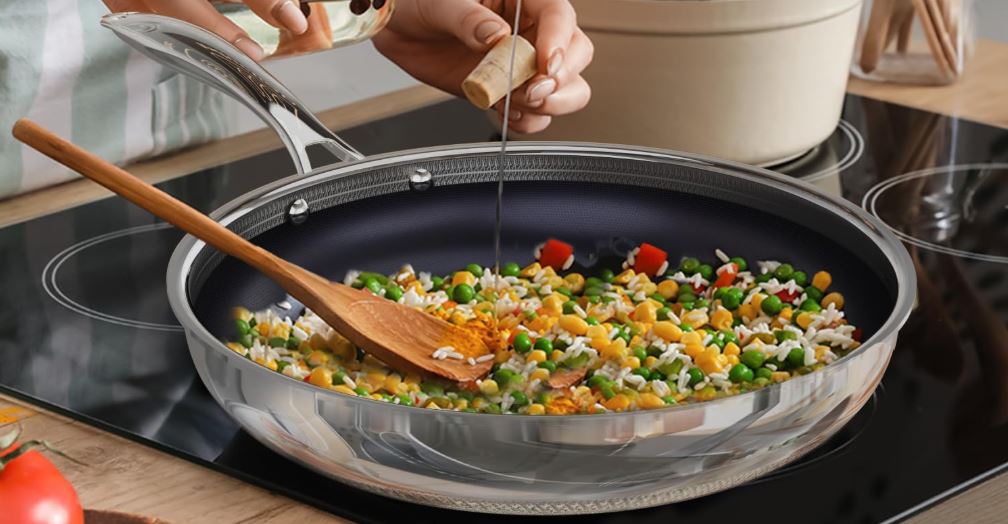
Do Ceramic Pans Work on Induction Stoves? Explained Clearly
Disclosure: As an Amazon Associate, I earn from qualifying purchases. Learn more
Ceramic pans work on induction stoves only if the pan has a magnetic base. Pure ceramic or aluminum-based ceramic pans will not heat on induction.
This confusion usually occurs after switching from a gas or electric stovetop to an induction stovetop. A pan that worked fine before suddenly does nothing, the burner blinks, or the stove shuts off. The issue is not the ceramic coating itself, but what sits underneath it.
Most ceramic non-stick cookware uses aluminum, which induction stovetops cannot detect. Without magnetic interaction, no heat is generated. This leads to concerns about compatibility, uneven heating, and potential cookware damage.
How Induction Stoves Work With Cookware Materials
Induction stovetops heat cookware using electromagnetic energy rather than direct heat. For this system to activate, the pan must contain magnetic material, usually iron or magnetic stainless steel.
Ceramic refers only to the coating, not the core. Most ceramic non-stick pans are built on aluminum, which does not respond to magnetic fields. As a result, the induction stovetop cannot detect the pan and will not heat it.
This explains why induction cooktops do not work with all pans. The stovetop is designed to shut off when incompatible cookware is detected, improving safety and energy efficiency.
- You May Also Like: Are Ceramic Pans Safe to Cook With and Healthier Than Teflon?
WhatsClad 10 Inch Hybrid Ceramic Nonstick Frying Pan for Induction Cooking
If you are wondering if ceramic pans work on induction stoves, this pan is a clear example of how proper construction makes the difference. Its 3-ply stainless steel core ensures full induction compatibility, while the ceramic non-stick coating supports healthier cooking without PFAS or PTFE. Even heat distribution, corrosion resistance, and dishwasher-safety make it practical for everyday use on induction, gas, or electric stovetops.
WhatsClad 10″ Hybrid Ceramic Frying Pan stands out this season for induction-ready performance and clean cooking → View on Amazon

Why Some Ceramic Pans Fail on Induction Stovetops
Cause: Aluminum or Non-Magnetic Core
Effect: Burner does not activate or shuts off
Cause: Thin Bonded Steel Disc
Effect: Slow or uneven heating
Cause: Pan Size Too Small
Effect: Induction zone fails to detect cookware
Cause: Warped Pan Base
Effect: Poor contact and inconsistent heat transfer
Which Types of Ceramic Cookware Can Work on Induction
Ceramic-Coated Stainless Steel
Stainless steel with magnetic properties works well on induction while offering a non-stick ceramic surface.
Ceramic-Coated Cast Iron
Cast iron is naturally induction compatible and performs reliably when finished with ceramic enamel.
Hybrid Ceramic Induction Pans
Some ceramic cookware includes a bonded magnetic base. Performance varies depending on build quality.
Pure ceramic or aluminum-only ceramic pans will not work on induction cooktops.
How to Check if a Ceramic Pan Is Induction Compatible
- Look for the induction safe symbol on the base
- Check manufacturer specifications for induction stovetop use
- Perform a magnet test; strong attraction means compatibility
- Ensure the base is flat and not warped
- Match the pan size to the induction zone
Step-by-Step Fixes When a Ceramic Pan Does Not Heat
1: Confirm magnetic compatibility using a magnet
2: Try a different burner zone
3: Use an induction interface disc if needed
4: Lower power settings to stabilize heat
5: Replace with induction-compatible ceramic-coated cookware if problems continue
Best Material Alternatives if Ceramic Cookware Is Not Compatible
| Cookware Material | Induction Compatible | Key Benefits | Limitations |
|---|---|---|---|
| Stainless Steel | Yes | Durable, versatile | May require oil |
| Cast Iron | Yes | Excellent heat retention | Heavy |
| Carbon Steel | Yes | Fast response | Needs seasoning |
| Aluminum Ceramic | No | Lightweight, non stick | Not induction safe |
This comparison clarifies what types of pans can be used on induction cooktops.
- Related Content You May Like: Is Sensarte Nonstick Ceramic Cookware Safe and Non-Toxic for Home Kitchens?
Common Errors When Using Ceramic Cookware on Induction
Many assume non-stick automatically means induction compatible. Others rely on labels instead of checking the base material. High heat settings are another issue; induction heats faster than gas or electric stovetops and can damage ceramic coatings quickly.
Sliding pans, heating empty cookware, or using warped bases also lead to poor performance and shortened cookware lifespan.
How to Prevent Ceramic Pan Damage on Induction Stoves
Placing an empty ceramic pan on high induction heat causes instant overheating. To prevent this, always start with medium heat and add oil or food before activating the burner.
Lift cookware instead of sliding it to protect the glass surface. Allow pans to cool before washing, even if labeled dishwasher safe. These habits reduce warping, coating failure, and uneven heating.
FAQs
What Pans Work on an Induction Stove?
Pans used on an induction stove must have a magnetic base. Cast iron, carbon steel, and most stainless steel cookware qualify. A simple magnet test confirms compatibility—strong attraction means the pan will heat. Aluminum or copper pans only work if a magnetic layer is bonded to the base.
Can Induction Pans Be Used on a Gas Stove?
Induction pans work normally on gas stoves. The magnetic metals used for induction compatibility handle open flames without issues. Proper heat control is important to protect non-stick or ceramic coatings, as gas flames can be more aggressive than induction heat.
Can You Use Aluminum Pans on an Induction Stove?
Aluminum pans do not work on induction stoves unless they include a magnetic steel base. Induction cooking relies on magnetic energy, which aluminum alone cannot trigger. Some aluminum pans are labeled induction compatible due to a bonded magnetic layer.
Do Induction Pans Work on All Stoves?
Induction pans work on gas and electric stovetops in most cases. Their magnetic construction allows efficient heat transfer across different heat sources. Heat retention is often higher, so adjusting temperature settings helps prevent overheating.
Practical Takeaways for Induction Cooking
Ceramic pans only work on induction stoves when a magnetic base is present. Most failures come from aluminum cores, thin bonded plates, or size mismatches. Checking induction symbols, testing with a magnet, and controlling heat prevent frustration and damage. With the right cookware and handling habits, ceramic-coated pans can perform reliably across induction, gas, and electric stovetops.
Discover New Articles: See Our Latest Updates
