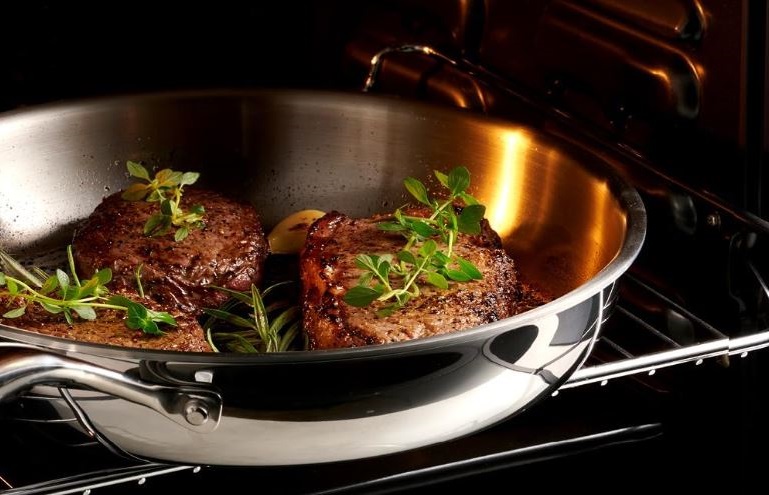
3-Ply Vs. 5-Ply Stainless Steel Cookware: Which Is The Smarter Investment
Disclosure: As an Amazon Associate, I earn from qualifying purchases. Learn more
For most home kitchens, 3-ply stainless steel cookware is more than sufficient. 5 ply cookware is better only if you cook frequently at high heat and want extra stability.
When you compare tri ply vs 5 ply cookware, the hesitation usually comes down to price versus performance. You see a noticeable cost jump and wonder if those extra layers truly change how your food cooks.
In reality, the decision depends on heat stability, cooking intensity, and budget flexibility. If you sear steaks often or simmer sauces for long periods, adding layers can improve temperature consistency. If you cook balanced weeknight meals, 3-ply stainless steel cookware already delivers excellent results.
Choosing the right stainless steel cookware is not about chasing more layers. It is about matching construction to how you actually cook every day.
Heat Distribution Differences In 3 Ply Vs 5 Ply Stainless Steel
| Feature | 3 Ply Stainless Steel Cookware | 5 Ply Stainless Steel Cookware |
|---|---|---|
| Core Structure | Stainless + Aluminum + Stainless | Stainless + Aluminum + Extra Core Layers |
| Heating Speed | Fast response | Slightly slower |
| Heat Retention | Moderate | Higher retention |
| Hot Spot Reduction | Good | Very good |
| Searing Strength | Strong | More even crust |
| Temperature Stability | Responsive | More consistent |
Tri-ply stainless steel pans heat quickly and adjust fast when you lower the flame. That responsiveness helps when cooking eggs, fish, or delicate sauces.
With 5-ply stainless steel cookware, the added layers distribute and retain heat longer. When you drop a cold steak into the pan, temperature recovery is slightly steadier. This improves browning and reduces sharp fluctuations.
For everyday sautéing, the difference is small. During longer cooking sessions or high-heat searing, 5-ply cookware shows more stability.
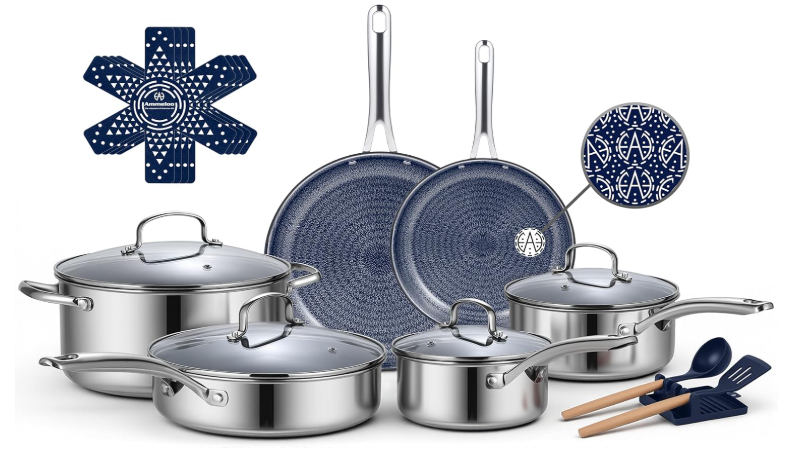
Ammeloo Hybrid Tri-Ply Cookware Set Review & Recommendation
The Ammeloo Hybrid Stainless Steel Cookware Set delivers versatile performance for everyday cooking. Its 17-piece tri-ply design ensures even heat distribution, while the hybrid non-stick surface makes cleaning effortless. Perfect for induction, gas, and oven use, it balances durability and lightweight handling for home chefs seeking convenience and reliability.
Ammeloo Hybrid Tri-Ply Cookware is a smart pick for versatile kitchens → View on Amazon
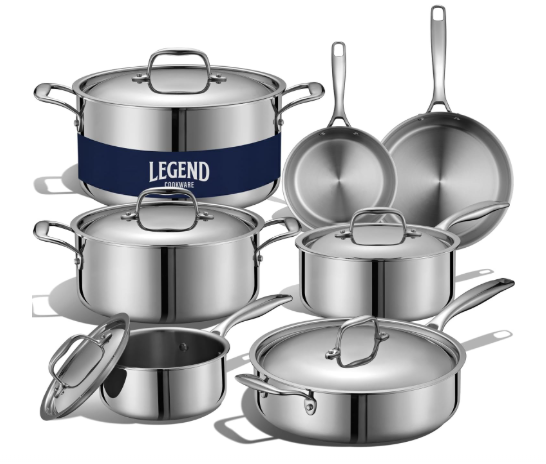
LEGEND 5-Ply Stainless Steel Cookware Set Review & Recommendation
The LEGEND COOKWARE 5-Ply Stainless Steel Set stands out for long-term durability and professional-grade heat retention. Its 12-piece design handles high-temperature searing and induction cooking with ease, all without coatings. Ideal for serious cooks who value structural strength and cookware built to last generations.
LEGEND 5-Ply Stainless Steel Cookware excels in durability and performance → View on Amazon
What’s the Real Performance Difference Between 3 Ply and 5 Ply Cookware?
Home cooks often struggle to understand whether 3 ply or 5 ply cookware is the better choice for everyday use. The main distinction lies in how many bonded layers of metal are used: 3 ply usually combines stainless steel with a single aluminum core, while 5 ply adds extra alternating layers of stainless and aluminum (or other conductive metals).
The result is that 5 ply cookware typically offers more even heat distribution and better heat retention, especially on larger pieces like stockpots or sauté pans.
That said, 3 ply cookware is often lighter and more affordable, making it a smart choice for cooks who want good performance without paying extra weight or cost.
Tri-Ply vs. 5 Ply Cookware For Everyday Home Cooking
Scenario 1: Quick Weeknight Meals
If you sauté vegetables, cook pasta, or pan-fry chicken, three-ply stainless steel cookware works perfectly. It heats quickly and reacts immediately when you lower the heat.
Scenario 2: High Heat Searing
If you frequently cook steaks or thick pork chops, 5-ply pans maintain more consistent surface heat, helping create deeper browning.
Scenario 3: Long Simmering
When preparing soups or stews, 5-ply stainless steel pots distribute heat gradually along the sides, lowering scorching risk during long cooking.
Scenario 4: Daily Comfort
Tri-ply cookware is usually lighter. If you prefer easier lifting and flipping, it feels more practical for daily use.
Most households benefit fully from tri-ply cookware. Five ply becomes valuable when cooking intensity increases.
3 Ply Vs 5 Ply Stainless Steel Durability And Thickness
| Durability Factor | 3 Ply Stainless Steel | 5 Ply Stainless Steel |
|---|---|---|
| Overall Thickness | Medium | Thicker |
| Warp Resistance | Strong | Very strong |
| Dent Resistance | Good | Better |
| Structural Rigidity | Stable | Highly rigid |
| Heavy Use Suitability | Reliable | Excellent |
High-quality 3-ply stainless steel cookware is already built for years of use. Warping is rare under normal cooking temperatures.
Five-layer stainless steel cookware adds more metal layers, increasing density. This improves rigidity and resistance under prolonged high heat. If you cook aggressively on gas or induction, that added margin can help.
Is 5 Ply Cookware Worth It For Serious Home Cooks?
Heat Stability
Stainless steel cookware 5 ply provides stronger thermal consistency during extended cooking. Sauces simmer more evenly with fewer temperature swings.
Searing Results
With 5-ply stainless steel, thicker cores reduce sudden heat loss when adding cold ingredients. Browning tends to be slightly more uniform.
Cost Justification
The upgrade delivers incremental improvements, not a dramatic transformation. If you cook daily at high temperatures, the difference feels worthwhile. If your meals are moderate, 3-ply stainless steel cookware already performs at a high level.
Five ply is refinement. Triply is practical excellence.
Price To Performance Breakdown Of 5 Ply Stainless Steel Cookware Set
| Category | 3 Ply Cookware | 5 Ply Cookware |
|---|---|---|
| Average Price | Moderate | Higher |
| Heat Performance | Excellent | Slightly improved |
| Weight | Lighter | Heavier |
| Longevity | Long lasting | Extended durability margin |
| Ideal For | Daily cooking | Frequent high heat cooking |
Best tri-ply stainless steel cookware offers strong value. The best 5-ply stainless steel cookware adds stability and thickness at a premium.
If budget comfort is limited, tri ply remains the smarter investment. If long-term durability is your priority, five ply justifies the higher cost.
Tri Ply Vs 5 Ply Stainless Steel Weight And Handling
Tri-Ply Stainless Steel Pan
- Lighter overall feel
- Easier wrist control
- Faster temperature adjustments
- Comfortable for quick tossing
- Less arm fatigue
5 Ply Stainless Steel Pan
- Noticeably heavier
- Solid, dense feel
- Longer heat retention
- Stable during intense searing
- Slightly slower cooling
If you cook multiple meals daily, lighter tri ply pans reduce strain. If you prefer heavier cookware with commercial density, 5-ply pans feel more substantial.
Best 3 Ply Stainless Steel Cookware Vs Best 5 Ply Stainless Steel Cookware
3-Ply Stainless Steel Cookware
Pros
- Excellent responsiveness
- Lighter handling
- Better value
- Ideal for most kitchens
Cons
- Slightly lower heat retention
- Less structural thickness
5-Ply Stainless Steel Cookware
Pros
- Improved heat stability
- Greater structural rigidity
- Better for frequent high heat
- Premium feel
Cons
- Higher price
- Heavier weight
Both constructions are high-performing. The difference lies in stability and density rather than cooking capability.
Stainless Steel Cookware 3 Ply Vs 5 Ply For Different Stovetops
Gas Cooking
On gas burners, tri ply stainless steel pans respond instantly to flame changes. This makes temperature control simple and precise.
Electric And Ceramic
Electric burners heat gradually. 5-ply stainless steel spreads heat more evenly across the base, reducing concentrated hot spots.
Induction
Both stainless steel 3 ply cookware and stainless steel 5 ply cookware work well if built with magnetic outer layers. Thicker 5-ply stainless steel may reduce small hot zones under high induction power.
Difference Between 3 Ply And 5 Ply Cookware In Real Kitchen Tests
In controlled kitchen testing, the most visible difference between 3 ply vs 5 ply stainless steel appears during prolonged high-heat cooking. When simmering thick tomato sauce for extended periods, 5-ply cookware maintains steadier sidewall heat. When searing chilled steak, heat recovery is slightly faster.
For everyday cooking tasks like scrambling eggs or sautéing vegetables, performance differences are minimal. Most stainless steel pan reviews show that three-ply stainless steel cookware already delivers professional results.
The added layers mainly enhance consistency and density, not basic cooking ability.
Buyer Checklist For Choosing Between 3 Ply Vs 5 Ply Stainless Steel
- Do you cook frequently at high heat
- Do you sear thick meats often
- Do you prefer lighter cookware
- Is your budget flexible
- Do you want maximum structural durability
- Is induction your main stove
- Do you cook large batches regularly
If most answers support intense cooking and long-term durability, 5-ply stainless steel cookware is suitable. If you value responsiveness, lighter handling, and strong value, 3-ply stainless steel cookware is the practical choice.
FAQs
Is 5 Ply Cookware Really Better Than 3 Ply For Home Cooking?
For most home kitchens, tri ply cookware like Ammeloo performs extremely well. You get even heating and solid responsiveness. However, if you cook at very high temperatures, use cast iron level heat, or want maximum structural stability, Legend 5 ply stainless steel cookware offers stronger heat retention and resistance to warping. It is not automatically better for everyone. It depends on cooking intensity.
Does 5 Ply Stainless Steel Last Longer?
In general, 5 ply stainless steel cookware can offer longer structural durability due to added layers. The Legend set is designed for extended use under high heat conditions. That said, quality tri ply cookware like Ammeloo can also last many years with proper care. Longevity depends more on usage habits than ply count alone.
Is 5 Ply Cookware Worth The Higher Price?
If you cook daily at moderate heat, the extra investment may not dramatically change your results. But if you want thicker stainless steel 5 ply cookware for serious searing, oven roasting, and heavy pots, the higher price can feel justified over time. It becomes more about long-term stability than basic cooking ability.
Are 3 Ply Pans Easier To Handle?
Yes, in most cases, tri ply pans are lighter. Ammeloo tri ply cookware feels easier to lift and maneuver, especially when full. If wrist comfort or quick movement matters in your kitchen, 3 ply stainless steel cookware often feels more manageable than heavier 5-ply pans.
Does Ply Count Affect Induction Performance?
Both tri ply and 5-ply stainless steel cookware sets are compatible with induction if properly constructed. The difference is not compatibility but heat stability. Legend 5 ply stainless steel may maintain steadier heat on induction, while Ammeloo tri ply heats slightly faster. Both function well on modern induction cooktops.
Practical Recommendation
Three ply stainless steel cookware delivers excellent performance for most kitchens. Five ply stainless steel cookware offers greater heat stability and structural density for frequent high heat cooking. Choose based on how you cook, how often you use high temperatures, and how much weight and cost you are comfortable with.
Suggested Reading:
- 5 Best Non-Stick Oven & Dishwasher Safe Pans for Everyday Meals
- Are HexClad Pans Worth It Compared to Traditional Nonstick?
Discover New Articles: See Our Latest Updates
