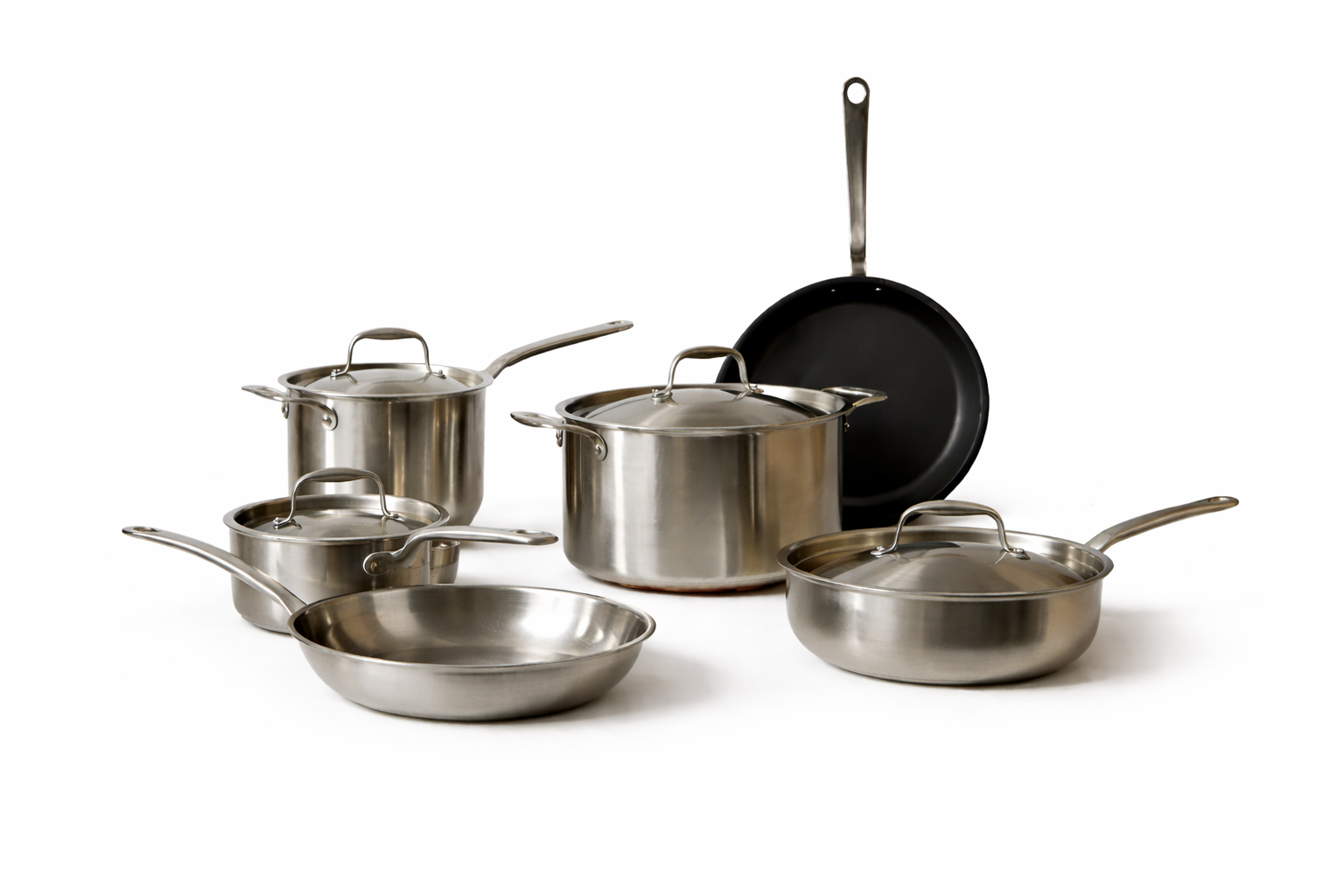
Is Made In Cookware Safe and Worth It? A Practical Review With Pros and Cons
Disclosure: As an Amazon Associate, I earn from qualifying purchases. Learn more
Yes, Made In cookware is generally safe when used properly, and most collections use materials considered food safe under normal cooking conditions. It is worth it for cooks who want professional-grade performance, but it requires proper heat control and maintenance.
When you invest in cookware, you are choosing tools that come into contact with your food every day. That raises real concerns about non-toxic materials, coating safety, and long-term durability. Many people researching made in cookware reviews are trying to figure out whether the stainless steel is reliable, if the nonstick surface holds up, and whether carbon steel is too demanding for everyday use.
There is also confusion around induction compatibility, dishwasher safety, and comparisons like is Made In cookware better than All Clad.
This guide explains the materials, performance, pros and cons, and maintenance expectations in clear terms so you can decide if it fits your kitchen routine.
What Is Made In Cookware and How Is It Built
Made In cookware is a US-founded brand that partners with manufacturers in countries known for specialized metalwork, including the United States and parts of Europe. The focus is on stainless steel cookware, carbon steel pans, nonstick collections, and enameled cast iron.
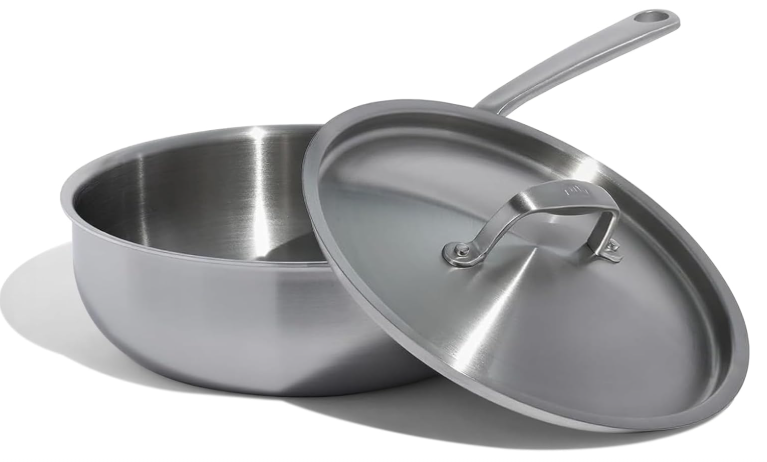
The stainless steel line typically uses fully clad construction, meaning layers of stainless steel and aluminum are bonded together from base to rim. This improves heat distribution, responsiveness, and structural strength. The cooking surface is stainless steel, while the aluminum core promotes even heating.
Carbon steel pans are formed from iron and carbon, offering high heat tolerance and the ability to build seasoning over time. The brand also produces specialty pieces such as a saucier, braiser, griddle, carbon steel, roasting pan, stock pot, and multiple frying pan sizes, including the 8-inch frying pan and 10-inch frying pan.
The Best Made In Cookware Pot and Pans Review & Recommendations
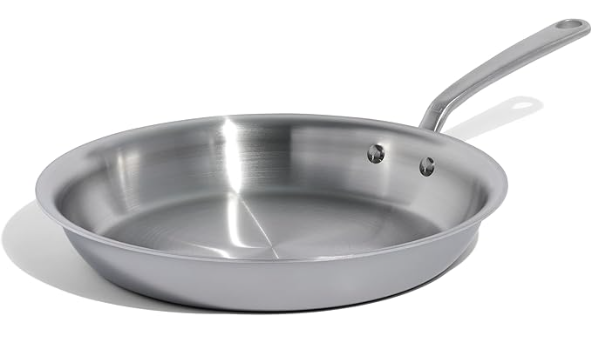
Made In Cookware 12 Inch Stainless Steel Frying Pan
The 12 Inch Made In Cookware stainless steel frying pan features 5-ply stainless clad construction for fast, even heating and strong heat retention. Compatible with induction, gas, electric, and oven use, it delivers professional-level searing and browning with excellent durability.
Made In 12 Inch Stainless Steel Frying Pan is a trusted pick for high-heat searing and everyday stovetop performance → View Product
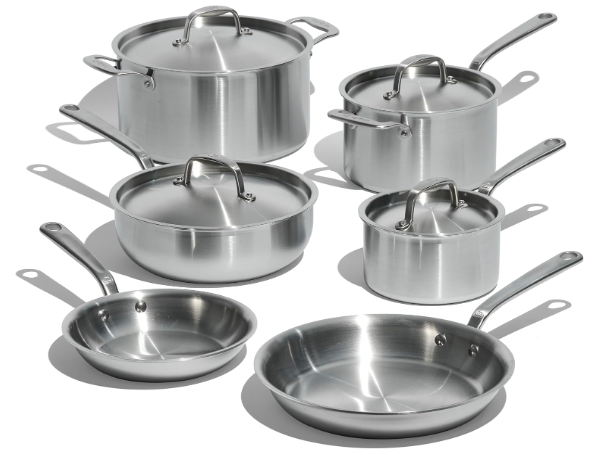
Made In Cookware 10 Piece Stainless Steel Pot and Pan Set
This 10-piece Made In Cookware stainless steel set includes frying pans, saucepans, saucier, and stock pot with lids, all built with 5 ply clad layers for balanced heat control. Compatible with induction and oven safe, it offers a complete solution for sautéing, simmering, boiling, and finishing dishes in the oven.
Made In 10 Piece Stainless Steel Set stands out for full kitchen versatility and consistent multi pan performance → View Product
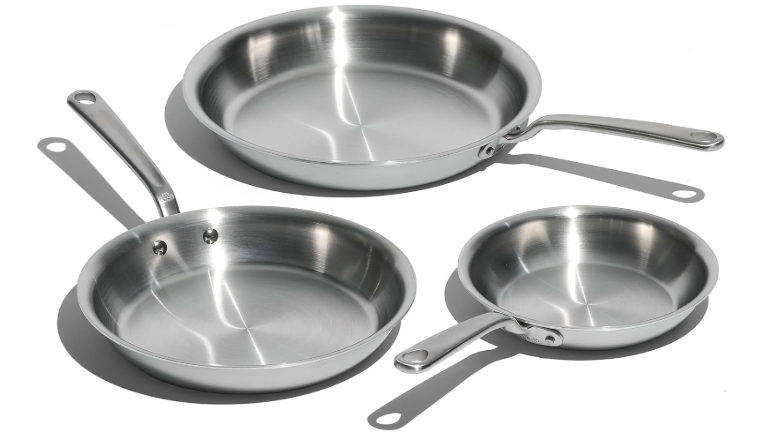
Made In Cookware 3 Piece Stainless Frying Pan Set
The 3-piece frying pan set includes 8-inch, 10-inch, and 12-inch pans crafted with 5-ply stainless-steel clad construction for responsive heat distribution. Compatible with induction cooktops and oven use, these pans support everything from delicate eggs to high-heat protein searing.
Made In 3 Piece Frying Pan Set is a practical choice for flexible cooking across multiple portion sizes → View Product
Made In Cookware 3 Quart Stainless Steel Saucier Pan
The 3-quart Made In Cookware saucier features rounded walls and 5 ply stainless clad construction to promote smooth stirring and even reduction. Compatible with induction and oven cooking, it is ideal for sauces, risotto, grains, and controlled simmering.
Made In 3 Quart Stainless Steel Saucier is favored for precision sauce work and controlled heat management → View Product
Are Made In Cookware Safe Materials and Non-Toxic Concerns?
Safety concerns usually focus on metal exposure, coatings, and overheating.
Stainless Steel
Cause: Concern about nickel or chromium exposure.
Effect: Possible irritation for people with extreme sensitivities.
Reality: High-grade stainless steel is considered stable and food safe under standard cooking temperatures. Metal transfer is minimal when surfaces are not damaged.
Carbon Steel
Cause: Rust formation or improper seasoning.
Effect: Surface discoloration or metallic taste.
Reality: Carbon steel contains iron and carbon only. When seasoned correctly, it becomes a naturally slick and safe cooking surface without synthetic coatings.
Nonstick ProCoat
Cause: Fear of chemical breakdown at high temperatures.
Effect: Potential release of fumes if severely overheated.
Reality: Modern PTFE-based coatings are widely regarded as safe below recommended heat limits. Overheating any nonstick surface can shorten its lifespan.
Is Made In Cookware Worth It?
Pros
- Even heat distribution in stainless steel cookware
- Strong induction compatibility across most lines
- Durable construction suitable for high-heat cooking
- Open stock availability, including saucepan, saute pan, saucier, and stock pot
- Carbon steel develops natural release properties over time
Cons
- Stainless steel requires heat control to prevent sticking
- Nonstick coating will eventually wear out
- Carbon steel demands drying and light oil maintenance
- Some items are not ideal for dishwasher cleaning
- Premium pricing compared to entry-level cookware
Is Made In Cookware Better Than All Clad
One selects Made In stainless steel cookware.
The other chooses All-Clad D3.
Both receive multi-layer clad stainless steel construction with aluminum cores and induction compatibility. Cooking performance in searing, browning, and simmering is comparable. Heat retention and distribution are similar because the engineering principle is nearly identical.
Differences usually appear in handle shape, price variation, country of production, and brand heritage perception. In practical kitchen use, performance gaps are narrower than many assume.
From a safety standpoint, both brands rely on stainless steel interiors and layered metal construction, which are considered safe when used appropriately. The final decision often depends on ergonomics and budget rather than dramatic quality differences.
Is Made In Cookware Dishwasher Safe and Induction Compatible?
| Cookware Type | Dishwasher Safe | Induction Compatible |
|---|---|---|
| Stainless Steel | Yes but hand wash preferred | Yes |
| Carbon Steel Pan | No | Yes |
| Nonstick Frying Pan | Not recommended | Yes if magnetic base |
| Enameled Cast Iron | Sometimes | Yes |
Even when labeled dishwasher safe, frequent machine washing can affect appearance. Hand washing supports long-term finish preservation.
Common Problems With Made In Cookware and How to Fix Them
Food Sticking to Stainless Steel
- Preheat the pan over medium heat.
- Add oil and allow it to heat until shimmering.
- Place food in the pan and let it form a crust before moving it.
- Flip only after natural release occurs.
Sticking is usually caused by insufficient preheating or early flipping, not surface defects.
Carbon Steel Rusting
- Rinse briefly without soaking.
- Dry completely with heat if needed.
- Apply a thin layer of oil.
- Store in a dry area.
Rust develops from prolonged moisture exposure, not material failure.
Nonstick Performance Declining
- Avoid high heat settings.
- Use silicone or wooden utensils.
- Do not stack without protection.
- Replace when coating shows visible wear.
Nonstick surfaces degrade primarily due to heat abuse and abrasive contact.
How to Maintain Made In Cookware for Long-Term
- Avoid overheating empty pans
- Use moderate heat for nonstick cooking
- Dry carbon steel immediately after washing
- Match burner size to pan diameter
- Store pans with protective liners if stacking
- Avoid metal utensils on coated surfaces
Consistent maintenance prevents warping, corrosion, and coating damage. Proper care directly influences whether Made In cookware remains safe and functional over time.
Stainless Steel vs Carbon Steel vs Nonstick Symptoms vs Causes
| Replace the nonstick and lower the heat | Likely Cause | Best Surface Solution |
|---|---|---|
| Food sticking | Poor heat control | Stainless steel with proper preheat |
| Rust spots | Moisture left on surface | Carbon steel with correct drying |
| Peeling coating | Excessive heat or metal utensils | Replace nonstick and lower heat |
| Uneven browning | Thin base construction | Fully clad stainless steel |
Identifying the root cause helps match the cookware material to your cooking style rather than misjudging the brand.
How the Product Line Addresses Performance and Safety Concerns
Stainless Steel Collection
Built with multi-layer cladding for even heating and structural strength. Designed for high-heat searing and long-term durability without relying on coatings.
Carbon Steel Line
Offers high temperature tolerance and develops seasoning over time, creating a natural release surface without synthetic layers.
ProCoat Nonstick
Designed for delicate foods like eggs and fish. Performs best at moderate temperatures with gentle utensils.
Specialty Pieces
Includes saucier, braiser, roasting pan, griddle, carbon steel, and stock pot to expand cooking versatility across stovetop and oven use.
Common Questions About Made In Cookware
Is Made In Cookware Good for Everyday Cooking?
Yes, particularly the stainless steel cookware and saute pan options. They handle searing, boiling, simmering, and oven finishing effectively. The key factor is temperature control. Stainless steel requires preheating and patience before flipping food. When used correctly, it delivers consistent results suitable for daily meals.
Is Made In Cookware Non-Toxic Compared to Ceramic?
Stainless steel and carbon steel contain no synthetic coatings and are widely considered safe cooking surfaces. Ceramic-coated cookware can chip or wear over time, exposing the underlying material. Nonstick options are safe when used below high heat thresholds. Material choice should align with your comfort level and cooking habits.
Does Made In Cookware Work on Induction Stoves?
Most stainless steel and carbon steel pieces are induction compatible because they contain magnetic layers. Always verify the specific product description for specialty items like a griddle or roasting pan. Induction performance depends on the magnetic base construction.
Why Does Food Stick to Made In Stainless Steel?
Sticking usually occurs due to low pan temperature or moving food too soon. Stainless steel releases proteins naturally once a crust forms. Proper preheating and oil temperature solve most sticking complaints.
How Long Does Made In Nonstick Last?
Nonstick lifespan varies based on heat exposure and utensil choice. With moderate heat and gentle handling, it can last several years. High temperatures and metal utensils significantly shorten durability. Eventual replacement is normal for all coated cookware.
Key Takeaways and Practical Guidance
Made In cookware is generally safe when used within recommended temperature limits and maintained properly. Stainless steel and carbon steel offer long-term durability with minimal safety concerns. Nonstick requires moderate heat and gentle care to preserve coating integrity.
Most negative experiences stem from technique issues rather than construction flaws. If you are comfortable managing heat and performing light maintenance, the cookware can deliver professional-level results. Matching the material to your cooking style is the most important factor in deciding whether it is worth it for your kitchen.
More Helpful Reads:
- Misen Carbon Steel Pans Pros And Cons Compared With Other Cookware
- Best 5-Quart Sauté Pan With Lid Reviewed
- Best Pizza Pans For Crispy Crust: Tested And Rated Guide
Discover New Articles: See Our Latest Updates
