Wok Vs. Saute Pan: Choose the Smart Fit for Stir Fry or Sauces
Disclosure: As an Amazon Associate, I earn from qualifying purchases. Learn more
A wok is best for high-heat stir frying and fast tossing, while a saute pan is better for even browning, sauces, and controlled cooking. Choose a wok for intense heat and movement, and a saute pan for stability and liquid capacity.
When choosing between these two pans, it usually comes down to cooking style and kitchen setup. You may love quick stir-fry meals but also want something practical for weeknight chicken, pasta, or pan sauces. Many people compare a saute pan vs a skillet, or research the difference between a fry pan and a saute pan, before deciding.
The hesitation often centers on heat intensity, induction compatibility, and everyday versatility. A stainless wok delivers concentrated heat and fast cooking. A saute pan with a lid offers straighter walls and better moisture control. Matching the pan to how you actually cook prevents clutter and improves results.
What Is a Wok and How Does It Compare to a Saute Pan
What Is a Wok
If you have asked what a wok is, it is a deep pan with sloped sides designed for high-temperature cooking. Traditional models have round bottoms, while modern stainless steel wok designs often feature flat bases for stability. The tall, curved walls allow you to move food away from the hottest center zone while continuing to cook in stages.
What Is a Saute Pan
A saute pan has a wide, flat base and straight, vertical sides. Compared to a skillet, it holds more liquid and reduces splatter. In saute pan vs skillet comparisons, the defining difference is wall height and cooking capacity. Most saute pans also include a fitted lid.
Structural Difference That Matters
In stir fry pan vs wok discussions, slope versus straight walls change how food moves and how heat concentrates. That structural design affects tossing ability, oil use, and sauce control.
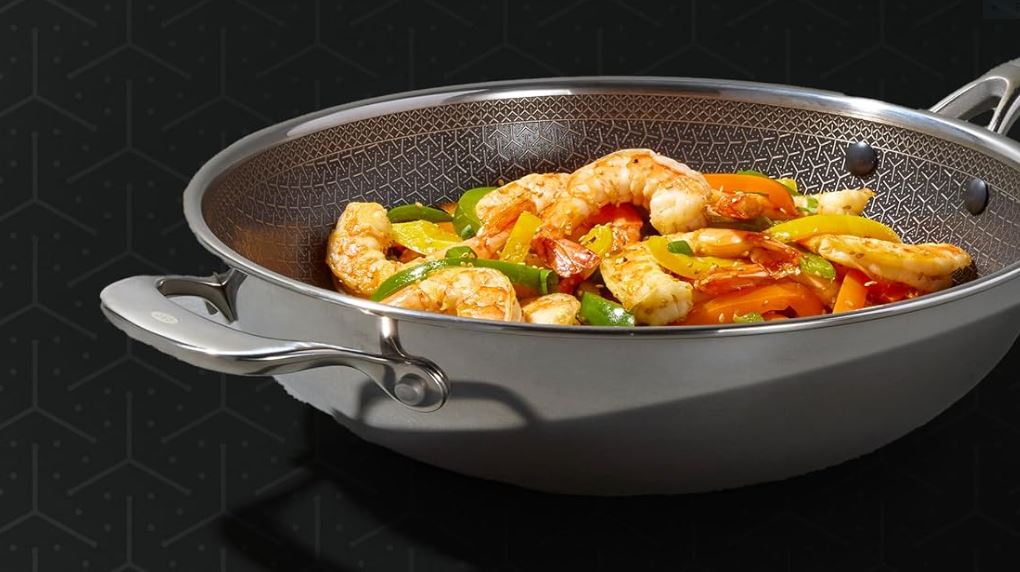
OXO Hybrid 12 Inch Nonstick Wok for High-Heat Stir-Fry Performance
Designed for serious stir fry cooking, this PFAS-free ceramic wok features mirror-polished tri-ply construction for powerful searing and fast heat response. The glass lid improves steam control, while induction and all cooktop compatibility make it practical for modern kitchens.
Key Features and Benefits: Fusion Boost technology, dishwasher-safe design, and even heat retention.
Compatible With: Induction, gas, electric, and ceramic cooktops.
OXO Hybrid 12 Inch Nonstick Wok is a top choice among users for high heat stir fry and induction versatility → View on Amazon
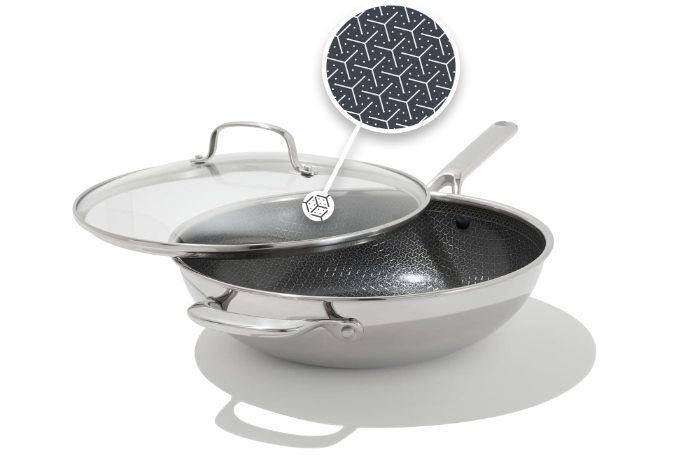
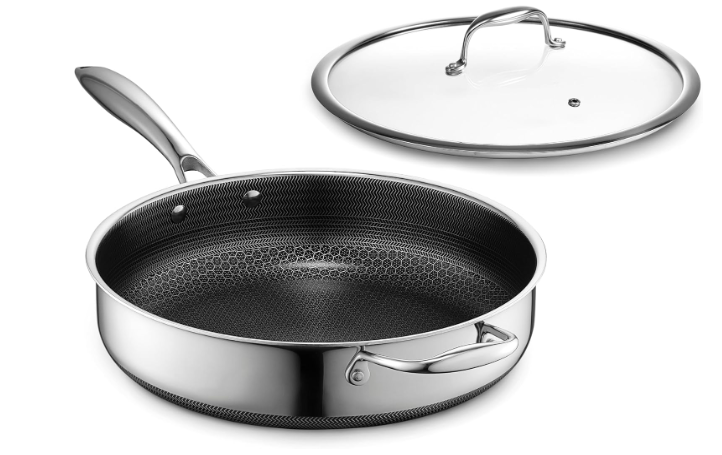
HexClad Hybrid 4.5 Quart Deep Saute Pan for Versatile Daily Cooking
Built with a hybrid nonstick surface and durable construction, this deep saute pan supports browning, simmering, and sauce-heavy meals with excellent heat control. Oven safe up to 900 degrees Fahrenheit and induction ready, it combines strength with convenience.
Key Features and Benefits: Hybrid nonstick surface, tempered glass lid, stay-cool handle, dishwasher-friendly.
Compatible With: Induction, gas, electric, and ceramic cooktops.
HexClad Hybrid 4.5 Quart Deep Saute Pan is a top choice among users for deep searing and multi-purpose cooking → View on Amazon
Side By Side Cooking Performance Breakdown
| Feature | Wok | Saute Pan |
|---|---|---|
| Shape | Sloped or rounded sides | Straight vertical sides |
| Best Use | Stir fry, flash searing | Browning, simmering, sauces |
| Heat Pattern | Intense center heat | Even base heat |
| Oil Usage | Lower oil concentration | Even oil distribution |
| Food Movement | Easy tossing | Limited flipping |
| Sauce Handling | Moderate control | Excellent reduction control |
| Induction Use | Flat base required | Fully compatible |
If you cook quick vegetables or protein-heavy stir fry, a stainless steel small wok concentrates heat efficiently. If you prepare creamy pasta, braised meats, or reductions, the best large saute pan provides more surface control.
Heat Control and High Temperature Cooking
High Heat Cooking
A stainless wok is built for rapid temperature shifts. The center becomes extremely hot, ideal for quick caramelization. For induction users, choose a wok for induction with a flat base to ensure direct contact.
Even Browning
Sauté pans distribute heat evenly across the base. In wok vs frying pan and saute pan vs skillet comparisons, this consistent contact reduces hot spots during longer cooking sessions.
Oil and Smoke Control
Woks pool oil in the center, often requiring less overall. Sauté pans spread oil evenly, which helps with uniform browning. If you cook at high temperatures often, ventilation and cooktop type play a role.
Stir Fry Pan vs Wok for Asian Style Meals
1: Quick Vegetable Stir Fry
If you cook vegetables in under five minutes, a stainless steel wok with a lid allows rapid tossing and optional steaming.
2: Fried Rice or Noodles
The deep-sloped walls make flipping and combining easier. In stir-fry pan vs wok comparisons, traditional woks usually provide better heat concentration.
3: Sauce Heavy Dishes
If your stir fry includes thicker sauces, a saute pan with a lid may contain liquids more effectively and reduce spillover.
Saute Pan vs Skillet and Fry Pan Differences
Key distinctions when comparing a saute pan vs a skillet, and the difference between a fry pan and a saute pan:
- Sauté pans have straight, taller walls
- Skillets have flared sides
- Saute pans hold more liquid
- Skillets allow easier flipping
- Saute pans commonly include lids
- Fry pans are shallower overall
Compared to a wok vs skillet, a saute pan functions as a versatile hybrid suited for browning and simmering.
Induction Compatibility and Modern Kitchen Setup
| Feature | Wok | Saute Pan |
|---|---|---|
| Flat Base Needed | Yes for induction | Standard flat base |
| Stability | Depends on design | Highly stable |
| Induction Performance | Only flat bottom models | Fully compatible |
| Heat Contact Area | Smaller central zone | Full base coverage |
| Glass Cooktop Safety | Must sit flat | Stable and secure |
If you use induction, confirm the wok induction design supports your burner diameter. Round-bottom models require a compatible ring and may reduce efficiency.
Stainless Steel Wok With Lid vs Saute Pan With Lid
Stainless Steel Wok With Lid
Pros
- Excellent for high-heat cooking
- Ideal for stir-fry tossing
- Lower oil concentration
Cons
- Less suited for slow simmering
- Requires a flat base for induction
Saute Pan With Lid
Pros
- Strong for sauces and braising
- Stable cooking surface
- Versatile daily use
Cons
- Not built for extreme tossing
- Heavier overall construction
Select based on cooking frequency and preferred techniques.
Capacity and Family Meal Cooking: Buyer Checklist
Before choosing, consider:
- Do you cook large portions
- Do you prepare sauce-based meals
- Do you often stir-fry
- Do you use induction
- Do you want a multipurpose pan
A best large saute pan supports pasta and one-pan family meals. A stainless steel small wok excels at fast, high-heat cooking but may require batch preparation for larger servings.
Wok vs Frying Pan and Everyday Versatility
In wok vs pan and wok vs frying pan comparisons, versatility often determines value. A frying pan works well for eggs and simple searing, but lacks the depth of a saute pan and the heat concentration of a wok.
If your meals include sauces, braising, and multi-step cooking, a saute pan covers more scenarios. If your kitchen routine includes frequent stir-fry and rapid cooking, a stainless steel wok performs better. Many home cooks keep both because each serves a distinct purpose rather than replacing the other.
Frequently Asked Questions
Can a Wok Replace a Saute Pan Completely?
A wok can sear protein and cook vegetables efficiently, but it is less effective for shallow liquid reductions and slow simmering. A saute pan provides straighter walls and consistent surface contact, which improves sauce control. If you regularly cook braised dishes, the saute pan remains more practical.
Is a Saute Pan Better for Induction Cooktops?
Yes, most saute pans are designed with flat bases that ensure full contact with induction burners. Wok induction models must specifically feature a flat bottom. Without proper contact, heating efficiency drops and cooking performance becomes inconsistent.
What Is the Difference Between Stir Fry Pan vs Wok?
A stir fry pan typically has shallower slopes and more base contact. A traditional wok has deeper curvature, allowing ingredients to move between intense center heat and cooler side zones. For authentic high-heat cooking, a wok generally performs better.
Which Uses Less Oil Wok or Saute Pan?
A wok often uses less oil because food gathers in the hot center. A saute pan spreads oil across a flat surface for even browning. The difference depends on the cooking method and portion size.
Which Is More Versatile for Everyday Cooking?
For general browning, simmering, and sauce preparation, a saute pan offers broader versatility. A wok excels at rapid cooking and tossing. Your cooking frequency and meal style determine which is more practical.
Expert Recommendation
Choose a wok if you prioritize high heat, fast movement, and frequent stir-fry cooking. Choose a saute pan if you value stability, sauce control, and consistent browning. Each pan serves a different function, and selecting the right one depends on how you cook most often.
Similar Posts You May Like:
- Skillet vs. Frying Pan vs. Saute Pan: Which is Better?
- Why Using a Paella Pan Changed My Cooking Game
Discover New Articles: See Our Latest Updates
