Are Kirkland Signature Pans Safe for Oven Use?

Disclosure: As an Amazon Associate, I earn from qualifying purchases. Learn more
Yes, most Kirkland Signature pans are oven safe. You can usually use them in the oven as long as you follow the specific temperature limits listed for your set.
You get good performance from Kirkland cookware because many pieces handle moderate to high oven heat with ease. I want you to feel confident using your set, so check the base and handles since heat limits vary between stainless steel, nonstick, and glass-lid options. Many shoppers ask whether Kirkland pans are oven-safe, and in most cases they are, but your comfort comes from knowing the exact limit for your model.
If you use Kirkland pots and pans in the oven, pay attention to the handle material. Stainless steel handles usually hold higher heat, while silicone or soft-grip handles stay comfortable to touch but may not tolerate extreme temperatures. This matters if you enjoy browning, baking, or finishing food under raised heat.
Your Kirkland Signature frying pans and roasting pans typically support a wide range of cooking tasks, so you can move them from stove to oven without stress. I like how flexible the Kirkland Signature pan set can be for everyday cooking because it gives you the freedom to create deeper flavor and crisp texture in a simple step. If you ever wonder can Kirkland Signature pans go in the oven, just match your recipe’s heat level with the limit shown on your cookware, and you are set for reliable results.
Are Kirkland Signature Pans Oven Safe, and What Does the Heat Limit Really Means
A lot of home cooks ask the same thing: Are these pans actually safe to put inside a hot oven, or is there a hidden risk waiting to ruin dinner and the cookware itself. The short answer is that many Kirkland Signature pans are designed for oven use, but the details truly matter. Labels, handle materials, and coating types make a difference in how well they tolerate heat. Some models hold up to 400 to 500 degrees Fahrenheit, while certain non-stick options perform better at slightly lower temperatures to help protect the coating.
The concept of a safe temperature limit comes down to preserving structure. The non-stick surface can degrade if exposed to extremely high heat for long stretches. Stainless steel versions may accept higher temperatures, giving you more flexibility in recipes that move from stove to oven. Think of it like wearing the correct footwear: a running shoe works on pavement, yet a hiking boot handles rocky trails. The right Kirkland pan for oven baking depends entirely on what you plan to cook.
People who enjoy searing chicken thighs on the stove and finishing them in the oven might appreciate the stainless steel sets. Meanwhile, folks who cook delicate omelets or baked fish fillets might lean toward non-stick to avoid tearing up the food. The main factor is always verifying the heat tolerance before placing your pan inside the oven so your cookware works longer and safer.
Kirkland Cookware Oven Safe Ratings Explained: Non-stick vs Stainless vs Hard-Anodized
| Cookware Type | Approx Oven-Safe Range | Best Use Case | Notes |
|---|---|---|---|
| Non-stick Kirkland pans | Usually up to 400 F | Egg dishes, fish, baked pasta | Protect coating by avoiding broilers |
| Stainless steel Kirkland cookware | About 500 F or more | Meat searing, roasting vegetables, skillet-to-oven recipes | Often compatible with metal handles |
| Hard-anodized Kirkland pieces | About 450 F | Potatoes, casseroles, baked chicken breasts | Stronger base with improved heat distribution |
Recommended Pick Kirkland Stainless Steel Pan Set, ideal for Oven Use
For shoppers looking to upgrade their kitchen, many home cooks appreciate a set similar to the Kirkland Signature COS1119338 stainless steel cookware collection, found on Amazon. A stainless steel set delivers excellent heat resistance, making it a smart choice for people who enjoy finishing steaks in the oven or crisping the top of a cheesy skillet meal. Durable steel allows reliable browning, and the smooth base often works with gas, electric, and induction stoves.
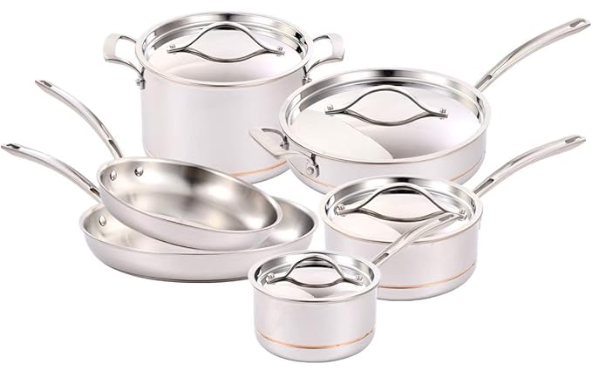
Stainless steel cookware sets tend to last longer if handled with care. That durability becomes incredibly useful for meal prep enthusiasts or anyone who cooks multiple times a week. If someone in your household likes robust flavors through pan reduction sauces, stainless steel supports that better than non-stick. The oven-safe flexibility means you can take recipes from stovetop searing straight into the oven, no pan switch needed.
How to Use Your Kirkland Signature Pans in the Oven Without Risk
Confirm the exact oven-safe temperature on the base or packaging of the cookware.
Use oven mitts every single time because metal handles get extremely hot.
Avoid sudden temperature changes like placing a hot pan under cold water.
Choose utensils that will not damage the cooking surface if you plan to use sauce reduction after baking.
place the pan in the oven only after it reaches the intended temperature to reduce coating stress.
Lift cookware slowly and keep children away from the area during removal.
Allow cookware to cool naturally before washing so the material keeps its shape.
Best Kirkland Pans for Oven Use: Frying Pans, Roasting Pans, Pan Sets
Different cooks have different preferences. A frying pan can handle tasks like searing pork chops then roasting them to finish. A roasting pan works wonders for turkey pieces, beef roast, or caramelized vegetables. Meanwhile, pan sets give you flexibility for everything from cornbread to baked pasta.
Some home chefs like matching sets because lids often transfer between pots and pans without leaking moisture. That’s helpful for slow-baked rice dishes or thick soups that need gradual browning.
The most versatile sets are usually stainless steel because of their higher safe temperature range, yet the comfort of hard-anodized pans appeals to people who love deeper flavors and slow roasting. Non-stick models still serve a place in the kitchen for gentler meals and easier cleanups.
Why the Phrase can Kirkland pans go in the oven Matters for Certain Recipes
Imagine preparing skillet lasagna, cornbread, or honey-glazed salmon. Many recipes start on the stove and move into a hot oven. The inquiry can Kirkland pans go in the oven becomes relevant because using cookware outside its temperature rating may lead to warping, coating damage, or food sticking in future meals.
Some desserts, like skillet brownies or peach cobbler, develop crisp edges only when baked in a preheated pan. People trying bread loaves or flatbread might notice improved texture in a heavy steel pan. The phrase quickly becomes a practical safety check, not just a general question.
Maintenance Tips for Kirkland Signature Pots and Pans Oven-Safe Use
- Dry fully after washing so metal does not discolor
- Use soft sponges on non-stick coatings
- Avoid stacking without padding to prevent surface scratching
- Do not store with leftover acidic foods for hours
- Preheat pans gradually, letting them warm steadily
- Oil lightly to maintain flavor release and easier cleanup
Pros and Cons of Using Kirkland Signature Pans in the Oven
| Pros | Cons |
|---|---|
| Versatile for stovetop to oven cooking | Potential coating damage if overheated |
| Great for searing, roasting, baking | Some lids may not be oven-safe |
| Stainless steel options handle higher heat | Non-stick versions require more care |
| Reduces need for multiple cookware pieces | Sudden temperature changes may warp pans |
Kirkland Signature Pan Set vs Other Brands Oven Safety and Value Comparison
| Feature | Kirkland Signature Pan Sets | Competing Mid-tier Brands |
|---|---|---|
| Heat tolerance | Often 400 to 500 F | May vary from 350 to 500 F |
| Construction | Stainless steel and hard-anodized options | Similar materials but often higher cost |
| Common use | Oven, stove, induction (model specific) | Oven, stove, induction (model specific) |
| Pricing | Attractive value for performance | Often higher for similar results |
| Best suited for | Home cooks upgrading cookware | Cooks seeking premium brand names |
Features to Look for in Kirkland Cookware if Oven Use Is Your Goal
Look for cast stainless steel handles since they usually tolerate more heat than silicone. A thick base improves browning and reduces uneven cooking. Tight-fitting lids that also tolerate oven temperatures help simmer sauces before finishing them under high heat. If you plan on roasting, choose pans with deeper walls so juices remain inside rather than spilling. Lastly, a balanced weight can make lifting safer and more comfortable.
Common Mistakes Using Kirkland Signature Pans Oven-Safe and How to Avoid Them
- Ignoring temperature recommendations leads to durability loss.
- Leaving non-stick pans under a broiler can cause coating harm.
- Using aerosol sprays may create residue buildup that burns.
- Moving cold pans into a hot oven can stress the material.
- Forgetting proper mitts risks hand injuries, so keep gloves nearby.
Discover New Articles: See Our Latest Updates
