
Best Hybrid Nonstick Frying Pans and Cookware Sets (Updated)

Disclosure: As an Amazon Associate, I earn from qualifying purchases. Learn more
If you want one pan that sears well and still lets eggs slide out, the HexClad Hybrid Frying Pan is the strongest everyday pick here, and the OXO and GreenPan options suit cooks who prefer PFAS-free ceramic. Steel ridges do the browning, and the coating does the forgiving.
You might be replacing a scratched nonstick skillet, or tired of scrubbing stainless steel after every breakfast. Hybrid pans sit between the two, but they are not all built the same. The things that matter most are the coating type under the steel pattern, real oven and lid limits, and whether a single pan or a full set fits your kitchen.
Below you will find quick picks, detailed reviews, and practical advice on safety, sizing, stovetops, and care.
The HexClad Hybrid Frying Pan pairs a laser-etched steel pattern with tri-ply heating, while the OXO Hybrid Cookware Set brings PFAS-free ceramic nonstick across ten pieces.
For Everyday Searing
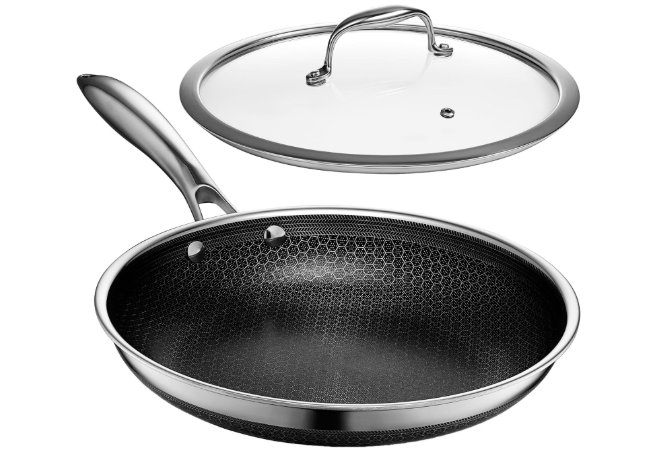
HexClad Hybrid Frying Pan
- Laser-etched hexagon surface
- Oven safe to 900°F
- Tempered glass lid included
For Full Kitchen Upgrades
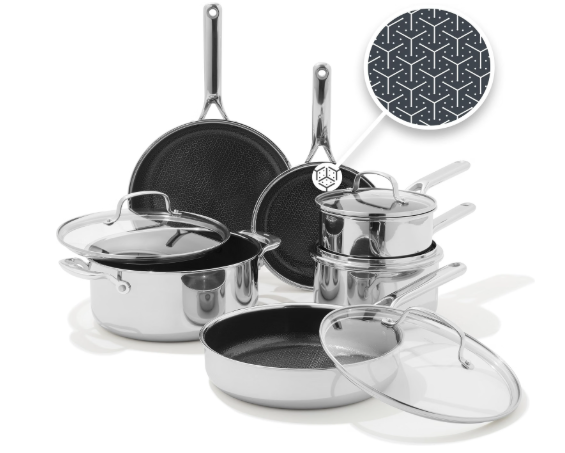
OXO Hybrid Cookware Set
- PFAS-free ceramic nonstick
- Tri-ply stainless body
- Two pans plus four pots
Best Hybrid Nonstick Frying Pans and Cookware Sets Reviewed
These picks were chosen for a real hybrid surface, a stainless or tri-ply body, clear oven and stovetop ratings, and sizes that match common kitchens. The list keeps the order you see below, from single pans to full sets.
1. HexClad Hybrid Frying Pan for Everyday Searing
The laser-etched hexagon pattern is what sets this pan apart. Raised stainless steel peaks handle browning, while HexClad’s TerraBond ceramic coating sits in the valleys for easier release.
Under the surface, tri-ply construction with an aluminum core heats evenly on any stovetop, including induction. The 10-inch size, about 2 inches deep, suits family dinners, sautéing, and one-pan meals.
Real-Use Fit
It fits cooks who want one pan for eggs at breakfast and a proper sear at dinner.
Feature Spotlight
- Hexagon steel pattern over ceramic coating
- Pan oven safe to 900°F
- Lifetime warranty against manufacturer defects
Core Strengths
- Browns meat better than smooth nonstick
- Metal-utensil safe per the maker
- Dishwasher-friendly cleanup
Suited To
- Gas, electric, and induction cooktops
- Stovetop-to-oven recipes
- Two to four servings
Limits To Keep In Mind
The tempered glass lid is only oven safe to 400°F. The pan weighs about 3 pounds, heavier than basic nonstick.
2. OXO Hybrid Cookware Set With Ceramic Nonstick
For a full kitchen refresh, this 10-piece set covers nearly every job: 8-inch and 10-inch frying pans, 1.6-quart and 2.5-quart saucepans, a 2.8-quart sauté pan, and a 5-quart stockpot, each pot with a lid.
OXO’s Fusion Boost design layers a diamond-infused, PFAS-free ceramic nonstick with a raised stainless etched pattern and a nonstick boost layer over a tri-ply stainless body.
Real-Use Fit
It suits households that want matching hybrid pots and pans instead of a single skillet.
Feature Spotlight
- Raised stainless etched pattern
- Diamond-infused PFAS-free ceramic
- Oven safe up to 850°F
Core Strengths
- One set covers frying, simmering, and boiling
- Works on induction and all stovetops
- Dishwasher safe
Suited To
- Daily family cooking
- Kitchens moving away from PTFE coatings
- Searing and sauce work
Limits To Keep In Mind
This is a newer listing with limited buyer feedback so far, and the frying pans top out at 10 inches.
3. GreenPan Hybrid Skillet Set With Ceramic Coating
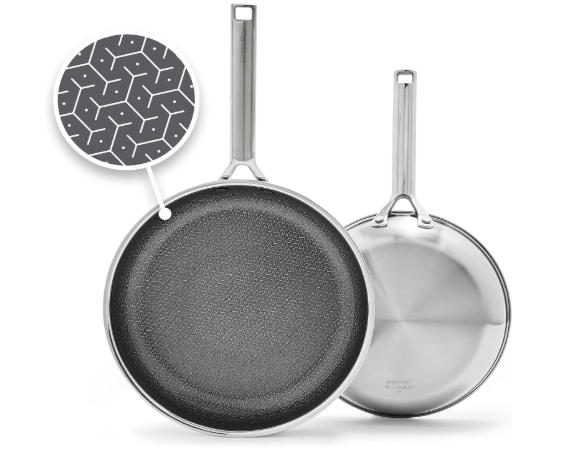
Cooks who want bigger skillets without buying a full set will like this pair. It includes a 9.5-inch and an 11-inch frying pan, sizes that handle everything from omelets to chicken thighs.
GreenPan’s Hybrid Thermobond technology fuses a diamond-infused, PFAS-free ceramic nonstick with an etched stainless steel pattern, built on tri-ply stainless steel with an aluminum core.
Real-Use Fit
It works well for anyone who wants two roomy hybrid skillets with a ceramic coating.
Feature Spotlight
- Etched stainless pattern over ceramic
- Oven and broiler safe to 850°F
- Tri-ply aluminum core body
Core Strengths
- Larger 11-inch pan for family portions
- PFAS-free ceramic nonstick
- Dishwasher safe
Suited To
- Induction, gas, electric, and ceramic cooktops
- Broiler finishing
- Couples and families
Limits To Keep In Mind
No lids are included, and the listing has fewer buyer reviews than long-established hybrid pans.
4. HexClad Hybrid Fry Pan Set in Three Sizes
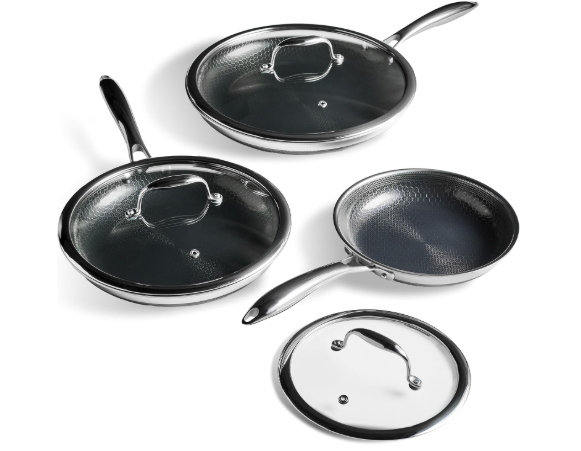
This set gives you the same hybrid surface as the single HexClad pan in 8-inch, 10-inch, and 12-inch sizes, each with its own tempered glass lid.
The 8-inch pan handles eggs and small sides, the 10-inch covers weeknight dinners, and the 12-inch takes larger batches. All three use tri-ply construction with an aluminum core and the stainless hexagon pattern over TerraBond ceramic.
Real-Use Fit
It suits cooks who reach for more than one skillet size during the week.
Feature Spotlight
- Three pan sizes with matching lids
- Pans oven safe to 900°F
- Lifetime warranty against manufacturer defects
Core Strengths
- Covers small, medium, and large jobs
- Same hybrid surface on every pan
- Metal-utensil safe per the maker
Suited To
- Induction and all home stovetops
- Family meals and batch cooking
- Replacing a mixed set of skillets
Limits To Keep In Mind
Glass lids are limited to 400°F in the oven. The 12-inch pan is heavier to toss than a basic nonstick pan.
5. imarku Hybrid Frying Pan Set With Honeycomb Surface
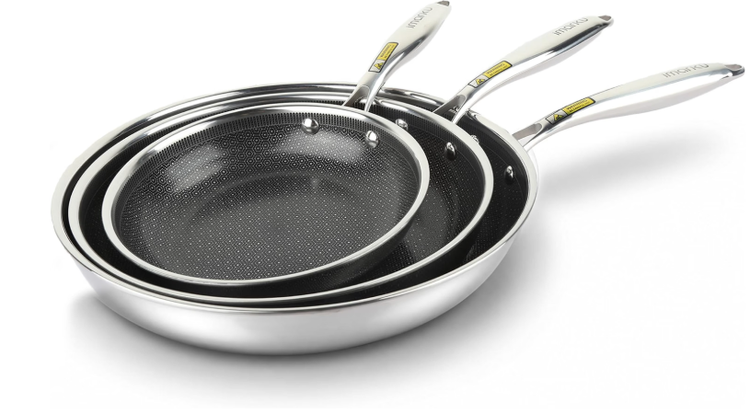
Built around a laser-etched honeycomb pattern, this set locks a ceramic nonstick coating into the stainless steel surface. imarku states it is free from PFAS, PTFE, and PFOA.
The body uses a 304 stainless steel interior, a 1.3mm aluminum core, and a magnetic 430 stainless exterior, with a 2.5mm total thickness meant to resist warping. You get 8-inch, 10-inch, and 12-inch pans.
Real-Use Fit
It suits cooks who want three hybrid sizes and are happy to preheat and use a little oil.
Feature Spotlight
- Honeycomb steel pattern over ceramic
- 2.5mm thick tri-ply body
- Magnetic base for induction
Core Strengths
- Three sizes for small to family meals
- Resists warping per the maker
- Oven safe to 500°F
Suited To
- Induction, gas, electric, and halogen cooktops
- Steaks, salmon, and vegetables
- Stovetop-to-oven finishing
Limits To Keep In Mind
The 500°F oven limit is lower than other picks, and ceramic needs preheating with oil for best release.
6. Blue Diamond Hybrid Cookware Set With Utensils
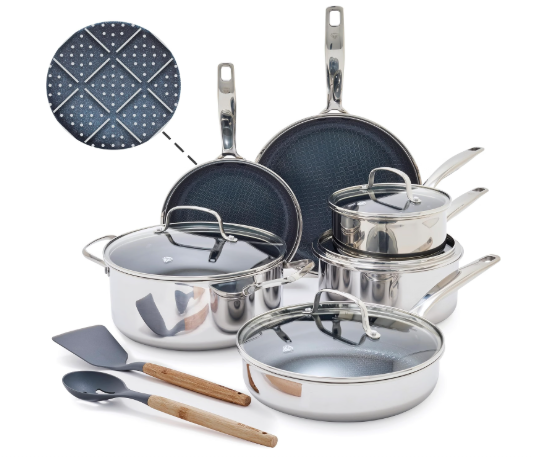
The largest set here includes 8-inch and 10-inch frypans, 1.57-quart and 3-quart saucepans, a 5.19-quart stockpot, and a 2.78-quart sauté pan, all lidded where needed, plus a solid turner and slotted spoon.
Its Diamond Bond design fuses tri-ply stainless steel with a laser-etched, diamond-textured surface and a ceramic nonstick made without intentionally added PFAS. Cast riveted handles and wrapped rims add everyday practicality.
Real-Use Fit
It fits larger households that want a complete hybrid set with serving tools in one box.
Feature Spotlight
- Diamond-textured etched surface
- Oven and broiler safe to 850°F
- Wrapped rims for cleaner pouring
Core Strengths
- Twelve pieces including two utensils
- PFAS-free ceramic nonstick
- Works on all stovetops, including induction
Suited To
- Big family kitchens
- First full cookware setup
- Boiling, sautéing, and frying
Limits To Keep In Mind
Glass lids are rated to 425°F. Blue Diamond recommends silicone tools and hand washing despite metal-safe claims.
What Makes a Pan Hybrid and How It Cooks
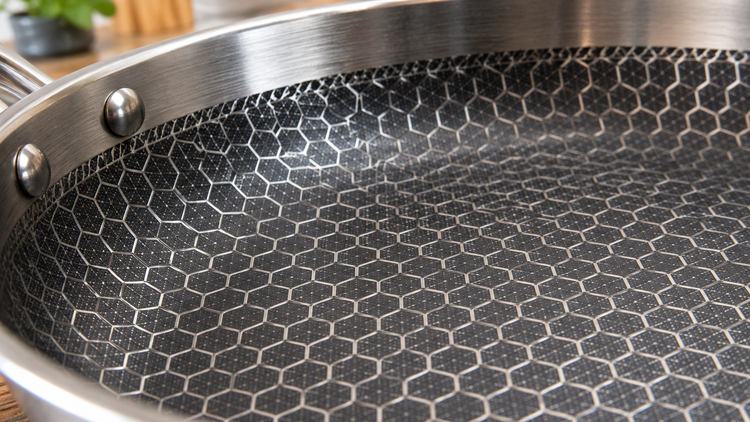
A hybrid pan lays a raised stainless steel pattern over a nonstick coating. The steel peaks touch the food and help with browning, while the coating sits lower in the valleys to help food release.
Patterns vary by brand, from hexagons to honeycombs, grids, and diamond textures. Most good hybrid pans also use a tri-ply body, with an aluminum core sandwiched between stainless layers, so heat spreads evenly and the pan works on induction.
The coating underneath matters too. Some hybrid pans use PTFE-type nonstick, while many newer models, including several picks here, use PFAS-free ceramic coatings.
The result is a pan that browns better than smooth nonstick and cleans more easily than bare stainless steel, though it does not fully match either at its specialty.
Hybrid Nonstick Versus Traditional Nonstick and Stainless Steel
Against traditional nonstick. Smooth nonstick still wins for the easiest release, especially with delicate eggs and crepes. Hybrid pans brown meat and vegetables better, and the steel pattern helps shield the coating from scrapes, so many makers rate them as metal-utensil safe.
Against stainless steel. Bare stainless gives the deepest sear and leaves browned bits for pan sauces, and it has no coating to wear out. Hybrid pans need less oil and less scrubbing, which suits quick weeknight cooking.
Heat tolerance. Hybrid pans often carry very high oven ratings, from 500°F to 900°F among these picks. That rating describes the pan body, though, and the coating still lasts longer when you cook on low to medium-high heat on the stovetop.
If you mostly bake in the oven or need dishwasher-friendly options, see our guide to oven and dishwasher safe pans.
Choosing the Right Hybrid Pan for Your Kitchen
Coating type. Decide whether you want a PFAS-free ceramic coating or are comfortable with traditional nonstick under the steel pattern. Check the product details, since marketing names vary.
Body construction. Tri-ply stainless with an aluminum core heats more evenly and works on induction. Thicker bodies resist warping but weigh more.
Single pan or set. A single 10-inch or 12-inch pan covers most daily jobs. A full set makes sense only if you also need matching saucepans and a stockpot.
Oven and lid limits. Pans may be rated to 850°F or 900°F while glass lids stop around 400°F to 425°F. Use the lower number when the lid goes in the oven.
Warranty terms. Read what the warranty covers. Manufacturer defects are often covered, while normal coating wear may not be.
If the premium price gives you pause, our look at whether pricier hybrid pans pay off breaks down the trade-offs.
Are Hybrid Pans Safe, Coatings and PFAS Explained
Many shoppers looking for the safest nonstick frying pans ask about PFAS, a large family of chemicals used in some traditional nonstick coatings. The FDA explains that for nonstick coatings on pots and pans, the PFAS molecules are polymerized and bonded to the cookware at very high temperatures, a process that drives off almost all of the smaller molecules that could migrate into food.
Concerns still remain because PFAS persist in the environment, as the EPA describes in its overview of how these chemicals behave. That is one reason many newer hybrid pans, including the OXO, GreenPan, imarku, and Blue Diamond picks, use ceramic coatings that their makers describe as PFAS-free.
Safe habits for any coated pan. Never heat an empty pan on high, keep the kitchen ventilated, and replace pans whose coating is flaking or badly worn.
Healthiest material overall. Bare stainless steel and cast iron have no coating at all. Hybrid pans are a middle ground for people who want easier cleanup with less oil.
Picking Between 8, 10, and 12-Inch Hybrid Skillets
8-inch pans suit one or two eggs, a grilled cheese, or toasting nuts and spices. They heat quickly and are easy to handle.
10-inch pans are the everyday size for most homes. They fit two chicken breasts, a couple of salmon fillets, or a vegetable sauté for two to four people.
12-inch pans are the best nonstick skillet size for family meals, larger stir-fries, and searing steaks without crowding. They need a larger burner and take more storage space.
If you can only buy one, a 10-inch pan is the safest choice for small households and a 12-inch pan suits families of four or more. Sets with all three sizes cover every job.
Cooking on Gas, Electric, and Induction Stovetops
Gas burners. Hybrid skillets work well on gas stoves. Keep the flame under the base rather than licking up the sides, which heats handles and discolors the exterior.
Electric coils and glass tops. Match the pan size to the burner for even heat, and lift rather than drag pans across glass tops to avoid scratches.
Induction. Induction needs a magnetic base. Tri-ply stainless hybrid pans with a magnetic exterior, like every pick here, work on induction. Induction heats very fast, so start one or two settings lower than you would on gas.
For more options built for this cooktop type, see our guide to cookware for induction cooktops.
Heat, Oil, and Everyday Dishes on Hybrid Surfaces
Hybrid pans release food best with a little fat and proper preheating. Going by the listed specifications, imarku advises preheating its ceramic hybrid pans on medium for one to two minutes and adding about a teaspoon of oil before cooking.
Eggs and pancakes. Use medium-low heat and a small amount of butter or oil. Let food set before moving it.
Salmon and steak. Preheat on medium to medium-high, pat the food dry, and leave it alone until it releases naturally.
Stir-fries and vegetables. The steel pattern helps vegetables brown instead of steam, especially in a 12-inch pan that avoids crowding.
Frittatas and skillet bakes. Start on the stovetop, then finish in the oven within the pan’s rating, using the lower lid limit if covered.
Cleaning, Storage, and Care for Longer Coating Life
Let it cool first. Plunging a hot pan into cold water can warp the body. Let it cool for a few minutes before washing.
Dishwasher or hand wash. Most picks here are listed as dishwasher safe, but some makers, such as Blue Diamond, still recommend hand washing to protect the coating. Warm, soapy water and a soft sponge are usually enough.
Stuck-on residue. Simmer a little water in the pan for a few minutes, then wipe. Avoid steel wool on the coated valleys.
Helpful accessories. Silicone or wooden tools, pan protectors for stacking, and a soft scraper help the surface last longer.
Storage. Hang pans or stack them with protectors between them so the steel pattern does not scratch other cookware.
Mistakes That Shorten the Life of a Hybrid Pan
- Cranking the heat to high every time, which wears coatings faster even when the pan body is rated for very high temperatures.
- Heating the pan empty for a long time, which can damage the coating.
- Using aerosol cooking sprays, which can leave a sticky film that is hard to remove.
- Skipping preheating and oil, then blaming the pan when food sticks.
- Stacking pans without protection, which scratches surfaces and rims.
- Putting glass lids in a hot oven above their rating.
Honest Limits and Who Should Skip a Hybrid Pan
Hybrid pans are a smart middle ground, but they are not for everyone. Weigh the trade-offs before you buy.
| Strengths | Trade-Offs |
|---|---|
| Better browning than smooth nonstick | Release is less slick than pure nonstick |
| Easier cleanup than bare stainless | Sear is not as deep as bare stainless |
| Tri-ply bodies heat evenly | Often heavier than basic nonstick |
| Many are metal-utensil safe per makers | Coatings still wear over time |
| Induction-ready designs | Usually cost more than standard pans |
Skip a hybrid pan if you mainly cook delicate eggs and want the slickest release, in which case a standard nonstick pan is simpler. If you want a lifetime pan with no coating at all, bare stainless steel or cast iron is a better fit.
Common Questions About Hybrid Nonstick Frying Pans
Can You Use Metal Utensils on a Hybrid Pan?
Many hybrid pan makers say their pans are metal-utensil safe because the raised steel pattern takes most of the contact. Still, the coating sits in the valleys, and sharp edges or knives can reach it over time. Some brands, such as Blue Diamond, still recommend silicone tools. Using wooden or silicone utensils for everyday cooking and saving metal tools for occasional use is the safest way to keep the coating in good shape.
Do Hybrid Pans Need to Be Seasoned Before Use?
Most hybrid pans do not need seasoning the way cast iron does, but some makers suggest a light seasoning before first use. That usually means warming the pan, wiping a thin layer of neutral oil over the surface, and letting it cool. It can help the coating release food better in the first weeks. Always follow your pan’s care guide, since instructions differ between ceramic and traditional nonstick hybrids.
Why Does Food Stick to My Hybrid Pan?
Food usually sticks because the pan was not preheated, there was too little oil, or the food was moved too soon. Hybrid pans are not as slick as smooth nonstick, so they need a few minutes on medium heat and a thin film of oil. Let proteins form a crust before turning them. Built-up residue from cooking sprays can also cause sticking, so clean the surface thoroughly between uses.
Can a Hybrid Pan Go in the Oven Covered?
Usually yes, but the lid often has a lower limit than the pan. For example, the HexClad pans in this guide are rated to 900°F, while their tempered glass lids are rated to 400°F, and Blue Diamond’s glass lids are rated to 425°F. When you cook covered in the oven, use the lid’s lower temperature limit. Check handles as well, and always use oven mitts because metal handles get very hot.
How Long Does a Hybrid Nonstick Pan Last?
Lifespan depends on the coating, how hot you cook, and how you clean the pan. A hybrid pan treated with moderate heat, gentle cleaning, and careful storage generally outlasts a basic nonstick pan, though the coating will still wear eventually. Warranties usually cover manufacturer defects rather than normal coating wear, so read the terms. Replace the pan once the coating flakes or food sticks no matter what you do.
Settling on a Hybrid Pan That Fits Your Cooking
A hybrid pan makes the most sense if you want better browning than standard nonstick with easier cleanup than bare stainless steel. For one everyday skillet, the HexClad Hybrid Frying Pan is a strong all-rounder. If you prefer PFAS-free ceramic, the GreenPan skillets or the full OXO set fit well, and the imarku set is a practical three-size option.
Keep the limits in mind. Hybrids are less slick than pure nonstick, glass lids carry lower oven limits, and coatings still wear. A simple rule helps: choose a 10-inch pan for small households, a 12-inch pan or three-size set for families, and a full set only when you need matching pots too.
