Why Use a Forced Air Unit Heater and Why Skip One

Disclosure: As an Amazon Associate, I earn from qualifying purchases. Learn more
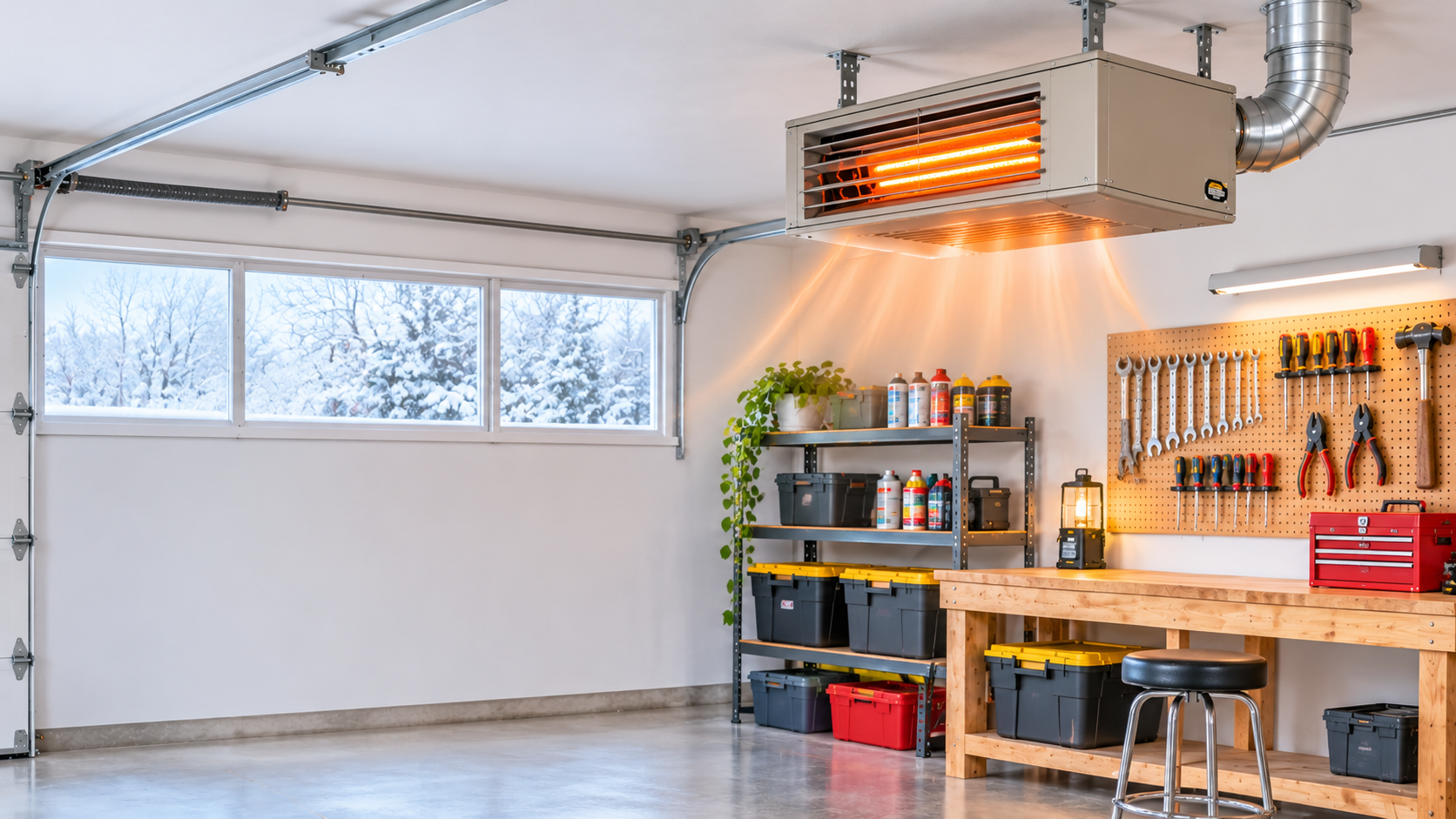
A forced air unit heater is a fan-driven heater, usually gas or electric, that pushes warmed air from a heat exchanger or element straight into one open space.
Cold air in a shop sits low and still, like water in a bucket, and this kind of heater is the hand that stirs it.
The hard part is choosing. Output ratings, fuel types, venting rules, and mounting heights all pull in different directions, and a wrong guess means a cold room or wasted fuel. Three factors matter most: correct sizing, safe venting, and ceiling and clearance room.
The Mr. Heater Big Maxx is a ceiling-mount gas unit heater with natural gas or propane options, suited to garages, barns, and workshops.
Our Choice
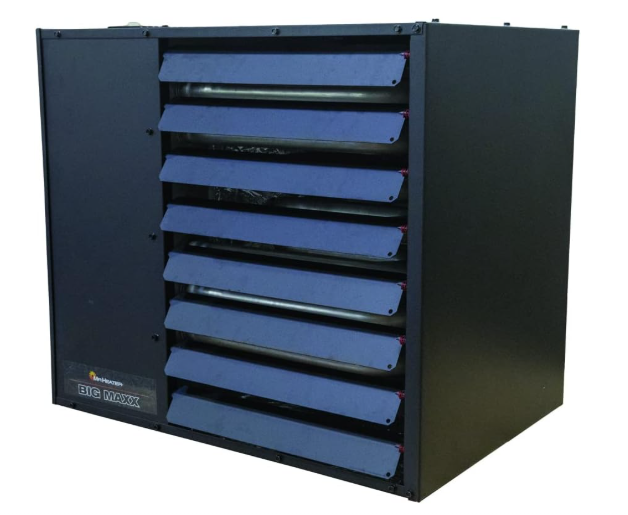
Mr. Heater Big Maxx
- Ceiling-mount design
- Natural gas or propane
- Thermostat compatible
- Electric spark ignition
This guide covers how these heaters work, where they fit, and when to skip them, and it reviews one product in depth below as a worked example, not a recommendation.
How Does a Forced Air Unit Heater Work?
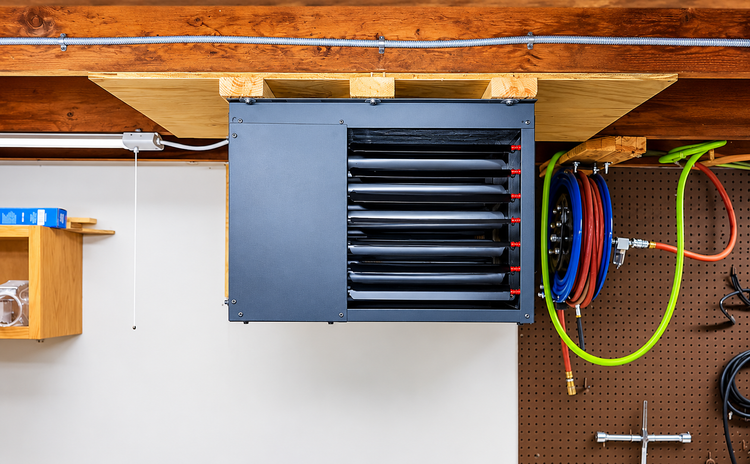
A unit heater is a self-contained box that hangs from a ceiling or wall. A gas burner or an electric element makes the heat, and a fan pulls room air across a heat exchanger or element before blowing it back into the space.
In most gas models, the combustion gases stay inside the heat exchanger and leave through a flue or vent. Your room air passes over the outside of that metal barrier, which is why venting matters more than the fan.
A thermostat cycles the burner and fan on and off. The fan throws warm air in a directional stream, so a space can warm up quickly, but the heater warms air rather than surfaces. In a tall room, that warm air tends to rise toward the ceiling.
Unlike a central furnace, a unit heater has no ductwork. It serves one open area and relies on the room layout to spread the warmth.
Why Use a Forced Air Unit Heater or Skip It
The answer depends on the building, so here are both sides.
Reasons to use one:
- Fast warm-up for a space you use in short sessions, such as a garage or shop.
- Overhead mounting keeps floor and bench space free.
- Thermostat control lets the heater cycle on its own.
- No ductwork is needed to cover a large open area.
- Moving air helps even out the temperature across the room.
Reasons to skip one:
- It needs a vent path and a fuel line (or a heavy electrical circuit), and some buildings cannot offer either.
- The fan can stir up dust and sawdust in woodworking spaces.
- In tall buildings with big doors that open often, heat escapes fast and radiant tube heaters may suit better.
- It warms air, not objects, so cold concrete and tools can stay cold longer.
- Gas models add a carbon monoxide risk if they are installed badly or poorly maintained.
Gas, Electric, and Hydronic Unit Heaters Compared
Gas-fired units, on natural gas or propane, are the most common choice for garages, barns, and shops that have fuel access. They need a gas supply and a vent path, and their output is rated in BTU per hour. Some designs draw combustion air from outside, which suits dusty spaces or shops that hold chemicals.
Electric units skip venting and combustion air completely. The trade-off is power: larger sizes usually need a dedicated higher-voltage circuit, and an electrician should size the wiring and check the panel.
Hydronic units take their heat from hot water or steam. They make sense mainly in buildings that already have a boiler.
Portable models, such as salamander-style job site heaters, serve temporary work. They need careful attention to ventilation and are a different tool from a fixed ceiling unit.
If fuel type is your sticking point on portable heat, this look at diesel versus propane heating covers the handling trade-offs.
Five Compatible Uses for Forced Air Heaters
These heaters fit open, fairly large spaces best. Each use below comes with its own catch.
Garages
A detached garage is the easiest case. An attached garage shares walls and doors with the house, so venting, carbon monoxide, and local code deserve extra attention.
Workshops
Heat helps when glue, finishes, and tool handling all depend on a warmer room. Sawdust and the fan do not mix well, so keep dust away from the intake and consider a model that draws combustion air from outside.
Barns and Livestock Buildings
Barns have large open volumes, but hay, bedding, and dust are combustible. Keep every material outside the clearance zone in the manual, and see these barn heating options for other approaches.
Sheds and Small Outbuildings
Most sheds are too small for a ceiling-hung unit, and an oversized heater cycles badly. A small shed heater usually fits the space better.
Warehouses and Utility Spaces
Industrial and commercial spaces are the original home of unit heaters. A wide floor may need several units rather than one large one, so plan the layout before you pick a size.
The Questions to Ask Before Choosing a Unit Heater
Question 1: Can this space carry a vent and a fuel or power supply? Gas models need an exhaust path and a fuel line, and electric models need a dedicated circuit. Going by the listed specifications, the reviewed unit is a ceiling-mount model that comes set for natural gas and includes a propane conversion kit, so the fuel decision comes before the mounting plan.
Question 2: Does the room hold heat? Insulation, ceiling height, door size, and how often the doors open shape the load more than floor area does. A small insulated garage and a tall drafty shop need different answers.
Question 3: Will you maintain it? A fuel-burning unit needs a clean heat exchanger, clear vents, and a yearly professional inspection. If you will not keep up with that, a heater without combustion is the safer path.
Decision rule: three yes answers mean a unit heater is a reasonable fit. Any single no means you should rethink the heater type before you compare models.
Mr. Heater Big Maxx as a Forced Air Unit Heater
The 125,000 BTU ceiling-mount design pulls room air across the heat exchanger with a built-in high-velocity fan, then pushes warm air back into the space. It ships set for natural gas and includes a propane conversion kit and ceiling brackets.
Safety hardware includes a high-temperature shut-off, a flame sensor shut-off, and electric spark ignition with a self-diagnostic control module. It needs a 120-volt AC supply and can be vented vertically or horizontally, subject to local codes.
What Users Mention: Users mention solid heating in shops and straightforward installation, while upkeep and shipping care come up as practical points.
Standout Features:
- Adjustable temperature with 24-volt thermostat compatibility
- Low-profile ceiling mount with included brackets
- Spark ignition with self-diagnostic module
Main Advantages:
- Heats large open garages, barns, and workshops
- Switch fuels with the included conversion kit
- Keeps floor and bench space clear
Suited To:
- Garages, barns, and workshops
- Standard 24-volt or Wi-Fi thermostats, sold separately
- Natural gas or propane supply
Before You Choose: It weighs over 100 pounds and needs venting, a gas line, and 120-volt power. Check local codes, and hire a pro if gas work is unfamiliar.
Sizing Mistakes That Leave a Forced Air Heater Struggling
The most common error is sizing by floor area alone. Ceiling height, insulation, and door openings change heat loss a lot, so use the manufacturer’s sizing chart and your real building details.
An oversized heater tends to short cycle, with uneven heat and wasted fuel. An undersized one runs nonstop and never quite catches up, leaving cold spots.
Placement counts too. Aim the airflow along the room instead of at a wall, and in a long or wide building, consider several smaller units over one large one.
Venting, Clearance, and Combustion Air Rules for Unit Heaters
Gas heaters produce carbon monoxide, and the CPSC winter heating safety tips note that poisoning can occur when heating systems are installed incorrectly, poorly maintained, or have blocked or defective vents.
Clearances come from the label and installation manual, not from a generic garage rule. Keep paint, fuel, sawdust, and other combustibles well outside those distances.
Gas units need fresh air to burn properly. In a tightly sealed building, ask your installer whether an outside air supply or a separated-combustion model is needed.
Keep the vent terminal clear of snow, and check that it does not sit close to doors, windows, or soffit openings. Many areas require a permit and inspection for gas appliances, so check with your local building department.
Install carbon monoxide alarms on every level of the building where people spend time and outside sleeping areas, with battery backup.
If your heater runs on propane, university extension propane guidance separates indoor-rated models, which have an oxygen depletion sensor, from outdoor-only ones that should never be used inside.
Forced Air Heater Questions Answered
Can You Install a Forced Air Unit Heater Yourself?
Mounting a unit heater is often within reach for a handy owner, but gas and venting work is a different matter. Many jurisdictions require permits and inspections for gas appliances, and an inspector may ask for the product sheet, the vent route, and gas line sizing. A licensed gas fitter or HVAC contractor usually handles the gas connection and vent. Call your local building department first, because rules differ by city and county.
Does a Forced Air Heater Need a Thermostat?
Most fixed unit heaters are built to work with a wall thermostat, and many accept a standard low-voltage type. Without one, you control the heater by hand, which wastes fuel and swings the temperature. Mount the thermostat at working height on an interior wall, away from the heater’s airstream, doors, and sunny windows, so it reads the room instead of a draft. Check the manual for the thermostat type your model supports.
Is a Forced Air Heater for Garage Use Better Than Radiant?
It depends on the building. A forced air heater warms the air quickly, which suits a small, insulated garage used in short sessions. Radiant tube heaters warm people and objects directly, so they tend to suit high ceilings and buildings where large doors open often, since less of their heat depends on the air staying put. Radiant models also need their own clearances and vent routing, so check both.
Can a Forced Air Electric Heater Replace a Gas Unit?
Sometimes, if the wiring allows it. Electric units need no vent, no flue, and no combustion air, which simplifies placement. The catch is electrical capacity: larger models usually need a dedicated higher-voltage circuit sized by an electrician, and the panel must have room for it. Never feed an electric heater through an extension cord or power strip, a rule safety officials stress for electric space heaters. Compare running costs using local utility rates before deciding.
How Much Fuel Does a Forced Air Unit Heater Use?
The label rating shows fuel input per hour at full burn, so a bigger unit can burn more fuel per hour while it runs. Real use depends on runtime: insulation, ceiling height, outdoor temperature, thermostat setting, and how often doors open all change how long the burner stays on. A properly sized heater in a tight, insulated space cycles off more often than an undersized one in a drafty building. Track your tank or meter over a few cold weeks.
Is a Forced Air Gas Heater Safe in an Attached Garage?
It can be, when the model is rated for the space and installed to code, but an attached garage raises the stakes because air and combustion gases can move into the house through shared walls and doors. The U.S. Consumer Product Safety Commission says carbon monoxide alarms belong on every level of a home and outside sleeping areas, with battery backup. Keep the vent terminal clear of snow and ask your building department about attached-garage rules.
How Often Should a Unit Heater Be Serviced?
Have a professional inspect fuel-burning heating equipment, including vents and flues, every year before heating season, which is the Consumer Product Safety Commission’s advice. Between visits, keep the housing, fan, and louvers free of dust, lint, and sawdust, and keep stored materials outside the clearance zone. If you see soot or the burner struggles to light, turn the heater off and call a qualified technician. If you smell gas, leave the building and call your gas supplier or emergency number.
Settling on the Right Forced Air Unit Heater
The decision comes down to four things: whether your space can carry a vent and fuel or power supply, how well the room holds heat, whether the size matches the load, and whether you will keep up with maintenance. The reviewed product suits a garage, barn, or shop owner with gas or propane access and a ceiling that allows the mounting clearances. It is a poor match for small sheds, dusty spaces with no outside air plan, or anyone unwilling to handle venting and inspections. A simple rule works: if the space fails any one of the three questions above, change the heater type before you compare models.
