
5 Best Vornado Heaters for Every Room Size (Updated)

Disclosure: As an Amazon Associate, I earn from qualifying purchases. Learn more
For most rooms, the right Vornado heater is the one sized to your space with the control style you will actually use, whether that is a simple dial or automatic climate control. Warm air should drift, not shout.
Many people buy a space heater expecting fast, even warmth and end up with hot spots near the unit and cold corners across the room. That usually comes down to a heater mismatched to room size, airflow that gets blocked, or thermostat features that go unused.
Vornado models work differently from basic fan heaters. They circulate air through the whole room, so placement and sizing matter more than raw wattage. Below you will find five current models, what each one suits, and the setup and safety habits that help any of them heat evenly and safely.
The Vornado VC-02 Ceramic Heater switches between personal and whole room modes with 70 degree oscillation, while the Vornado AVH10 Space Heater adjusts heat and airflow on its own.
For Flexible Room Heating
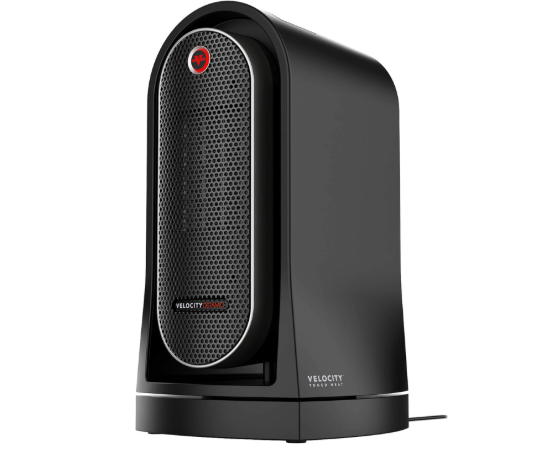
Vornado VC-02 Ceramic Heater
- 70° oscillation
- Personal or Whole Room modes
- Reusable dust pre-filters
For Set-It Comfort

Vornado AVH10 Space Heater
- Auto Climate Control
- Two heat settings plus fan
- Cool-touch exterior
How Vornado Heaters Warm the Whole Room Evenly
Most Vornado heaters circulate air instead of pushing heat in one narrow stream. The heater pulls in cooler room air, warms it inside, and sends it back out in a focused column that keeps the air moving around the room.
Over time, this raises the temperature of the whole space rather than just the spot in front of the grille. The result is fewer hot and cold zones, which matters most in closed bedrooms and offices.
Because the system relies on air movement, it rewards good placement and the right room size. Oscillating and higher-velocity models push warm air farther, which is why some feel stronger than others in the same room.
To choose the models below, we compared each listing’s heating style, heat settings, thermostat type, oscillation, timer and remote options, and safety protections, then matched every heater to the room and routine it suits.
Reviewed Picks for the Best Vornado Heater
1. Vornado VC-02 Ceramic Heater for Personal or Whole Room Use
The VC-02 pairs ceramic heat with Vornado’s Velocity Tuned Heat, which the maker says moves warm air faster and farther than standard ceramic heaters. You choose Personal or Whole Room mode, so it can warm your legs under a desk or circulate heat across a bedroom.
A 70-degree oscillation spreads the airflow, and reusable pre-filters help catch dust before it reaches the element. Night Mode dims the display lights that are not needed, which helps in a dark bedroom.
Practical Impressions: The remote, touch controls, and timer make it easy to adjust from bed or a desk chair, and the two heating modes cover both quick personal warmth and steadier room heat.
What Sets It Apart:
- Personal and Whole Room heating modes
- Reusable pre-filters to reduce dust
- Night Mode dims non-essential lights
Practical Gains:
- Flexible for desk or room heating
- Quieter nights with dimmed display
- Layered safety with overheat shutoff
Suited To:
- Bedrooms and dorm rooms where allowed
- Home offices
- Living spaces
Fair Warning: Rinse or clean the pre-filter as the manual directs, since a dusty filter can cut airflow and slow heating.
2. Vornado AVH10 Space Heater With Auto Climate Control
If you prefer to set a temperature and forget the controls, the AVH10 suits that habit. Its Auto Climate Control senses how much heat and circulation the room needs and adjusts power and airflow on its own.
Vortex Heat Circulation spreads gentle warmth through small to medium rooms, and two heat settings plus a fan-only mode let you use it beyond winter. A cool-touch exterior, tip-over protection, and an automatic safety shut-off system cover daily safety.
Practical Impressions: It fits people who dislike fiddling with settings, since the heater manages output once the target temperature is chosen.
What Sets It Apart:
- Automatic heat and airflow adjustment
- Fan-only mode for warmer months
Practical Gains:
- Steady temperature with little adjustment
- Gentle, even room warmth
- Compact tabletop footprint
Suited To:
- Bedrooms
- Home offices
- Small living rooms
Fair Warning: It has no oscillation, so place it where its airflow can travel across the room without furniture in the way.
3. Vornado MVH Space Heater for Simple Dial Control
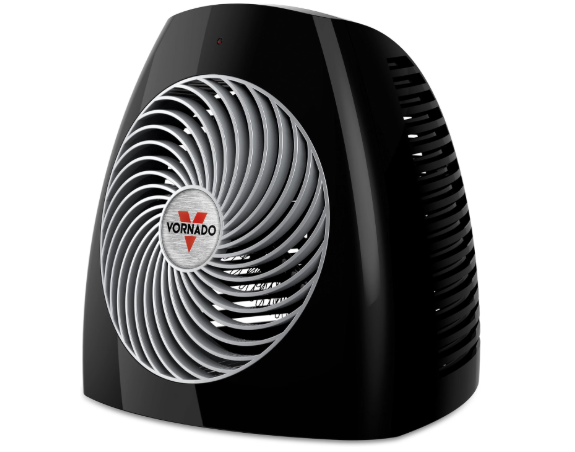
The MVH keeps things manual. You pick Low, Medium, or High heat, then set the adjustable thermostat, which offers seven settings and switches the heater on and off to hold your comfort level.
Vortex Heat Circulation warms the air in small to medium rooms in a way Vornado compares to a small forced-air furnace. Safety covers a cool-touch exterior, tip-over protection, and an automatic shut-off system.
Practical Impressions: Dial controls make it quick to use without learning menus or keeping track of a remote, and the low setting helps when the room is already close to comfortable.
What Sets It Apart:
- Three heat levels for energy control
- Seven-setting adjustable thermostat
Practical Gains:
- No screens or menus to learn
- Lower settings ease circuit load
- Cool exterior for safer handling
Suited To:
- Bedrooms
- Home offices
- Small living areas
Fair Warning: The thermostat uses numbered settings rather than exact degrees, so expect a little trial and error to find your level.
4. Vornado Velocity CUBE 5 OSC for Wider Heat Spread

Built for spreading heat, the Velocity CUBE 5 OSC combines 70-degree oscillation with Velocity Tuned Heat that pushes warm air farther than a typical space heater. Three heat settings and a fan-only mode give you room to adjust through the seasons.
Lockable controls help in homes with curious kids, and Night Mode turns off non-essential lights on the LED display. Tip-over protection, automatic shut-off, and a cool-touch case round out the safety side.
Practical Impressions: The remote and oscillation make it handy for a bedroom or family room where people sit in different spots.
What Sets It Apart:
- 70-degree oscillation with Velocity Tuned Heat
- Lockable controls
- Night Mode for the LED display
Practical Gains:
- Reaches more of the room
- Sleep-friendly display dimming
- Fan mode for year-round use
Suited To:
- Bedrooms
- Family rooms
- Home offices
Fair Warning: Oscillation spreads the same heat over more space, so a large or drafty room may still feel cool far from the heater.
5. Vornado TAVH10 Space Heater With Remote and Timer
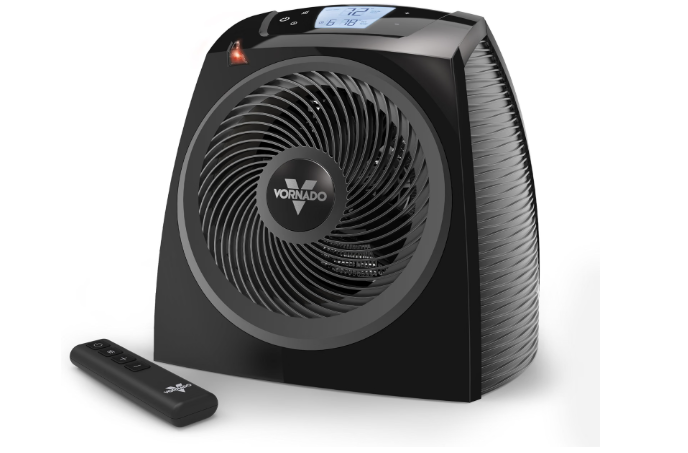
The TAVH10 takes the Auto Climate idea and adds more control. An LCD screen with touch-sensitive controls lets you choose between two heat settings, a fan-only option, and a 12-hour timer, and a remote handles changes from across the room.
Vortex Heat Circulation warms small to medium rooms, while the heater senses how much heat and circulation it needs to hold your set temperature. It is ETL certified, with a cool-touch exterior, tip-over protection, and a two-stage automatic safety shut-off.
Practical Impressions: The timer helps you warm a room for a set stretch, such as before bed or during work hours, then lets the heater switch off.
What Sets It Apart:
- LCD screen with touch-sensitive controls
- 12-hour timer and remote
- Two-stage automatic safety shut-off
Practical Gains:
- Hands-off temperature holding
- Timer limits run time
- Clear display for settings
Suited To:
- Bedrooms
- Home offices
- Small living rooms
Fair Warning: Touch controls and a display add convenience, but keep the remote in a set place so settings stay easy to reach.
Why Some Models Handle Large Rooms Better
Cause: limited airflow reach. Compact, non-oscillating models are built for small to medium rooms.
Effect: In a big space, warm air fades before it reaches far corners, so the room heats unevenly.
Cause: no oscillation. Fixed-airflow heaters depend on circulation alone.
Effect: Wide or open layouts take longer to feel comfortable.
Cause: blocked intake or outlet. Furniture or walls too close cut circulation.
Effect: Longer run times and weaker heating.
For bigger spaces, an oscillating, higher-velocity model helps, but every plug-in heater tops out around 1500 watts. Our guide to heaters for large rooms covers options when one unit is not enough.
Matching Each Heater Style to Your Room Type
Small bedrooms and offices. A compact vortex heater with a simple thermostat warms the space without much noise or fuss.
Medium bedrooms. Auto climate models hold a steady temperature, which helps in the evening when you would rather not keep adjusting settings.
Shared family rooms. Oscillation and a remote help when people sit in different spots, and lockable controls add peace of mind around children.
Desks and reading corners. A model with a personal heating mode directs warmth at you rather than the whole room, so you can run it for shorter stretches.
Match the heater to the room first, then pick the control style you will actually use every day.
Vortex Ceramic and Oscillating Designs Compared
Each design warms a room in its own way, even though they all draw similar power. For background on the two main heating methods, see our comparison of ceramic and convection heaters.
| Design | Where It Fits |
|---|---|
| Vortex, dial thermostat | Simple small-room heat |
| Vortex, auto climate | Steady bedroom temperature |
| Oscillating velocity heat | Wider rooms, shared spaces |
| Ceramic with personal mode | Desk or room flexibility |
Choose by coverage and control style rather than wattage, since most plug-in models share the same 1500-watt ceiling.
Thermostat Types and Which One Fits You
A thermostat decides how often your heater runs, so it shapes both comfort and running cost.
Dial thermostats use numbered steps rather than degrees. They are simple and reliable, but finding your setting takes a night or two.
Auto climate controls let you set a temperature, then the heater adjusts its own heat and fan speed to hold it. Going by the listed specifications, the AVH10 and TAVH10 manage both heat and airflow this way, while the MVH relies on a seven-setting dial.
A timer adds a useful limit. It lets you warm a room for a set stretch, then shuts the heater off so it does not run longer than needed.
Setting Up Your Heater for Even Warmth
- Place it on a hard, level floor where air can flow freely in and out.
- Keep at least three feet clear of curtains, bedding, furniture, and paper.
- Plug it straight into a wall outlet, never an extension cord or power strip.
- Set the thermostat once and give the room time to settle.
- Use oscillation or whole room mode when you want wider coverage.
- Close doors and windows so warm air stays where you need it.
The Massachusetts space heater safety guidance gives the same advice on wall outlets and clearance, and these steps let the heater circulate air the way it was designed to.
Safety Features and Habits That Matter Daily
Built-in protection is a strong starting point. Look for tip-over protection, automatic overheat shut-off, a cool-touch case, and a safety certification such as ETL.
Habits matter just as much. The Consumer Product Safety Commission urges extra care with space heaters every winter, including keeping them away from anything that can burn.
Vornado’s own guidance says its heaters are meant for attended, short-term use, so turn the heater off when you leave the room or go to sleep. It also warns against extension cords, surge protectors, timers, and smart plugs.
For a broader look at the risks of this heater type, our ceramic heater safety guide covers placement, cords, and warning signs.
Setup Mistakes That Slow Down Room Heating
Many people expect instant heat, but circulating heaters warm a room gradually. Judging one after five minutes often leads to cranking the setting higher than needed.
Pushing the heater against a wall or tucking it behind furniture blocks the intake and outlet. That cuts circulation and can trigger the safety shut-off.
Changing the thermostat again and again also works against you, since the heater never settles into a steady cycle. Pick a setting, close the door, and give it time.
Running it in a room far larger than it suits is the last common mistake. If you want to understand running costs, our look at how efficient these heaters are explains what drives your bill.
Common Questions About Vornado Space Heaters
Can a Vornado Heater Run While You Sleep?
No. Vornado’s own guidance says its heaters are intended for attended, short-term use, and that you should turn the heater off when you leave the room or go to sleep. Built-in tip-over and overheat protection lower the risk, but they do not make unattended use safe. To wake up or fall asleep in a warm room, run the heater for a while before bed with the door closed, then switch it off and rely on bedding or your main heating.
Do Vornado Heaters Work with Extension Cords or Smart Plugs?
Vornado says its heaters must never be used with extension cords, surge protectors, multi-outlet adapters, timers, or smart plugs. These devices may not handle a heater’s steady power draw and can overheat. Plug the heater straight into a wall outlet in good condition, with a plug that fits snugly. If the plug or outlet feels warm or looks discolored, stop using that outlet and have an electrician check it before running any heater there again.
Are Vornado Heaters Energy Efficient?
Every plug-in electric resistance heater turns nearly all of its power into heat, so no model is more efficient at the element itself. Savings come from how you use it. Heating only the room you are in while lowering your central thermostat can cut overall use, and a thermostat or auto climate control reduces how long the heater runs at full power. Lower heat settings and timers help further when the room only needs a little extra warmth.
Why Does a Vornado Heater Keep Cycling On and Off?
Cycling is usually normal. The thermostat switches the heat off once the room reaches your setting, then back on as the air cools, and auto climate models may also change fan speed as they go. If the heater shuts off and will not restart, check for a tilted surface that triggers tip-over protection, or blocked airflow that trips the overheat shut-off. Move it to open floor space, let it cool, and restart it.
How Large a Room Can One Vornado Heater Warm?
Most models in this lineup are listed for small to medium rooms. A common rule of thumb for plug-in electric heat is about 10 watts per square foot, which puts a 1500-watt heater at roughly 150 square feet in a room with standard ceilings and decent insulation. High ceilings, big windows, and drafts lower that figure. Oscillation spreads heat farther, but it does not add heating power, so very large rooms may need another heat source.
Choosing Wisely for Steady Winter Comfort
A circulating space heater works best when it matches the room and the way you like to control heat. Small rooms do well with a simple dial model, while bedrooms and shared rooms benefit from automatic climate control, oscillation, or a timer.
Keep its limits in mind. A plug-in heater warms one room, not a whole home, and it needs open space, a direct wall outlet, and someone nearby while it runs. A quick rule helps: size the heater to the room, choose the control style you will use, and switch it off when you leave or sleep.
