
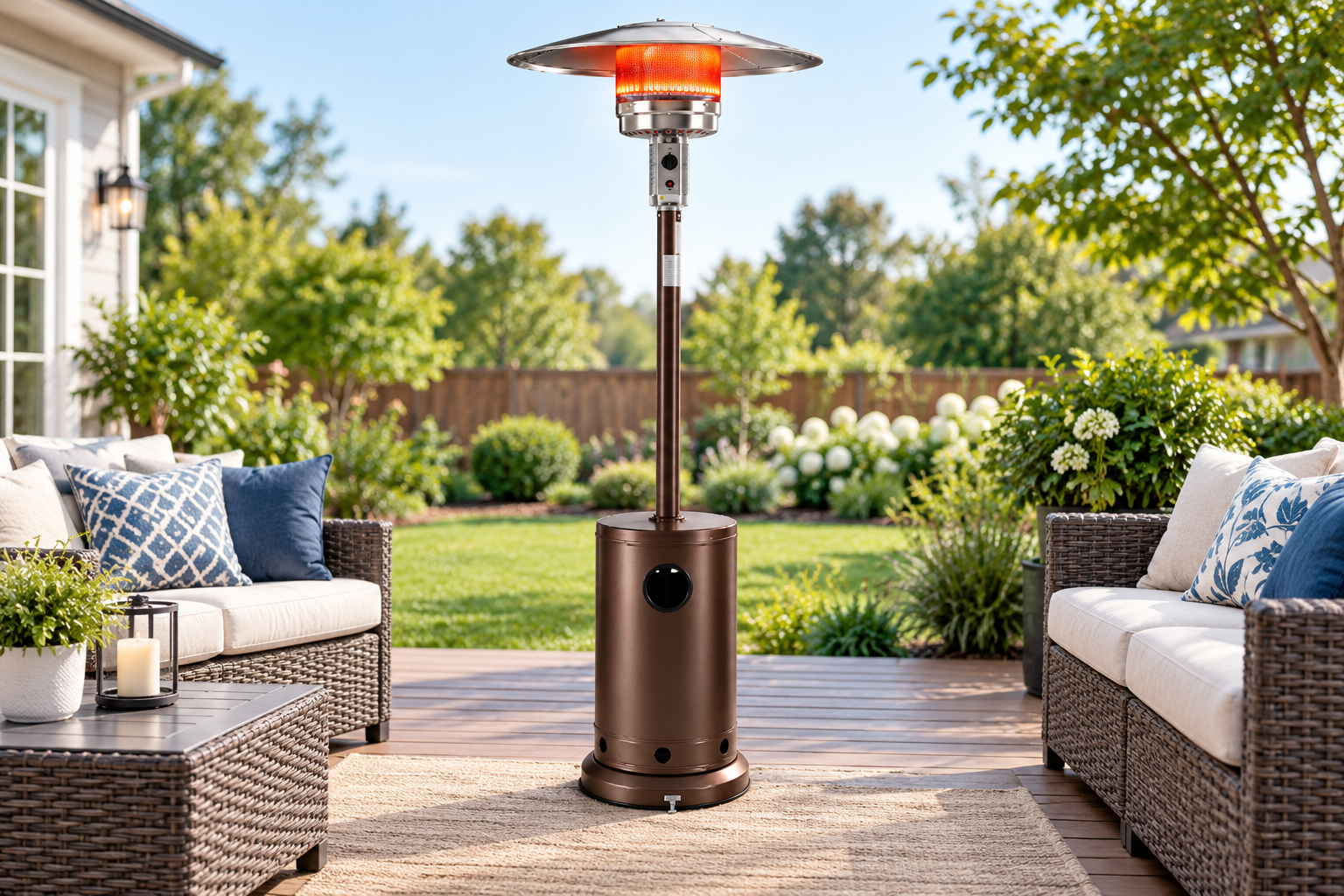
Best Deck Heaters Reviewed for 2026

Disclosure: As an Amazon Associate, I earn from qualifying purchases. Learn more
Picking the best deck heater sounds simple until you start comparing. One model runs on a propane tank, another plugs into a wall outlet, and a third hangs from a ceiling bracket.
You may wonder whether a tall tower can warm a small covered deck, or whether an electric infrared unit can handle a windy evening in late fall. Then there is the question of safety around a wooden deck, how far the heat actually reaches, and whether the setup fits the space you really have. Those details matter more than a list of specs, because an outdoor heater that suits a restaurant patio may not suit a narrow porch.
This guide walks you through five models, shows where each one makes sense, and explains the limits you should know before you decide.
1. Amazon Basics 46,000 BTU Propane Heater for Open Decks
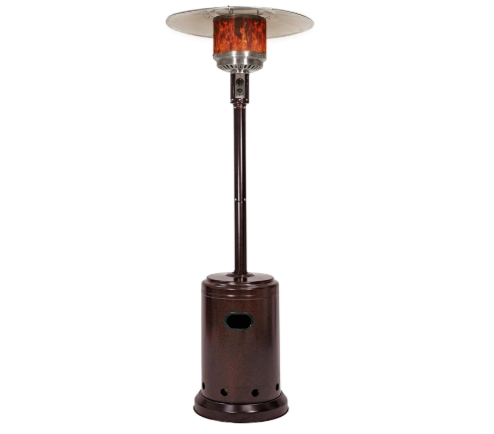
This floor-standing propane model is rated at 46,000 BTUs and listed to warm an area about 18 feet in diameter, which suits a medium to large open deck. A one-touch ignition button starts it without matches, and an adjustable temperature knob controls output.
A water box adds base weight, the wheel kit helps with positioning, and a tilt safety auto shut-off valve plus a tank securing chain add protection. The powder-coated finish is built for lasting strength, and a 20 pound liquid propane tank is needed but not included.
Standout Feature: The water box and wheel kit combine a weighted, stable base with easy movement, a useful pairing for a tall propane tower.
Core Advantages:
- One-touch ignition for quick start ups
- Adjustable knob controls heat output
- Tilt safety auto shut-off valve included
- Wheels and weighted base support easy placement
Pairs Well With:
- Standard 20 pound liquid propane tank
- Open decks, patios, and cafe seating
- Medium to large seating groups
Usage Note: Propane tank is not included. Use outdoors only with good ventilation, and check the manual for clearance from railings and wooden surfaces. Fill the water box as the instructions describe to add weight to the base.
2. Sweetcrispy 48,000 BTU Patio Heater With Round Side Table
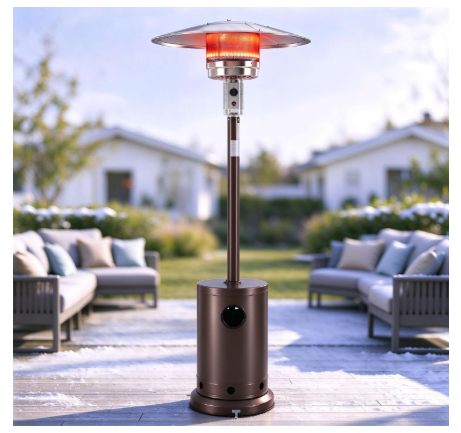
This propane tower is rated at 48,000 BTUs and described as covering an 18-foot diameter area, with room for roughly four to eight people. A built-in round side table holds drinks or a phone, with a central cutout for valve adjustments.
Flame-out protection cuts the gas if the flame blows out, and a tilt sensor shuts the unit off past 45 degrees. A double-layer 304 stainless steel burner resists rust and warping, while wheels and included ground anchors help with moving and securing it.
Standout Feature: A built-in round side table with a central valve cutout turns the heater into a small serving spot as well as a heat source.
Core Advantages:
- Fast heating radiant output for open seating
- Flame-out and tilt shutoff protection
- Double-layer stainless steel burner resists rust
- Wheels and anchors for placement and stability
Pairs Well With:
- Propane fuel setups
- Open decks, porches, gardens, and backyards
- Small groups of four to eight
Usage Note: Propane fuel is required, and the tank setup should follow the manual. Use outdoors only with proper ventilation, and confirm clearances from railings and wooden surfaces before lighting. Check the manual before using the included anchors on a deck surface.
3. DR. INFRARED Portable Electric Heater for Deck and Patio
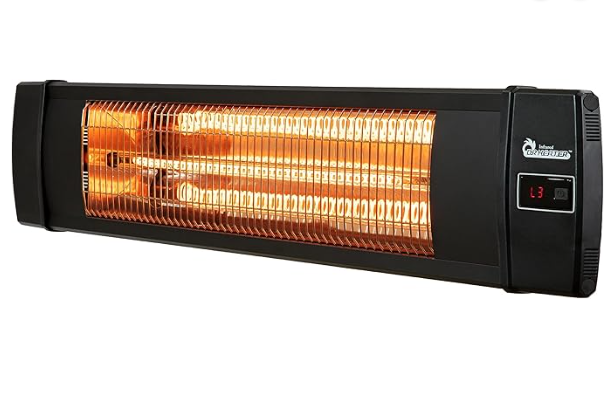
This plug and go electric infrared heater is rated IP55 for indoor and outdoor use, so it can move from deck to garage as needs change. It runs on standard 120V power with three power settings of 900W, 1200W, and 1500W, plus a remote control.
Heat is clean, instant, and odorless, aided by a mirror aluminum reflector with 90 percent reflectivity. Wall and ceiling brackets are included, the weatherproof aluminum body suits covered porches and open-air spaces, and this model has no thermostat.
Standout Feature: The IP55 rating for indoor and outdoor use, paired with wall and ceiling mounting brackets, gives this heater unusual placement flexibility.
Core Advantages:
- Clean, instant, odorless infrared heat
- Three power settings with remote control
- Wall and ceiling brackets included
- Weatherproof aluminum body for outdoor spaces
Pairs Well With:
- Standard 120V outlets
- Decks, patios, garages, and open-air restaurants
- Wall and ceiling mounting setups
Usage Note: This model has no thermostat, so adjust the power setting manually. Plug it directly into a suitable outlet, keep the cord clear of walkways, and follow the manual for mounting height and clearance from combustible surfaces.
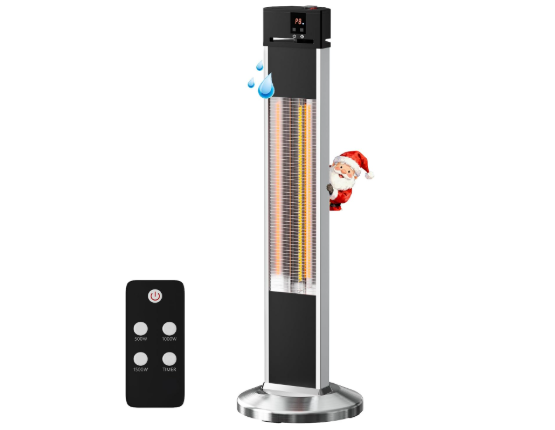
4. Danluke Electric Infrared Patio Heater With Remote
This freestanding electric infrared heater uses carbon fiber tubes and 1500W of power for focused, sunshine-like warmth, with heat modes at 500W, 1000W, and 1500W.
A 24-hour timer and remote control add convenience, with a free extra remote included and batteries not provided. The fanless design runs quietly without odors, chemicals, or smoke, and water resistance supports terraces, balconies, and kiosks.
ETL certification and anti-overturning and overheating protection shut the heater down if it is knocked over or runs too hot.
Standout Feature: Carbon fiber tube infrared technology delivers focused, instant heat, backed by a 24-hour timer.
Core Advantages:
- Focused infrared warmth from carbon fiber tubes
- Three heat modes for flexible control
- 24-hour timer with remote control
- Overturn and overheating protection built in
Pairs Well With:
- Standard electric outlet setups
- Terraces, balconies, kiosks, and screened porches
- Outdoor cafes, garages, and workshops
Usage Note: Batteries for the remote are not included. Keep the cord clear of foot traffic, plug directly into a suitable outlet, and follow the manual for clearances. Water resistance does not mean the unit belongs in standing water.
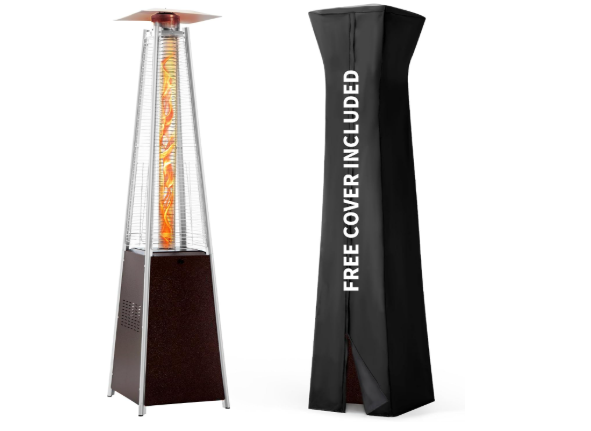
5. Pamapic 89 Inch Pyramid Propane Patio Heater With Cover
This pyramid style propane tower stands 89 inches tall with a quartz glass tube flame column. It is listed to cover up to a 15 foot diameter, concentrating heat at the top and dispersing it outward, and runs on a 20 pound propane tank that is not included.
Pulse ignition needs no matches or electricity, a side access door speeds tank changes, and tip-over auto shut-off, flame-failure protection, and an overheat guard add safety. Wheels ease moves between patio and poolside, a fade-resistant cover is included, and assembly takes about an hour.
Standout Feature: The quartz glass tube flame column creates a visible fire display while the pyramid shape concentrates heat near the top and spreads it outward.
Core Advantages:
- Visible quartz glass flame column
- Pulse ignition without matches or electricity
- Tip-over, flame-failure, and overheat protection
- Fade-resistant cover included for protection
Pairs Well With:
- Standard 20 pound propane tanks
- Decks, porches, patios, and gazebos
- Poolside and dining set seating
Usage Note: Propane tank is not included. Use outdoors only with proper ventilation, keep the heater away from wooden railings and low overhangs, and follow the manual for clearances. The tower is tall, so check overhead space first.
Best Deck Heater Types for Different Outdoor Layouts
The right heater starts with the shape of your space, not the model name.
Open decks with no roof lose warmth fast, so a tall propane tower that radiates heat in a wide circle suits a group of four to eight.
Covered or screened decks often suit electric infrared units, since they have no flame, no exhaust, and a smaller footprint. For one chair or a hot tub corner, a wall mounted infrared panel can be cleaner still.
Picture a narrow rear deck, where a floor tower may block the walkway while a bracket-mounted heater keeps it open. Now picture a wide deck with a dining table, where a tower with a round side table can sit in one corner and warm everyone nearby.
Measure the usable floor space, count how many people sit at once, and note where doors and railings are. That short exercise shows you the best layout before you spend anything.
Propane or Electric Infrared for Your Deck Heater
Propane towers and electric infrared units solve the same problem in very different ways.
A propane model, such as the 46,000 BTU and 48,000 BTU towers above, burns gas and radiates heat in a wide circle, so it covers a group without any outlet nearby. The trade is a tank to refill, a flame to supervise, and strict ventilation rules.
An electric infrared model needs only an outlet. A 1500 watt unit produces roughly 5,100 BTUs per hour, far less raw output than a tower, but infrared warms people and objects directly instead of heating open air.
That suits a reading chair, a balcony table, or a spot beside the hot tub, where you sit within a few feet. Many households keep one of each.
If your deck is big, windy, and far from power, propane is usually the best match. If it is small, sheltered, and near a receptacle, electric is cleaner and quieter.
How Much Heat Your Deck Heater Really Needs
Heat output is easy to misread. BTUs describe how much energy a heater produces, while the coverage figure shows how far that warmth is meant to reach.
The 46,000 and 48,000 BTU towers above are listed for an 18 foot diameter, roughly 250 square feet of floor space. The pyramid tower is listed for 15 feet, closer to 175 square feet. The best number to compare is the coverage diameter, not BTUs alone.
A 12-by-12-foot deck is 144 square feet, so any of them reaches the whole space. A very large deck may need more than one.
Wind and cold change the picture. A heater that feels generous on a calm 50-degree evening may feel weak on a breezy 30-degree night, because moving air strips warmth away.
If you sit out in cold weather often, aim for more output than the minimum, or choose a model with adjustable settings so you can turn it down when the night is mild.
Heater Choices for a Covered Deck Setup
A roof over the deck changes the safety math. Propane heaters burn oxygen and release carbon monoxide, a colorless, odorless gas, so manufacturers state they are for outdoor use only.
A deck with a roof and open sides can still work. A deck with sealed sides, curtains, or tight screens starts to behave like a room, so treat it as enclosed and skip propane entirely.
Height matters too. A tall tower such as the 89-inch pyramid model needs space overhead, and every manual lists a minimum clearance to ceilings and beams. Measure the lowest point above the heater before you decide.
For low or partly enclosed covers, electric infrared is usually the calmer choice, since it produces no exhaust. A wall or ceiling-mounted unit such as the IP55 model above keeps the floor clear.
The best covered deck setup pairs a low-profile electric heater with good airflow and a clear path to the exit.
Wooden Deck Heater Safety and Clearance Basics
A wooden deck tolerates sunshine and rain, but not concentrated heat. Radiant heaters get very hot, and cushions, blankets, hanging baskets, and dry railings are all fuel.
A simple rule from fire safety guidance is to keep anything that can burn at least 3 feet away from the heater on every side. Measure it rather than eyeballing it.
Place the unit on a level, firm section of decking so it cannot tip, and use the weighted base, water box, or anchors exactly as the manual describes. Check the manual for any floor protection it asks for, since manuals list minimum clearances from combustible surfaces.
Never leave a heater running while nobody is outside, and switch it off at bedtime. Pets and children move fast around hot surfaces, so give them a clear boundary.
The best protection for wood is simply distance, and a few minutes of setup care protects the boards, the furniture, and the people using them.
Placing Your Heater for Even Warmth on a Deck
Placement often matters more than a few extra BTUs. A tall radiant tower throws heat in a circle, so it works best near the middle of the seating group, away from railings and walls.
Pushing it into a corner wastes half the circle on the yard.
Infrared units are directional, so aim them at the seats, not at the floor in front of them, and keep the face of the heater clear of furniture.
Wind is the quiet thief. Set the heater on the upwind side of the seating so the breeze carries warmth toward you, or add a screen, planter, or wall behind the seats to cut the draft.
Walk the deck on a cool evening and notice where the air feels still. That spot is usually the best place for the heater. Leave a clear walkway as well, so nobody squeezes past a hot surface to reach the door.
Wall and Ceiling Mounted Heater Options for Your Deck
Mounted heaters free up floor space, which matters on a compact deck. The IP55 infrared model above includes both wall and ceiling brackets, so you can fasten it above a seating area and aim it at where people sit. Overhead placement also keeps it away from feet, pets, and rolling toys.
Fasten brackets into solid framing such as a rafter or stud, not siding or thin trim. Follow the manual for height and angle, since the best mounting height is the one it lists.
Heat rises, so a unit hung too close to a ceiling or beam can overheat that surface.
Think about the cord too. An extension cord is not a permanent wiring solution, so hire an electrician if the nearest outlet is out of reach.
Mounted heaters suit narrow porches, pergola corners, and covered decks. They suit large open decks less, since one fixed spot warms only the seats beneath it.
Cold Weather Performance for Outdoor Deck Heaters
Cold nights test a heater harder than any spec sheet. Radiant heat warms you and nearby surfaces rather than the air, so infrared and radiant models still feel pleasant in chilly conditions when the wind stays low.
The heater also works longer in the cold, and propane tanks can deliver weaker flow in very cold weather, so the flame may look smaller than usual. Check the manual for the lowest recommended operating temperature and keep a spare tank ready.
Ice on decking makes a tall tower less stable, so clear snow and ice before you set it down. Keep electric models away from puddles and drifts, even when rated water resistant or weatherproof.
Cover or store the heater when a storm is forecast.
For the best results in winter, pair the heater with a windbreak, warm cushions, and layered clothing. A heater takes the edge off a cold night, not replace a coat.
Handling Propane Tanks Safely Near Your Deck Heater
Propane adds convenience and a few responsibilities. The listings above call for a standard 20 pound propane cylinder that is not included with the heater.
Check that the valve, hose, and regulator connections are snug and undamaged, and follow the manual’s leak check steps before each season. If you smell gas, shut the valve and move away.
Change tanks only when the heater is off and fully cooled, and never refuel or swap a cylinder while the unit is running.
Fire safety guidance is clear about storage. A cylinder should never be stored inside a building, and an outdoor spot should be shaded, upright, and protected from knocks or tampering.
Keep a spare tank nearby but separate, not tucked behind the heater or beside the grill, and learn how long one cylinder lasts on your usual setting. A tank that runs out halfway through dinner is annoying, and a poorly handled one is dangerous.
Electric Deck Heater Power and Cord Requirements
Electric heaters trade fuel handling for electrical planning. Both infrared models above run on standard 120V power, and the top setting on each is 1500 watts.
That draws about 12.5 amps, most of a typical 15 amp household circuit. If the same circuit feeds string lights, a hot tub pump, or another heater, you may trip the breaker. Check what else is on the circuit before the first cold night.
Plug the unit straight into a wall outlet, and never use a power strip or run the cord under a rug. If you need an extension cord, use one rated for outdoor use with enough capacity, keep it short, and route it away from foot traffic.
Outdoor receptacles are normally protected by a GFCI, so if it trips repeatedly in damp weather, have an electrician look at it instead of working around it.
Look for a listing mark such as ETL, since it indicates testing by an independent laboratory.
Wheels, Weight, and Stability for a Deck Heater
A tall heater is only as safe as its base. The towers above use a water box, a weighted pyramid base, and ground anchors, because a top heavy unit on narrow wheels can tip.
Tilt shut-off valves are a helpful backup, yet they work after a heater starts to fall, so stability stays your first line of defense.
Gaps between boards can catch small wheels, and slight slopes make a tower lean. Set the heater on the flattest section and gently rock the pole to check it. If it wobbles, shim or move it before lighting.
Fill water or sand bases exactly as the manual instructs, and secure the tank with the chain or strap provided.
Wheels are for moving, not parking. Shut the heater off, let it cool, and follow the manual’s tank steps before rolling it. The best arrangement is a heater that stays in one stable spot all evening.
Other Places a Deck Heater Can Work Well
A good heater rarely stays in one spot for life. Many models above suit patios, porches, backyards, and gardens, so the unit that warms the deck in October can serve a gazebo or poolside seating area in spring.
The pyramid tower is listed for moving between patio and poolside, which helps if you entertain in more than one place.
Electric infrared units open up more options. The IP55 model is listed for garages and open-air restaurants as well as decks, and the other infrared heater is listed for workshops, kiosks, and balconies.
That helps when you want warmth during weekend projects or on a small balcony where a propane tower would never fit.
Propane towers are outdoor appliances, so they never belong in a garage, shed, or screened enclosure, even with the door open. When in doubt, use electric near enclosed spaces and keep propane for open air.
Where an Outdoor Heater Falls Short on a Deck
Even the best heater has limits, and knowing them early prevents frustration. Radiant warmth is local, so seats near the heater feel comfortable while the far edge of a large deck may still feel cold.
Wind lowers performance for every type, and a windy night can cut perceived warmth more than any spec difference between models. Heat released into moving air disappears fast.
Electric infrared heaters have modest output compared with propane towers, and the DR. INFRARED model has no thermostat, so you adjust comfort manually. Propane towers need fuel, tank storage, and a tall footprint.
Vinyl siding, plastic furniture, and fabric awnings can warp, discolor, or catch fire when they sit too close to strong heat, so leave generous space.
Rules vary as well. Some apartments, condos, and rental agreements restrict propane or open flames on balconies and decks, so check your lease and local fire code first.
Seasonal Care and Storage for a Deck Heater
At the end of the season, turn the unit off, let it cool, and wipe the housing with a damp cloth and mild soap.
On a propane model, check the burner area for debris, spider webs, or rust, because blocked airflow can disturb the flame. Inspect the hose and regulator for cracks, and have a qualified person service anything worn.
Electric units need less work. Unplug the heater, let it cool, and wipe dust off the housing and reflector with a soft dry cloth, avoiding harsh cleaners on the heating element. Check the cord for nicks or crushed spots.
A fitted cover, like the one included with the pyramid tower, gives the best protection from rain and sun.
If you store a propane heater indoors, the cylinder must be disconnected and left outside in a safe spot. Dry, covered storage keeps rust away and gets you ready for the first cool evening.
Best Deck Heater Features That Matter Most Over Time
Long term satisfaction comes from a short list of features, mostly about safety and build quality rather than raw power.
Automatic shut-off protection comes first. Tilt sensors, flame-failure valves, and overheat guards appear on several models above, and they give a safety net when a pet bumps the heater or a gust blows out the flame.
Next comes build quality. A stainless steel burner, a powder coated or weatherproof aluminum body, and a fitted cover help a heater survive rain, sun, and temperature swings.
Ease of use counts too. One-touch or pulse ignition, a clear control knob, and a remote or timer make daily use effortless, so the heater actually gets used. Look for a listing mark from a recognized testing laboratory as well.
The best choice is rarely the heater with the biggest number on the box. It is the one whose safety features, output, and footprint match your deck and the way you sit outside.
Matching a Heater to Your Deck and Season
Choosing a heater comes down to a few honest questions. How large is the deck, and is it open, covered, or screened? Do you have an outlet nearby, or room for a propane tank and a spare? Open and breezy spaces suit propane towers, while compact and sheltered corners suit electric infrared. Safety features, steady placement, and clear space around the unit matter more than the biggest output number. When you weigh those factors together, the best fit is the heater that matches your layout, your fuel situation, and the way you spend cool evenings outside.
Read More:
Discover New Articles: See Our Latest Updates
