
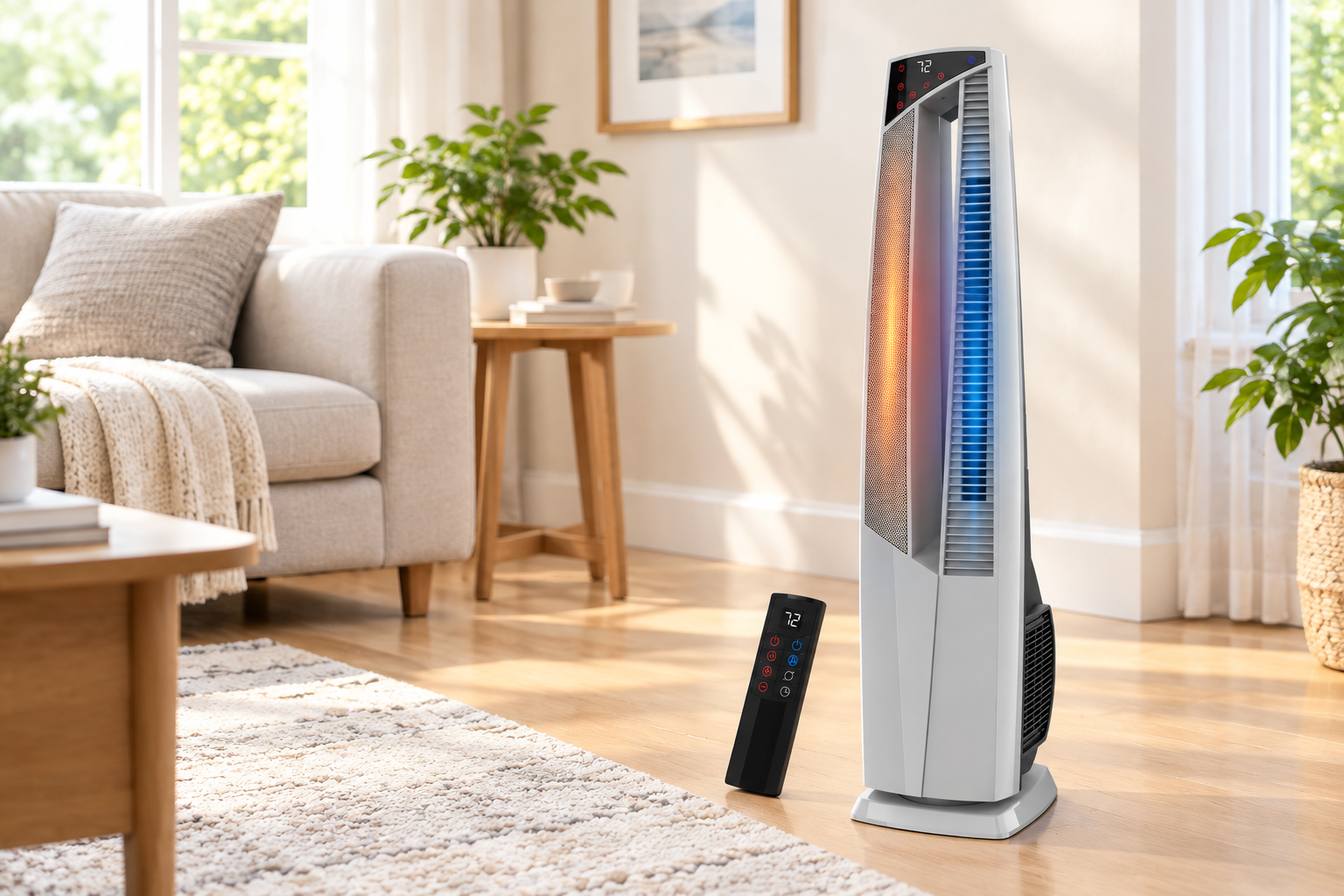
Best Heater and Fan Combo Tested for 2026

Disclosure: As an Amazon Associate, I earn from qualifying purchases. Learn more
Picking a heater that doubles as a fan sounds simple until you start comparing. One unit promises quiet nights, another claims fast warmth for a big living room, and a third fits on a desk but moves less air. You may worry about safety around kids and pets, how much room it can actually warm, or whether the fan side feels strong enough in July.
Those are fair concerns, because a combo unit has to do two jobs well and most people only have space for one. A tower model suits a bedroom corner, while a compact desk unit makes more sense under a cold office table.
This guide walks through five models, then breaks down features, wattage, noise, and everyday limits so you can find the best match for your room and routine.
Best Heater and Fan Combo Reviews & Recommendations
1. DREO 42 Inch Tower Heater and Fan Combo for Large Rooms
This 42 inch tower pairs a 1500W PTC heater with 12 fan speeds and 120 degree oscillation, so warmth and airflow reach most of a large bedroom or living room. Eight listed safety protections, including tip-over and overheat shutoff, ETL certification, and a 25dB quiet rating, make it a sensible match for bedrooms and offices where noise matters.
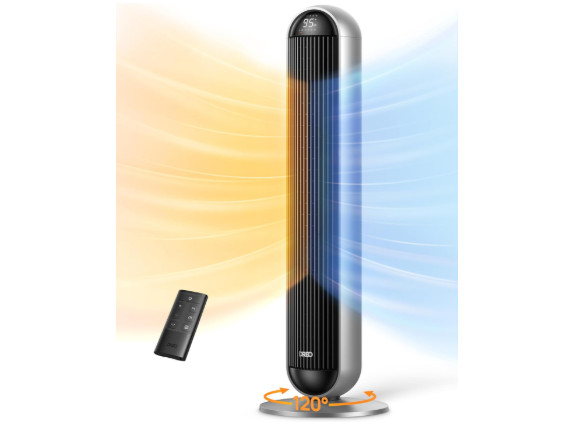
DREO MC706 suits large bedrooms and quiet offices that need steady heat and wide airflow → View on Amazon
2. MOMOKOVA Bladeless Tower Fan and Heater Combo With LED Light
This 32 inch bladeless tower uses a 1500W PTC ceramic element, 70 degree oscillation, and a digital thermostat that runs from 59 to 95 degrees Fahrenheit. The remote, 24 hour timer, and seven color base light suit bedrooms, living rooms, and home offices, and the bladeless body has no exposed spinning blades.
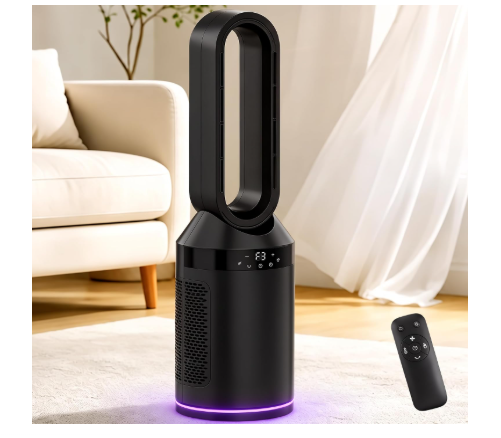
MOMOKOVA bladeless tower works well for bedrooms and home offices that want a soft night light → View on Amazon
3. Lasko 38 Inch Duo Comfort Tower Fan and Heater for Bedrooms
The Lasko FHV820 offers 1500W with three heat settings, four fan speeds, widespread oscillation, a remote, and an 8 hour timer. It is ETL certified and lists overheat protection, a tip-over switch, cool touch housing, and a child lock, which fits large bedrooms, living rooms, and home offices.
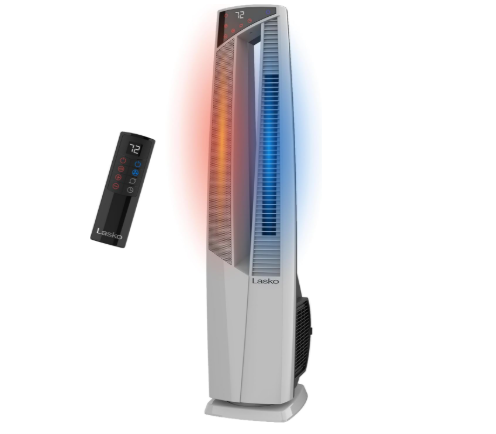
Lasko FHV820 is a dependable match for large bedrooms and living rooms with kids or pets → View on Amazon
4. Shark TurboBlade Bladeless Fan and Heater Combo for Flexible Airflow
This bladeless tower offers 10 fan speeds, three heat modes including Thermo IQ automatic temperature control, and 180 degree oscillation. You can switch between vertical Tower Mode and horizontal Air Blanket Mode. A wipe-clean body, a Dust Defense filter, and a magnetic remote that snaps onto the unit keep daily use simple.
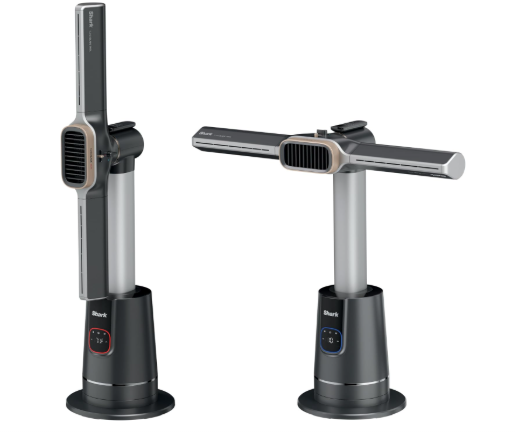
Shark TurboBlade fits rooms where adjustable airflow direction and easy cleaning matter most → View on Amazon
5. 5 Sunday Living 2 in 1 Desk Heater and Fan Combo for Office Use
This compact 2 in 1 unit has 1500W and 750W heat settings, two fan speeds, a 45 degree adjustable angle, and a built-in carrying handle. Overheat and tip-over protection and a listed 35dB noise level suit desks, home offices, and personal spaces. The listing notes a faint plastic smell during first use is normal and temporary.
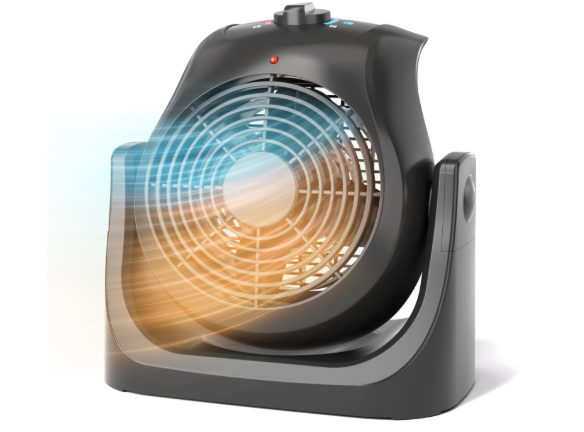
The 5 Sunday Living 2 in 1 works best as a compact desk or personal space option → View on Amazon
How a Heater and Fan Combo Works Through Every Season
A heater and fan combo is one cabinet doing two separate jobs. In winter, a PTC ceramic element warms up and the fan pushes that warmth across the room, which is why the air feels hot within seconds. In summer, the element stays off and the same motor runs as a regular standing fan. That is the whole idea behind a 2 in 1 heater and fan: one footprint, two seasons.
The fan is what separates it from a plain radiant space heater, because moving air spreads heat past the spot directly in front of the unit. Most models add a thermostat that cycles the element on and off once the room reaches your target temperature. One detail deserves attention: the cooling side is airflow only. It will not lower the room temperature the way an air conditioner does. It moves air across your skin so you feel cooler.
Picture a home office in January. You switch on the heat, set the thermostat, and the unit quietly cycles. Come July, the same unit sits in the same corner pushing a breeze. Knowing that split helps you set realistic expectations before you compare tower, bladeless, and desk designs.
Tower, Bladeless, and Desk Heater Fan Combo Types Compared
Before you pick a model, it helps to know which body style fits your room. Tower units stand on the floor and cover more space, bladeless designs hide the blades inside the base for a smoother breeze, and desk models trade coverage for a small footprint. The table below keeps the comparison short enough to read on a phone.
| Type | Best Fit | Airflow Style | Main Trade-Off |
|---|---|---|---|
| Tower heater fan combo | Bedrooms and living rooms | Tall column, wide oscillation | Needs open floor space |
| Bladeless fan and heater combo | Homes with kids and pets | Smooth, even breeze | Airflow feels different from a classic fan |
| Desk heater and fan combo | Office tables and personal spots | Close range, adjustable angle | Covers only a small area |
If you share a room with someone who sleeps lightly, a tower with a low listed noise rating tends to make more sense than a desk unit running on high. If you sit at a desk all day with cold hands, a compact model pointed at you does more than a tower across the room. Think about where you spend the most time, then match the shape to that spot instead of chasing the biggest unit.
Best Heater and Cooling Fan Combo for Large Rooms
Large rooms ask more from a combo unit, so expectations matter here.
Heating Power and Coverage
Most models in this category top out at 1500W, the usual ceiling for a standard household outlet. A common rule of thumb is about 10 watts per square foot for supplemental heat, which puts a single unit at roughly 150 square feet. In a bigger living room, it works best as extra warmth near where you sit while central heating handles the rest. Ceiling height, windows, and insulation all change the result.
Airflow and Oscillation
Wide sweep matters more than raw speed. The 120 degree oscillation on the DREO tower and the widespread oscillation on the Lasko tower move warm air past more of the room, which helps reduce cold spots. In summer, a tall tower pushes air from floor to head height, which freshens a stuffy living area.
Placement Tips
Set the unit on a flat, hard floor a few feet from the wall, and aim the airflow across the seating area rather than at one chair. Keep the path to the outlet clear so the cord is never stretched or pinched. In an open plan space, a tower near the sofa usually works better than one parked in a far corner.
Best Fan and Heater Combo for Small Rooms and Bedrooms
Small spaces have different priorities, and three everyday situations show why.
The cold bedroom at bedtime. You want warmth before you get under the covers, and you want it quiet. A tower with a low listed noise rating, such as the 25dB DREO or the 35dB desk model, keeps the hum in the background. Use the heat to warm the room first, then switch it off before sleeping, since safety agencies advise against running portable heaters while you sleep.
The compact home office. Floor space is tight, so a slim tower or a desk model with a 45 degree adjustable angle can aim warmth at your hands and legs. A remote helps when you do not want to reach under the desk.
The nursery or kids room. Keep the unit well away from children and pets, choose a bladeless body with no exposed blades if possible, and look for a child lock and cool touch housing. Agencies also warn that heat can build quickly in a confined room, so avoid leaving a heater running unattended around infants.
In a small room, even a modest setting heats quickly, so start low and let the thermostat do its job instead of running everything on high.
Heater and Fan Combo Features Worth Checking Before Choosing
Spec sheets get long, so this checklist keeps your attention on what changes daily comfort. Use it while you compare any heater and cooling fan combo, whether tower, bladeless, or desk style.
- Adjustable thermostat: a clear temperature range lets the unit cycle instead of running flat out.
- Multiple heat settings: low and high modes give you control in shoulder seasons.
- Fan speed range: more speeds mean finer control on warm days.
- Listed noise level: check the decibel figure if the unit will sit near a bed or desk.
- Oscillation width: wider sweep spreads heat and air more evenly.
- Remote and timer: useful when the unit sits across the room.
- Safety certification mark: look for a recognized testing lab listing.
- Cord length: a longer cord reaches a wall outlet without any extension cord, which you should never use.
- Carry handle and weight: matters if you move the unit between rooms.
- Easy cleaning: wipe-clean bodies and accessible filters save effort later.
You do not need every item at the highest level. Rank the three that matter most for your room, then use the rest as tie-breakers.
Safety Features Every Heater and Fan Combo Should Include
Safety features are the quiet part of a good purchase. The table lists what to look for and why each item earns its place.
| Feature | What It Does | Why It Matters |
|---|---|---|
| Tip-over switch | Cuts power if the unit falls | Prevents a running element from touching floors |
| Overheat protection | Shuts the unit off at high temperature | Guards against blocked vents |
| Cool touch housing | Keeps the outer shell comfortable | Helps around kids and pets |
| Child lock | Locks the controls | Stops accidental setting changes |
| Testing lab listing | Shows independent safety testing | Confirms safety standards were checked |
| Thermal insulated wiring | Protects internal wires from heat | Supports long term reliability |
A safety feature only works when you use the unit correctly. The U.S. Consumer Product Safety Commission advises that you plug electric heaters directly into a wall outlet and never into an extension cord or power strip, because overloading is a known fire risk. Also check the cord and plug before each season, and stop using a unit if the cord or plug feels hot.
- Read Also: 5 Best Mica Heaters Guide for Large Rooms
Heater Wattage and Room Size Guide for Fan Combos
Wattage tells you how much heat a unit can produce, and room size tells you how much work it faces. The quick reference below uses the common rule of thumb of about 10 watts per square foot for supplemental heat.
| Heat Setting | Approximate Space | Good Match |
|---|---|---|
| 750W | About 75 square feet | Desk area or small corner |
| 1500W | About 150 square feet | Bedroom or home office |
| 1500W in a larger room | Over 150 square feet | Spot warmth beside central heating |
These figures are starting points, not guarantees. A room with tall ceilings, large windows, or poor insulation needs more heat than the number suggests, while a tight, well-sealed room may feel warm sooner. If your space is large, aim the unit at the area you actually use and let it warm you rather than the whole room. Closing the door also helps hold warmth in. For a small bedroom, a 1500W tower on a lower setting with the thermostat engaged is usually enough, and an energy efficient routine follows from that: heat only the room you are in.
How to Use a Fan Heater Combo Safely Day to Day
Good habits matter as much as good hardware. Follow these steps each time you set up or switch on your unit.
- Inspect the cord and plug. Look for fraying, cracks, or discoloration before plugging in.
- Choose a flat, hard surface. Place the unit on the floor or a stable desk, never on a bed or soft rug.
- Clear the space around it. NFPA guidance says to keep anything that can burn at least three feet away, including curtains, bedding, and furniture.
- Plug straight into the wall. Avoid extension cords and power strips.
- Set the mode and thermostat. Start with a mid setting, then adjust once the room feels comfortable.
- Use the timer as a backup. It is a helpful safeguard, but do not rely on it to leave the unit running while you sleep or are away.
- Switch off and unplug when leaving. Turn portable heaters off when you leave the room or go to bed.
- Keep children and pets back. A three foot kid-free zone is a simple rule to follow.
Run through this list at the start of each heating season, and the unit becomes routine rather than a worry.
Other Uses for a Heater and Cooling Fan Combo
A combo unit earns its space beyond the obvious winter and summer jobs. These quick ideas show where it can help.
- Shoulder season mornings: take the chill off a room without turning on central heating.
- Zone warmth while you lower the thermostat: heat the room you use and let unused rooms stay cooler.
- Summer air circulation: move air around a stuffy room, especially with a window open.
- Desk side comfort: a compact model keeps your hands and legs warm during long work sessions.
- Evening reading corner: a unit with a soft base light adds a calm glow while the heat runs.
- Guest room backup: keep one on hand for visitors who run cold.
- Spot cooling for naps: a low fan speed on a warm afternoon feels gentle and quiet.
One boundary applies to all of these: do not use it to dry clothes or place objects on top of it, and keep it out of damp areas such as bathrooms. A combo unit is a flexible comfort tool, not a replacement for a clothes dryer or a built-in ventilation fan.
Heater and Fan Combo Limitations You Should Know
Every product has limits, and being honest about them saves frustration. First, the cooling side is a fan, not an air conditioner, so it will not drop room temperature on a hot, humid day. Second, a 1500W unit rarely heats a large room by itself, so plan on supplemental warmth rather than whole home heating.
Third, high settings can raise energy use quickly, so lean on the thermostat and timer. Fourth, portable heaters should not share a circuit with other high-draw appliances, since a 1500W unit draws about 12.5 amps at 120 volts, which is most of a typical 15 amp circuit. Fifth, these units are made for indoor use and are not meant for damp rooms.
A few comfort limits also exist. Some units give off a faint plastic smell during first use, which usually fades after a couple of sessions. Fans on higher speeds can be louder than the listed rating suggests, and oscillating towers need open floor space around them. Finally, never place a heater under a desk or in a walkway. Weigh these limits against how you plan to use the unit, and the right choice becomes much clearer.
FAQs?
Can a Heater and Fan Combo Cool a Room Like an Air Conditioner?
No. In cooling mode the unit only moves air, so it makes you feel cooler through airflow across your skin, but it does not remove heat from the room. It works well in mild to warm weather, in a room with open windows, or when you want a steady breeze at a desk or bedside. In a very hot, humid space, you will still want an actual air conditioner for real temperature drops.
How Much Electricity Does a Fan Heater Combo Use?
At its highest setting, a typical unit draws up to 1500 watts, which is roughly 12.5 amps at standard household voltage. Lower settings and the thermostat cut that down, because the heating element cycles off once the room reaches your target. The fan alone uses far less power than the heating element. Your actual cost depends on how long it runs and your local electricity rate, so a timer and a sensible thermostat setting are the easiest ways to keep use in check.
Is a Fan Heater Better Than a Bar Heater?
It depends on what you want. A fan heater pushes warm air across the room, so it raises the room temperature faster and gives you a cooling option in summer. A bar heater warms people and objects directly and runs silently, but it covers a narrower area and offers no airflow. For bedrooms and offices where you want even warmth plus a summer fan, a combo is usually more useful. For silent spot warmth, a bar style can suit better.
Is It Safe to Leave a Heater and Fan Combo On Overnight?
Safety agencies advise against running portable heaters while you sleep or leaving them unattended, even when the unit has tip-over and overheat protection. Those features reduce risk, but they do not remove it. A better routine is to warm the room before bed and switch the heat off when you go to sleep. In summer, running the fan alone overnight is a different situation, since no heating element is active, though you should still follow the manufacturer instructions.
How Often Should I Clean a Heater and Cooling Fan Combo?
A quick check once a month during heavy use keeps dust from building up. Unplug the unit and let it cool fully, then vacuum the vents and wipe the housing with a dry or slightly damp cloth, keeping moisture away from the controls. Some models have a base filter or a wipe-clean body that makes this easier. Clean the unit before storing it for the off season, and always check the cord and plug when you take it out again.
Picking the Best Combo for Your Room and Routine
The right heater and fan combo comes down to a few honest questions. How big is the space, who shares it, and how much noise can you live with? Tower and bladeless models suit bedrooms and larger rooms, while desk units fit tight spots and office tables. Check the safety features first, then compare thermostat range, fan speeds, oscillation, and remote controls.
Remember the main limits as well. The fan side moves air rather than cooling it, a 1500W unit works best as supplemental warmth, and safe habits matter as much as safety features. Place the unit on a flat surface, plug it directly into the wall, and keep flammable items well clear. The five models above show how different designs handle those trade-offs, so match one to your space and daily routine.
Discover New Articles: See Our Latest Updates
