Is a Ceramic Dutch Oven Safe? What to Check Before Cooking

Disclosure: As an Amazon Associate, I earn from qualifying purchases. Learn more
Yes, a ceramic Dutch oven is safe when it is made for food use, the coating or glaze is intact, and you stay within the heat limits on the label. Problems usually come from damaged surfaces, unbranded imports, or pots that were never meant for cooking.
If you are shopping for one or checking the pot already in your kitchen, the confusion is that ceramic can mean several different things. A ceramic-coated nonstick pot, a solid stoneware pot, and an enameled cast iron pot each behave differently.
You may worry about lead in the glaze, cracking from sudden heat, or a coating that wears out too soon. This guide covers each concern so you can tell what your pot can handle, how to use it, and when to retire it.
Best Choice
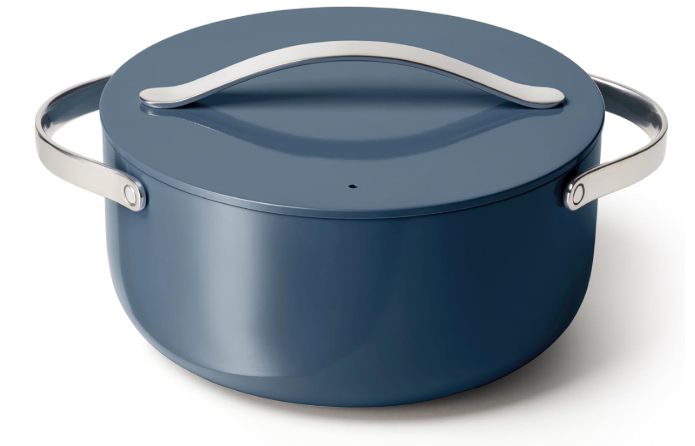
Caraway Non-Stick Ceramic Dutch Oven
- 6.5 qt capacity
- PTFE and PFOA free
- Oven safe to 550F
- Fits all stovetops
Quick Safety Rule for Choosing a Ceramic Dutch Oven
Here is the short rule: a ceramic Dutch oven is safe if three things are true. It is sold for cooking, its glaze or coating is undamaged, and you use it inside the heat range the maker lists.
Miss any one of those and the answer can change. A pot made for decoration is not tested for food contact, and a coating worn down to bare metal no longer does its job.
Brand and origin matter too. Reputable cookware makers generally state their food-contact details and heat limits, while unbranded or handmade pieces often give you nothing to check.
When the label is missing or vague, treat the pot as display only. Washing a questionable glazed piece will not fix it.
What Ceramic Really Means on a Dutch Oven Label
The word ceramic covers four very different pots. Check which one you own before judging its limits.
Ceramic-coated nonstick: A metal pot with a ceramic nonstick layer. The coating is the part that wears.
Solid ceramic or stoneware: A fired clay body with a glaze. Often oven-first, and it dislikes sudden temperature swings.
Enameled cast iron: Cast iron with a glass-like enamel layer, sometimes sold as ceramic enamel. Chipped enamel is the warning sign.
Decorative glazed pottery: Made for display. Not tested for food contact unless the label says it is.
Oven and stovetop ratings differ for each type, so the label always beats general advice.
Are Ceramic Dutch Ovens Safe From Lead and Toxins
For modern cookware from established brands, the picture is reassuring. Ceramic foodware sold in the US is held to FDA limits on how much lead can leach out of food-contact surfaces. Many makers also state that their coatings are free of lead, cadmium, PTFE, and PFOA.
The risk sits mostly with glazes. Some older, handmade, or imported glazed pieces have been found to release lead into food, and acidic foods like tomato sauce make that more likely.
Imported metal pots deserve a look as well. The FDA has warned about certain imported aluminum and brass cookware that can leach lead, so a vague, unbranded pot is a weaker choice than a documented one.
An intact coating keeps food away from the metal body underneath. Once it is scratched through or flaking, retire the pot instead of cooking acidic or long-simmered dishes in it.
If you are unsure about a pot you already own, avoid acidic recipes in it and ask the maker for its food-contact details.
Caraway Ceramic Dutch Oven for Safe Everyday Cooking
If you want a coated pot with a clear listing, the Caraway 6.5 qt Dutch oven is a straightforward match. The maker states the coating is free of PTFE, PFOA, PFAS, lead, and cadmium, and the pot works on gas, electric, and induction stovetops. It is listed as oven safe up to 550 degrees Fahrenheit, with low to medium heat advised for everyday cooking. The roomy size suits soups, stews, pasta, and bread.
Caraway Ceramic Dutch Oven is a smart pick for everyday one-pot cooking on any stovetop → View on Amazon
Best For
- Soups, stews, pasta, and bread baking
- Gas, electric, and induction stovetops
- Cooks who want less oil and easy cleanup
Skip If
- You sear or fry on high heat often
- You like using metal utensils
Safe Oven Heating Steps for Ceramic Dutch Ovens
Most damage happens through heat habits, not through the oven itself. These steps keep both the pot and the coating in good shape.
Read the label first. The oven rating, lid rating, and handle material set your ceiling. The lid can have a different limit than the pot.
Warm the pot gradually. Solid ceramic and stoneware cope poorly with sudden jumps, so avoid sliding a cold pot into a very hot oven.
Leave some margin. Running right at the maximum every time is harder on a nonstick coating, so stay under the limit when the recipe allows.
Use dry mitts and a trivet. Wet mitts conduct heat, and a hot pot on a cold or wet counter can crack.
Cool before cleaning. Cold water on a hot pot is the classic way to crack a glaze or warp the base.
Which Stovetops Work With a Ceramic Dutch Oven
Stovetop use depends on the type. A ceramic-coated pot suits gas, electric, or induction only when the maker says so, and some solid ceramic pieces are not rated for direct burner heat at all.
Medium heat is the safe habit for coated pots. High flames are harder on the coating and gain you little, since the metal underneath already spreads heat. Induction needs a magnetic base, so confirm the listing names induction.
Broilers and open campfires are a different case. Unless the label names them, keep ceramic away from direct flame and broiler elements, because coatings, glazes, and lid parts are rated for ordinary oven heat.
Cleaning Habits That Keep Ceramic Coating Safe Longer
A few small habits protect the surface that keeps food away from the metal.
- Wash by hand with a soft sponge and mild soap unless the care guide approves the dishwasher.
- Wait until the pot is cool to the touch before washing.
- Use wood, silicone, or nylon tools, since metal can scratch the coating.
- Skip scouring pads and abrasive powders.
- Cook with a dash of oil or butter so food releases easily.
- Dry the pot fully before storing it.
- Place a cloth or pan protector between stacked pots.
Mistakes That Make Your Ceramic Dutch Oven Unsafe
Treating every ceramic pot the same. A coated pan, a stoneware pot, and a display piece follow different rules. Check the type and the rating on the label.
Shocking a hot pot with cold water. A colleague once asked me whether a hot pot could go straight under the tap. It should not, because sudden cooling stresses glazes and coatings.
Cooking on high heat to save time. It wears the coating faster and rarely cooks the food better.
Scraping with metal tools. Scratches break the barrier between your food and the base.
Using a damaged pot a little longer. Flaking, chips, and exposed metal do not heal. Retire the pot for food use.
Warning Signs Your Ceramic Dutch Oven Is No Longer Safe
Run through this list every few months. One match is enough to stop using the pot for food.
- Cracks or fine lines in the glaze: The surface can trap food and wear through.
- Flaking or peeling coating: Pieces can end up in your meal.
- Bare metal showing: The coating is no longer protecting your food.
- Chipped enamel on cast iron: Chips expose the iron underneath.
- Warped or wobbling base: It heats unevenly and sits poorly on flat tops.
- Food sticks no matter what you do: The coating is often worn out.
- A Not for Food Use label: Such pieces should never touch food.
- Loose or cracked handle: It is a burn and drop risk.
Ceramic or Cast Iron Dutch Oven for Your Kitchen
Ceramic-coated pots suit people who want nonstick convenience, less oil, and lighter cleanup. They fit soups, stews, pasta, and gentle braising.
Enameled or bare cast iron suits high-heat searing and long, rugged cooking. It is heavier, and bare cast iron needs seasoning, which coated pots generally do not.
Skip a ceramic-coated pot if you sear on high heat, reach for metal tools out of habit, or deep fry often. A coating asks for gentler handling than bare metal does.
If you want one pot for soups and bread with easy cleanup and you are happy cooking on medium, ceramic is a sensible match. If you want a pot that takes punishment, look at cast iron.
FAQs
Is a Ceramic Dutch Oven Dishwasher Safe?
Only if the maker says so; some coated pots are rated for the dishwasher, but harsh detergent and long heated drying cycles are tougher on a nonstick coating than a soft sponge. Check the care guide first, and if it is silent, wash by hand. Solid ceramic and enameled pieces follow their own instructions, so read those separately.
Can You Deep Fry in a Ceramic Dutch Oven?
With a coated pot, it is better not to. Deep frying pushes oil to high temperatures, and makers of coated cookware usually advise low to medium heat. A solid ceramic pot adds another risk, since a big temperature jump can crack it. If a maker explicitly rates a pot for frying, follow that guidance and use a thermometer to keep the oil in range.
Does a Ceramic Dutch Oven Need Seasoning?
Bare cast iron needs seasoning, but ceramic-coated and enameled pots generally do not. A small amount of oil or butter still helps food release, and many makers recommend it. Always confirm in the care guide, because some solid ceramic and unglazed clay pots have their own preparation steps.
Can You Bake Bread in a Ceramic Dutch Oven?
Yes, as long as the pot’s oven rating covers the temperature your recipe calls for. Many bread recipes use high heat, so check the limit for both the pot and the lid, including the knob. Follow the maker’s advice on preheating an empty pot, since not every coating is meant to sit dry in a hot oven.
How Long Does a Ceramic Dutch Oven Coating Last?
There is no fixed number. Lifespan depends on how you cook and clean: medium heat, soft tools, and hand washing keep the coating smooth longer, while high flames and scratching shorten it. Watch for food that starts sticking, visible scratches, or flaking, and retire the pot once the surface breaks down.
Is It Okay To Cook Acidic Food in a Ceramic Dutch Oven?
With an intact coating or glaze on a food-safe pot, yes. Tomato sauce and wine-based braises are common uses. Trouble starts when the surface is damaged, because acid can reach the metal underneath, or when a glazed piece was never tested for food use. If the surface is worn, move acidic recipes to a different pot.
Can a Ceramic Dutch Oven Go in the Microwave?
Usually not. A coated pot has a metal body, and metal does not belong in a microwave. Solid ceramic or stoneware can be microwave-safe, but only when the label says so, and the lid and handles must qualify too. When in doubt, move leftovers into a microwave-safe bowl.
Simple Decision Rules Before You Cook
If the pot is labeled for food use and the surface is intact, cook with confidence inside its heat limits.
If it is glazed pottery with no food-use label, keep it for display.
If the coating is flaking or metal shows, replace the pot.
If you want a coated option with a clear listing, the Caraway pot above fits that profile.
Discover New Articles: See Our Latest Updates
