6 Best Portable Camping Stoves for Car Campers

Disclosure: As an Amazon Associate, I earn from qualifying purchases. Learn more
Dinner at a campsite begins the moment a blue flame steadies against the evening breeze. For most car campers, the Coleman Triton 2-Burner Propane Stove covers family meals, the Gas One Dual Fuel Stove handles big pots on one strong burner, and the Coleman Classic 1-Burner Butane Stove keeps quick breakfasts simple.
The hard part is that every listing promises speed, and you only find the weak spots when the wind picks up or your pan will not fit. You want a stove that matches how you actually cook, not one that just looks good in the trunk.
Fast Family Stove Verdict
Our pick is the Coleman Triton 2-Burner Propane Stove, with 22,000 total BTUs, two adjustable burners, and wind guards suited to family meals at the campsite → View on Amazon
Three things settle it fastest: fuel you can find easily, burner count for your group, and wind protection with real simmer control. Below are six picks, from propane workhorses to a wood rocket stove, plus the setup and safety habits that keep camp cooking calm.
The Coleman Classic 1-Burner Butane Stove brings matchless lighting to quick meals, while the Gas One Dual Fuel Stove adds 15,000 BTUs and propane or butane flexibility.
For Quick Solo Breakfasts
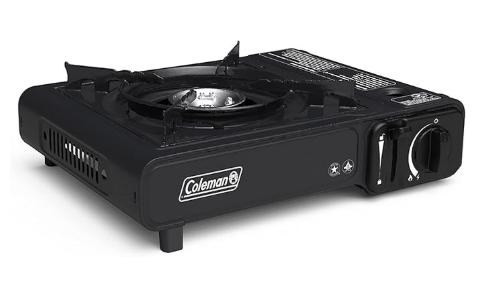
Coleman Classic 1-Burner Butane Stove
- Instastart matchless ignition
- Fits one 10-inch pan
- Wind baffle around flame
For Big Pot Cooking
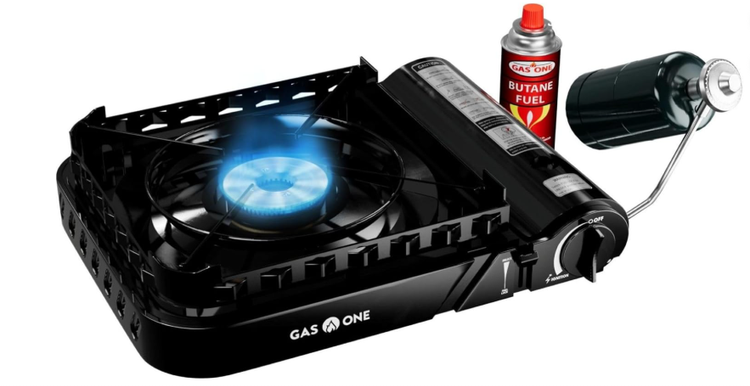
Gas One Dual Fuel Stove
- 15,000 BTU single burner
- Butane or 1 lb propane
- Pressure-sensing cartridge ejection
What Makes a Car Camp Stove Worth Packing
A car camp stove does a different job than a backpacking burner. Weight barely matters when the trunk carries it, so you can trade ounces for stability, wider burners, and steadier flame control.
The real test is dinner for a group on a breezy evening. A stove that holds a 10-inch or 12-inch pan flat, keeps the flame alive in a crosswind, and turns down to a gentle simmer will feed people better than one with a big BTU number alone.
Fuel access matters just as much. One-pound propane cylinders are easy to find across the US and cope with cold better than butane, while butane cartridges pack neatly but lose pressure as temperatures drop.
Think about where you camp, too. Developed campgrounds give you a picnic table for a tabletop stove, while dispersed sites may call for a folding table you bring along so the stove sits level.
How We Selected These Best Car Camp Stoves
Each stove was compared using its listed specifications and the general themes in owner feedback. No hands-on testing is claimed here, so every point below rests on what the listing states.
Fuel type and access: propane, butane, dual fuel, alcohol, or wood, and how easy that fuel is to buy before a trip.
Heat output and burner layout: listed BTUs, the number of burners, and whether each burner adjusts on its own.
Pan fit: the pan sizes each listing names, and whether two pans can sit side by side.
Wind protection: baffles, wind guards, or glass shields that keep the flame steady outdoors.
Safety features: pressure-sensing cartridge ejection, canister locks, gas cut-off, and a clear on and off control.
Feedback themes: repeated owner comments on ease of use, heat, stability, and durability, read as patterns rather than numbers.
Range of needs: picks that cover solo breakfasts, family meals, mixed fuel trips, minimal kits, and off-grid wood cooking.
Six Car Camp Stoves Reviewed for Campsite Cooking
1. Coleman Classic 1-Burner Butane Stove for Quick Camp Breakfasts
Picture a picnic table at sunrise, coffee water ready and eggs waiting. This stove lights with a press of the Instastart matchless ignition, so there are no matches to hunt for in the cold.
The 7,650 BTU burner sits under a wind baffle that shields the flame, and the porcelain-coated grate lifts out for quick cleanup. A rust-proof aluminum burner and a large, stable base make stirring easy.
Feedback Themes: Owners describe it as easy to set up, quick to heat, and compact enough to stash almost anywhere. Opinions split on long-term durability and value.
What Sets It Apart:
- Push-button lighting without matches
- Rust-proof aluminum burner under a removable grate
Practical Gains:
- Lights fast on chilly mornings
- Cleans up quickly after greasy breakfasts
- Packs small for short trips
Pairs Nicely With:
- 8.8 oz butane cylinders, sold separately
- Skillets and pots up to 10 inches
- Picnic tables and tailgates
Before You Choose: Burn time is listed at up to 1.25 hours on high per cartridge, butane weakens in cold weather, and only one pan fits at a time.
2. Gas One Dual Fuel Stove With Big Pot Power
A 15,000 BTU burner sits at the heart of this stove, giving one pot plenty of heat for boiling and searing. It runs on an 8 oz butane cartridge or, with the included adapter, a 16.4 oz propane cylinder.
Safety gets real attention here. A pressure-sensing cartridge ejection system and a gas flow cut-off add protection, while a heavy-duty windblocker on all four corners of the burner helps keep the flame lit outdoors.
Feedback Themes: Buyers praise the strong heat, fast boiling, dual fuel flexibility, and solid build. Some report the flame going out at medium-high settings or a damaged case on arrival.
What Sets It Apart:
- Runs on butane or propane without swapping stoves
- Windblocker on all four burner corners
Practical Gains:
- Boils large pots of water quickly
- Keeps cooking if one fuel runs short
- Serves as outdoor backup during outages
Pairs Nicely With:
- 8 oz butane cartridges
- 1 lb propane cylinders with included adapter
- Cast iron pans and large stockpots
Before You Choose: It cooks one pot at a time, fuel is sold separately, and some owners note flame dropouts at higher settings, so keep an eye on it.
3. Coleman Triton 2-Burner Propane Stove as a Car Camping Workhorse
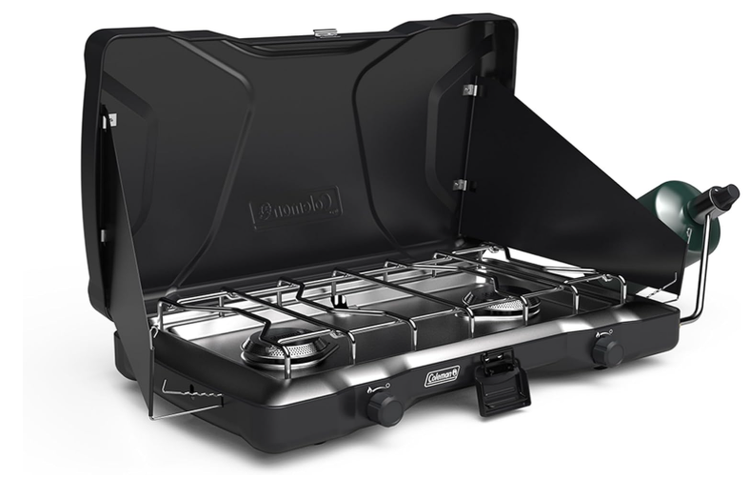
If you feed a family at camp, this is the classic two-burner layout, with 22,000 total BTUs and improved knob rotation for temperature and simmering control.
Two wind guards shield the flames, and the chrome-plated grate lifts out for cleaning. The listing rates burn time at up to 1 hour on high from one 16 oz propane cylinder, sold separately. Owners note some versions light by match, so pack a lighter.
Feedback Themes: Owners call it a dependable car camping and power outage stove with plenty of heat and room for two large pans. Durability gets mixed feedback, with some units arriving bent.
What Sets It Apart:
- Latch keeps the lid shut in storage
- Two wind guards around the burners
Practical Gains:
- Cooks a main and a side together
- Folds flat for trunk packing
- Simple controls for new campers
Pairs Nicely With:
- 16 oz propane cylinders, sold separately
- A 12-inch skillet beside a 10-inch pot
- Larger tanks through a compatible adapter hose
Before You Choose: Some owners find the jump between simmer and high abrupt, and a few units arrived with bent metal, so inspect yours right away.
4. Gospowor Dual Fuel Camp Stove for Mixed Fuel Trips
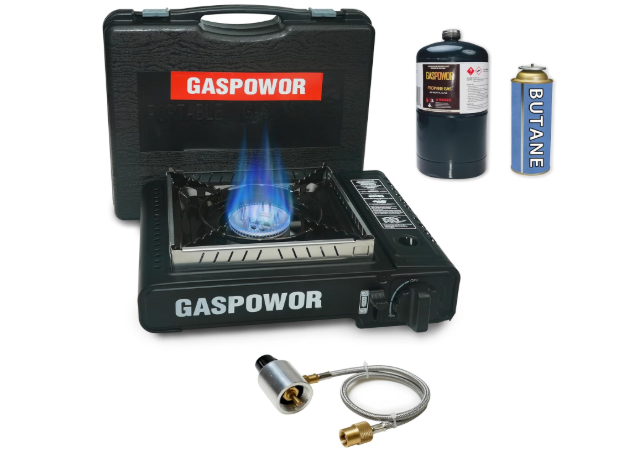
The main benefit here is fuel freedom. It accepts most 1 lb propane cylinders and 8 oz butane cartridges, so you can cook with whatever the next store carries.
Overpressure protection and a canister safety lock add peace of mind, and the ceramic-coated frame detaches and wipes clean with little effort. That mix suits short trips and home emergency kits alike.
Feedback Themes: Buyers find it easy to use and portable, and it handles coffee pots and small pans well. Opinions are mixed on stability and heat, and one owner could not get a true simmer.
What Sets It Apart:
- Hose built to resist abrasion and gnawing
- Twist-button automatic ignition
Practical Gains:
- Uses whichever fuel is easier to find
- Wipes clean thanks to ceramic coating
- Fits small emergency kits
Pairs Nicely With:
- 1 lb propane cylinders
- 8 oz butane cartridges
- Coffee pots and small pans
Before You Choose: At 10,000 BTUs it is a modest single burner, stability gets mixed feedback, and the maker says outdoor use only, never tents or vehicles.
5. QMFEQGI Mini Alcohol Camp Stove for Lean Coffee Kits
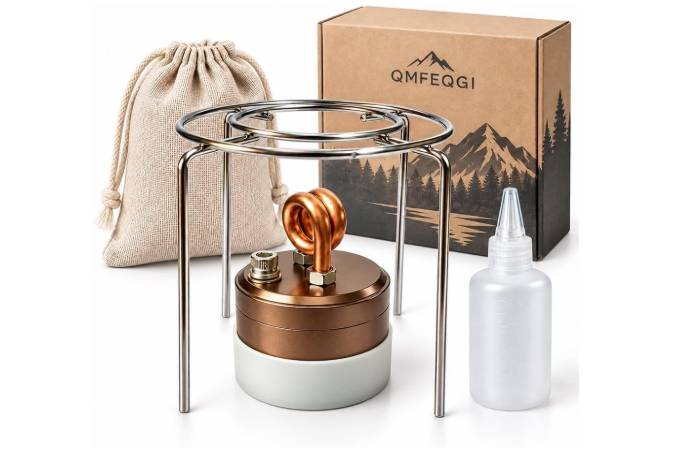
Think of a quiet trailhead morning when all you want is hot water for coffee. This tiny burner runs on alcohol fuel, and the maker suggests 95 percent concentration, filled to about one third.
It is small and light enough to tuck into a glovebox or survival kit. To put it out, the maker recommends blowing through the center hole of the copper tube or covering it with the lid.
Feedback Themes: Early owner comments mention easy camp coffee, a compact size, and simple packing for short outings.
What Sets It Apart:
- Copper tube vaporizer for a consistent flame
- Packs smaller than any canister stove here
Practical Gains:
- Uses widely sold alcohol fuel
- Adds almost no bulk to a kit
- No canister to dispose of
Pairs Nicely With:
- Small pots, cups, and kettles
- Emergency or survival kits
- Backup coffee setups
Before You Choose: There is no flame control knob or shut-off valve, so it suits boiling water rather than full meals and may be off limits under fire restrictions.
6. Ironclad Supply Rocket Stove for Wood Fired Camp Cooking
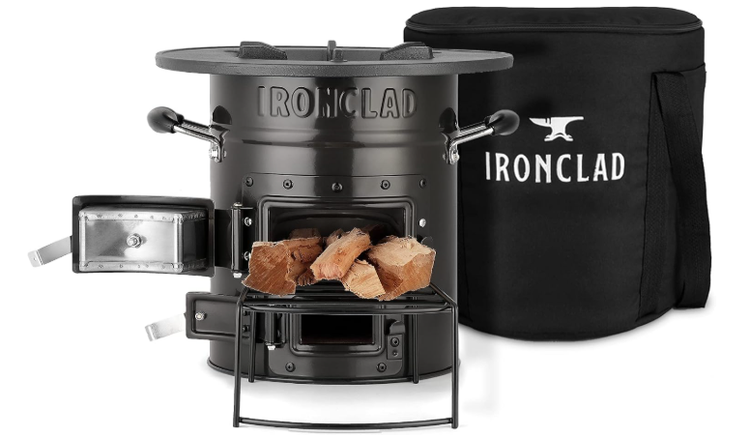
Instead of a gas line, this stove burns twigs, branches, or charcoal in a rocket-style combustion chamber that channels heat straight under your cookware. The listing rates it at up to 23,000 BTUs.
A fuel support system helps feed longer sticks, and the sturdy top handles woks, kettles, and Dutch ovens. It is heavy, though, so it lives in the car or at a fixed campsite rather than in a pack.
Feedback Themes: Owners describe it as well-built and stable, with a large top that brings big pots to a boil. Weight and durability draw mixed comments, and a few units arrived with cracked ceramic lining.
What Sets It Apart:
- Cooks without propane, butane, or electricity
- Feed door lets you add wood mid-cook
Practical Gains:
- Gathered sticks become your fuel
- Holds heavy pots without wobbling
- Works as an outdoor outage backup
Pairs Nicely With:
- Dutch ovens and cast iron pans
- Woks and large kettles
- Dry sticks, branches, and charcoal
Before You Choose: Wood stoves are often banned during fire restrictions, hot embers can drop from the feed door, and listed weights conflict, so expect a heavy stove.
Propane, Butane, Wood, or Alcohol for Camp Cooking
Fuel choice shapes everything else, from what you pack to which campsites allow your stove. Each type has a clear lane.
Propane for Most Campsites
Propane is the default for car camping because one-pound cylinders are easy to find and keep working in colder weather. Many two-burner propane stoves can also connect to a larger refillable tank with the correct adapter hose.
Butane and Dual Fuel Stoves
Butane cartridges are compact and lock into place without a separate regulator, which makes tabletop stoves quick to set up. The tradeoff is weaker performance near freezing, so a dual fuel stove that also takes propane gives you a backup for cold mornings. These propane versus butane differences go deeper on the tradeoffs.
Wood and Alcohol Options
Wood rocket stoves burn twigs and branches, so fuel is never far away at a forested site, but they are often banned during fire restrictions. Simple alcohol burners like the one reviewed here have no flame control knob and suit boiling water more than full meals.
Single Burner or Two Burners for Your Group
Match the stove to how many people you feed and what you cook most. These common camp scenarios point to the right layout.
Solo or couple, simple meals: a single burner such as the Coleman Classic handles coffee, eggs, and one-pan dinners while taking little table space.
Family of four, full breakfasts: two independent burners let you fry bacon on one side and warm coffee on the other, which is where the Triton fits.
One big pot at a time: pasta water, seafood boils, or stoves suited to canning call for strong single-burner heat like the Gas One.
Mixed fuel road trips: a dual fuel stove like the Gospowor lets you use whichever cylinder or cartridge the next store carries.
Off-grid or outage prep: a wood rocket stove cooks with gathered sticks, but only where open flame is allowed.
BTU Ratings, Wind, and Simmer Control Explained
A BTU rating tells you the most heat a burner can put out, not how well it cooks. A higher number boils water faster and fights wind better, but it also burns fuel faster.
Two-burner stoves list a total figure, so think about each burner’s share. Going by the listed specifications, the Triton spreads 22,000 BTUs across two burners, while the Gas One puts 15,000 BTUs under one pot, so a single large pot gets more direct heat on the Gas One.
Wind steals heat quickly. Look for wind guards on at least three sides, a baffle around a single burner, or a glass shield on tabletop models, and set up so your back blocks the breeze.
Simmer control is the feature most people notice too late. Owners of some high-output stoves mention the lowest setting still boils, so if you cook rice, sauces, or eggs, favor a knob that turns down smoothly.
Real output also drops in cold air and steady wind. A little extra power, plus a lid on the pot, gives you margin on rough evenings.
Never Run a Camp Stove Inside Your Tent
Every fuel-burning camp stove produces carbon monoxide, a gas you cannot see or smell. That is why cooking belongs outside, in open air, even when rain makes the tent look tempting.
According to federal consumer safety guidance, people die every year from carbon monoxide poisoning linked to camping heaters, lanterns, and stoves used inside tents, campers, and vehicles.
Opening a tent flap or cracking a car window does not make it safe. Health officials have warned that open flaps, doors, and windows are not enough to stop carbon monoxide from building up.
Know the warning signs. Headache, dizziness, weakness, nausea, vomiting, sleepiness, and confusion can all point to exposure, and they are easy to mistake for a cold or flu.
The same rule applies at home during power outages. A camp stove belongs on a patio or driveway in open air, never in a kitchen, garage, or closed porch.
Give the stove room outdoors too. Keep it on a stable, heat-resistant surface, away from tent walls, dry grass, and spare fuel, and turn it off before you step away.
Fire Restrictions Can Rule Out Wood Burning Stoves
Dry seasons bring fire restrictions to many public lands, and those rules decide which stove you can light. A wood rocket stove may be fine one week and prohibited the next.
Under one national forest order, wood and charcoal fires are prohibited outside permanent fire pits at developed sites, while stoves fueled solely by liquid or gas that can be turned on and off are allowed in a cleared area. That order asks for 10 feet of clearance, and other forests set their own distances.
The on and off valve is the key detail. Propane and butane stoves usually qualify, while wood stoves and alcohol burners like the one reviewed here have no shut-off valve, so check local rules before relying on them.
Look up the managing agency’s current alerts before you leave, and pack a gas stove as backup whenever your plan depends on wood.
Common Mistakes When Choosing a Portable Camping Stove
Most stove regrets come from a handful of predictable slips. Avoid these and almost any pick on this list will serve you well.
- Chasing the biggest BTU number. Power helps in wind, but simmer control decides whether eggs and rice turn out well.
- Ignoring pan size. A stove listed for one 10-inch pan will not handle a wide griddle or two pots at once.
- Trusting the igniter alone. Push-button igniters can fail, so always pack a lighter or long matches.
- Buying fuel you cannot find. Check which cylinders or cartridges stores along your route carry before you commit.
- Skipping a wind plan. Without guards or a sheltered spot, cook times stretch and fuel runs out early.
- Forgetting fire rules. A wood stove does nothing for you at a site under restrictions, so keep a gas option ready.
- Bringing a tiny burner for a group. Narrow backpacking burners struggle to keep a family-size pot at temperature.
Setting Up Your Stove Safely at Camp
A steady routine prevents most campsite accidents. Follow these steps each time you cook.
1. Choose open air and a level surface. Set the stove on a picnic table or flat ground, away from tent walls, low branches, and dry grass.
2. Inspect before connecting. Look over hoses, seals, and the canister seat for cracks or damage, and replace a damaged part rather than risk a leak.
3. Connect fuel with valves closed. Lock the butane cartridge into place or thread the propane cylinder hand tight with every burner knob off.
4. Check propane joints for leaks. Brush soapy water on the connections and watch for bubbles, and never use a flame to look for a leak.
5. Light, then adjust. Use the igniter or a long lighter, let the flame settle, and position the wind guards before the pan goes on.
6. Shut down in order. Turn off the burners, let the stove cool completely, then remove the cartridge or cylinder before packing it away.
Keeping a Camp Stove Clean Between Trips
Grease and food spills clog burner ports and cause uneven flames, so wipe the grate and drip area once the stove is cool. Removable grates, like the porcelain-coated one on the Coleman Classic and the chrome-plated one on the Triton, lift out for washing.
Dry every part before storage, since moisture invites rust on steel. Store the stove and fuel separately in a cool, dry place with cartridge caps on, and this small stove care routine adds useful inspection habits.
For a wood rocket stove, empty the ash only when it is fully cold and keep the stove covered from rain between uses.
Questions Campers Ask About Car Camp Stoves
Can You Connect a Camp Stove to a 20 Pound Propane Tank?
Many two-burner propane stoves can run from a larger refillable tank, but only with an adapter hose made for that purpose and matched to your stove. The Triton, for example, is built around 16 oz cylinders, and owners mention adding an adapter hose for longer cooking sessions.
Keep the tank upright and well away from the flame, check every joint with soapy water, and close the tank valve first when you finish so the hose empties.
Is a Backpacking Stove Enough for Car Camping?
For one person boiling water or heating simple meals, a small canister stove can work. For groups, it falls short quickly. Narrow burners create hot spots under wide pans, small pot supports wobble with heavy cookware, and fine simmering is harder.
If you already own one, keep it as a backup or coffee burner and add a tabletop stove for real meals, so an empty canister mid-dinner does not stop the whole meal.
How Long Does One Fuel Canister Last on a Camp Stove?
Burn time depends on flame height, wind, and temperature, so listed numbers are a ceiling rather than a promise. The Coleman Classic lists up to 1.25 hours on high from one 8.8 oz butane cylinder, and the Triton lists up to 1 hour on high from one 16 oz propane cylinder.
Cooking at medium, using lids, and blocking wind stretch those times. For a weekend of family meals, packing at least one spare is a sensible habit.
Can a Camping Stove Work for Cooking During a Power Outage?
Yes, as long as it stays outdoors. Several stoves here, including the Gas One and the rocket stove, appeal to people preparing for storms and outages. Set up on a patio, driveway, or open yard, away from doors and windows, and never inside a garage.
Store fuel in a cool, ventilated spot away from living areas, and check your supply before storm season. A dual fuel model adds flexibility if one fuel runs short.
What Should Go in a Camp Stove Kit Besides Fuel?
Pack a lighter or long matches, since push-button igniters can fail. Add a small windscreen if your stove lacks guards, a pot grabber or heat-resistant gloves, and a folding table if your site may not have one.
A spray bottle of soapy water helps with leak checks on propane joints. Bring a bag for cooled, empty cartridges, because empty fuel containers should be packed out and disposed of under local rules.
Do Camp Stoves Work Well at High Altitude?
They do, but performance changes. Water boils at a lower temperature as elevation rises, so pasta and rice take longer even once the pot is boiling. Canister stoves can also feel weaker in the cold that often comes with altitude.
A lid and steady wind protection help a lot. Keep cooking in open air, since federal safety guidance notes carbon monoxide risk rises at high altitudes.
Picking Your Stove Before the Next Trip
If you cook for a family, a two-burner propane stove like the Triton gives you the most room to work. Solo campers and couples will find the Coleman Classic or a dual fuel single burner easier to pack and set up. The alcohol burner and rocket stove fill narrower roles, one for minimal coffee kits and one for wood cooking where fire rules allow it. When in doubt, choose the fuel you can buy near your route and the burner count that matches your usual meals.
