
Chimney Downdraft! Causes, Signs, and How to Stop It?

Chimney downdraft is air and smoke flowing down your chimney instead of up, and you stop it by finding the cause: a cold flue, wind, exhaust fans pulling air out of the house, a blockage, or a chimney that is too short. Start with the damper fully open and a flue that is warm, and call a professional if smoke keeps coming into the room.
You may notice a puff of smoke when the fire starts, a stale ash smell on cold days, or a draft near the fireplace when nothing is burning. The most serious warning is a carbon monoxide alarm going off, because that means smoke entering the room is not just a nuisance. Treat it as a reason to stop using the fireplace until the cause is found.
How Chimney Draft Works And Why It Reverses
A chimney works because the gases from a fire are warmer and lighter than the air outside, so they rise and carry smoke out. That upward pull is called draft, and it also draws fresh air into the fire.
Draft is a gentle force, and other air movement can overpower it. A cold flue, a small fire, wind around the building, or fans pulling air out of the house can all weaken the pull.
When that happens, the flow can reverse. Cooler air drops down the flue, and smoke, soot odor, or combustion gases come back into the room instead of leaving.
Downdraft can show up while a fire is burning, in the first minutes after lighting, or even when the fireplace is cold. That is why a chilly draft or a stale ash smell near the fireplace can be an early clue.
Why Smoke And Cold Air Come Down Your Chimney
Most cases trace back to one of a few causes, and more than one can be at work at once.
Cold flue: A flue filled with cold air has little upward pull, so smoke is most likely to spill in the first minutes after you light a fire.
Wind and nearby structures: High winds around the building, or a chimney that is too short, can push air down the flue. Taller roof sections or buildings close to the chimney can add turbulence.
Negative pressure inside the house: Exhaust fans, dryers, and air leaks high in the house pull air out, and the chimney becomes an easy path for replacement air.
Blockage or a poor liner: Nests, leaves, ice, snow, creosote, or a damaged or wrongly sized liner restrict airflow and weaken draft.
Weak fire or closed damper: A smoldering fire makes too little heat to warm the flue, and a damper that is not fully open chokes the flow.
Signs Your Fireplace Is Pulling Air Down
Look for these clues, especially on cold, windy days or right after lighting a fire.
- Smoke or soot smell in the room: puffs of smoke or a sooty odor while a fire burns or just after it starts.
- Cold air from the fireplace: a chilly draft or stale ash smell even when nothing is burning.
- Soot marks: dark spots on glass doors, the mantel, or nearby walls.
- A fire that is hard to start or burns weakly: flames that sulk or die out for no clear reason.
- A carbon monoxide alarm sounding: carbon monoxide has no smell, so the alarm is your warning, and you should never dismiss it.
Burning eyes, headache, or dizziness near the fireplace are also warning signs that fumes may be entering the room.
What To Do When Smoke Enters The Room
Smoke in the living space is a warning, so act before you try to fix anything.
- Step 1, leave if an alarm sounds or anyone feels sick. If a carbon monoxide alarm goes off, or anyone has a headache, nausea, or dizziness, get everyone outside and call 911.
- Step 2, keep the damper open. Do not close it while the fire or ashes are still warm.
- Step 3, let the fire die down. Stop adding wood, and keep the glass doors or screen closed.
- Step 4, ventilate and cut the competition. Open a window or door and switch off exhaust fans and the dryer.
- Step 5, do not relight until you know why. If smoke returns, stop using the fireplace until a qualified professional has inspected it.
A gas leak is a separate problem, but the same rule applies to any fumes you cannot explain: get out first and sort out the cause afterward.
Warming A Cold Flue Before You Light A Fire
The first few minutes are when most downdraft starts, because a cold flue holds heavy air that has to be pushed out before draft takes over. This is common with chimneys on an outside wall.
Open the damper fully before you strike a match. Then build a small, hot fire from dry kindling and a few pieces of dry wood instead of loading big logs at once.
Give the fire plenty of air until the flames are lively, and keep the fireplace doors closed once it is burning. Add larger pieces only when the chimney is clearly drawing.
If smoke still rolls into the room on every start, the cause is probably pressure or a blockage, not just a cold flue, and the sections below cover those fixes.
Exhaust Fans And Tight Homes Can Pull Smoke Down
Anything that moves air out of the house can create negative pressure, and that pressure can overpower weak draft. Range hoods, bath fans, clothes dryers, and even leaks high in the house all take part.
Tight, well-sealed homes feel this the most, because replacement air has fewer easy paths. The chimney becomes one of them, according to university extension guidance.
The simplest fix is to switch off fans and the dryer while the fire is burning. Opening a window slightly, ideally low in the house or near the fireplace, gives the house another source of air.
If the problem returns every time a fan runs, ask an HVAC or building-performance professional about makeup air tied to the exhaust fans. Keeping every window and door shut does not relieve the pressure.
Height, Liner Size, And Cap Choices For Chimneys
Chimney height matters because wind needs somewhere to go. Building codes and fire protection standards call for a chimney to rise at least 3 feet above the point where it passes through the roof, and at least 2 feet higher than any part of the building within 10 feet.
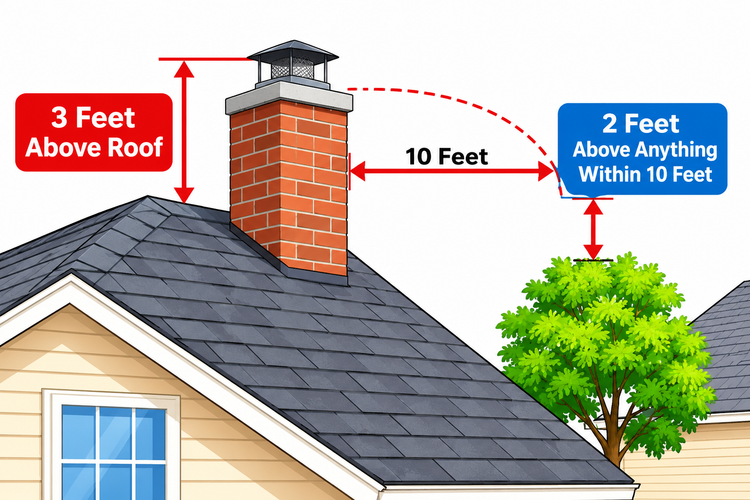
A short chimney, or one close to a taller roof section, is more likely to catch wind-driven downdraft. Raising it is a job for a qualified installer, because extra height needs proper support.
Liner size matters too. A flue that is too small chokes airflow, while one that is much too large can stay cold and weaken draft, so a professional should size it to the appliance.
A cap keeps rain, debris, and animals out, and some designs help with wind. Read about how caps affect draft before choosing one, and remember that a cap will not fix negative pressure or a cold flue.
Also Worth Reading: caps that prevent downdraft
Dry Firewood And Damper Habits That Help
Open the damper fully before lighting and keep it open until the ashes are cool, as CPSC fireplace safety tips advise. An open damper also helps keep harmful gases from building up in the home, and it is worth a moment to check the flue is open before every fire.
Burn only dry, well-seasoned wood. EPA guidance says wood burns best below 20 percent moisture, and seasoning takes at least six months.
Wet wood makes a cooler, smokier fire that leaves creosote and weak draft behind, which makes downdraft more likely.
Build hot fires, because a smoldering fire is neither safe nor efficient in most appliances, and keep doors closed except when loading wood.
Cleaning And Inspecting The Chimney Safely
Soot, creosote, nests, and debris narrow the flue and weaken draft, so a clean, open chimney is a basic part of stopping downdraft.
Official safety guidance commonly advises having flues and chimneys inspected before each heating season for blockage and leakage. A chimney inspection also checks the liner and cap for damage you cannot see from the hearth.
Sweeping from the roof means ladders, dust, and a risk of falls, so most homeowners are better off hiring a certified chimney sweep. If you still want to understand the process, read how chimneys are swept safely.
After any chimney fire, a cracked liner, or signs of animals, have the chimney checked before the next fire.
Also Worth Reading: cleaning gas fireplace chimneys
Chimney Downdraft FAQs
Why Does Downdraft Only Happen On Windy Days?
A pattern tied to gusts points to wind, not a blockage. Wind flowing over the roof and around taller roof sections or nearby buildings can swirl and push air down the flue, especially when the chimney is short or the fire is small. Note which wind direction causes it, because that tells an installer where the turbulence comes from. A suitable cap or extra height can help, but a professional should check the chimney first.
Can Downdraft Happen When The Fireplace Is Not In Use?
Yes. Cold air in the flue is heavy, and a house that pulls air out through fans or leaks can draw that air down into the room, often with a stale ash or creosote smell. A cold draft or odor with no fire burning usually signals pressure or an open path rather than a fire problem. A well-fitting damper closed while the fireplace is cool can limit the flow, but always reopen it fully before lighting a fire.
How Can I Test For Chimney Downdraft Safely?
Use a smoke pencil or a stick of incense, not burning paper. With no fire lit and the damper open, hold it in the throat of the fireplace and watch the smoke. If it rises, draft is normal. If it drifts into the room, try again with the kitchen fan or dryer running to see whether pressure is the cause. Never light paper or other material inside to test.
Do Wood Stoves Get Downdraft Differently Than Fireplaces?
The cause is the same, but stoves show it differently. Because a stove is closed, smoke often appears only when you open the door to add wood, especially when the flue is cool or the fire is low. Open the door slowly after the fire is burning hot, and follow your stove manual. Smoke at the door every time points to weak draft, a blockage, or pressure problems worth inspecting.
When Should I Call A Chimney Professional?
Call one if smoke returns after you have tried the basic fixes, if a carbon monoxide alarm has sounded, or if you see soot stains, rust, loose sections, or crumbling masonry. Also call after a chimney fire, before using a chimney that has been unused for a long time, or when you cannot explain a persistent odor. Ask for an inspection of the liner, cap, height, and flue size, not just a sweep.
Staying Safe And Keeping Smoke Outside
Chimney downdraft usually comes down to a handful of causes: a cold flue, wind, pressure from exhaust fans, a blockage, or a chimney that is too short or poorly sized. Matching the fix to the cause works better than trying everything at once.
Open the damper fully, warm the flue with a small hot fire, burn dry wood, and keep fans off while you burn. If smoke keeps entering the room, or a carbon monoxide alarm sounds, stop using the fireplace and bring in a qualified professional.
More Helpful Reads: venting without a chimney
