
Are Oven Liners Toxic When Heated in Gas or Electric Ovens

Oven liners are not toxic by default, but some can become unsafe when they are overheated, damaged, or placed the wrong way. Food-grade silicone is generally considered stable at normal baking heat, while PTFE coated liners can release fumes if they get too hot.
You may be staring at a liner right now, wondering if it is fine to leave in while your dinner bakes. The confusion is understandable, because the packaging often says very little about temperature limits, vent blocking, or what happens during a self-cleaning cycle.
Those three issues are the ones worth checking first. Safe use also depends on whether your oven is electric or gas. This guide explains which materials to trust, where a liner should never go, what warning signs to watch for, and when a simple catch tray is smarter.
Quick Answer on Whether Oven Liners Are Toxic
Most oven liners are not toxic when you use them within their heat rating and place them correctly. The risk comes from specific materials and specific mistakes, not from liners as a whole.
Food-grade silicone is generally regarded as stable, while PTFE coated liners can break down and release fumes when overheated. A poorly fitted liner can also cover vents and cause problems that have nothing to do with chemicals.
A liner does help catch drips and cut down on scrubbing. It does not replace regular cleaning, and it is never a reason to ignore your oven manual.
Which Materials Make Oven Liners Safer or Riskier
The material tells you more than the marketing words on the package. Find out what yours is made of and what maximum temperature the maker lists.
| Material | Safety note |
|---|---|
| Food-grade silicone | Generally stable; follow the label rating |
| PTFE coated fabric | Fumes possible above about 500°F |
| Fiberglass mesh | Safe only if it never blocks vents |
| Aluminum foil | Can trap heat and melt on the floor |
| Catalytic panels | Built into some ovens, not loose mats |
Catalytic panels are coated wall surfaces that absorb grease while the oven runs. They belong to the oven itself, so follow the oven manual for them.
If a liner does not list its material or a maximum temperature, treat it with caution.
How Safe Are Silicone Oven Liners at High Heat
Food-grade silicone is generally regarded as non-toxic and stable at normal baking temperatures. Each liner still has its own maximum temperature, so read the label before the first use.
Keep silicone away from heating elements and open flames. Never leave it in during a self-cleaning cycle, because that cycle runs far hotter than any rating printed on a liner.
Throw out a liner that feels sticky, looks torn, or smells strange when warm. Old grease buildup can smoke even when the material itself is fine.
If you are weighing different shapes and sizes, this breakdown of liner options compared shows how they differ.
Why PTFE Coated Oven Liners Need Strict Heat Limits
PTFE is the slick nonstick coating found on many pans and some liners. Poison control guidance says it can release fumes when heated above about 500°F (260°C).
Breathing those fumes can cause polymer fume fever, with chills, fever, headache, and body aches. Most cases are short-lived, but severe lung damage is possible in rare cases.
Broiling, preheating an empty oven at maximum heat, and self-cleaning can all push past that limit. Keep PTFE coated liners out of the oven for all three.
Nonstick cookware follows the same rule, so check these cookware oven temperature limits before you roast with it.
Are Oven Liners Safe in Electric Ovens
They can be, but only when your oven maker allows them. Many electric ovens have a heating element hidden beneath the floor, so the oven bottom is not a safe spot for loose items.
A liner that touches an element can scorch, melt, and become a fire hazard. Keep any liner clear of every element.
Quick rule: if you cannot point to a line in the manual or on the label that allows a liner on the floor, do not put it there. A rimmed baking sheet on a lower rack catches drips with less risk.
For more on placement, read these electric oven liner rules.
Can You Use Oven Liners Safely in Gas Ovens
Gas ovens need extra caution. Many have vents, slots, or passages in the oven bottom that let combustion gases escape and fresh air flow in.
Official safety guidance from appliance makers commonly advises against covering oven bottom vents or slots with foil or liners, because blocked airflow can lead to carbon monoxide poisoning.
A federal recall notice shows how this can go wrong. It describes fiberglass oven liners that, if not cut to fit, could cover vents and let carbon monoxide build up.
Carbon monoxide has no color or smell, so a working detector matters near any gas appliance. If your manual forbids liners, skip them.
What To Do When Oven Liners Release Fumes
A sharp chemical smell, smoke from the liner, or a sudden headache and chills while baking are signs to act quickly.
- Turn the oven off and open nearby windows. Run the hood fan.
- Move people and pets out of the kitchen.
- Wait for the oven to cool before removing the liner, then throw it away instead of reusing it.
- Watch for symptoms such as fever, cough, or chest tightness. Call Poison Help at 1-800-222-1222 if they appear, and seek medical care for trouble breathing.
- Leave the house and call 911 if a carbon monoxide alarm sounds.
Polymer fume fever is generally a mild flu-like illness, and this medical overview of fume fever explains how it is recognized. Symptoms can look like a common cold, so link them to the baking session if the timing fits.
Mistakes To Avoid When Cleaning and Using Oven Liners
- Leaving the liner in during self-clean. Remove it first.
- Covering vents or cutting a liner too large. Leave space so air can move.
- Letting grease build up. Thick residue can smoke on the next bake.
- Using harsh scrubbers or strong chemicals. They can wear down coatings.
- Keeping a damaged liner. Holes, tears, and flaking coatings mean it is time to replace it.
Cleaning steps that protect the coating

- Let it cool fully, then lift the liner out and lay it on a flat surface.
- Wash gently with a soft sponge, mild soap, and warm water.
- Rinse and dry with a clean cloth.
- Set it back flat without folds or curled edges.
- Clean after heavy spills and at least monthly if you use it often.
Safer Ways to Keep Your Oven Clean Without Liners
Often you do not need a liner at all. Wiping spills once the oven has cooled keeps buildup from baking on.
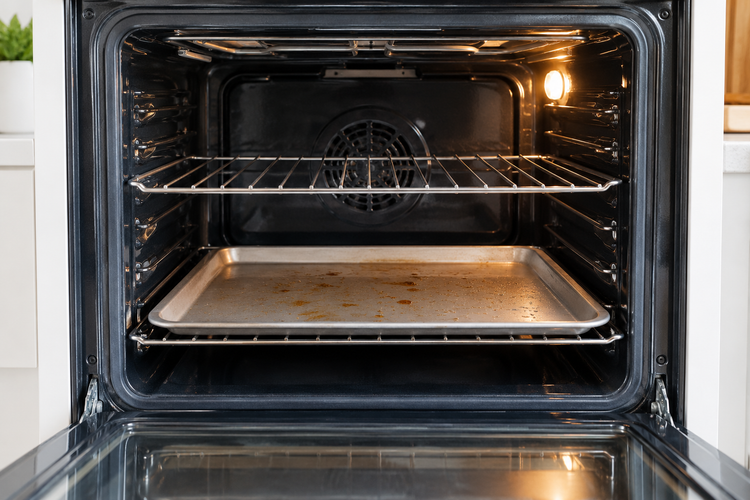
A rimmed baking sheet on a lower rack catches most drips. It also avoids the fit and vent problems that loose liners can create.
For baked-on spots, spread a paste of baking soda and water on the cooled oven interior. Leave it for several hours or overnight, then wipe and rinse with a damp cloth. Keep the paste off heating elements.
If your oven has a self-cleaning mode, follow the manual and remove racks and liners first.
Frequently Asked Questions About Oven Liner Safety
Can oven liner fumes harm pet birds?
Yes, birds are far more sensitive to fumes than people are. Poison control guidance warns that the first sign of polymer fume exposure in a pet bird can be sudden death. If you keep a bird, avoid PTFE coated liners and nonstick items entirely, and keep the bird in a different, well-ventilated room whenever you bake. Open a window and run the hood fan during any heavy cooking, even when the liner is rated for the temperature you use.
Is a stained or discolored oven liner still safe to use?
Light staining is usually cosmetic, but the cause matters. Brown marks from cooked-on grease can smoke and smell the next time the oven gets hot. Wash the liner once it cools completely, and check whether the surface feels sticky, rough, or flaky afterward. A liner that stays tacky, shows bare patches, or has a coating that rubs off should be thrown away, because a damaged surface no longer behaves the way the maker intended.
Do oven liners change how evenly food bakes?
They can. Anything placed low in the oven or across a rack may disturb airflow and shift how heat reaches your food. After adding a liner, watch the first few bakes and rotate pans if one side browns faster. An oven thermometer helps you check whether the temperature changed. If results look uneven or the oven struggles to hold heat, remove the liner and use a rimmed baking sheet on a lower rack instead.
Can I use an oven liner in a toaster oven or air fryer?
Only if the product manual for that appliance says so. Small ovens and air fryers sit the heating element close to the food and rely on fast airflow, so a loose sheet can touch an element or block circulation. Fan-driven models may even lift a lightweight sheet and push it against the element. If the manual does not mention liners, treat that as a no and use the crumb tray that came with the appliance instead.
What should an oven liner label tell me before I use it?
Look for the material, a maximum temperature in degrees, and the oven types it is approved for. A good label also says where the liner may go, such as a rack or oven floor, and whether it is safe in convection mode. If any of these details are missing, or the label claims the liner works in every oven, treat that as a warning sign and check your own oven manual before using it.
Closing Thoughts on Using Oven Liners Safely
Oven liners are not toxic in themselves, but heat, damage, and poor fit can turn a harmless-looking liner into a problem.
The main causes are overheated PTFE coatings, blocked vents, and liners left in during a self-cleaning cycle.
The fixes are simple. Confirm the material and its temperature rating, follow your oven manual, keep liners clear of elements and vents, and replace worn pieces. When in doubt, a baking sheet on a lower rack and regular wiping keep an oven clean with less risk.
