
6 Best Stove Lighters, Arc and Flame Options (Updated)

Disclosure: As an Amazon Associate, I earn from qualifying purchases. Learn more
A stove burner waits in silence until something hands it a spark. For most kitchens, a long, flexible-neck rechargeable arc lighter is the easiest daily pick, while a butane utility lighter suits cooks who want a visible flame. You might be standing over a burner whose built-in igniter clicks but never catches, or packing a camp kit for a weekend by the lake.
In both cases, what matters most is reach that keeps your hand clear of the burner, a safety lock that stops accidental sparks, and a power source you will actually keep topped up. The reviews below cover arc and flame styles, and the guide that follows walks you through lighting a gas burner without a startle.
VEHHE Flexible Neck Arc Lighter bends into tight burner spots with USB-C charging, while Click n Flame Utility Lighter gives a wind-resistant flame for stovetops and grills.
For Deep Burners
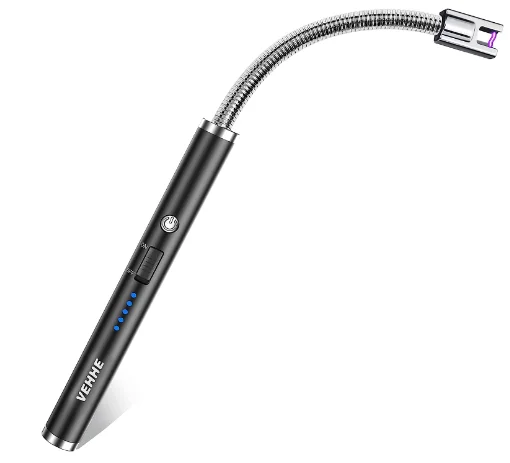
VEHHE Flexible Neck Arc Lighter
- Flexible long neck
- USB-C rechargeable battery
- Safety lock with auto-off
For Real Flame Fans
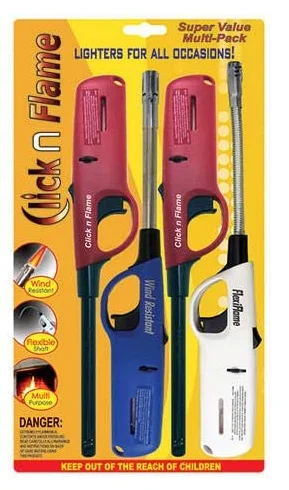
Click n Flame Utility Lighter
- Four lighters per pack
- Flexible extended shaft
- Push-button trigger grip
Our Selection Method for These Stove Lighters
Every lighter here had to be made for the job, which means the product itself lists gas stoves or stove burners among its uses. Plenty of candle lighters look similar, but if the maker never mentions stoves, we left it out.
From there, we looked at what changes your daily experience at the range. Reach came first, because a longer or bendable stem keeps your knuckles away from the grate. Safety design came next: a lock switch, an automatic shut-off, or both.
We also wanted a mix of power types, so you will find rechargeable arc models alongside a classic flame option. Each product had to be in stock and ready to order at the time of writing, with a recognized brand and steady, consistent feedback themes behind it.
Six Stove Lighters Worth Keeping Near the Range
1. VEHHE Flexible Neck Arc Lighter for Deep Burners
A flexible long neck lets you angle the arc straight at a burner port instead of tilting your wrist over the grate. Because it runs on a built-in lithium battery charged through USB-C, there is no fuel to refill, and a charging cable comes in the box.
The safety lock and automatic power-off cut down on accidental sparks in a drawer. As an electric lighter for gas stove use, its bendable stem helps you reach burners tucked under wide pans.
Everyday Use Notes: The bendable neck is the part you notice daily, since it keeps your knuckles away from the grate. The built-in hook lets it hang near the range instead of hiding in a drawer.
Notable Features:
- Wind-resistant plasma arc ignition
- Built-in hanging hook for quick storage
Practical Gains:
- No disposable fuel or batteries to buy
- Bendable stem reaches awkward burner angles
- Lock reduces accidental ignition in storage
Suited To:
- Gas stove burners
- Deep candle jars and lanterns
- Fireplaces and grills
Before You Choose: The maker advises a charging head around 20W and keeping the lock engaged in storage. An arc has no flame, so aim the tip right into the gas flow.
2. Click n Flame Utility Lighter for Gas Stove Flames
Some kitchens simply like a real flame, and this pack gives you four long utility lighters to spread between the stove, the grill, and the fireplace. The flexible extended shaft bends toward deep grills and kitchen burners so your hand stays back.
Many cooks still see a visible flame as the best lighter for gas stove burners, and gas stove burners appear right in the listed uses. The wind-resistant flame also helps on a breezy patio.
Everyday Use Notes: Having several lighters means one can live by the range and another with the grill tools. The easy push-button trigger sits on a comfortable grip.
Notable Features:
- Flexible shaft for hard-to-reach spots
- Wind-resistant flame for outdoor grilling
Practical Gains:
- Spare lighters for several rooms
- Flame is easy to see in daylight
- Works without any charging
Suited To:
- Gas stove burners
- BBQ grills and fire pits
- Candles and fireplaces
Before You Choose: These burn gas fuel, so they make an open flame and eventually run empty. The listing does not say they are refillable. Store them well away from children.
3. SUPRUS Electric Arc Lighter With Battery Level Display
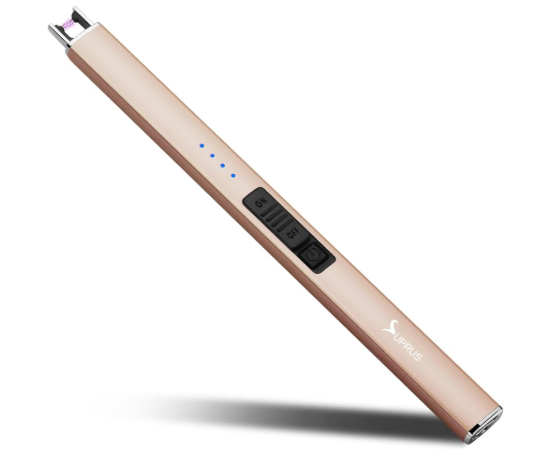
If you like knowing exactly how much charge is left, the four-LED battery display on the barrel shows the level in real time. The flameless plasma arc is described as wind and splash proof, so a draft from an open window will not blow it out.
The listing confirms this rechargeable model can light a gas stove, which earns it a place among the best rechargeable lighters for a simple kitchen setup. It weighs under 2 ounces.
Everyday Use Notes: The slim, light stick slips into a drawer or camp bag without fuss. You slide the lock before each use, which adds a deliberate second step.
Notable Features:
- Lock switch must be released before ignition
- Arc stops after 7 seconds, then restarts on demand
Practical Gains:
- Battery level visible at a glance
- Light enough for a travel kit
- No fuel refills to manage
Suited To:
- Gas stove burners
- Candles and fireplaces
- BBQ and camping trips
Before You Choose: Its straight, shorter body gives less reach than the flexible-neck models, so keep your hand clear of hot pans and steam.
4. FUKKUDA Rechargeable Arc Lighter for Stoves and Candles
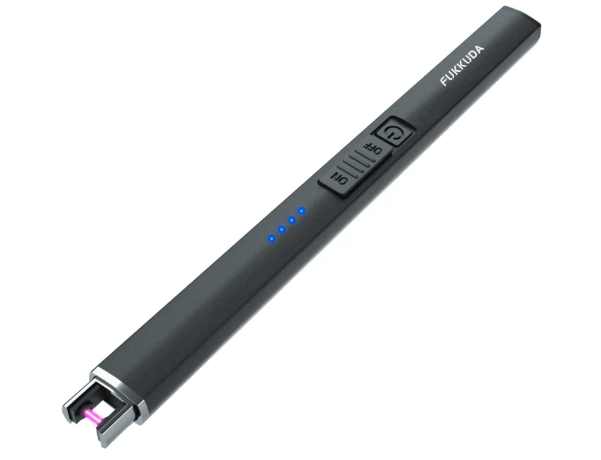
An aluminum alloy body with a heat-resistant ceramic tip gives this slim lighter a sturdy feel for daily use. Its windproof plasma arc is listed for deeply recessed candle wicks, birthday candles, gas stoves, and indoor fireplaces.
A USB rechargeable battery with LED indicators shows remaining power, and the maker says one full charge covers hundreds of uses. An auto-shutoff after 7 seconds and a lock switch round out the safety design.
Everyday Use Notes: It suits a household that lights candles as often as burners. The slim profile tucks into the drawer next to the range.
Notable Features:
- Heat-resistant ceramic tip
- Windproof and splashproof arc design
Practical Gains:
- No butane odor or refill mess
- Battery level shown by LEDs
- Slim shape stores easily
Suited To:
- Gas stoves
- Recessed candle jars
- Indoor fireplaces
Before You Choose: Its straight body does not bend, so tight burner positions may need a careful angle. Keep it locked and stored away from children.
5. Navpeak Long Neck Electric Lighter for Kitchen Stoves
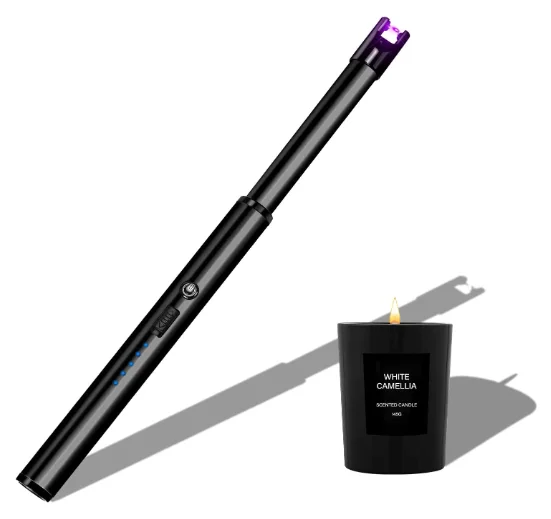
Built for people who hate leaning over a burner, the long neck design reaches candles, stoves, and hard-to-reach spots without bending. A double-lock system means you push the lock switch first and then press the ignition button.
Charging runs through USB with an LED battery indicator, and a 10-second automatic shut-off prevents overheating. The windproof arc and listed camping use make it a fair candidate for the best electric lighter for camping, and then it goes back to stove duty at home.
Everyday Use Notes: The two-step lock feels deliberate, which is reassuring with curious kids nearby. The battery lights remind you to charge before a weekend trip, not after.
Notable Features:
- Built-in timer shuts off after 10 seconds
- No butane gas needed
Practical Gains:
- Two-step ignition limits accidental sparks
- Battery level visible before trips
- Windproof arc for outdoor cooking
Suited To:
- Gas stoves and fireplaces
- BBQ grills
- Camping and hiking trips
Before You Choose: The arc has to meet the gas stream, so hold the tip close to the burner ports. It has no flame for lighting larger outdoor fires quickly.
6. LcFun Plasma Arc Lighter Two-Pack for Home Stoves
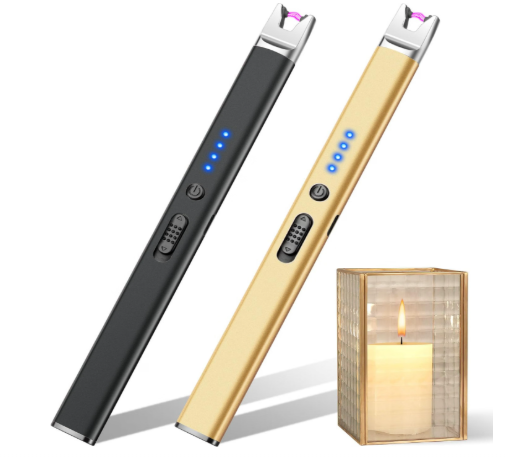
With a two-pack and two charging cables, you can keep one lighter by the range and another wherever your candles live. Each has a 7-second auto power-off plus an external safety lock switch.
The maker says one hour of charging gives 500+ ignitions, and a real-time LED battery display shows what remains. The slim, long design lets you light from a distance, and gas stoves appear in its list of uses.
Everyday Use Notes: Two identical lighters make it easy to share between rooms or keep a charged spare. The slim build also fits a pocket or backpack.
Notable Features:
- 500+ ignitions per full charge, as listed
- No flame and no pungent smell
Practical Gains:
- Spare lighter always within reach
- Quick one-hour recharge
- Lock prevents accidental ignition
Suited To:
- Gas stoves
- Scented candles
- Grills and camping trips
Before You Choose: Ignition counts are the maker’s figures and will vary with how long you hold the arc. The stem is straight, so reach is fixed.
Benefits of a Dedicated Lighter for Gas Stove Burners
A long lighter keeps your hand and sleeve back from the burner when the built-in igniter fails or when your range never had one. Matches burn down fast, drop hot heads, and put your fingers right at the grate.
A dedicated stove lighter also has a home. When it hangs on a hook or sits in the drawer beside the range, you are not hunting for a pocket lighter while gas hisses from an open valve.
Most stove lighters handle more than burners. The same tool reaches candle jars, grill burners, and fireplace logs, so one purchase covers several small jobs around the house.
One correction to a common claim: stove lighters do not adjust your burner flame. Flame size is always set by the stove knob, and the lighter only starts the gas burning.
Which Stove Lighter Type Fits Your Kitchen Best?
Three styles cover nearly every kitchen, and each lights gas in a different way. Picking the right one depends on where you cook, how often, and whether you mind charging or refilling.
| Type | How It Lights | Good Match |
|---|---|---|
| Rechargeable arc | Electric arc jumps between two contacts | Daily indoor burners, drafty spots |
| Butane utility | Trigger releases fuel and lights a flame | Grills, fire pits, flame lovers |
| Piezo spark | Squeeze makes a spark, no fuel or battery | Gas burners only, low upkeep |
Arc lighters do not use a heated coil. They push a small electric arc across a gap, and gas passing through that gap catches. That is why the tip has to sit right in the gas flow.
Butane utility lighters give you a flame you can see, which many cooks find reassuring. They work without charging, but they run out of fuel, and some are disposable rather than refillable.
Piezo lighters make a spark from a squeeze, much like the igniter on a camp stove. They need no fuel or battery, though they only light gas, never a candle or log. If you want a hotter, jet-style flame for outdoor jobs, our guide to refillable torch lighters covers that category.
Do Electric Stove Lighters Work on Every Gas Burner?
An electric stove lighter works on almost any gas burner, as long as the arc meets the gas stream. Standard cooktop burners, sealed burners, and most camp stoves all light the same way.
The catch is placement. The arc is tiny compared with a flame, so you need to hold the tip against the burner ports where gas exits, not hover it a few inches above.
Deep or recessed burners are where a flexible neck earns its place. You can bend the tip down under a wide pan or past a raised grate without twisting your wrist.
Strong wind is rarely a problem for the arc itself, since there is no flame to blow out. Wind can scatter the gas, though, so shield the burner with your body or a windscreen outdoors.
Features That Matter Most in a Long Stove Lighter
Small details decide whether a lighter feels easy or awkward after a month of daily use. These are the ones worth checking on any listing.
- Reach: A longer stem keeps your hand away from heat, steam, and grease spatter.
- Neck style: A bendable neck reaches awkward burners; a straight stick is simpler and slimmer.
- Safety lock: A switch that must be released first keeps the lighter from firing in a drawer.
- Auto shut-off: A timer that stops the arc after several seconds protects the battery and limits overheating.
- Battery display: LED bars tell you when to charge before the lighter dies mid-dinner.
- Charging port: USB-C is the most common cable in many homes today.
Going by the listed specifications, the VEHHE model measures about 10.4 inches long while the SUPRUS stick is about 7.6 inches, a gap you feel when reaching past a tall stockpot.
For flame lighters, look for a child-resistant trigger and a comfortable grip. If you buy a refillable model, a fuel window helps you see when it is getting low.
How to Light a Gas Burner With a Lighter Safely
Manual lighting is simple once you follow the right order. Your range manual is the final word, so check its manual-lighting section first.

- Clear the area. Move towels and packaging away, roll back loose sleeves, and make sure every knob is off.
- Ready the lighter. Release the lock and hold the tip at the burner ports, keeping your face back.
- Turn the knob. Most manuals have you bring the spark or flame to the ports first, then push and turn the knob to the light or high setting, so gas does not build up.
- Watch the ring. The flame should catch all the way around the burner within a few seconds.
- Reset if it fails. If it does not light quickly, turn the knob off and wait for the gas to clear before trying again.
- Finish up. Adjust the flame with the knob, lock the lighter, and put it back away from the cooktop.
Safety Habits That Keep Stove Lighting Low Risk
The most important rule comes first. If you smell gas, do not use any lighter. Leave the room, get outside, and call your gas utility or 911 from a safe distance.
Child safety matters with every lighter style. Federal child-resistant lighter rules are designed to make flame lighters hard for children under five to operate, but child-resistant does not mean childproof. Lock arc lighters after each use and store all of them up high.
- Never leave a lighter resting on the cooktop, where burner heat can damage the battery or fuel.
- Keep lighters out of hot cars and away from direct sun.
- Stop using any lighter that is cracked, leaking, or sparking unevenly.
- Pair the lighter with stove knob covers if small children can reach the range.
- Stay in the kitchen while burners are on.
Common Mistakes People Make When Lighting Gas Burners
Most stove lighting scares come from a handful of habits, and each one is easy to fix.
Turning the knob first. Opening the gas and then searching for the lighter lets gas collect around the burner. Have the lighter ready and in place before the knob moves.
Retrying without a pause. Clicking again and again while gas keeps flowing builds up fuel. Turn the knob off, wait, and start over.
Leaning in close. Putting your face over the grate to see better is the fastest way to a singed eyebrow. Use the lighter’s reach instead.
Wearing loose sleeves. Dangling fabric can touch a gas flame and catch, a point federal kitchen fire prevention tips also stress. Roll sleeves up before lighting.
Using a pocket lighter. A short cigarette lighter puts your thumb right at the burner. Keep a long stove lighter for the job.
Charging and Care Tips for Rechargeable Lighters
A rechargeable lighter stays dependable when you treat its battery kindly. Charge it with the cable that came in the box, and use a standard wall adapter rather than a high-power fast charger unless the maker says otherwise.
Avoid letting the battery sit empty for months. Some makers recommend storing the lighter charged with the lock engaged, which helps the battery last longer.
Keep the tip clean. Kitchen grease and dust settle around the contacts and weaken the arc, so a quick wipe while the lighter is locked keeps it sparking strongly.
For flame lighters, store them upright in a cool place and check the fuel level before a holiday meal or a camping trip.
Picking a Lighter for Camping and Backpacking Stoves
Outdoor cooking puts different demands on a lighter. Wind, damp air, and cold all work against you, and you may be miles from a spare.
Arc lighters shrug off wind because there is no flame to blow out, and many are listed as splash resistant. They do need charging, so top them up before you leave and keep them in an inner pocket on cold nights.
Butane lighters give a flame that is easy to aim at a camp stove, but cold weather can weaken butane pressure. Keeping the lighter warm in a pocket helps.
Carry a backup either way. Waterproof matches in a sealed case weigh almost nothing and do not depend on batteries or fuel.
When Your Stove Lighter Stops Sparking or Lighting
A lighter that suddenly quits usually has a simple cause. Work through these checks before replacing it.
- Lock still on: Many arc lighters need the lock slid off before the button works.
- Low battery: A weak or flickering arc often means it needs a full charge.
- Dirty contacts: Grease on the tip can block the arc; clean it while locked.
- Wrong position: The arc must sit in the gas stream at the burner ports.
- Empty fuel: A butane lighter that clicks without a flame is likely out of fuel.
If the lighter works but the burner flame looks yellow, lifted, or patchy once lit, the issue is the burner, not the lighter. This guide to uneven burner flames walks through the common fixes.
Built-In Igniter Versus a Handheld Stove Lighter
Most modern gas ranges have a built-in spark igniter that clicks when you turn the knob. It is convenient, but spills, moisture, and worn parts can stop it from sparking, and it needs power to work.
| Point | Built-In Igniter | Handheld Lighter |
|---|---|---|
| Power needs | Household electricity | Battery or fuel |
| Works in outages | No | Yes, if charged or fueled |
| Other uses | Stove only | Candles, grills, fireplaces |
| Common failure | Wet or dirty electrode | Flat battery or empty fuel |
A handheld lighter is the best backup, not a permanent fix. If your range clicks without lighting, the electrode may just need drying or cleaning, much like an outdoor igniter that will not spark. Persistent problems deserve a service call.
Pros and Cons of Using a Stove Lighter Daily
A stove lighter solves a real problem, but it is worth knowing the trade-offs before you rely on one.
Pros
- Keeps hands farther from the burner than matches
- Lights burners when the built-in igniter fails or power is out
- Doubles for candles, grills, and fireplaces
- Rechargeable models cut repeat fuel purchases
Cons
- Rechargeable batteries need regular charging and wear out over time
- Flame models run out of fuel, and some cannot be refilled
- Any lighter needs careful storage around children
- It does not fix a faulty igniter or burner
Stove Lighter Questions Readers Often Ask
Can you light a gas stove during a power outage?
Often, yes. Many gas cooktops use electric spark igniters, so the clicking stops when the power goes out, yet the gas valves still open. Your range manual will say whether burners can be lit by hand and how to do it. Ovens are different, since many newer gas ovens will not run without electricity, so never try to light one manually unless the manual describes the steps. Keep a charged arc lighter or a fueled flame lighter nearby for outages.
How many lights can you expect from one charge?
It depends on the battery size, its age, and how long you hold the arc each time. Makers usually list a figure, such as 500 or more ignitions from one full charge for some models, but those numbers assume short presses. Coaxing a stubborn burner for several seconds uses far more power than touching a candle wick. Treat the listed count as a rough guide, glance at the battery lights each week, and top up before guests arrive.
Should you refill a butane utility lighter or replace it?
Check the packaging first, because some utility lighters are built to be refilled and others are meant to be used up and discarded following local rules. If yours is refillable, use the fuel the maker recommends and refill outdoors or in a ventilated spot away from any flame. Let it rest a few minutes before lighting so excess fuel can disperse. A lighter that leaks, hisses, or has a cracked body should go in the trash, not back in the drawer.
How do you clean the tip of an arc lighter?
Engage the lock and make sure the lighter is off before you start. A dry cotton swab or a soft, clean brush usually lifts grease and dust from around the contacts. Avoid soaking the tip or pushing metal tools between the electrodes, since bending them can weaken or misdirect the arc. If the arc still looks thin after cleaning and a full charge, the battery may be wearing out, and replacing the lighter is often simpler than repairing it.
Can a stove lighter go in an emergency kit?
It can, and a rechargeable one makes most sense if you rotate it into regular use so the battery stays charged. Lithium batteries slowly lose charge in storage, so a lighter left untouched for months may be weak when you need it most. Many people pack a sealed flame lighter or waterproof matches as a second option, since neither depends on charging. Store whatever you choose in a cool, dry container that children cannot open easily.
Do arc lighters work on electric or induction cooktops?
No, and they are not needed there. Electric coil, smooth-top, and induction cooktops create heat without any gas flame, so there is nothing for a lighter to ignite. Using an arc on those surfaces only risks scorching food residue or draining the battery for no reason. If your home has a gas range in one spot and an electric cooktop elsewhere, keep the lighter beside the gas appliance, the grill, or the fireplace where it actually helps.
Are rechargeable stove lighters cheaper over time?
Usually, if you light burners often. A rechargeable arc lighter replaces repeat purchases of disposable lighters or butane, and topping it up uses very little electricity. The trade-off is battery life, since lithium cells lose capacity over the years and most of these lighters have built-in batteries you cannot easily swap. If you only light a burner a few times a year during outages, a simple flame lighter may serve you just as well.
Matching the Right Lighter to Your Stove
A rechargeable arc lighter suits most indoor gas cooktops and anyone who would rather charge a battery than buy fuel. A flame lighter suits grills, fire pits, and cooks who like to see exactly what is lighting the gas.
Neither type replaces a working igniter, and both need sensible storage around children. Batteries age and butane runs out, so whichever you choose, check it before you need it.
A simple rule helps: if you light burners several times a week and can charge once in a while, pick an arc lighter with a long or flexible neck; if you cook mostly outdoors or only light burners now and then, a flame lighter is enough. For most kitchens, the VEHHE Flexible Neck Arc Lighter is the calm overall choice, thanks to its bendable reach and USB-C charging.
