
4 Best Ceramic Heaters Latest Model Reviewed

Disclosure: As an Amazon Associate, I earn from qualifying purchases. Learn more
A ceramic heater warms a room by passing air over a heated ceramic element. It suits small to medium rooms such as bedrooms and home offices. Most plug-in models top out at 1500 watts, so they work best as supplemental heat rather than a replacement for central heating, especially in large or drafty spaces.
The best picks combine a thermostat, tip-over and overheat protection, and a safety listing from an independent testing lab.
Below you will find reviewed models, clear sizing and running cost guidance, and the safety rules that matter most. If you are comparing heater types first, our ceramic and convection comparison can help.
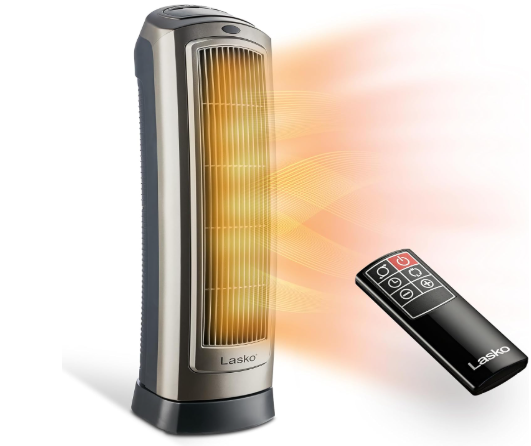
Lasko Tower Ceramic Heater With Remote and Timer
The Lasko 751320 pairs 1500W ceramic heat with wide oscillation, so warmth reaches more of a medium-sized room. A remote, adjustable thermostat, and timer make daily control easy, and overheat protection with a cool-touch housing adds a safety layer.
Feedback commonly praises its quick, quiet heating and the remote. Some users find the thermostat steps coarse, and reliability gets mixed comments.
At A Glance
Lasko 751320 Ceramic Tower Heater
1500W ceramic heatingWidespread oscillationRemote and 7-hour timerAdjustable thermostat
Great For: Medium-sized bedrooms and home offices that want remote and timer control.
Pass If: You want fine temperature steps or heating for a very large room.
Dreo Oscillating Ceramic Heater for Bedrooms and Offices
For a bedroom or home office that needs steady warmth, the Dreo Ceramic Tower Heater uses 1500W PTC ceramic heating with 70° oscillation.
Its digital thermostat runs from 41 to 95°F, and a remote, 12-hour timer, and 24-hour auto-off keep control simple. Tip-over and overheat safeguards are built in, and noise is listed as low as 34 dB.
Users often mention fast heat-up and a compact size, while reliability feedback is mixed.
At A Glance
Dreo Ceramic Tower Heater
1500W PTC ceramicWide-angle oscillation12-hour timerDigital thermostatChild lock
Great For: Bedrooms and home offices needing quiet, adjustable warmth with a remote.
Pass If: Reliability worries you or you need heat for a large open area.
What Ceramic Heaters Do Well and Where They Fall Short
Ceramic heaters shine at quick, targeted warmth. The ceramic element heats fast, and many models add a fan that pushes warm air into the room within moments of switching on.
Safety features are a real strength. Look for tip-over shutoff, overheat protection, and a listing from an independent testing lab. These are what separate a sound heater from a risky one.
Portability is another plus. Most units are light, have a handle, and need nothing more than a wall outlet, so you can move one from a bedroom to a home office as the day changes.
The limits matter just as much. A ceramic heater is not more efficient than other electric heaters, because every plug-in electric heater turns the power it uses into heat. Most also have a fan, so they are quiet rather than silent.
They also struggle in big, drafty, or poorly insulated rooms, where a 1500-watt unit can only do so much. Treat one as a spot heater for the people in the room, not a whole-home solution.
1. Lasko Oscillating Ceramic Space Heater
The Lasko Oscillating Ceramic Space Heater is a powerful and efficient solution for heating small to medium-sized rooms up to 150 sq. ft. With 1500W of heating power, it quickly warms up spaces like bedrooms, offices, or garages, eliminating cold spots with its widespread oscillation feature. The manual thermostat allows you to customize your comfort level, while the energy-efficient ceramic heating element ensures optimal performance. Its compact design (15.7H x 6L x 5W inches) makes it perfect for desks, tables, or nightstands. Safety is a priority with automatic overheat protection and a cool-touch exterior, making it safe for families and pets. Plus, its lightweight (4 lbs) and portable design with a built-in handle make it easy to move around.
Key Benefits
- 1500W rapid heating
- Widespread oscillation for even warmth
- Energy-efficient ceramic element
- Cool-touch exterior for safety
- Lightweight and portable
Compatible For
- Bedrooms, offices, garages
- Small to medium-sized rooms
- Personalized heating needs
Special Note: Always plug directly into a wall outlet. Avoid using extension cords. Not suitable for humid environments like bathrooms.
2. Dreo Space Heater with Remote Control
The Dreo Space Heater is a high-performance ceramic heater designed for large rooms up to 200 sq. ft. Its 1500W PTC ceramic heating ensures fast and efficient warmth, while the 70° wide oscillation distributes heat evenly across the room. The adjustable thermostat (41-95°F) and ECO mode help save energy by automatically adjusting power between 900W and 1500W. This heater is ultra-quiet (40dB), making it ideal for bedrooms or offices. The LED display and remote control offer convenient operation from up to 26 feet away. Safety features include tip-over protection, overheat protection, and a V0 flame-retardant plug. Its compact, 16-inch design and hidden handle make it easy to move around.

Key Benefits
- 1500W PTC ceramic heating
- 70° wide oscillation
- ECO mode for energy savings
- Remote control and LED display
- Ultra-quiet operation (40dB)
Compatible For
- Large rooms, offices, and dorms
- Hot yoga studios, basements
- Energy-efficient heating
Special Note: Do not use with extension cords. Plug directly into a wall outlet. Avoid high-moisture areas.
3. Amazon Basics Mini Ceramic Heater
The Amazon Basics Mini Ceramic Heater is a compact and lightweight heating solution, perfect for small spaces like desks or tents. With 500W of power, it delivers quick and efficient warmth in seconds. Its small size (5.8″D x 3.4″W x 6″H) and lightweight design (1.4 lbs) make it highly portable, ideal for moving between rooms. The tip-over protection ensures safety by automatically shutting off if knocked over. Despite its small size, it’s powerful enough to keep you warm in compact areas like offices or camping tents.

Key Benefits
- 500W fast heating
- Compact and lightweight (1.4 lbs)
- Tip-over protection for safety
- Portable design for small spaces
Compatible For
- Desks, offices, camping tents
- Small rooms or personal spaces
- On-the-go heating needs
Special Note: Avoid using in high-moisture areas. Always place on a stable surface.
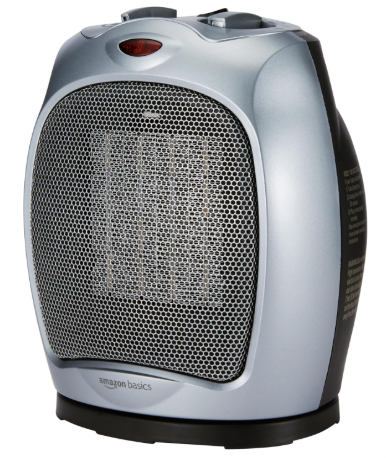
4. Amazon Basics Tower Ceramic Heater
The Amazon Basics Tower Ceramic Heater offers customizable heating options with three settings: High (1500W), Low (900W), and Fan Only. Its rapid ceramic heating technology ensures quick warmth in minutes, making it ideal for home or office use. The compact design (7.5″L x 6.3″W x 9.5″H) and lightweight build (3 lbs) make it easy to move around. Safety features include tip-over protection, overheat protection, and a TÜV certification. However, it’s not suitable for humid environments like bathrooms or laundry rooms.
Key Benefits
- 1500W rapid heating
- Three customizable settings
- Compact and portable (3 lbs)
- TÜV-certified safety features
Compatible For
- Home, office, or small rooms
- Quick and efficient heating
- Non-humid environments
Special Note: Avoid use in humid areas. Always plug directly into a wall outlet.
Do Ceramic Heaters Dry Out Air or Affect Indoor Air?
Ceramic heaters do not burn fuel, so they add no combustion fumes to your room. That makes them a cleaner choice than fuel-burning portable heaters for indoor use.
They do not remove moisture from the air on their own. Warming a room does lower its relative humidity, though, so the air can feel drier. Winter air is often dry already, which adds to the effect, and a small humidifier placed away from the heater can offset it.
Fan-driven models can stir up settled dust, which may bother people with allergies. Dust that lands on a hot element can also give off a brief burning smell, so a clean room and a clean heater help.
New units often give off a faint odor during the first hours of use. If the smell is strong, keeps going, or smells like burning plastic, switch the heater off and unplug it.
Ceramic Heater Running Costs and Ways to Lower Them
A ceramic heater’s running cost depends on its wattage and how long it runs, not on the heater type. Plug-in electric resistance heaters convert nearly all their power into heat, so a ceramic model has no efficiency edge over a basic fan or oil-filled unit.
You can estimate the cost yourself. Divide the wattage by 1,000 to get kilowatts, multiply by the hours of use, then multiply by your utility rate per kilowatt-hour. A 1500-watt heater running for 10 hours uses 15 kilowatt-hours.
The thermostat is your best savings tool. When the room reaches the set temperature, the heater cycles off, so it draws power only part of the time. A timer helps too, especially for warming a bedroom before bed or a desk before work.
Heat only the room you are using, and lower your central thermostat while you do. If you skip that step, the heater’s cost simply adds to your normal heating bill.
Sealing drafts and closing doors helps the same watts go further. Electric resistance heating is also among the pricier ways to heat, so it works best for short, targeted use.
Keeping Your Ceramic Heater Clean and Working Safely
A little routine care keeps a ceramic heater safer and helps it run as designed. Always unplug it and let it cool completely before you touch any part of it.
- Dust the grille and body: Wipe with a soft, dry cloth, and use a vacuum brush attachment on the vents.
- Skip water and sprays: Liquids and cleaning solutions can damage electrical parts.
- Inspect the cord and plug: Look for fraying, cracks, or discoloration. If you find any, stop using the heater and contact the maker or replace the unit rather than repairing it yourself.
- Check the guard and controls: Do not use a heater with a missing guard or a broken control.
- Watch for warning signs: A hot plug or cord, or a heater that no longer cycles off at the set temperature, means it is time to replace it.
- Store it dry: In the off-season, keep it in its original box or under a cover in a cool, dry spot.
- Relevant Post: 4 Best Space Heaters for Large Rooms
Where a Ceramic Heater Works Best in Your Home
A ceramic heater is an indoor, plug-in spot heater, so match it to the job.
- Personal heating: A desk or reading corner, where warm air reaches you directly from a safe distance.
- Whole room heating: Small to medium rooms with the door closed and fair insulation. A 1500-watt unit will not keep a large open area comfortable.
- Outdoor use: Not suited. Standard models are made for indoor use, so keep them away from rain and damp patios.
- Supplemental heating: A good fit for a cold bedroom or office when central heat falls short, ideally on a timer.
- Pet areas: Keep a clear zone so pets cannot touch the grille. Safety features lower the risk but do not remove it.
Choosing Between Ceramic Oil Fan and Infrared Heaters
Each electric heater type has a different feel, even though they all use power in a similar way. For a deeper look at one pairing, see our oil-filled heater comparison.
- Ceramic: Warms air over a ceramic element, often with a fan. It heats up fast and is light, but fan noise and drier-feeling air are possible.
- Oil-filled: Takes longer to warm up but keeps radiating heat after the thermostat shuts off. It runs quietly and is heavier to move.
- Fan heater: Uses a metal coil instead of ceramic plates, with a similar fan-driven feel.
- Infrared: Heats people and objects directly rather than the air, which suits one seated spot more than a whole room.
- Quick rule: At the same wattage, all of them cost about the same to run, so choose by warm-up speed, noise, and room coverage.
Matching Ceramic Heater Wattage to Room Size and Insulation
A common rule of thumb is about 10 watts of heating power per square foot. By that guide, a 1500-watt heater suits a room around 150 square feet, such as a small bedroom or home office.
The rule assumes standard ceilings and decent insulation. Older homes, high ceilings, large windows, and drafts all lower what a heater can achieve, so treat the number as a starting point.
Because 1500 watts is the usual ceiling for a plug-in heater, a bigger room may need another heating source rather than a stronger plug-in model.
Insulation does the quiet work. Closing the door, hanging thick curtains, and sealing gaps near windows keep warm air in, so the heater cycles off sooner and the room feels steadier. Keep the heater away from drafts, since cold air near its sensor can make it run longer.
Smart Placement and Daily Habits for a Ceramic Heater
Where and how you use a heater matters as much as which one you buy. These habits follow guidance from fire safety groups, and our ceramic heater safety guide covers more.
- Choose a flat, solid floor: Never set a heater on furniture or a soft rug where it can tip.
- Keep three feet clear: Curtains, bedding, furniture, and paper should stay at least three feet away.
- Plug straight into the wall: Avoid extension cords and power strips.
- Use the thermostat: Set a target temperature instead of running on high all the time.
- Keep walkways clear: Do not block exits or foot traffic.
- Stay dry: Keep the heater away from water, and never touch it with wet hands.
How to Pick the Best Ceramic Heater for Your Space
Choosing well comes down to a few checks you can make yourself. The label and product page answer most of them, so no special testing is needed.
- Safety listing: Look for a mark from an independent testing lab, such as UL or ETL.
- Built-in protection: Tip-over shutoff and overheat protection are the baseline.
- Wattage and room size: Compare the wattage with your room’s square footage.
- Thermostat and timer: A thermostat limits run time, and a timer helps at bedtime or during work hours.
- Oscillation and remote: Helpful for spreading heat and controlling it from a chair, but optional.
- Size, weight, and handle: Portability matters if you will move it between rooms.
- Warranty and manual: Read the terms, since reliability reports vary by model.
Why Does a Ceramic Heater Keep Shutting Off by Itself?
A heater that clicks off is not always broken. Often a built-in feature is doing its job.
Start with the thermostat. Once the room reaches your set temperature, the heater pauses and restarts as the air cools. A timer or auto-off setting can also end a session you forgot you set.
Next, check the tip-over switch. A soft rug, a tilted surface, or an object leaning on the heater can make it think it has fallen. Move it to a flat, hard floor and restart it.
Overheat protection is the more serious cause. A heater pushed against a wall or furniture, or one with blocked air flow, can shut down to protect itself. A colleague once asked me about this, and giving the heater open space was the first fix to try.
If it still shuts off after these checks, unplug it and stop using it. Contact the maker or replace the unit rather than repairing it yourself.
Can Your Outlet Handle a 1500 Watt Ceramic Heater?
Most plug-in ceramic heaters run at 1500 watts on high. At standard 120 volts, that draws about 12.5 amps, which is most of what a common 15-amp household circuit can carry.
Everything else on the same circuit adds to that load. A vacuum, hair dryer, or second heater can trip the breaker, so keep other high-wattage devices off that circuit while the heater runs. Your panel labels can show which outlets share one.
Know the warning signs. A breaker that trips again and again, or a plug or outlet that feels warm or looks discolored, are reasons to unplug the heater and stop using that outlet. Heat at the plug can start a fire, so have an electrician inspect it.
A plug that fits loosely is a common sign of a worn outlet, so get it replaced before running a high-wattage heater there.
Quick Answers to Common Ceramic Heater Questions
How Long Does a Ceramic Heater Last?
There is no fixed lifespan. It depends on build quality, how many hours the heater runs each winter, and how much dust it collects. Owner reports vary widely, with some seeing weaker heating after a few seasons and others getting many years of use. Check the warranty length before you buy and keep the receipt. Replace a heater that heats poorly, has a damaged cord, or shows signs of heat damage, since an aging unit can be a safety problem as well as an inconvenience.
Is a Ceramic Heater Safe Around Kids and Pets?
Safety features lower the risk but do not remove it. Tip-over and overheat protection help, yet the front grille still gets hot and can burn skin or fur. Many models have a cool-touch body, but check the manual for which parts stay cool. Keep children and pets out of the clear zone around the heater, and consider a model with a child lock if little hands can reach the controls. Never leave kids alone in a room with a running heater.
Can I Leave a Ceramic Heater On Overnight?
Fire safety groups advise turning space heaters off and unplugging them when you leave the room or go to bed. A heater is not a substitute for bedding, warm clothes, or your main heating system overnight. If you want a warm bedroom, use a timer to heat the room before you sleep, then switch the heater off. Use the same habit when you leave the house, even for a short trip.
Can I Use a Ceramic Heater in a Bathroom?
Only if the manual says the model is made for bathroom use. Most ceramic heaters are not rated for damp rooms, and water near electric parts raises the risk of shock and fire. Even a bathroom-rated heater needs to stay well away from tubs, sinks, and showers, and you should never touch it with wet hands. If the manual does not mention bathrooms, keep the heater in a dry room and look for a different way to warm the bathroom.
Is It Safe to Use an Older Ceramic Heater?
Older heaters may lack newer safety features, and parts wear with age. Portable electric heaters made after 1991 must meet more safety requirements than earlier ones. If your heater is old, has a frayed cord, a missing guard, or no tip-over or overheat protection, replace it with a model listed by an independent testing lab. Do not rely on an old unit just because it still turns on.
Can I Move a Ceramic Heater While It Is Running?
It is safer to unplug it first and let it cool. Moving a running heater can drag the cord, tip the unit, or bring the hot grille against something flammable. Carry it by the handle rather than the cord, and set it on a flat surface before plugging it back into the wall. If the model has a cool-down fan after shutoff, wait until it stops before you pick it up.
Is a Remote Control Worth Having on a Ceramic Heater?
A remote is a convenience, not a heating upgrade. It helps if the heater sits across the room from your bed or desk, since you can adjust settings and a timer without getting up. Remotes often use small batteries that may not come in the box, and they are easy to misplace. If you only turn the heater on and off, the controls on the unit itself may be enough.
Our Closing Advice on Choosing a Ceramic Heater
A ceramic heater is a handy way to add warmth to one room, as long as you match it to the space and use it carefully. Its strengths are fast heat, easy portability, and useful safety features. Its limits are room size, running cost, and the need for sensible placement.
Choose a model with a safety listing, a thermostat, and tip-over and overheat protection. Keep it on a flat floor, plug it straight into the wall, and turn it off when you leave the room or go to sleep. Used that way, it can make a cold bedroom or office far more comfortable.
- Read More: 6 Best Small Space Heaters Reviewed
