
The 6 Best Compact Camping Stoves Reviewed (Updated)

Disclosure: As an Amazon Associate, I earn from qualifying purchases. Learn more
A good trail dinner starts with a flame small enough to vanish into your pocket. For most campers, the MSR PocketRocket 2 is the easiest quick decision, while the Coleman Classic 1-Burner Butane suits drive-up sites where weight barely matters.
Picture yourself packing for two nights out. Every ounce counts, yet you still want hot coffee at dawn and a real meal after a long climb. The right stove comes down to your fuel type, how much weight and pack space you can spare, and whether you need steady simmer control or just fast boiling.
Below, you will find six options sorted by need, followed by setup, safety, and fire rule basics, so your stove works where and when you need it.
The MSR PocketRocket 2 folds tiny for long trails, while the Jetboil MightyMo adds a pushbutton igniter and fine flame control for cold, early starts.
For Light Packs
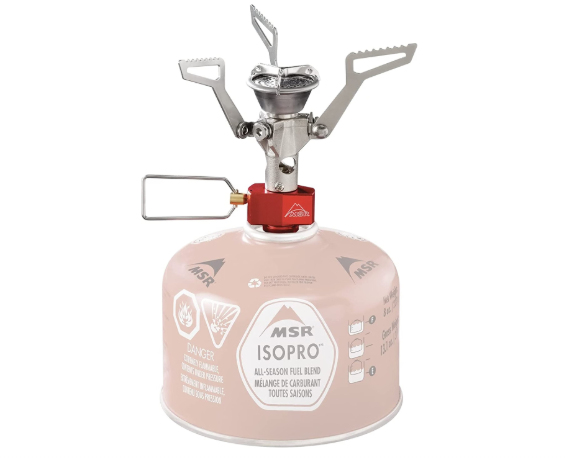
MSR PocketRocket 2
- Weighs 2.6 ounces
- Folds to 2 x 2 x 3 inches
- Serrated folding pot supports
For Cold Mornings
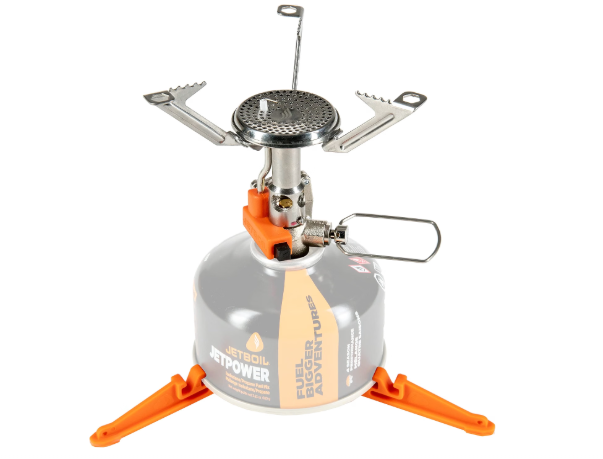
Jetboil MightyMo
- Four-turn flame regulator
- Pushbutton igniter built in
- Fuel can stabilizer included
Why a Small Camping Stove Earns Its Pack Space
A campfire is lovely, but it is slow, smoky, and often not allowed. A small stove gives you a controllable flame in minutes, which means hot drinks before breaking camp and a warm dinner even when the wood is wet.
The real win is space. Many canister stoves fold small enough to ride inside your cook pot, so the whole kitchen takes up the room of a coffee mug. Tabletop butane models are bulkier, yet they still slide under a car seat.
A compact stove also gives you an on and off valve. That matters on public land during dry months, when open fires may be banned but stoves that shut off instantly are often still allowed.
Finally, a portable camping stove keeps cooking simple for one or two people. You boil, simmer, and pack up without hauling a heavy two-burner unit for meals that only need one pot.
How We Chose These Compact Camping Stoves
Every stove here had to be a true compact camping stove, not a cook set, accessory, or full-size camp kitchen. We looked for clear wording on the product page that confirms the stove is built for camping and designed to pack small.
Next, we favored recognized brands with steady demand and consistent owner feedback over time. Specifications came only from each product listing, so every weight, output figure, and burn time you read below matches what the maker states.
We also mixed fuel types and use cases. You will find two ultralight canister stoves for the trail, a tabletop butane burner, a folding butane stove, a propane bottletop model for car camping, and one tiny titanium burner for hikers who count every gram.
Reviews of Six Small Camp Stoves Worth Packing
1. MSR PocketRocket 2 Ultralight Canister Stove for Long Trails
Weighing 2.6 ounces and collapsing to 2 x 2 x 3 inches, this canister stove disappears into a cook pot or hip belt pocket. It threads onto self-sealing isobutane-propane canisters and needs no priming, preheating, or pressurizing.
The maker lists a boil time of about 3.5 minutes per liter, and the flame adjusts from a simmer to a rolling boil, so it handles real cooking, not just water. Serrated pot supports grip a wide range of pot sizes.
Real-Use Fit: It reads as a true ultralight camping stove for solo hikers and pairs who boil, rehydrate, and sometimes simmer on the trail.
Standout Features:
- Folding serrated pot supports
- Lightweight protective case included
Core Strengths:
- Very small packed size
- Simmer to boil flame control
- No priming or preheating needed
Works Well With:
- Threaded isobutane-propane canisters
- Narrow and wide backpacking pots
- Solo and two-person trail meals
Before You Choose: There is no built-in igniter, so carry a lighter. The canister-top design sits tall, so pick level ground and keep wide pots centered.
2. Jetboil MightyMo Compact Stove With Steady Cold Weather Flame
Cold, early starts are where this stove fits best. Its pushbutton igniter lights without a match, and the maker states performance stays regulated down to 20°F.
A four-turn regulator gives fine control from a light simmer to a full boil, which helps when you sauté greens or warm a sauce. The open platform holds a Jetboil skillet or FluxRing pot without a separate pot support, and a fuel can stabilizer and storage pouch come in the box.
Real-Use Fit: At 3.36 ounces, it works well as an ultra light camping stove for hikers who want simmer control without carrying much extra weight.
Standout Features:
- Regulated performance down to 20°F
- Fuel can stabilizer included
Core Strengths:
- Matchless pushbutton lighting
- Fine flame steps for real cooking
- Steadier canister base with stabilizer
Works Well With:
- Jetboil skillet and FluxRing pots
- JetPower isobutane-propane fuel canisters
- Chilly shoulder-season trips
Before You Choose: Fuel, skillet, and pot are sold separately. Pack a backup lighter in case the igniter stops sparking on a long trip.
3. Coleman Classic 1-Burner Butane Tabletop Stove for Car Camping
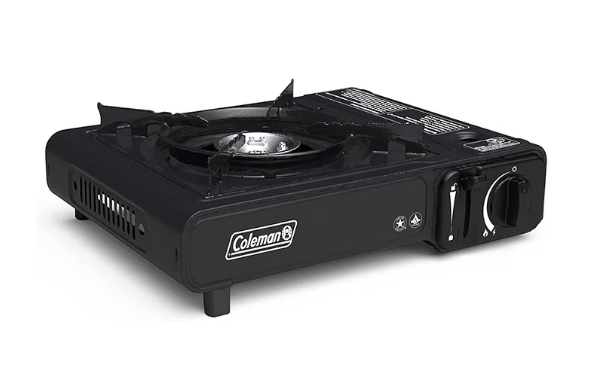
For drive-up sites and picnics, this tabletop burner trades trail weight for a large, stable base that makes stirring easy. Instastart ignition lights it without matches, and the single adjustable burner delivers 7,650 BTUs.
A wind baffle shields the flame, the porcelain-coated grate lifts off for cleaning, and the burner fits one 10-inch pan. The maker rates burn time at up to 1.25 hours on high per 8.8-ounce butane cylinder, sold separately.
Real-Use Fit: It feels closest to a home cooktop, which helps when you cook eggs, pancakes, or one-pan dinners at a campsite table.
Standout Features:
- Removable porcelain-coated grate
- Carry case included
Core Strengths:
- Matchless automatic lighting
- Wide base for steady stirring
- Quick cleanup after greasy meals
Works Well With:
- 8.8 oz butane cylinders
- One 10-inch pan
- Picnic tables and tailgates
Before You Choose: It is too bulky for backpacking. Butane loses pressure near freezing, so this burner suits mild-season trips on a flat outdoor surface.
4. Gas One GS-8300 Foldable Compact Camping Stove
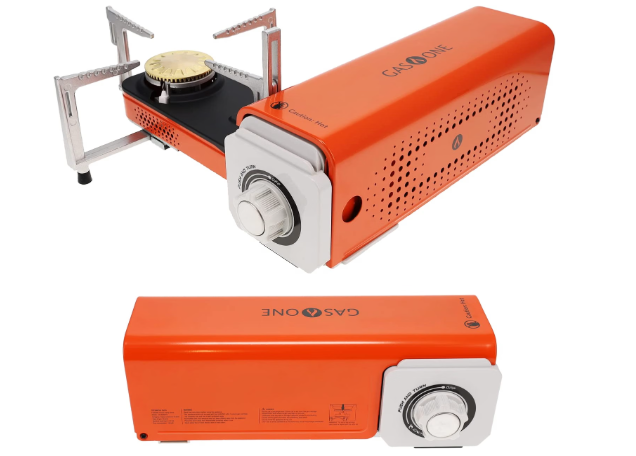
Roughly the size of a 32-ounce water bottle when folded, this butane stove still puts out 8,000 BTU. Its spider-style grates swing out to hold pots and fold back in for packing.
A durable brass burner head, an enamel coating for easier cleaning, and ventilation holes round out the build. Piezo auto ignition and a push-and-turn knob handle lighting and flame control, and a carrying case keeps everything together in the car.
Real-Use Fit: It sits between a backpacking stove and a tabletop burner, a sensible middle ground for car campers and backyard cooks.
Standout Features:
- Folds to water bottle size
- Carrying case included
Core Strengths:
- Strong output for its size
- Simple folding setup
- Push-and-turn flame control
Works Well With:
- Butane canisters in the body
- Small pots and pans
- Backyard or campsite tables
Before You Choose: At about 2 pounds, it is too heavy for most backpackers, and butane weakens in cold weather.
5. Coleman Bottletop Propane Stove That Stores in Two Pieces
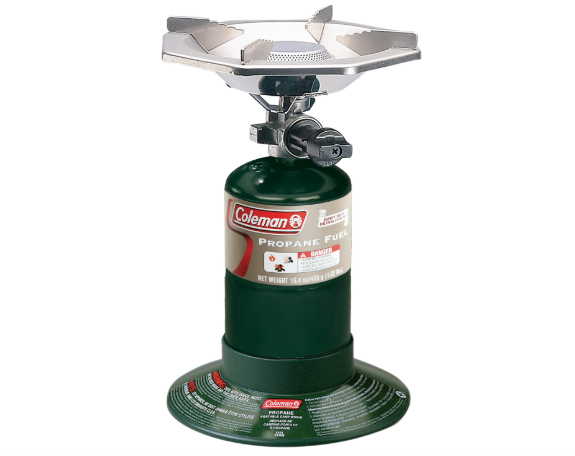
This stove screws straight onto a 16.4-ounce propane cylinder, and its space saver design lets the burner and base separate from the bottle for compact storage. A pressure regulator helps keep output consistent in harsh conditions.
Wind baffles protect the burner, the single adjustable burner fits an 8-inch pan, and the maker rates runtime at up to 2.5 hours on high per cylinder. It comes with a 3-year limited warranty.
Real-Use Fit: Small propane cylinders are easy to find for camping, so this stove suits car campers who already carry them for lanterns or other gear.
Standout Features:
- Burner and base separate for storage
- Wind baffles around the burner
Core Strengths:
- Steady flame from the regulator
- Uses common propane cylinders
- Small footprint on a table
Works Well With:
- 16.4 oz propane cylinders
- Pans up to 8 inches
- Car camping and emergency kits
Before You Choose: Sitting high on a bottle, it needs firm, level ground and its base attached. Like every fuel stove here, it is for outdoor use only.
6. BRS Outdoor BRS-3000T Tiny Titanium Stove for Gram Counters
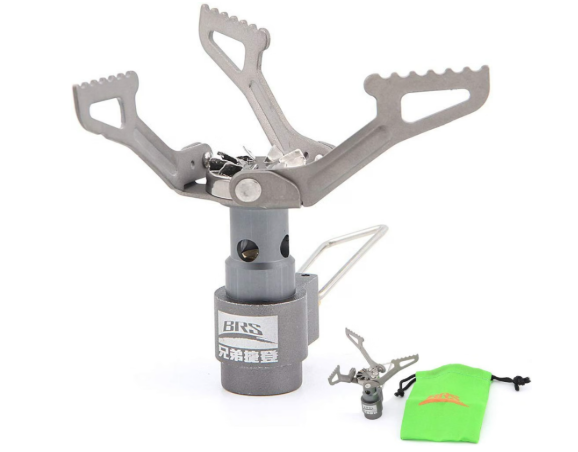
Gram counters will notice one number first, 25 grams. This titanium canister stove flips out its pot supports and twists onto a gas canister in seconds.
The maker lists 2700W output and a boil time of about 2 minutes 58 seconds per liter, with smooth flame adjustment. The stove and a 110g canister nest inside a 750 ml pot, and a pouch and spare O-ring are included.
Real-Use Fit: It works as a true mini camping stove for fast and light trips where boiling water matters more than gourmet cooking.
Standout Features:
- Nests with a 110g canister in a 750 ml pot
- Spare O-ring included
Core Strengths:
- Lightest stove in this guide
- Fast setup on a canister
- Tiny packed size
Works Well With:
- Threaded gas canisters
- Small 750 ml pots
- Solo boil and eat meals
Before You Choose: The maker says it suits trips where weight matters more than features. Narrow arms favor small pots, and the valve must be fully closed before attaching.
Canister, Butane, or Propane Fuel for Your Trips
Fuel shapes almost everything about a small stove, from where it works to how much it weighs once the canister is attached. Pick the fuel first, and the stove choice gets much easier.
| Fuel | Best Fit | Watch Out For |
|---|---|---|
| Isobutane-propane canister | Backpacking, three seasons | Needs threaded canisters |
| Butane cartridge | Tabletop cooking, mild weather | Weak near freezing |
| Small propane cylinder | Car camping, cooler days | Heavy and bulky to carry |
| Wood and twigs | Long trips, no fuel to carry | Often banned during fire restrictions |
| Alcohol | Simple ultralight setups | Slow boil, faint flame |
Canister stoves are the easy choice for hikers because the fuel is sealed, clean, and quick to attach. If you are torn between the two lightest systems, this guide on alcohol versus canister stoves breaks down the trade-offs.
Butane and propane are not interchangeable without the right hardware. Before mixing fuels, read up on swapping propane into butane stoves, since pressure and fittings differ.
Ultralight Canister Stove or Tabletop Burner, Which Fits You?
The word compact covers a surprisingly wide range. Going by the listed specifications, the lightest stove in this guide weighs 25 grams, while the folding Gas One model weighs about 2 pounds.
Choose an ultralight canister stove when you carry everything on your back. These screw onto a fuel canister, pack inside a pot, and boil water fast, which is all most trail meals need.
Choose a tabletop burner when you park near your site. A wide, low base holds a real frying pan, resists tipping, and makes stirring and flipping much easier.
A bottletop propane stove lands in between. It is taller and heavier than a canister burner, yet it runs on cylinders you may already own and stores in pieces.
What to Check Before You Pick a Stove
A few details decide whether a small stove feels easy or frustrating on day two of a trip.
- Packed size and weight: Measure against the pot or bag you already use.
- Fuel you can find: Threaded canisters, butane cartridges, and propane cylinders are sold in different places.
- Ignition: Built-in igniters are handy, but always pack a lighter as backup.
- Flame control: Look for a valve that turns down low if you plan to cook, not just boil.
- Pot support: Wider arms or grates suit bigger pans; narrow arms suit small pots.
- Wind handling: Baffles or a recessed burner help keep the flame steady.
- Shut-off valve: Stoves that turn off instantly are often allowed when campfires are not.
Easiest Small Camping Stoves for First Trips
If this is your first stove, ease of use beats saving a few grams. Tabletop butane burners with automatic ignition are the most familiar, since they light and adjust much like a kitchen range.
Canister stoves are just as simple once you know the routine. You thread the stove onto the canister, open the valve slightly, light it, and adjust. There is no priming or pumping involved.
Practice at home in an open yard before your trip. Light the stove, boil a pot of water, and pack it away once. That one rehearsal removes most of the stress at camp.
Getting Good Performance Without Overspending on a Stove
A budget camping stove can cook just as well as a premium one for simple meals. Where you save or spend should follow how you camp, not the spec sheet.
Spend more on weight only if you backpack often. For car camping, a sturdy tabletop burner from a known brand covers most needs.
Count fuel costs over time. A stove that uses common cylinders or cartridges may cost less to run across a season than one tied to a single canister type.
Check the warranty and look for a clear shut-off valve and stable base. Skipping those to save a little rarely pays off.
Setting Up and Lighting a Camp Stove Safely
A calm, consistent routine keeps small stoves safe and reliable. Always follow the maker’s manual first, then use these general steps.
- Inspect the threads, O-ring, and burner for damage or debris.
- Close the stove valve fully, then attach the fuel hand tight without forcing it.
- Set the stove on firm, level ground outdoors, clear of grass, leaves, and gear.
- Open the valve slightly and light it with the igniter or a lighter held to the side.
- Adjust the flame so it stays under the pot, not around its sides.
- Stay with the stove while it burns, and keep children and pets back.
- Turn it off and let it cool fully before removing the fuel or packing it.
If you smell gas or see frost forming on a fitting, shut the valve and check the connection before relighting.
Never Cook Inside a Tent or Vehicle
Fuel-burning stoves produce carbon monoxide, a gas you cannot see or smell. Inside a tent, camper, or car, it can build up quickly, even with a door partly open.
The U.S. Consumer Product Safety Commission warns that people die every year from carbon monoxide poisoning with camping equipment used in enclosed spaces. Early signs include headache, dizziness, nausea, and confusion, which are easy to mistake for flu.
Cook in the open, well away from tent walls, and never use a stove for warmth while sleeping. For a closer look at butane stoves and indoor use, see our guide on the topic.
Simple Ways to Save Fuel and Block the Wind
An energy efficient camping stove setup is mostly about technique. Small habits stretch a canister further and cut cooking time.
- Use a lid on every pot to trap heat.
- Keep the flame moderate, since flames licking up the sides waste fuel.
- Use natural windbreaks such as rocks or a pack, kept a safe distance away.
- Soak dried foods before cooking to shorten simmer time.
- Warm canisters in your jacket on cold mornings, never over a flame.
Avoid fully enclosing a canister stove in a windscreen unless the maker approves it, because trapped heat can overheat the canister.
Fire Restrictions and Camp Stoves on Public Land
During dry seasons, national forests often limit or ban campfires. Many orders still permit portable stoves, but only certain kinds.
For example, the Humboldt-Toiyabe National Forest explains that portable stoves with an on and off switch and a contained fuel source are allowed under its restrictions, and California requires a campfire permit for any portable stove.
That rule is why a gas or liquid-fuel stove with a shut-off valve is the safer bet. A camping wood stove has no instant shut-off, so it is often prohibited when restrictions are in place. Check the local forest or park alert page before every trip.
Common Mistakes That Shorten a Small Stove’s Life
Most stove problems come from handling, not from the stove itself.
- Cross-threading the canister: Start threads gently by hand and stop if they bind.
- Overtightening: Hand tight is enough and protects the O-ring.
- Storing it attached: Remove the canister after each trip to rest the seals.
- Leaving grease and spills: Wipe the burner and grate once cool.
- Crushing pot supports: Pack the stove in its case or inside a pot.
- Leaving fuel in a hot car: Heat raises canister pressure, so store fuel cool.
Who Should Skip a Compact Stove Altogether
A small stove is not the right tool for every camp. If you cook for a family or a group, one burner turns dinner into a slow relay of pots.
Campers who like full breakfasts with eggs, bacon, and coffee at once will be happier with a double-burner setup. The extra size buys you two flames and a wider cooking surface.
Winter campers who melt snow for water in deep cold may also need a liquid-fuel stove, since canister and butane models lose pressure as temperatures drop.
Frequently Asked Questions About Compact Camp Stoves
How long does one fuel canister last on a small stove?
It depends on the stove, the flame setting, the weather, and how much you cook. Makers usually list runtime on high, which is the shortest case. For example, the Coleman Classic 1-Burner Butane is rated for up to 1.25 hours on high per 8.8-ounce cylinder, and the Coleman Bottletop for up to 2.5 hours per 16.4-ounce propane cylinder. Using a lid, a moderate flame, and wind protection can stretch those numbers noticeably on a real trip.
Can you bring a camping stove on a plane?
The Transportation Security Administration allows camp stoves in carry-on or checked bags only when they are empty of all fuel and cleaned so no fuel vapors or residue remain. Fuel canisters and cartridges cannot fly at all, so plan to buy fuel at your destination. Canister stoves travel well because the stove itself holds no fuel. Clean it, let it air out, and pack it where officers can inspect it easily.
Do butane stoves work in cold weather?
Plain butane struggles as temperatures approach freezing because it does not vaporize well, so the flame weakens or sputters. Isobutane-propane canister blends handle cool mornings better, and some stoves add a pressure regulator for steadier output. If you camp in shoulder seasons, a regulated canister stove or a propane model is a safer choice. Keeping the canister warm in your jacket until cooking time also helps, but never heat it over a flame.
Is a wood-burning stove a good compact alternative?
A wood stove saves you from carrying fuel, and some fold flat for packing. The trade-offs are smoke, soot on your pot, slower cooking, and dependence on dry twigs. The bigger issue is regulation. Twig stoves have no shut-off valve, so many public lands prohibit them during fire restrictions, even when gas stoves remain allowed. Treat a wood stove as a backup or a fun extra rather than your only cooking option.
What size pot works best on a mini canister stove?
Small, lightweight pots between roughly 750 ml and 1 liter suit most mini stoves because they sit centered on narrow pot arms. The BRS-3000T, for instance, is designed so the stove and a 110g canister nest inside a 750 ml pot. Wide skillets or heavy cast iron raise the center of gravity on a canister-top stove and can tip it. For larger pans, a tabletop burner with a broad grate is the better match.
How should you store fuel canisters between trips?
Detach canisters from the stove, then store them upright in a cool, dry, ventilated place away from heaters, flames, and direct sun. Avoid leaving them in a hot car trunk, since heat raises internal pressure. Check threads and valves for dents or rust before each trip, and retire any canister that looks damaged. Partly used canisters are fine to keep for short trips, and you can shake one gently to estimate how much fuel remains.
Matching the Right Stove to Your Next Trip
A compact stove suits campers who cook for one or two and value packed size, quick setup, and a flame that shuts off instantly. It is less suited to big groups, multi-pan meals, or deep winter trips where butane and canister fuels lose strength.
Use a simple rule. If you carry your kitchen on your back, choose a canister stove. If you park beside your site, choose a tabletop or bottletop model with a wide, stable base.
For most readers who want one stove that does the most with the least weight, the MSR PocketRocket 2 is a calm, dependable place to start.
