
7 Best Heat-Powered Wood Stove Fans Reviewed for 2026

Disclosure: As an Amazon Associate, I earn from qualifying purchases. Learn more
A heat-powered wood stove fan is an energy-efficient and cost-effective way to circulate warm air throughout your home during the colder months. These fans are designed to operate without electricity, instead utilizing the heat from your wood-burning stove to power the fan blades.
Quick Stove Fan Picks
On a flat stove top that gets hot, the Freedom Stoves Heat Powered Stove Fan can move air across a medium to large room → View on Amazon
Anyone worried about overheating will appreciate the VODA Wood Stove Fan Heat Powered, which lifts its front when the surface runs too hot → View on Amazon
When searching for the best wood stove fan, it is important to consider the CFM (cubic feet per minute) rating. The highest CFM wood stove fans are capable of moving a larger volume of air, making them ideal for larger rooms or spaces. These powerful fans ensure that warmth is evenly distributed, providing optimal comfort during colder months.
For those with a large room to heat, the best wood stove fan for large rooms is essential. These fans are designed to handle larger spaces and deliver consistent warmth throughout the area. Another noteworthy option is the Voda heat-powered stove fan, which offers excellent performance and durability.
Whether you’re using a wood stove or a buddy heater, finding the best stove fan is crucial. The best stove fan for a buddy heater ensures that the heat generated is effectively circulated, maximizing the heater’s efficiency and creating a cozy environment.
Some of the best heat-powered wood stove fans on the market include the Ecofan UltrAir, the VODA New Designed Wood Stove Fan, and the TOMERSUN 3 Blades Heat Powered Stove Fan. These fans have received high ratings and positive reviews from customers for their efficiency and durability.
Best Choice
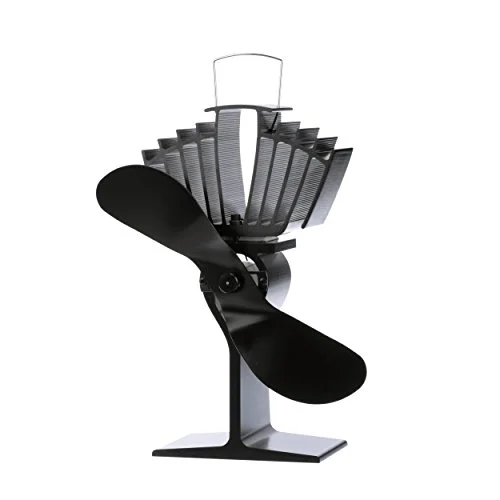
Ecofan AirMax Heat Powered Stove Fan
- Heat powered, no cords
- FingerSafe two-blade design
- Replacement motors available
Strong Option

JossaColar Heat Powered Wood Stove Fan
- Curved aluminum fan blade
- Magnetic thermometer included
- Fits stoves and fireplaces
If you’re looking for a heat-powered wood stove fan for a larger room, the Ecofan AirMax is a great choice. This fan has a larger blade designed to circulate warm air throughout larger spaces.
For those looking for a non-electric option, the Valiant 4 Blades Heat Powered Stove Fan and the Caframo Limited Ecofan AirMax are both great choices. These fans are designed to operate solely on the heat from the stove, making them an eco-friendly and cost-effective choice.
Ensure you’re looking at the best and latest data with our updated ratings and comparisons of current stove fan models.
7 Best Heat-Powered Wood Stove Fans Review
1. VODA 4-Blade Heat Powered Stove Fan for Wood / Log Burner/Fireplace
This stove fan is great! It’s heat-powered, so it doesn’t need batteries or electricity to run. And it has four blades instead of the standard two, so it moves a lot of air and really circulates the heat from your wood stove. We’ve been using it for a few weeks now and love it!
A 4-blade heat powered stove fan is a great way to increase the amount of warm air that circulates in your room. This type of fan is powered by the heat from your stove, so it doesn’t require any batteries or electricity.
The VODA 4-blade design makes this fan more efficient than a 2-blade fan, and it’s also more durable and silent.

- Mounting Type: Free Standing
- Number of Blades: 4
Key Features/ Advantages
• A 4-blade powered Stove Fan increases 80% more warm air than a 2-blade fan
• No batteries or electricity required
• Efficiently circulates warm air throughout the room
• Less consumption, more efficiency
• Innovative and durable design
• Silent operation
• Can be used with Wood / Log Burner/Fireplace
Where to Improve
• Sometimes stopped working after a short period
Our Recommendations
This stove fan is great! It’s really easy to use and it actually works to help circulate the heat from our wood stove. We’ve only had it for a few weeks, but so far we’re very happy with it.
2. GALAFIRE 4-Blades Heat Powered Wood Stove Fan + Magnetic Thermometer
Looking for a way to make your wood stove more efficient? Check out the Galafire 4-Blade Heat Powered Wood Stove Fan. This fan helps circulate warm air throughout your room, so you can enjoy the heat from your stove more evenly.
The fan is also magnetic, so it can attach to your stove, and the temperature can be monitored to avoid overheating.
Plus, its compact design means it won’t take up too much space on your stove. And with a 2-year warranty, you can be sure that your Galafire fan will last.

- Mounting Type: Ceiling Mount
- Number of Blades: 4
Key Features/ Advantages
• Premium anodized aluminum heat-powered wood stove fan N429
• Magnetic thermometer monitors stove temperature to avoid over-heat
• Height only 19 cm / 7.48” to fit narrow spaces
• Self-starts at temp as low as 50°C / 122°F, no batteries or electricity required
• Ideal operation temp is around 482°F/250°C
• Warm air is quietly pushed into the room for maximum heat distribution
Where to Improve
• Not efficient for a large room
Our Recommendations
This fan is also amazing! We have a wood stove and it does a great job of circulating the heat. It’s also very quiet. We love the magnetic thermometer that comes with it. It’s a great way to keep track of the temperature in our home.
3. 5 Blades Heat Powered Stove Fan – PYBBO Silent Motors
If you’re looking for the best heat-powered stove fan, the 5-Blade PYBBO is a great choice. This fan is powered by your stove, so no batteries or mains electricity are required.
It’s also made from anodized aluminum, which is rust-proof and wear-resistant. The PYBBO is also silent, so you won’t have to worry about it disturbing your peace.
This stove fan is amazing! It’s completely silent and moves a lot of air. We have a wood stove, and it’s been awesome at circulating the heat.

- Mounting Type: Free Standing
- Number of Blades: 5
Key Features/ Advantages
• 5 Blades for larger air volume and better heat circulation
• No batteries or mains electricity required
• Silent operation with low noise
• Overheating protection
• Recommended surface temperature between 140°F – 644°F (60°C – 340°C)
• Made from rust-proof, wear-resistant anodized aluminum
• Maximum temperature that the product can withstand is 350-400 degrees
Where to Improve
• Air does not move effectively
4. Ecofan AirMax, 812AMXBX, Classic Styled, Heat Powered Wood Stove Fan
The Ecofan AirMax is a great way to circulate the heat from your wood stove without using any electricity! It’s easy to set up and use, and it really helps to evenly distribute the heat throughout the room.
The AirMax circulates warm air further into your home, making it ideal for all room sizes.
With its tested and proven fuel savings of up to 18%, the Ecofan AirMax is a great way to save money and heat your home more efficiently.
And because it doesn’t rely on electricity, you can save even more on your energy bills. It’s one of the best fans to move wood stove heat. So why wait? Give your wood stove a boost with the Ecofan AirMax.

- Mounting Type: Free Standing
- Number of Blades: 2
Key Features/ Advantages
• Heat powered, no electricity needed
• Circulates warm air further into the home
• Warms the room up to 38% faster
• Saves up to 18% in fuel
• Highest performing Ecofan model
• Tested in harshest winters
• 2-year limited warranty
Where to Improve
- Expensive
- Insufficient airflow
Our Recommendations
We really love our Ecofan! It does a great job of circulating the heat from our wood stove and keeps the room at a comfortable temperature. We would highly recommend it to anyone.
5. Signstek 4-Blade Heat Powered Wood Stove Fan + additional bracket
This is another amazing product! It has 4 blades, and it’s heat powered, so it doesn’t need batteries or electricity. It also comes with an additional bracket so you can attach it to your wood stove. It’s very well made and works great!
Specifically designed for heaters, this fan is perfect for camping/picnics. The additional bracket helps mount the fan on the heater, ensuring that it stays in place while in use. The powerful motor and silent operation make this fan a must-have for any home.

- Mounting Type: on the Heater
- Number of Blades: 4
Key Features/ Advantages
• Specifically designed for heaters with an additional hook for mounting
• 2022 latest upgrade version, more powerful motor, and higher efficiency
• Motor imported from Japan, smooth and super quiet
• Heat powered – no batteries or electricity required
• Automatically adjusts rotation speed according to temperature
• In-built Bi-metallic strip to protect the motor and the thermoelectric module
• Can withstand normal surface temperature between 140°F to 653°F (60°C to 345°C)
Where to Improve
• Complaints to stopped working after a short period of time
6. Hanaoyo Wood Stove Fan, 6 Blades Wood Stove Fan Heat
This Hanaoyo wood stove fan is a great way to circulate heat from your wood stove. It has 6 blades and runs very quietly. It’s easy to use; just place it on your wood stove, and it will start circulating the heat.
A Hanaoyo Wood Stove Fan is a great way to distribute heat more evenly throughout your home. It operates quietly and efficiently and comes with a free magnetic thermometer. This fan is also designed with overheating protection, so you can rest assured that your motor will get a long working life.
Hanaoyo stove fan is backed by a 366-day 100% money-back or replacement guarantee, so you can buy with confidence.

- Mounting Type: Tabletop
- Number of Blades: 6
Key Features/ Advantages
• 6-Blade Heat Powered Wood Stove Fan- No electricity required
• Ultra-Quiet Motor Operating- ≤25db noise level
• Made of High-Quality Anodized Aluminum- Rust proof, good thermal conductivity
• Overheat Protection- Lifts lightly if working temp. is too high
• Free Magnetic Thermometer- More convenience
• No Installation Required- Easy to install
• Quality After-Sales Service- 366-day 100% money back or infinity replacement guarantee
Where to Improve
• Doesn’t blow enough air
7. Wood Stove Fan, Fireplace Fan for Wood Burning Stove, Heat
Looking for a way to upgrade your wood stove and make it more efficient? Check out the Cocoon fan for the wood stoves! This fan is equipped with 5 blades and circulates warm air created by your wood stove, pellet stove, or coal stove.
It’s also eco-friendly and has a quiet operation, making it a great choice for any home. Plus, the quality warranty gives you peace of mind in case of any issues.
This wood stove fan is great! It really helps circulate the heat from my wood-burning stove and keeps the room nice and toasty. I would definitely recommend it to anyone with a wood stove.

- Mounting Type: Tabletop
- Number of Blades: 5
Key Features/ Advantages
• 5 Blades for Faster Speed and Larger Air Volume
• Heat Powered Stove Fan Non-Electric and Eco-Friendly
• Quiet Operation with Noise Level below 25 dB
• Efficiently circulates Warm Air throughout the Room
• Quality Warranty with Free Stove Accessory Thermometer Included
• Improved Warm Air Circulation for Greater Comfort
• Reduced Wood Consumption from Your Stove
Where to Improve
• Some customers reported blowing way less air than expected
Benefits of Using the Best Wood Stove Fan
There are a number of benefits that come with using a heat-powered wood stove fan. Perhaps the most obvious benefit is that it can help to circulate the heat from your wood stove more evenly throughout your home. This can help to take the chill out of the air and make your home more comfortable overall.
Another benefit of using a heat powered wood stove fan is that it can help to improve the efficiency of your wood stove. By circulating the heat more evenly, the fan can help your wood stove to burn more evenly and efficiently. This can in turn help you to save money on your fuel bills.
A heat-powered wood stove fan can also help to extend the life of your wood stove. By circulating the heat more evenly, the fan can help to prevent hot spots from forming on the stove. Hot spots can cause the stove to break down prematurely.
By using a fan to circulate the heat, you can help to avoid this problem and extend the life of your wood stove. With a number of benefits, it’s easy to see why these fans are becoming increasingly popular.
How Does a Heat-Powered Wood Stove Fan Work?
A heat-powered wood stove fan is a simple device that can be used to increase the efficiency of your wood stove. The fan is designed to use the heat generated by the stove to create electricity, which then powers a small motor that turns the fan blades. This results in the circulation of warm air throughout the room, making it feel more comfortable.
The device operates through a process called the Seebeck effect. This process is based on the principle that a temperature difference between two metals can create an electrical current. In the case of a heat-powered wood stove fan, a thermoelectric module made of two different metals is used.
One side of the module is heated by the stove, while the other side remains cool. This temperature difference creates an electrical current, which is used to power the motor that turns the fan blades.
How to Choose the Best Fans to Move Wood Stove Heat?
When you are looking for a heat powered wood stove fan, you want to make sure that you are getting the best option for your needs. There are a few things that you need to take into account when choosing a fan, and detailed descriptions of each of these can be found below.
Size
The first thing to consider when choosing a fan for your wood stove is the size. Most fans are designed to fit on a standard-size wood stove. However, if you have a particularly large or small stove, you may need to look for a different fan.
The size of the fan is also important when it comes to airflow. If you have a small stove, a small fan will not be able to produce enough airflow to adequately cool the stove. On the other hand, if your stove is large, a large fan may not be able to circulate the air around it effectively.
Type
There are three main types of heat powered wood stove fans: electric, gas, and oil. Each has its own benefits and drawbacks, so it is important to choose the right one for your needs.
Electric fans are the most popular type, and they are the easiest to use. They simply plug into an outlet and are ready to use. Gas fans work similarly, except that they use gas instead of electricity. Oil fans are the least common type, and they require oil to operate. They are the least convenient option, but they are the most powerful.
Airflow
Another important factor to consider when choosing a heat-powered wood stove fan is the airflow. Fans come in different sizes and shapes, but all of them have one thing in common: they produce airflow.
Airflow is crucial when it comes to wood stoves. A fan that doesn’t produce enough airflow can’t adequately cool the stove, and a fan that produces too much airflow can cause the stove to overheat.
Ease of Use
One of the main reasons that people choose heat powered wood stove fans is because they are easy to use. Most fans require no special installation or setup, and they are ready to use right out of the box.
Price
Finally, one of the most important factors to consider when choosing a heat powered wood stove fan is the price. There are a variety of options available, and each has its own price tag.
Overall, detailed descriptions of how to choose the best heat powered wood stove fan can be found below.
How to Check Whether Your Stove Fan Really Helps
A fan moves heat around. It does not make more, so test it before you trust it.
- Put a thermometer at the far side of the room, at seated height, and note the reading before you light the stove.
- Burn the stove the same way each time, with the same wood, damper setting, and start time.
- Run one session without the fan and record the far-side reading at regular intervals.
- Repeat on a day with similar weather, with the fan on a hot, flat spot.
- Compare the gap between the stove side and the far side.
A real gain shows up as a smaller gap, not a big jump overall. If the gap barely changes, try another position or rethink the room layout.
Handling a Hot Stove Fan Around Kids and Pets
A stove fan pairs a hot metal body with spinning blades, so treat it as part of the stove, not an accessory.
Keep children and pets out of reach of the stove top. Fire safety groups commonly advise a clear zone of about three feet around a heating stove.
Never reach for the fan while it spins, and never move it with bare hands. Use heat-proof gloves, and use the handle if the maker provides one.
A colleague once asked me whether a fan could be shifted mid-burn to stop a rattle. Let the stove cool first, unless it is an emergency.
After a burn, the fan stays hot long after the blades stop. Never set it on a counter, wood, or fabric, and wipe dust off only once it has cooled.
Which is the Best Wood Burning Stove Fan?
There are many wood burning stove fans on the market, but which one is the best? This is a difficult question to answer because there are many factors to consider when choosing a wood burning stove fan. Some of the factors you may want to consider include:
- The size of the room you will be using the fan in.
- The type of wood burning stove you have.
- Your budget.
- The level of noise the fan makes.
- The warranty.
Once you have considered all of these factors, you will be able to narrow down your choices and choose the best wood burning stove fan or Fireplace Fan.
What Is the Best Wood Stove Fan?
As the best wood stove fan, we always recommend the VODA 4-Blade Heat Powered Wood Stove Fan.
This highly efficient fan is designed to optimize the flow of warm air throughout the room, so you can enjoy a comfortable atmosphere during the winter months. It is powered by heat, so there is no need for electricity or batteries, making it an energy-efficient option that is sure to save you money on your energy bills.
It is an innovative and durable design that is sure to last for years to come. The fan blades are crafted from high-quality aluminum that is designed to resist corrosion and wear and tear.
It also features a silent operation so you won’t be disturbed by loud noises while the fan is running. Plus, it is affordable.
Are Heat-Powered Wood Stove Fans Worth It?
If you have a wood stove, you know that keeping it properly stoked and the fire burning evenly can be a bit of a chore. One way to help with this is to use a heat-powered wood stove fan. These fans sit on top of your wood stove and as the name implies, they are powered by the heat from your stove.
But are they really worth it? There are several benefits to using a heat-powered wood stove fan. First, it can help circulate the air in your home and even out the temperature.
This is especially helpful during those cold winter months when you want to keep your home nice and cozy. Another benefit is that it can help improve the efficiency of your wood stove. By circulating the air, it helps distribute the heat more evenly, which means that your wood will burn more evenly and last longer.
Do Wood Stove Fans Actually Work?
Most wood stove fans are designed to increase the circulation of air around the stove and improve the efficiency of the fire. There is some debate as to whether or not they actually work, but many people find that they make a significant difference in the performance of their wood stoves. There are two main types of wood stove fans: those that sit on top of the stove and those that mount underneath it.
Top-mounted fans are usually more effective because they can move more air around the room. Under-mounted fans can be less effective because they may be blocked by furniture or other objects. If you’re considering buying a wood stove fan, it’s important to choose one that’s appropriate for the size and type of your stove.
Some models are designed specifically for certain types of stoves, so make sure you get one that will work with yours. It’s also important to read reviews before purchasing a fan, to see what other people have found to be effective (or not).
What is the Best Way to Circulate Heat From a Wood Stove?
There are a few ways to circulate heat from a wood stove. One way is to use a blower. This will help push the hot air out into the room, making it more comfortable.
Another way is to use a fan. This will help circulate the air and make it easier to breathe. Lastly, you can open up the door to the room and let the heat naturally circulate.
Are Two Stove Fans Better Than One?
Advantages of Using Two Stove Fans Instead of One
Increased Airflow: Two stove fans can generate more airflow than a single fan, which can help circulate the heat more effectively throughout your room. This increased airflow can also help distribute heat more evenly throughout your home, resulting in greater overall comfort.
Improved Efficiency: Two stove fans can improve the efficiency of your stove, allowing you to heat your home more quickly and effectively. This is because two fans can help circulate more hot air throughout the room, reducing the amount of time it takes to reach the desired temperature.
Better Distribution: With two stove fans, you can direct hot air to different parts of your home. This can be especially useful in large or multi-story homes, where a single fan may not be able to circulate enough hot air to all parts of the house.
More Comfortable: Two stove fans can help maintain a more comfortable temperature throughout your home, which can reduce the need for additional heating sources. This can save you money on your energy bills and reduce your overall carbon footprint.
Quieter Operation: When you use two stove fans, you can run them at a lower speed, which can reduce the noise level. This can be especially useful if you want to enjoy a peaceful environment while still maintaining a comfortable temperature in your home.
Disadvantages of Using Two Stove Fans Instead of One
Cost: Two stove fans can be more expensive than a single fan, which may not be feasible for everyone. However, the benefits of increased airflow and improved efficiency may outweigh the cost in the long run.
Space: Two stove fans may take up more space in your home, which can be a concern if you have limited space available. However, there are smaller and more compact models available that can still provide the benefits of two fans.
How Do Heat-Powered Stove Fans Work?
A heat-powered fan does not use a plug, a switch, or a sensor. It turns the stove’s own heat into motion, and the whole process follows your burn.
Cold stove: The fan sits still. Nothing happens until the base warms up.
Warming up: Once the stove top reaches the fan’s start temperature, the blades begin to turn. The exact number depends on the model, so check your manual.
Hot stove: The hotter the surface, the faster the blades spin and the more air moves. This is why a strong, steady fire gives better results than a weak one.
Too hot: Every fan has a maximum surface temperature. Some models lift or tilt when the top gets too hot, which protects the motor. If you see this, move the fan to a cooler part of the stove top.
Cooling down: As the fire dies, the fan slows and then stops on its own. The base stays hot for a while, so wait before you touch it.
The fan only moves heat that the stove already makes. It does not add heat or burn extra fuel.
Type
Heat-powered fans differ by blade count and built-in features, not by fuel. They are not electric, gas, or oil fans. A plug-in or battery fan is a different product.
- Two-blade fans: The classic design. Simple build, and some makers say the two blades keep motor resistance low.
- Multi-blade fans: Three to six blades. More blades can look more powerful, but real airflow also depends on the motor, blade size, and how hot the stove top runs.
- Fans with a thermometer: Some come with a magnetic stove thermometer, which makes it easy to stay within the safe temperature range.
- Fans with overheat protection: These lift or tilt when the surface gets too hot, which helps protect the motor.
Pick the type that suits your stove top size, room size, and how hot your stove usually runs.
How to Use a Heat-Powered Wood Stove Fan?
A heat-powered fan has no plug, switch, or batteries. It runs on heat from the stove top, so setup comes down to placement and temperature.
- Check the stove top. You need a flat, metal surface large enough to hold the base steadily. Curved, uneven, or cool tops will not drive the fan well.
- Pick the spot. Set the fan on a flat area of the stove top, a few inches from walls. Keep it away from the flue pipe and the back of the stove, where hot air collects. If your model has a handle, keep it upright.
- Place it before the fire gets hot. Put the fan on while the stove is cool or only warm. Most makers advise against moving a fan while it spins.
- Light the stove as usual. The fan starts on its own once the surface reaches its start temperature, which is often somewhere around 140 to 175°F depending on the model. It then spins faster as the top gets hotter.
- Watch the temperature. Check your manual for the maximum surface temperature, since limits vary by model. A magnetic stove thermometer makes this easy. If the top runs hotter than the limit, move the fan to a cooler spot.
- Handle it with care. Never touch the blades while it spins. After a burn, the fan stays hot for a long time, so use heat-proof gloves and let it cool before you move or clean it.
Best Wood Stove Fan for Large Room: Ecofan UltrAir, Heat Powered Stove Fan

The Ecofan UltrAir is the best wood stove fan for large rooms, as it is specifically designed to circulate heat throughout large spaces, up to 240 square feet. This fan operates silently and efficiently without the need for electricity, using only the heat from your stove to power it.
With a maximum airflow of 125 CFM (cubic feet per minute), the Ecofan UltrAir quickly distributes warm air throughout your room, making it the perfect choice for those who want to save on heating costs and reduce their environmental impact.
This fan features an innovative blade design that maximizes airflow and efficiency, allowing it to move up to 38% more air than other stove fans. The Ecofan UltrAir also has an adjustable thermostat that automatically regulates fan speed for optimal comfort, and it has a durable construction that will last for years to come.
Electric vs. Non-Electric Wood Stove Fans
The world of wood stove fans offers a variety of choices, with electric and non-electric options leading the pack. Electric fans, as the name suggests, rely on electricity to function. They can be powerful and often come with adjustable settings. Yet, they can also hike up your electricity bill, especially during colder months when they’re used frequently.
Non-electric fans, often termed heat powered fans, operate without the need for any external power source. These fans utilize the heat from the stove itself to generate motion. This not only makes them environmentally friendly but also cost-effective in the long run.
The absence of electrical components means there’s no spike in your monthly bills. Plus, in areas prone to power outages during winter, these fans ensure continuous heat distribution.
Fireplace Fans and Their Role in Heating
Fireplace fans and wood stove fans, though similar in purpose, have distinct differences. Fireplace fans are specifically designed to enhance the efficiency of traditional fireplaces.
They help in distributing the warmth more evenly throughout the room, ensuring no cold pockets. Using a fan in front of a fireplace can significantly improve the room’s comfort level, making those chilly winter evenings more bearable.
Wood stove fans, in contrast, are tailored for wood stoves. Their primary role is to push the hot air generated by the stove out into the room.
Both types of fans aim to optimize heat distribution, but their design and functionality cater to their specific heating sources.
Enhancing Home Comfort with Heat-Powered Wood Stove Fans
In the quest for a cozy and efficiently heated home, heat-powered wood stove fans emerge as a standout solution. These innovative devices, designed to operate without electricity, harness the heat from your wood stove to propel their blades, thus circulating warm air throughout your space.
By leveraging the heat generated by your stove, these fans distribute warmth more evenly, eliminating cold spots and boosting your stove’s heating efficiency.
Optimizing Your Wood Stove with High CFM Fans
For those with spacious rooms, choosing a wood stove fan with a high CFM (cubic feet per minute) rating is crucial. High CFM models can move a larger volume of air, making them ideal for larger spaces.
This ensures that warmth is not just concentrated near the stove but is spread throughout the room, maintaining a comfortable temperature in every corner.
Fans like the Voda heat-powered stove fan offer exceptional performance and durability, making them a wise investment for enhancing your stove’s efficiency.
Optimal Placement to Prevent Overheating
Many heat-powered wood stove fan issues stem from improper placement that limits airflow and causes overheating of the thermoelectric cell. Placing the fan too close to the flue or on the back plate where hot air accumulates diminishes its ability to maintain a strong temperature differential between the base and the fins. That reduces power generation and speeds thermal breakdown. One user shared they moved their fan from directly in front of the flue to the rear edge of the stove, where it could draw cooler air, which improved longevity substantially.
Careful positioning also ensures cooler ambient air can contact the fan’s heat sink. In obstructed or tight placements, air cannot circulate freely, so the upper fins heat up and kill the differential that drives electricity.
Recommendations include setting the fan a few inches away from walls or chimneys and positioning it where air flows from behind the stove to contact the fins directly. A laser thermometer can help pinpoint cooler spots on the stove surface suitable for placement.
Tips for Safe and Efficient Use of Wood Stove Fans
Ensuring the safety and longevity of your wood stove fan is paramount. Begin with the correct placement. Position your fan on a flat surface atop your wood stove, away from the flue pipe to prevent exposure to extreme temperatures. This not only optimizes heat distribution but also reduces the risk of overheating.
Regular cleaning is essential. Dust and soot can accumulate on the fan blades, affecting its efficiency. A simple wipe-down with a soft cloth can keep your fan in top shape. Avoid using water or liquid cleaners as they can damage the fan’s components.
Maintenance goes beyond cleaning. Periodically check for any signs of wear and tear. If your fan starts making unusual noises or wobbles, it might be time for a check-up or replacement. With proper care, your wood stove fan can provide optimal performance for years to come.
Heat Powered Wood Stove Fan: Pros and Cons
Pros
-A wood stove fan can help to circulate the heat from the stove more evenly throughout the room, making it more comfortable.
-A wood stove fan can also help to increase the efficiency of the stove, by helping the heat to reach further into the room.
-A wood stove fan can be a great addition to any home and can help to make a wood stove even more efficient and effective.
Cons
-If the fan is not properly placed, it can actually cause the stove to work less efficiently.
-The fan can also be a potential fire hazard if it is not used properly.
FAQs
How Do I Keep My Wood Stove Hot All Night?
Load large, dry, seasoned splits onto a good bed of coals, then lower the air control gradually as your stove manual describes. Do not shut the air supply completely. A smoldering fire makes more smoke and creosote and raises carbon monoxide risk. A heat-powered fan does not extend burn time, it only moves heat that the stove already makes. Keep a working carbon monoxide alarm in the room.
What Are the Benefits of Using a Heat-Powered Wood Stove Fan?
It moves warm air away from the stove and across the room, which narrows the gap between hot spots near the stove and cold corners. It needs no cord or batteries, so it keeps working during a power outage, and most models run quietly. A fan does not create heat. Any fuel savings depend on your stove, room layout, and burning habits, so treat exact percentages with caution.
How Much Heat Is Required to Operate a Heat-Powered Wood Stove Fan?
It depends on the model. Many fans start turning when the stove top reaches roughly 140 to 175°F, then speed up as it gets hotter. Maximum surface temperatures also vary, and many manuals list limits somewhere between about 570 and 660°F. Check the manual for your exact range and monitor the stove top with a magnetic thermometer.
How Often Should I Replace My Heat-Powered Wood Stove Fan?
There is no fixed schedule. Lifespan depends on how often you burn, how hot the top runs, and how well the fan is built. Replace it if it will not start on a hot, flat surface after cleaning, if the blades bend or wobble, if the motor grows noisy, or if the metal is damaged. Some makers sell replacement motors and offer a warranty, so check both before buying a new unit.
Can I Use a Heat-Powered Wood Stove Fan With a Gas Stove?
Sometimes. It can work only if both the fan maker and the stove maker allow it, and the flat top gets hot enough to start the fan. Many gas stoves, inserts, and fireplaces have tops that stay too cool, or surfaces that are curved or vented, so a fan may sit idle or sit unsafely. Never block a vent or flue, and never place a fan on glass or a heat-sensitive surface.
Are Heat-Powered Wood Stove Fans Noisy?
Most are quiet, and some makers list operation below about 25 dB. You may still hear a soft whirr, and a fan can rattle if it sits unevenly or if soot builds up on the blades. If it becomes noisy, let it cool, check that the base sits flat, and wipe off dust and soot. A bent blade or a worn motor may mean it needs replacing.
Do I Need to Regularly Maintain My Heat-Powered Wood Stove Fan?
Yes, but upkeep is light. Wait until the fan is completely cool, then wipe off dust and soot with a dry or slightly damp cloth. Never submerge it or spray it with water. Check that the blades are straight and secure, and that the base sits flat. In the off-season, store it dry, ideally in its original packaging.
Conclusion
Heat-powered wood stove fans represent a smart and eco-friendly way to enhance the warmth and comfort of your home. By selecting the right model, particularly those with high CFM ratings for larger rooms, you can ensure efficient heat distribution and a cozy living environment. These fans not only maximize the effectiveness of your wood stove but also contribute to energy savings by reducing the need for additional heating sources. With their silent operation and no need for external power, heat-powered wood stove fans are an indispensable addition to any home with a wood stove, promising warmth and comfort throughout the colder months.
Featured image credit: Amazon.com
