
Best Indoor Emergency Cooking Stoves With Safety Rules

Disclosure: As an Amazon Associate, I earn from qualifying purchases. Learn more
For most households, the best emergency cooking stove is a butane model with a pressure-sensing shut-off, set up just outside a door or on a covered porch, because health agencies warn against running portable fuel stoves inside the home. A hot meal can steady a long, dark day.
The trouble is that many listings call these stoves indoor-ready, while carbon monoxide risk does not care what a product title says. You need a stove that lights reliably, holds a pot steady, and runs on fuel you can store safely for months.
Below you will find five stoves for an emergency kit, what each one suits, and the safety rules and indoor alternatives that keep a power outage from turning into a medical one.
The Chef Master 90011 Butane Stove brings 10,000 BTU and a pressure-sensing shut-off, while the Gas One GS-800A Butane Stove packs 7,650 BTU into a smaller case for tight storage.
For Fast Outage Meals

Chef Master 90011 Butane Stove
- 10,000 BTU brass burner
- Pressure-sensing shut-off
- Four fuel canisters included
For Compact Emergency Kits
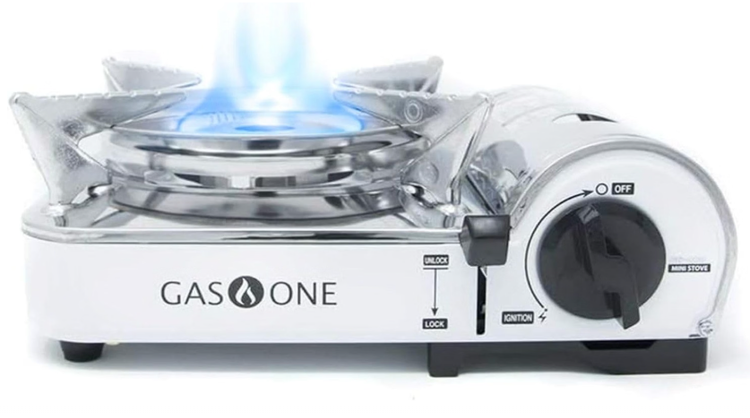
Gas One GS-800A Butane Stove
- 7,650 BTU output
- Piezo-electric ignition
- Carrying case included
Why a Backup Cooking Stove Belongs in Your Emergency Kit
A storm, ice event, or grid failure can knock out electric ranges and, in some cases, gas service for days. A portable stove lets you boil water, heat canned food, and make coffee when the kitchen goes dark.
Boiling matters most. If a water advisory follows a storm, a working burner turns questionable tap water into safe drinking water and keeps warm food on the table.
The trade-off is safety. Every flame stove burns fuel and releases combustion gases, so a backup stove is only as safe as the place you use it. The models below were chosen with that in mind.
To build this list, we compared each listing’s fuel type, rated output, ignition, shut-off and pressure features, stability, size, and how easily the stove stores in a kit, then matched each one to the household it suits.
Top Emergency Cooking Stoves Reviewed for Outage Readiness
1. Chef Master 90011 Butane Stove for High-Heat Outage Cooking
If you want the most heat in a single burner, the Chef Master 90011 leads this group at 10,000 BTU. A brass burner resists corrosion, and a built-in wind guard steadies the flame when you cook outside.
Safety comes from an in-line regulator with pressure-sensing shut-off, and piezo ignition lights it without matches. This combo ships with four 8 oz butane canisters and a hard-shell case, so the kit is ready to store.
In-Use Notes: The dial control moves from a fast boil to a simmer, which helps when you cook a full pot of soup or rice for several people.
Standout Features:
- 10,000 BTU brass burner
- In-line regulator with pressure-sensing shut-off
- Four butane canisters in the box
Real Advantages:
- Fast boiling saves fuel
- Ready-to-store kit
- Wind guard for outdoor cooking
Pairs Nicely With:
- Pots up to family size
- Emergency kits
- Tailgating and camping
Safety Reminder: The maker lists it for outdoor cooking. Run it outside, away from doors and windows, and never in a closed room or garage.
2. Gas One GS-800A Butane Stove for Compact Emergency Kits
Small storage space is where the GS-800A makes sense. At about 9.6 by 8 inches and 3.1 pounds, it slides into a closet shelf or bin with its carrying case.
It still delivers 7,650 BTU, enough for boiling water and heating one-pot meals, and piezo-electric ignition means you do not need matches. The white and stainless body wipes clean easily after use.
In-Use Notes: It suits quick tasks such as boiling water, heating soup, and making coffee, where a compact footprint matters more than maximum heat.
Standout Features:
- Compact 9.6 by 8 inch footprint
- Piezo-electric ignition
Real Advantages:
- Easy to store and carry
- Light enough for a go-bag
- Simple wipe-clean surface
Pairs Nicely With:
- Small pots and kettles
- Apartment emergency kits
- Picnics and camping
Safety Reminder: Use standard butane canisters only as the manual directs, and cook outdoors in open air.
3. ALOCS 2250W Alcohol Stove for Quiet Low-Fuel Simmering
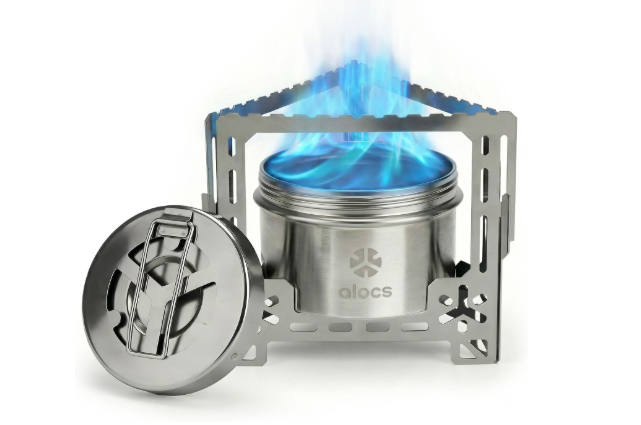
Alcohol stoves skip pressurized canisters entirely. This ALOCS model holds up to 200 ml of alcohol fuel, which the maker rates at about 45 minutes on high and up to two hours on low, and a leak-proof silicone-sealed cover helps with transport.
The 304 stainless steel build supports cookware up to 22 pounds, a flame control cover lets you turn heat down for simmering, and the stand folds flat with no tools.
In-Use Notes: Its quiet flame and low setting work well for slow simmering, reheating, or keeping water hot over a long stretch.
Standout Features:
- Up to 200 ml fuel capacity
- Adjustable flame control cover
- Foldable stand for cookware 3.1 to 10.2 inches
Real Advantages:
- No pressurized canisters to store
- Long low-heat burn time
- Sturdy stainless construction
Pairs Nicely With:
- Small pots and kettles
- Backpacking kits
- Long-term prep supplies
Safety Reminder: Alcohol flames can be nearly invisible in daylight. Fill only when the stove is cold, and keep it outdoors on a stable, nonflammable surface.
4. QMFEQGI Mini Alcohol Camp Stove for Ultralight Backup Boiling
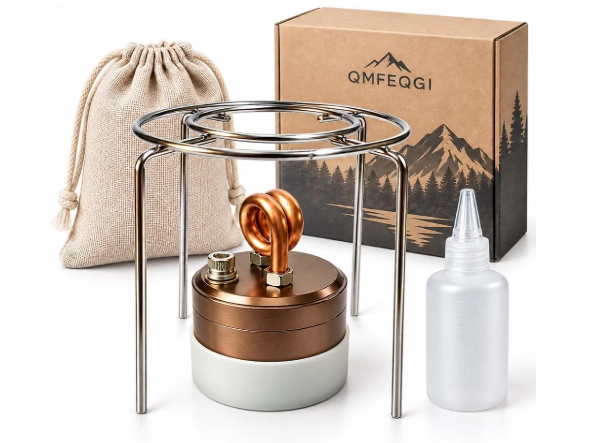
Built for the smallest kits, this mini stove measures about 4.3 inches across and pairs an aluminum burner with a stainless steel windproof stand that holds a pot or cup steady.
The maker recommends 95 percent alcohol, filled about one third full, and explains how to extinguish it by blowing through the center of the copper tube or covering it with the lid.
In-Use Notes: It is best for boiling water for drinks, instant meals, or purification rather than cooking several dishes.
Standout Features:
- Compact 4.3 inch footprint
- Stainless steel windproof pot stand
Real Advantages:
- Fits almost any kit
- Simple design with few parts
- Inexpensive fuel to stock
Pairs Nicely With:
- Cups and small pots
- Car emergency kits
- Hiking and backpacking
Safety Reminder: It has no flame control. Read the fill and extinguishing steps in the manual and practice outdoors before you need it.
5. Gas One GS-3400P Dual Fuel Stove for Butane or Propane

Fuel flexibility is the main draw here. The GS-3400P runs on an 8 oz butane cartridge or a 16.4 oz propane cylinder, and the propane converter regulator comes in the box.
For butane, a built-in pressure sensor and cartridge ejection system cut the gas flow and eject the canister if irregular pressure is detected. Piezo ignition and an adjustable heat dial keep operation simple.
In-Use Notes: Switching between butane and propane helps during long outages, when one fuel may sell out before the other.
Standout Features:
- Dual fuel with included propane regulator
- Pressure sensor with cartridge ejection
- Automatic piezo ignition
Real Advantages:
- More fuel options in a shortage
- Layered butane safety features
- Easy dial control
Pairs Nicely With:
- Small propane cylinders
- Standard butane canisters
- Camping and outage cooking
Safety Reminder: Propane cylinders are meant for outdoor use. Keep this stove outside, away from doors and windows, with either fuel.
Indoor Safety Rules Every Stove Owner Must Follow
This is the most important part of choosing an emergency stove. The CDC’s carbon monoxide guidance says plainly to never use a portable gas camp stove indoors and not to cook on any stove that is not vented.
Carbon monoxide has no smell or color, and symptoms such as headache, dizziness, and nausea can feel like the flu. People who are asleep can be overcome before they notice anything.
Cook outdoors. Ready Wisconsin’s power outage guidance advises keeping camp stoves outside, in a well-ventilated area at least 20 feet from windows.
Skip the garage. An open garage door does not clear fumes fast enough, and fumes can drift into the house.
Install CO alarms. Battery-powered or battery-backup alarms near every sleeping area give you a warning when it matters most.
Safer Ways to Cook Indoors When the Power Is Out
If you truly need to cook inside, look beyond flame stoves.
A portable power station with enough output can run a small electric hot plate, kettle, or slow cooker indoors with no fumes, as long as you stay within its rated wattage.
A vented wood stove or fireplace insert designed for cooking can heat a pot safely because its smoke and gases leave through a chimney.
No-cook foods such as canned beans, nut butter, crackers, and ready-to-eat meals reduce how often you need a stove at all.
For everyday cooking once power returns, our guide to everyday cooking stoves covers full-size options.
Choosing Fuel Type for Emergency Cooking
Butane canisters are compact, clean-burning, and easy to snap in, which makes them the most common choice for backup stoves. They lose pressure in freezing weather, so keep spares indoors and warm.
Propane handles cold better and small cylinders are sold widely, but the cylinders are bulkier and are meant for outdoor use.
Alcohol stoves have no pressurized parts and very few moving pieces. They run quietly but heat more slowly and need careful refilling.
Solid fuel tablets and wood store well but smoke more and work best outdoors only. Our look at multi-fuel camping stoves explains how stoves that burn several fuels compare.
How to Pick the Best Indoor Emergency Cooking Stove
Safety features first. Look for pressure-sensing shut-off or cartridge ejection on canister stoves, and a stable base that will not tip with a full pot.
Heat output. Higher BTU boils water faster and saves fuel per pot. Going by the listed specifications, the canister stoves in this guide range from 7,650 to 10,000 BTU, while the alcohol models trade speed for simplicity.
Ignition. Piezo ignition removes the need for matches, though it is wise to pack waterproof matches as a backup.
Size and storage. A carrying case keeps parts together and makes the stove easy to find in the dark.
Cookware fit. Check the supported pot size, and keep a small, flat-bottomed pot with the stove. Our roundup of compact cookware sets shows space-saving options.
Storing Fuel Safely for Long-Term Readiness
Fuel storage deserves as much thought as the stove itself.
Keep butane canisters and propane cylinders in a cool, dry, ventilated place away from heat sources, direct sun, and living areas. Avoid storing them in a hot car or next to a furnace or water heater.
Store alcohol fuel in its original, tightly closed container, away from flames and out of reach of children.
Check stored canisters once or twice a year for rust, dents, or leaks, and replace any that look damaged. Rotate your supply by using older fuel on camping trips.
Cleaning Your Stove After Each Use
Let the stove cool completely and remove the fuel canister before cleaning.
Lift off removable grates or pot supports and wash them in warm, soapy water. Wipe the body and drip area with a soft, damp cloth, then dry everything well to prevent rust.
Brush crumbs and spills away from the burner holes with a soft brush. A blocked burner can produce an uneven, yellow flame that wastes fuel.
Store the stove in its case once it is fully dry, with the canister stored separately.
Maintenance Checks Before You Need the Stove
A stove that sits in a closet for a year can fail when you finally need it. A quick check every few months avoids that surprise.
Test the stove outdoors, light it, and watch for a steady blue flame. A yellow or sputtering flame can point to a dirty burner or a low canister.
Inspect the canister connection and seals for cracks, and listen or smell for leaks after attaching fuel. If anything seems off, stop and contact the maker.
Click the piezo igniter several times. If it no longer sparks, keep matches or a long lighter in the kit and follow the manual for repairs.
Practical Tips for Cooking During an Outage

Plan simple, one-pot meals. Soups, pasta, and canned stews use less fuel than several dishes.
Use a lid. Covering the pot brings water to a boil faster and stretches each canister.
Pre-soak beans and grains to shorten cooking time.
Keep a fire extinguisher nearby and set the stove on a stable, heatproof surface away from anything that can burn.
If you already keep a camping setup, our guide to car camping stoves shows models that can double as backup burners.
Emergency Stove Questions People Often Ask
Is It Safe to Use a Butane Stove Indoors?
Health agencies say no for portable gas camp stoves. The CDC advises never using a portable gas camp stove indoors because it can cause carbon monoxide to build up. Some butane cassette stoves are sold for food service use with strong ventilation, but home rooms rarely match those conditions. The safer plan is to cook outdoors, at least 20 feet from windows and doors, and keep battery-powered carbon monoxide alarms working inside.
Do Alcohol Stoves Produce Carbon Monoxide?
Any stove that burns fuel can produce carbon monoxide, especially when air is limited or the flame burns poorly. Alcohol stoves are often seen as cleaner burning, but that does not make them safe in a closed room. Treat them like any other flame stove. Use them outdoors on a stable, nonflammable surface, keep children and pets away, and never leave one burning unattended, since the flame can be hard to see in daylight.
How Much Fuel Should I Store for an Emergency?
Base it on the maker’s rated burn time and how many hot meals or boils you plan per day. Write down how long one canister or one fill lasts on medium heat, then multiply by the meals you expect over the days you want to cover. Add extra for boiling drinking water if your area is prone to water advisories. Store fuel safely and rotate it so older supplies get used first.
Can a Camp Stove Run in an Open Garage?
No. Official guidance groups garages with the home itself, because fumes can collect in the garage and seep into living spaces through doors and gaps even with the main door open. Set the stove up outdoors in open air, at least 20 feet from windows, doors, and vents. A covered porch or carport that is fully open on several sides is better than a garage, but distance from the house still matters.
What Is the Safest Way to Boil Water Without Power?
If you have a portable power station, an electric kettle or hot plate indoors avoids fumes entirely. Without power, use a fuel stove outdoors with a lid on the pot to speed up the boil and save fuel. Bring water to a rolling boil and follow your local water advisory for how long to boil it. Let the pot cool before carrying it inside, and keep the stove attended the whole time.
Making a Safe Choice for Your Emergency Kit
A backup stove is one of the most useful items in an emergency kit, as long as it matches how and where you will cook. Canister stoves give fast, reliable heat for families, while alcohol stoves suit small kits and quiet simmering.
The limit is the same for every model: flame stoves belong outdoors, away from windows, with carbon monoxide alarms working inside. A simple rule helps: choose the stove for heat and storage, plan the cooking spot before the outage, and use a fume-free electric option whenever you need to cook indoors.
