
Best Rice Steamer Cookers for Fluffy Rice and Steamed Sides

Disclosure: As an Amazon Associate, I earn from qualifying purchases. Learn more
A good rice steamer cooker takes the guesswork out of rice. You add grains and water, press a button, and come back to tender rice that stays warm, often with vegetables or fish steaming in a tray above it. Dinner sorts itself out while you do something else.
Choosing the best rice steamer for your kitchen comes down to a few practical points: how much rice you cook, whether you want a steam tray, the inner pot material, and how smart the controls need to be. A single cook needs something very different from a family of five, and a stainless pot suits different habits than a nonstick one.
The picks below cover full-size family cookers, compact units for one or two people, and a multicooker for those who want more than rice. After the reviews, you will find sizing help, water ratio tips, steaming times, and food safety basics for leftover rice.
The AROMA Digital Rice Cooker and Steamer pairs Sensor Logic cooking with a steam tray and delay timer, while the Hamilton Beach model adds a rinse-and-steam basket and a dishwasher-safe PFAS-free nonstick pot.
For Everyday Family Meals

AROMA Digital Rice Cooker and Steamer
- 2 to 8 cups cooked rice
- Steam tray included
- 15-hour delay timer
For Rinse and Steam Prep
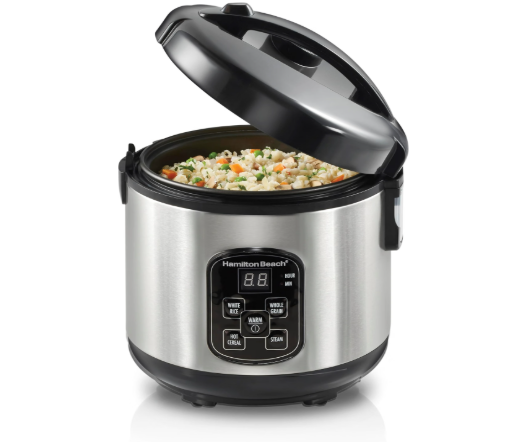
Hamilton Beach Digital Rice Cooker and Food Steamer
- Up to 8 cups cooked
- 2-in-1 rinse and steam basket
- PFAS-free nonstick pot
How We Picked These Rice Steamer Cookers
Each model here was checked against its current product listing, and only cookers that are available now made the list. We favored established brands with a long track record and strong, steady buyer demand, then sorted the picks by how well they match the core job of a rice steamer.
Steaming ability. Models with an included steam tray or basket ranked higher, since cooking rice and steaming a side at once is the main reason people shop for this appliance.
Capacity range. We included options from about 3 cups of uncooked rice up to 14 cups of cooked rice, so singles, couples, and families all have a fit.
Controls and pot. We looked at preset programs, keep-warm and delay timers, and inner pot material, including nonstick, PFAS-free nonstick, and stainless steel.
Product details come from the makers’ published specifications. Nothing here is based on our own cooking tests.
Best Rice Steamer Cookers
These models are ordered by brand reputation, buyer demand, and how fully they cover both rice cooking and steaming.
1. AROMA Digital Rice Cooker and Food Steamer
This AROMA model is a well-rounded rice steamer for daily use. It cooks 2 to 8 cups of cooked rice (4 cups uncooked with the included cup), and its Sensor Logic Technology automatically manages the internal temperature for evenly cooked rice and grains.
Preset functions cover White Rice, Brown Rice, Steam, and Flash Rice, which AROMA says cuts cooking time by up to 50 percent. The included steam tray lets you steam meat or vegetables while rice cooks below, a 15-hour delay timer helps you plan ahead, and the cooker switches to Keep Warm automatically after each cycle. A steam tray, measuring cup, and serving spatula come in the box.
Kitchen Routine: Measure rice with the included cup, add water to the matching line, set the tray on top for vegetables, and pick a program.
Standout Specs:
- Programmable digital controls
- Automatic Keep Warm after cooking
- Works for soups, chili, and jambalaya
Reasons It Shines:
- Rice and steamed sides in one cycle
- Faster Flash Rice option for busy nights
- Delay timer for ready-when-you-get-home meals
Handles Dishes Like:
- Jasmine and long-grain white rice
- Brown rice and mixed grains
- Steamed broccoli, carrots, and chicken
Good to Know: Capacity is measured with the included rice cup, which is smaller than a standard U.S. measuring cup, so follow the pot lines rather than kitchen cups.
2. Hamilton Beach Digital Programmable Rice Cooker and Steamer
The Hamilton Beach cooker holds up to 8 cups of cooked rice in a removable 2-quart pot, enough for a family meal. A hinged lid opens easily and seals in moisture while cooking.
Its standout extra is the 2-in-1 basket, which works as a rice rinser or colander before cooking and as a steam basket for vegetables, shrimp, eggs, and seafood while rice cooks below. Preset options cover rice, whole grains, and hot cereal, and the cooker switches to warm automatically and keeps food warm for up to 12 hours. The PFAS-free nonstick pot and basket are dishwasher safe, and Hamilton Beach backs it with a 1-year limited warranty.
Kitchen Routine: Rinse rice in the basket, pour it into the pot with water, then add the basket with vegetables on top and press start.
Standout Specs:
- Hinged lid for easy filling and serving
- Presets for rice, grains, and hot cereal
- Dishwasher-safe pot and basket
Reasons It Shines:
- One basket handles rinsing and steaming
- Family-size capacity in a compact body
- Hot cereal option for breakfast
Handles Dishes Like:
- Brown rice and quinoa
- Oatmeal and hot cereal
- Steamed shrimp and green beans
Good to Know: Long keep-warm times are convenient, but rice can dry out or brown at the edges if left warming for many hours.
3. Aroma Select Stainless Rice Cooker and Steamer
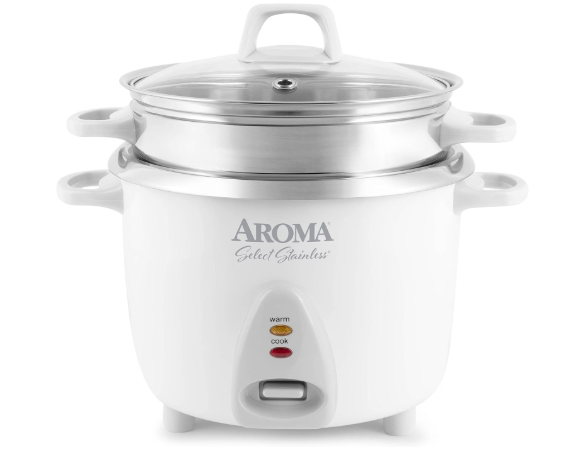
This Aroma Select model suits people who would rather skip nonstick coatings. Its cooking pot is made from food-grade 304 stainless steel, and it prepares 4 to 14 cups of cooked rice, making it the largest pick on this list.
Operation is as simple as it gets, with one-touch cooking and an automatic Keep Warm switch at the end of the cycle. A stainless steel steam tray lets you steam meat or vegetables while rice cooks below, and the pot also handles soups, jambalaya, and chili.
Kitchen Routine: Lightly oil or rinse the stainless pot before adding rice, flip the switch, and let it move to warm on its own.
Standout Specs:
- Food-grade 304 stainless steel pot
- Stainless steel steam tray
- Pot-style design for large batches
Reasons It Shines:
- No nonstick coating to wear out
- Large capacity for gatherings
- Very easy to operate
Handles Dishes Like:
- Big batches for meal prep
- Party-size jambalaya and chili
- Steamed vegetables for a crowd
Good to Know: Stainless pots can let rice stick more than nonstick ones. A short soak after cooking makes cleanup easier.
4. Zojirushi NHS-06 3-Cup Rice Cooker
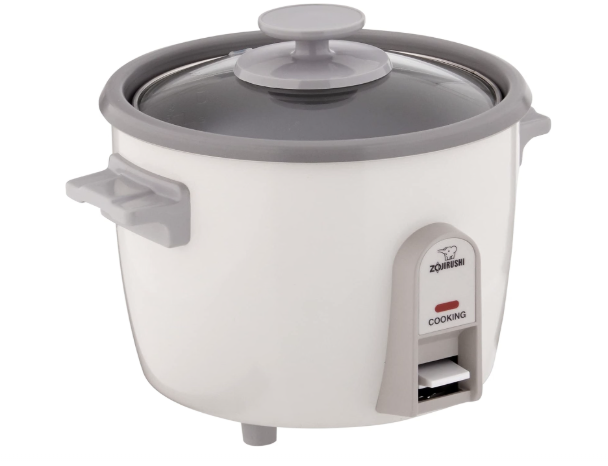
The Zojirushi NHS-06 is a classic small cooker with an easy single-switch control. It cooks up to 3 cups of uncooked rice, measured with Zojirushi’s 6-ounce cup, and one cup of raw rice makes roughly 2 to 3 of those cups cooked.
A see-through glass lid with a stay-cool knob lets you watch the rice, the nonstick inner pan releases rice easily, and stay-cool handles make it simple to carry to the table. The maker describes it as keeping rice warm for up to five hours. Zojirushi includes a steaming tray only on larger models in this line, so this 3-cup size is best for rice alone.
Kitchen Routine: Rinse rice, fill to the matching line, press the switch down, and serve once it clicks to warm.
Standout Specs:
- Single switch control
- Glass lid with stay-cool knob
- Includes measuring cup and spatula
Reasons It Shines:
- Very little to learn or go wrong
- Compact footprint for small counters
- Easy to watch through the lid
Handles Dishes Like:
- White rice for one or two
- Small batches of brown rice
- Side portions for weeknight dinners
Good to Know: This model fits the rice steamer idea only partly, because it steams rice but has no tray for vegetables. Choose the AROMA or Hamilton Beach if steaming sides matters.
5. Toshiba Mini Rice Cooker With Fuzzy Logic Control
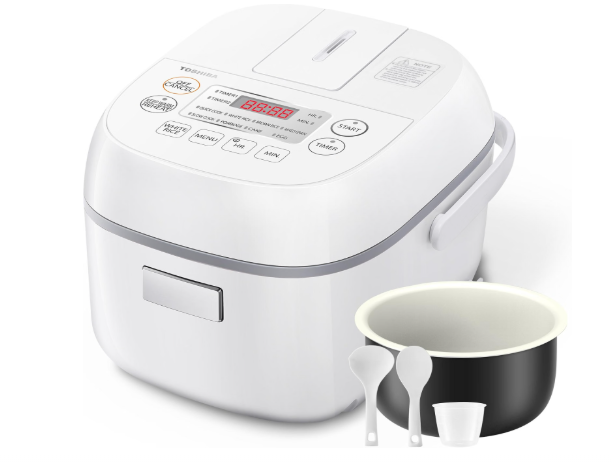
The Toshiba mini cooker brings fuzzy logic to a small 3-cup body. It senses the moisture in the rice and adjusts temperature and cooking time, which helps with white, brown, jasmine, sushi, basmati, and wild rice, plus oatmeal and quinoa.
It offers 8 functions: White Rice, Quick Cook, Brown Rice, Mixed Grain, Slow Cook, Porridge, Cake, and Egg. A large LED display, Keep Warm and Reheat, and a delay timer up to 24 hours add flexibility. Safety touches include a lid that locks during cooking, a thermal fuse, automatic shut-off, and a detachable power cord. A measuring cup, spatula, and soup ladle are included.
Kitchen Routine: Pick the program for your grain, set the delay timer at night, and wake up to warm rice or porridge.
Standout Specs:
- Fuzzy logic moisture sensing
- Removable steam valve and vent cap
- Lid lock and thermal fuse
Reasons It Shines:
- Smart adjustments for many rice types
- Long delay timer for planning
- Compact enough for dorms and small kitchens
Handles Dishes Like:
- Sushi and jasmine rice
- Porridge and oatmeal
- Small cakes and slow-cooked dishes
Good to Know: No steam basket is listed, and the maker advises hand-washing the nonstick pot with mild soap and a soft cloth.
6. Instant Pot Duo Mini 7-in-1 Electric Multicooker
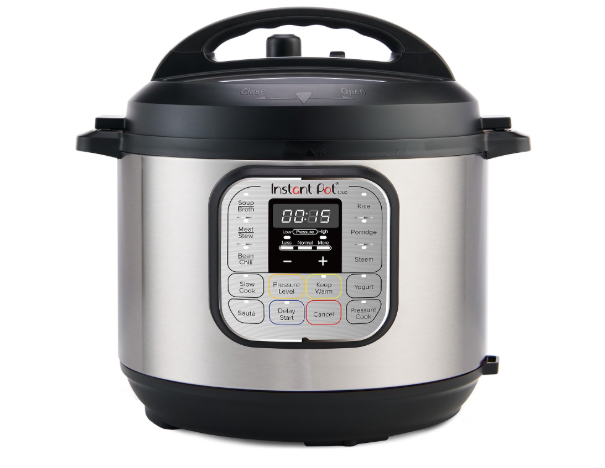
The Instant Pot Duo Mini is a multicooker rather than a dedicated rice steamer, which is why it sits last on this list. It does handle rice and steaming well, and it adds pressure cooking, slow cooking, sautéing, yogurt making, and warming in a 3-quart body.
It has 11 one-touch smart programs, a stainless steel (18/8) pot with a tri-ply bottom for searing, and a stainless steel steamer rack. The lid and inner pot are dishwasher safe, it runs at 700 watts, and it is UL listed with more than 10 safety mechanisms, including overheat protection and a safety lid lock.
Kitchen Routine: Use the Rice program for white rice, or set the steamer rack over water for vegetables and eggs.
Standout Specs:
- 11 one-touch smart programs
- 18/8 stainless pot with tri-ply bottom
- Over 10 safety mechanisms
Reasons It Shines:
- Replaces several small appliances
- Pressure cooks beans and tough cuts quickly
- Stainless pot with no coating
Handles Dishes Like:
- Rice and grain bowls
- Steamed eggs and vegetables
- Soups, stews, and yogurt
Good to Know: It partly matches the rice steamer category because it is built as a pressure multicooker. For larger households, compare models in our Instant Pot Duo vs Pro guide.
What Separates a Rice Steamer From a Rice Cooker
Mostly, yes. A rice cooker or rice steamer is an automated appliance that boils water and then lets the rice steam until a thermostat senses the water is gone and switches to warm. Every electric rice cooker steams rice in that sense, which is why the two names are used interchangeably.
The difference shows up in the extras. A model sold as a rice cooker and steamer in one usually includes a steam tray or basket that sits above the rice, so vegetables, fish, dumplings, or eggs cook in the rising steam at the same time. Basic cookers, like many 3-cup models, steam rice but have no tray.
Rice cooker vs steamer appliances. A dedicated food steamer has stacked baskets and a water reservoir, and it is great for vegetables and seafood but less precise for rice. If you want both jobs covered by one machine, look for a rice cooker that includes a steam tray.
For small kitchens, our guide to mini and small rice cookers covers compact options in more depth.
Capacity Sizing Guide Based on Household Size
Rice cooker capacity is usually listed in uncooked cups using the included rice cup, which is smaller than a standard U.S. measuring cup. Cooked volume is roughly double.
| Household | Uncooked Capacity | Cooked Rice | Matching Picks |
|---|---|---|---|
| 1 to 2 people | About 3 cups | About 6 cups | Zojirushi NHS-06, Toshiba Mini |
| 2 to 4 people | About 4 cups | About 8 cups | AROMA Digital, Hamilton Beach |
| 4 to 6 people or meal prep | About 7 cups | About 14 cups | Aroma Select Stainless |
| Mixed cooking needs | 3-quart pot | Varies by recipe | Instant Pot Duo Mini |
Going by the listed specifications, the AROMA Digital and Hamilton Beach models both top out at 8 cups of cooked rice, while the Aroma Select reaches 14 cups. Choose a size slightly above your usual batch. Cookers work best when they are not filled to the very top line, and a little extra room helps if you entertain.
Nonstick Versus Stainless Steel Inner Pots
Nonstick pots. Rice slides out easily and cleanup takes a quick wipe. The trade-off is that the coating can scratch over time, so use the plastic paddle that comes with the cooker and avoid metal utensils and abrasive pads. If coatings concern you, some makers, such as Hamilton Beach on its model above, now list PFAS-free nonstick pots.
Stainless steel pots. A stainless steel rice steamer has no coating to wear out and handles metal spoons without worry. Rice tends to stick more at the bottom, so a short soak after cooking helps. The Aroma Select and the Instant Pot Duo Mini both use stainless pots.
Which to choose. Pick nonstick for the easiest everyday cleanup, or stainless steel for durability and a coating-free surface.
Fuzzy Logic, Sensor Controls, and Single-Switch Models
Single-switch cookers use a simple thermostat. They heat until the water is absorbed and then click to warm. They are inexpensive, reliable, and easy to use, but they cook every type of rice the same way.
Sensor and digital models add presets for white rice, brown rice, grains, and steaming, plus delay timers. AROMA’s Sensor Logic, for example, manages the internal temperature through the cycle.
Fuzzy logic cookers go a step further by adjusting time and temperature as they sense moisture and heat. That helps with brown rice, mixed grains, and sushi rice, and it gives a little more forgiveness if your water measurement is slightly off. Higher-end Japanese cookers take this furthest, as covered in our roundup of the best Japanese rice cookers.
How to Cook Rice in a Rice Steamer
- Measure the rice with the cup that came with your cooker, not a kitchen measuring cup.
- Rinse if desired. Swirl the rice in water and drain until the water runs mostly clear. This removes surface starch for less sticky rice.
- Add water to the line. Put the rice in the inner pot and fill water to the line that matches the number of cups and the rice type.
- Load the steam basket. If your model has one, place cut vegetables, fish, or eggs in the tray and set it on top.
- Choose the program and press start, or flip the switch on a basic model.
- Let it rest. When the cooker switches to warm, leave the lid closed for about 10 minutes, then fluff with the paddle.
Using the steam basket. Add quick-cooking items later in the cycle if your cooker allows it, so they do not overcook. Some cookers have a separate steam-only setting for cooking vegetables without rice.
Water Ratios for White, Brown, and Other Grains
The most reliable rice steamer ratio is the one printed inside your pot. Makers calibrate the lines for their own cup size and heating pattern, so start there before adjusting.
White rice. Long-grain and jasmine rice usually need slightly more water than rice by volume. Short-grain and sushi rice often use a little less, for a stickier texture.
Brown rice. Brown rice needs more water and a longer cycle because the bran layer slows absorption. Use the brown rice line and setting if your cooker has them. If not, add a bit of extra water and let it rest longer on warm.
Other grains. Quinoa, barley, steel-cut oats, and mixed grains cook well in most rice cookers. Check the manual for its suggested ratios, since these grains vary widely.
Adjusting to taste. If rice comes out too firm, add a tablespoon or two of water next time. If it is mushy, use a little less.
Steaming Vegetables, Fish, and Eggs While Rice Cooks
A steam tray turns a rice cooker into a one-pot dinner machine. These ideas suit most models with a tray or basket.
Firm vegetables. Carrots, potatoes, and squash cut into small, even pieces can go in at the start, since they need more time.
Tender vegetables. Broccoli, green beans, asparagus, and snap peas cook quickly. Add them partway through the cycle so they stay bright and crisp.
Fish and seafood. Thin fillets and shrimp steam well. Set them on a piece of parchment or a heat-safe plate in the tray, season simply, and add them near the end of the rice cycle.
Eggs and dumplings. Whole eggs and frozen dumplings steam easily in the basket.
One-pot rice dishes. Beyond plain rice, popular rice steamer recipes include chicken and rice, coconut rice, congee, oatmeal, and jambalaya. Always check that meat and poultry reach a safe internal temperature with a food thermometer.
Keep Warm Safety and Leftover Rice Handling
The keep-warm setting holds cooked rice hot after cooking, but it is meant for hours, not days. The USDA explains that hot food should stay at 140°F or above, and that leftovers should be refrigerated within two hours of cooking or of coming off a warming appliance. See its guidance on leftovers and food safety for details.
Why rice needs care. Cooked rice left at room temperature can let bacteria that survive cooking grow and produce toxins that reheating may not destroy. Cool leftover rice quickly in shallow containers, refrigerate it promptly, and reheat it until steaming hot.
Practical tips. Cook amounts you will eat soon, avoid leaving rice on warm overnight, and clean the pot before the next batch. Even if your cooker allows long warming times, rice quality drops as it dries out.
Rinsing Rice and Arsenic, What Research Shows
Rice can absorb arsenic from soil and water as it grows, which leads many people to ask whether rinsing helps. According to the FDA, cooking rice like pasta, in about 6 to 10 parts water and then draining it, can reduce inorganic arsenic by 40 to 60 percent depending on the rice type. The FDA also notes that this method lowers the nutritional value of enriched white and parboiled rice.
What this means for rice cookers. Rice cookers use the absorption method, where all the water is soaked up, so they do not provide that reduction. Rinsing mainly removes surface starch for a fluffier texture. The FDA also suggests eating a variety of grains as part of a balanced diet.
If arsenic is a concern for you, rotate in grains such as quinoa, barley, and oats, which also cook well in most rice steamers.
Bamboo, Stovetop, and Electric Steamers Compared
Bamboo rice steamer baskets. Cooking rice in a bamboo steamer is a traditional method for sticky or glutinous rice. The rice is soaked for several hours, then steamed in a cloth-lined basket over a wok or pot of simmering water. It produces excellent texture but needs attention and practice.
Old-fashioned stovetop steamers. The Charleston or Carolina rice steamer is a two-part stovetop pot in which rice cooks in an upper insert above simmering water, giving separate, fluffy grains. It is a regional classic in the Southern Lowcountry, though it is harder to find than electric models today.
Stovetop pots. A regular saucepan works well once you know your timing, but it needs watching to prevent scorching and has no keep-warm function.
Electric rice steamers. These handle timing, heat control, and keeping rice warm automatically, which is why most home cooks prefer them. Large commercial gas or electric rice steamers with many trays serve restaurants and caterers, but they are far beyond what a home kitchen needs.
Cleaning and Care to Make Your Cooker Last
After each use. Unplug the cooker and let it cool. Wash the inner pot, paddle, and steam tray with warm, soapy water and a soft sponge. Only put parts in the dishwasher if the maker says they are dishwasher safe.
Lid and vents. Wipe the lid and the inside of the cooker with a damp cloth. If your model has a removable steam vent cap or inner lid, take it off and rinse it regularly to prevent starch buildup and odors.
Heating plate. Keep the heating plate under the pot clean and dry. A stray grain of rice there can stop the pot from sitting flat and affect cooking.
Storage. Store the cooker dry with the lid slightly open to prevent musty smells, and check the power cord for damage from time to time.
Common Questions About Rice Steamer Cookers
Is a Rice Cooker the Same as a Rice Steamer?
In most cases, yes. An electric rice cooker boils water and then steams the rice until the water is absorbed, so the two names describe the same appliance. The real difference is the accessories. Models sold as rice cooker and steamer combinations usually include a tray or basket that lets you steam vegetables, fish, or eggs above the rice at the same time. Basic cookers steam rice but have no tray for other food.
Can You Steam Vegetables While the Rice Cooks?
Yes, if your cooker includes a steam tray or basket. Put rice and water in the inner pot, place vegetables in the tray, and set it on top before closing the lid. Firm vegetables such as carrots can go in at the start, while tender ones like broccoli or green beans are better added partway through so they do not overcook. Cut pieces evenly so they finish at the same time.
How Much Water Do You Use in a Rice Steamer?
Start with the water lines printed inside the inner pot. They are matched to the cooker’s own rice cup and to rice types such as white or brown. Measure rice with the included cup, add it to the pot, and fill water to the line for that number of cups. If the rice is too firm, add a little more water next time. If it is too soft or mushy, use slightly less water.
Can You Cook Brown Rice in a Rice Steamer?
Yes. Brown rice needs more water and a longer cooking time than white rice because its bran layer slows water absorption. Use the brown rice setting and water line if your cooker has them, since the cycle is designed for it. On a basic single-switch cooker, add a bit of extra water and let the rice rest on warm for 10 to 15 minutes after the switch clicks so the grains finish softening evenly.
Is It Safe to Leave a Rice Cooker Unattended?
Rice cookers are built to switch to warm or shut off automatically when cooking ends, so it is normal not to stand beside one while it cooks. Still, follow the manual, place the cooker on a stable, heat-safe surface away from cabinets, and keep the steam vent clear. Avoid running it while you are away from home for long periods, and do not leave cooked rice on warm overnight for food safety reasons.
How Long Can Rice Stay on Keep Warm?
It depends on the model. Some cookers list keep-warm times of a few hours, while others allow up to 12 hours or more. For food safety, the USDA advises keeping hot food at 140°F or above and refrigerating leftovers within two hours after they come off a warming appliance. For the best texture, serve rice within a few hours, since it dries out and can turn crusty at the edges.
What Size Rice Steamer Do I Need?
Match the size to how much rice you usually cook. A 3-cup uncooked model suits one or two people. A cooker that makes about 8 cups of cooked rice works well for small families. If you meal prep, cook for a crowd, or have five or more people, look at models in the 10 to 14 cup cooked range. Remember that capacity uses the small rice cup included with the cooker.
Final Verdict on Picking Your Rice Steamer
The right rice steamer depends on your household size, whether you want a steam tray, and how much control you need. Families who want rice and sides together should look at models with a tray and around 8 cups of cooked capacity, while singles and couples can pick a compact 3-cup cooker. If you cook large batches or prefer an uncoated pot, a big stainless model fits better.
For most kitchens, the overall pick is the AROMA Digital Rice Cooker and Steamer. It balances family-friendly capacity, Sensor Logic cooking, an included steam tray, a Flash Rice option, and a 15-hour delay timer in one easy, well-proven package.
