
6 Best Wood Stove Steamer Pots and Kettles (Updated)

Disclosure: As an Amazon Associate, I earn from qualifying purchases. Learn more
A lattice lid breathing slow white clouds above the firebox is winter’s quietest comfort. For most wood stoves, the INNO STAGE Lattice Top Steamer is the easiest pick, with an enamel-coated cast iron body and a 2.5-quart reservoir that keeps steam coming without a cord.
Your real question is probably simpler than it looks. You want air that stops feeling scratchy, a pot that will not rust into an orange mess, and a size that fits your stovetop without crowding the flue pipe. Every steamer below is cast iron, and each one handles at least one of those concerns well.
If you run a small insert or a cabin stove, footprint matters more than style. If your stove is large and burns all day, capacity and refill ease come first. The picks and the guide that follow help you match the pot to the stove you already have.
The INNO STAGE Lattice Top Steamer brings a vented lattice lid and side handles, while the MYFIREPLACEDIRECT Deer Pattern Steamer adds rustic cabin style with an enamel-lined interior.
For Steady Steam
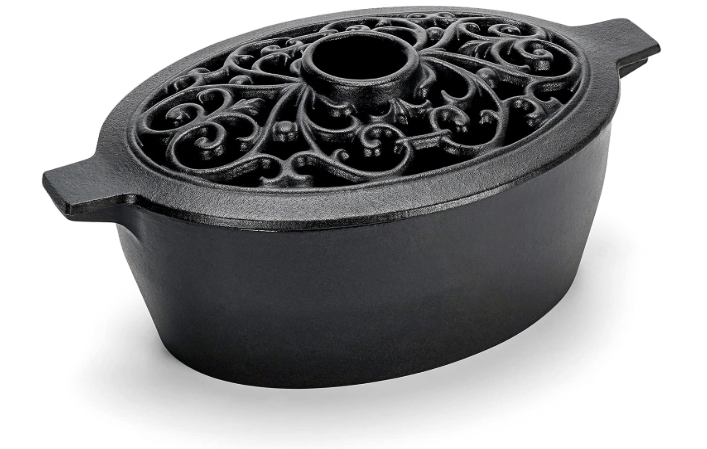
INNO STAGE Lattice Top Steamer
- Enamel-coated cast iron body
- Vented lattice lid
- Two side handles
For Cabin Decor
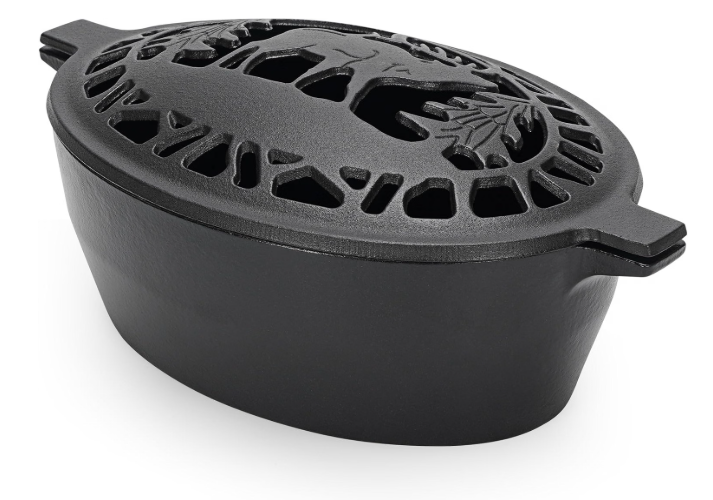
MYFIREPLACEDIRECT Deer Pattern Steamer
- Hollowed deer pattern lid
- Smooth enamel inner coating
- Retro matte finish
Why Wood Heat Dries Your Air and How Steamers Help
Cold winter air carries very little moisture. When your stove warms that air, the moisture stays the same while the air’s capacity to hold it rises, so the relative humidity drops and the room starts to feel dry.
A wood stove steamer is a simple open vessel that sits on the hot stovetop. The stove heats the water, the water evaporates through the vented lid, and the vapor drifts into the room. There is no plug, filter, or motor involved.
Many people notice the difference in small ways first:
- Less static when you touch a doorknob or pull off a sweater
- Skin, lips, and nasal passages that feel less parched in the morning
- Wood floors and furniture that are less prone to opening seams in deep winter
- Moisture that keeps coming during a power outage, as long as the fire burns
Keep your expectations realistic. A stovetop pot adds moisture mostly to the room it sits in. Moving that warm, moist air through the house helps, and you can spread warm air further with doorways, ceiling fans, or a heat-powered stove fan.
How We Chose These Wood Stove Steamers
Every pot on this list is a true stovetop steamer made to evaporate water, not a teakettle sold under a steamer label. We read each listing closely and kept only products whose own pages describe them as wood stove steamers.
We then compared them on the points that matter on a hot stovetop:
- Material and coating, with cast iron bodies and a protective interior finish
- Capacity, from compact 2.2-quart pots to 3-quart reservoirs
- Refill design, such as open tops, hollowed lids, and handles
- Footprint, so small stoves and large stoves both have an option
- Consistent owner feedback themes and current availability
We also aimed for variety in shape and style, so you can choose between a classic lattice pot, a decorative lid, an oval enamel pot, and a kettle-style steamer.
Six Stovetop Steamers Reviewed for Wood Heat
1. INNO STAGE Lattice Top Steamer for Steady Room Moisture
A lattice lid full of small vents lets this pot release vapor across a wide area. The body is cast iron with an enamel coating, listed at 9.2 pounds, so it sits firmly on the stovetop.
It holds 2.5 quarts (2.8 liters), and two protruding handles give you something to grip with a mitt. You can add a few aromatics to the water if you like a light scent.
Everyday Use Notes: It suits anyone who wants a classic, no-fuss steamer, and it works as a cast iron wood stove humidifier with a matte black finish that blends with most stoves.
What Sets It Apart:
- Patented lattice top design
- Rust-resistant enamel coating
Core Strengths:
- Adds moisture without electricity
- Heavy enough to resist casual bumps
- Generous capacity for long burns
Fits Best With:
- Freestanding wood stoves with a flat top
- Rooms with traditional or farmhouse decor
Before You Choose: The lattice lid must come off for a full refill, so plan to use a mitt and refill during calmer moments of the burn.
2. MYFIREPLACEDIRECT Deer Pattern Steamer With Rustic Cabin Charm
If you want your steamer to look like part of the cabin, this one leans into it. The lid has a hollowed deer pattern, and the openings double as a convenient spot to add water.
The body is heavy-duty cast iron with a smooth enamel inner coating meant to resist rust. It holds 2.5 quarts and weighs about 9 pounds, which helps it stay put around children and pets.
Everyday Use Notes: It fits homes where the stove is a centerpiece, and the removable lid makes wiping the enamel interior simple.
What Sets It Apart:
- Decorative deer lid with fill openings
- Retro matte exterior finish
Core Strengths:
- Enamel interior cleans with a damp cloth
- Steady footing from its weight
- Works with natural aromatics in the water
Fits Best With:
- Cabin, lodge, and rustic living rooms
- Standard flat-top wood stoves
Before You Choose: The maker advises against sharp tools, strong corrosives, and acids, so skip harsh scrubbing when you clean it.
3. 1MORE Porcelain Enamel Steamer for Small Wood Stoves
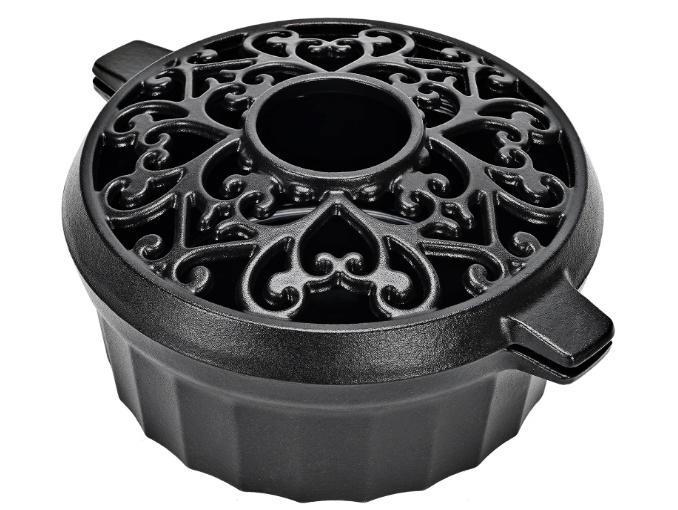
Small stoves get a fitting option here. The maker describes this round pot as suited to small wood stoves, measuring 11 by 9 by 5.5 inches with a 2.5-quart capacity.
Inside, a porcelain enamel coating protects the cast iron from rust, fading, and peeling. A water inlet on top lets you add water while the stove runs, without lifting the lid.
Everyday Use Notes: It is a handy cast iron stove steamer for compact stovetops, and the vine design on the lid gives it a seasonal look.
What Sets It Apart:
- Top water inlet for lid-on refills
- Porcelain enamel interior
Core Strengths:
- Easy to top up mid-burn
- Compact round footprint
- Matte black exterior hides soot
Fits Best With:
- Small and freestanding wood stoves
- Cinnamon sticks or mint leaves for scent
Before You Choose: At about 10 pounds empty, it gets noticeably heavier once filled, so move it only after it cools.
4. Minuteman Enamel Lattice Steamer in Classic Oval Shape

Glossy color sets this pot apart from the matte crowd. It is cast iron with porcelain enamel on the outside and a matte black enamel interior, finished with a traditional lattice top that lets water vaporize freely.
The oval shape measures about 11 by 7.25 by 6.5 inches and holds 2.2 quarts. You can set it directly on the stovetop or on a trivet.
Everyday Use Notes: For anyone who wants an enamel wood stove steamer that adds a pop of color, this compact oval is an easy match for narrow stovetops.
What Sets It Apart:
- Enamel inside and out
- Narrow oval footprint
Core Strengths:
- Exterior enamel wipes clean easily
- Fits tighter stovetop spaces
- Trivet-friendly for very hot surfaces
Fits Best With:
- Smaller stoves and narrow top plates
- A stove trivet on hot spots
Before You Choose: At 2.2 quarts it is the smallest pot here, so expect more frequent refills during long, hot burns.
5. WILLOW WEAVE Open Top Steamer for Easy Refills
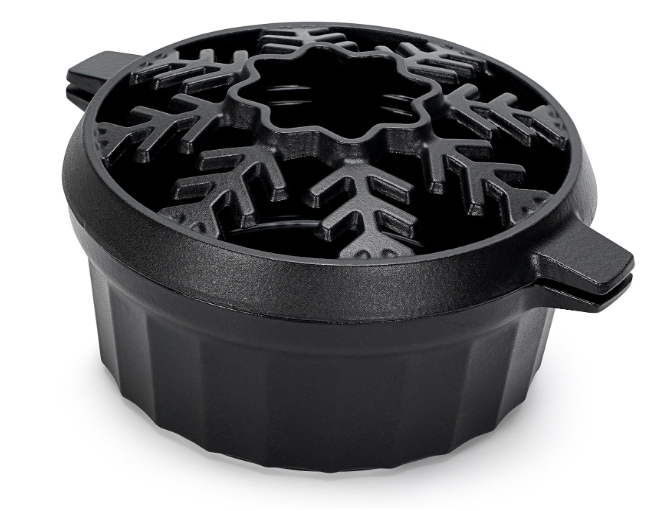
Refilling is where this steamer shines. A sizable opening in the top lets you pour water in while the pot stays on the stove, with no lid to juggle.
The 10-pound cast iron body is rustic outside and ceramic coated inside to resist rust. It holds 2.5 quarts, and its large flat base keeps solid contact with the stovetop for even heating.
Everyday Use Notes: It suits busy households that top up the water several times a day, and the flake pattern on the lid adds a wintry touch.
What Sets It Apart:
- Large open top for pouring
- Ceramic-coated interior
Core Strengths:
- Quick refills without removing a lid
- Wide base for good heat contact
- Offered in three colors
Fits Best With:
- Medium and large flat-top stoves
- A long-spout watering can for refills
Before You Choose: The open top makes the water level easy to see but also leaves the steam vent wide, so keep curious hands away.
6. Gtongoko Cast Iron Steamer Kettle With Extra Capacity
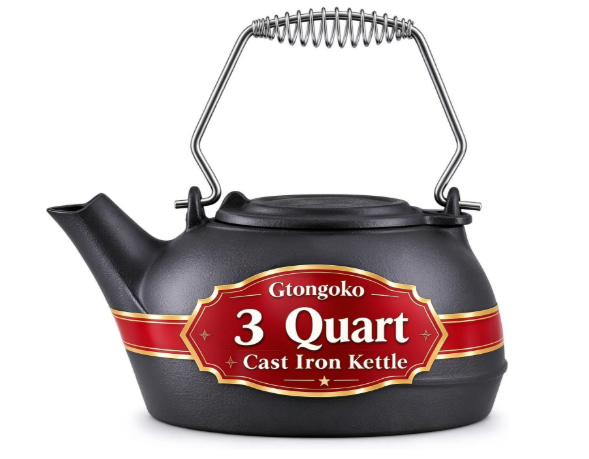
Longer burns call for more water, and this kettle-style pot holds 3 quarts, the most on this list. That means fewer refills on a full day of heating.
It is cast iron with a protective finish, a wide mouth for filling and cleaning, and a sturdy steel handle for lifting once it cools. Its compact footprint is about 7.7 inches across.
Everyday Use Notes: If you have been hunting for a wood stove steamer kettle with a real handle, this one pairs that classic shape with a deep reservoir.
What Sets It Apart:
- 3-quart capacity in a small footprint
- Carry handle on top
Core Strengths:
- Fewer refills on all-day burns
- Wide mouth simplifies cleaning
- Fits stoves with limited top space
Fits Best With:
- Wood stoves and fireplaces with a flat surface
- Cabins and farmhouse-style rooms
Before You Choose: The listing describes a protective finish rather than an enamel lining, so dry it fully after each use to limit rust.
Cast Iron Versus Enamel Versus Ceramic Coated Steamers
Nearly every good steamer starts with cast iron, because it handles direct stove heat without warping. The real difference is the finish inside the pot, since that is the surface sitting in hot water for months.
| Finish | What it means | Watch for |
|---|---|---|
| Bare or seasoned cast iron | Classic look, very durable | Rust if left wet |
| Enamel-lined cast iron | Iron body, glassy interior | Chips from impact |
| Enamel inside and out | Glossy color, easy wiping | Thermal shock cracks |
| Ceramic-coated interior | Smooth lining over iron | Abrasive scrubbing |
A ceramic wood stove steamer usually means a cast iron pot with a ceramic lining, not a pot made entirely of ceramic. A solid stoneware or ceramic vessel is not typically rated for direct stovetop heat, so check the maker’s guidance before using one.
The stove itself matters too. Plate steel tops and cast iron tops heat a little differently, and this comparison of cast iron and steel stoves explains why surface temperature can vary.
Steam Pot or Kettle for Your Wood Burning Stove
Wood stove steamers and kettles both add moisture, but they are shaped for slightly different habits.
A steam pot is wide and shallow, often with a lattice or patterned lid. That broad water surface releases vapor efficiently, and the low profile keeps it stable on the stovetop.
A wood stove steamer kettle is taller, with a handle and sometimes a spout. It is easier to carry to the sink, takes less top space, and has that old-fashioned farmhouse look.
- Choose a pot if you want the most evaporation from a flat stove
- Choose a kettle if top space is tight or you prefer carrying by a handle
- Skip an ordinary whistling teakettle, since it is built to boil and pour, not to vent steam slowly
Small Steamers for Compact Stovetops and Insert Fireplaces
Small stoves have less flat space, and that space often sits right next to the flue collar. Before you buy, measure the usable flat area and leave a margin on every side.
Narrow and round shapes help here. The Minuteman Enamel Lattice Steamer is about 7.25 inches wide, the Gtongoko Cast Iron Steamer Kettle is roughly 7.7 inches across, and the 1MORE Porcelain Enamel Steamer is marketed for small wood stoves.
Fireplace inserts are trickier because many have only a shallow ledge on top. If the ledge cannot hold a pot fully flat, a steamer is not a safe fit there, and a freestanding humidifier nearby is the better route.
Capacity and Size Rules of Thumb for Any Steamer
Capacity decides how often you refill. A hot stove can empty a small pot within a single long burn, so match the size to how you heat.
| Your heating pattern | Capacity to consider |
|---|---|
| Evening fires only | About 2 to 2.5 quarts |
| All-day primary heat | 2.5 to 3 quarts |
| Small stove or insert ledge | Compact pot with a narrow footprint |
| Away from home for hours | Largest pot that fits safely |
Going by the listed specifications, the steamers in this guide range from 2.2 to 3 quarts and weigh roughly 7 to 10 pounds empty, so even the smallest one has real heft on the stovetop.
Remember that water adds about 2 pounds per quart. A full 3-quart pot is a heavy, hot object, so bigger is only better when you can lift it safely after it cools.
Picking a Wood Stove Steamer That Won’t Rust
Rust usually starts where water sits against bare iron. The best defense is a sealed interior, such as enamel, porcelain, or a ceramic lining, which keeps water off the metal.
Even coated pots often have a bare or matte exterior. Boil-overs and drips can leave orange spots on the outside and on your stovetop, so wipe spills while things are cool.
Inspect the lining each season. A small chip exposes the iron beneath it, and that spot will rust first. Pots without a full lining need to be emptied and dried after each heating period.
Where to Place the Steamer on Your Stove Top
Placement affects both safety and how much steam you get.
- Choose a flat, stable spot where the base sits evenly without rocking.
- Keep it clear of the flue collar and stovepipe, and away from where you load wood.
- Leave air controls and any catalytic or bypass handles fully reachable.
- Use a trivet on very hot zones or on stone tops if your stove manual suggests one.
- Follow your stove manual when it conflicts with any general advice.
Hotter spots produce more steam but also empty the pot faster. If you find yourself refilling constantly, slide the steamer toward a cooler edge.
Safe Daily Habits That Prevent Burns and Boil-Dry Pots
A steamer is low-maintenance, but it sits on one of the hottest surfaces in your home. A few habits keep it safe.
- Check the water level in the morning and evening at minimum
- Wear heat-resistant gloves whenever you touch the lid or handle
- Pour slowly from a long-spout pitcher to avoid splashing onto the stovetop
- Let the pot cool before carrying it anywhere
- Keep children and pets from leaning on or reaching toward the stove
A steady, predictable fire also makes evaporation easier to judge. Burning properly seasoned firewood helps your stove hold an even temperature through the day.
Mistakes That Crack Enamel or Leave Mineral Stains
Most steamer damage comes from a handful of avoidable habits.
- Letting it boil dry. An empty pot on a hot stove can overheat, which stresses the iron and the coating.
- Adding cold water to a dry, hot pot. The sudden temperature change can crack enamel. Let it cool first.
- Overfilling. Water that bubbles over leaves rust marks and mineral streaks on the stovetop.
- Using harsh scrubbers. Steel wool and sharp tools scratch linings and invite rust.
- Ignoring scale. Hard water leaves a crust that dulls the interior and slows evaporation.
Cleaning and Care to Keep Your Steamer Working
A quick routine keeps the pot clean and the lining intact.
- Let the steamer cool completely, then empty any remaining water.
- Wipe the interior with a soft cloth or non-scratch pad and mild soap.
- For white mineral crust, soak with a mix of white vinegar and water, then rinse well.
- Dry every surface thoroughly, including the lid and handle joints.
- At season’s end, store it dry with the lid off or ajar so moisture can escape.
Using distilled or filtered water reduces scale in the first place, which means less cleaning over the winter.
Adding Natural Scent Without Gunking Up the Pot
Several steamers here mention adding aromatics, and it is an easy way to make the room smell like the season.
Simple options work best: a cinnamon stick, a few cloves, citrus peel, or a sprig of fresh herbs. Add them to plenty of water and remove them before the level runs low, so they do not scorch onto the bottom.
Rinse the pot after scented use, since sugars and oils from peels can leave a sticky film. If you have pets, check that anything you simmer is safe for them before you use it.
Do You Need a Hygrometer With a Stove Humidifier
A hygrometer is a small, inexpensive gauge that shows your indoor humidity. It turns guessing into a simple number you can act on.
That number matters because too much moisture causes its own problems. EPA moisture guidance recommends keeping indoor humidity below 60 percent, ideally between 30 and 50 percent.
A wood stove top humidifier rarely pushes a room too high on its own, but tight, well-sealed homes can surprise you. If you see condensation on windows, take a break from steaming and let the room dry out.
Who Should Skip a Stovetop Steamer Altogether
A steamer is not the right tool for every home.
- Gas and electric fireplaces usually lack a hot, flat top surface
- Homes that already see window condensation or musty smells need less moisture, not more
- Households where young children play near an unguarded stove
- Anyone who wants precise humidity control in bedrooms far from the stove
In those cases, a room humidifier with a built-in humidistat gives you more control, and you can still enjoy the stove for heat alone.
Common Questions About Stovetop Steamers
Can I use a wood stove steamer on a pellet or coal stove?
Often yes, as long as the stove has a flat top that gets hot enough to warm water and your stove manual allows items on that surface. Many pellet stoves have cooler tops or sloped panels, so steam output may be low or placement may be unsafe. Coal stoves usually run hot enough. Check the manufacturer’s guidance for both the stove and the steamer before trying it, and never set a pot where it blocks vents or controls.
Should I fill my steamer with tap water or distilled water?
Distilled or filtered water is the better choice if your area has hard water. Minerals do not evaporate, so they stay behind as white crust inside the pot and sometimes as dust around the stove. Tap water works fine in soft-water areas and is easier to keep on hand. If you use tap water, plan on a vinegar soak every few weeks to dissolve scale and keep the lining smooth.
How often will I need to refill the steamer?
It depends on stove temperature, pot size, and where the pot sits. A hot stove can use up a smaller pot within a long burn, while a cooler spot stretches the time. Start by checking the level every few hours during your first week, then settle into a routine that fits your burn pattern. A larger pot or a cooler stovetop position reduces how often you need to top it up.
Is it safe to leave a steamer on overnight?
It can be, provided the pot is full when you go to bed and your fire will cool down overnight. The main risk is the pot boiling dry on a stove that stays hot for many hours. Fill it before bed, place it away from the hottest zone, and check it first thing in the morning. If your stove runs hard all night, choose a larger steamer to give yourself more margin.
Can a steamer replace an electric humidifier?
For the room with the stove, a steamer often adds enough moisture to ease dry air, and it needs no power or filters. It cannot target distant bedrooms, and it offers no automatic shutoff or humidity setting. Many households use both, relying on the steamer while the stove runs and a small electric unit in rooms the stove does not reach. A hygrometer helps you decide whether you need the second device.
Will a steamer damage the finish on my stove?
The steamer itself rarely harms a stove, but spills can. Water that boils over or drips during refills can leave rust spots on bare cast iron or mineral marks on painted and enameled tops. Avoid overfilling, pour slowly, and wipe the area once it cools. A trivet under the pot adds a buffer if your stove manual allows it. Stove polish can refresh a marked cast iron top.
Do I need to season an enamel-lined steamer?
No, an enamel or porcelain lining does not need seasoning like bare cast iron does. A quick wash and rinse before first use is enough. The exterior is a different story on some models, because a matte or bare outer surface can still rust if water sits on it. Wiping it dry and, on bare iron, rubbing on a very thin coat of oil while it is cool helps protect it.
Choosing the Right Steamer for Your Winter Setup
A stovetop steamer is a simple, power-free way to take the edge off dry winter air in the room where your stove lives. It will not humidify a whole house on its own, and it needs regular attention to avoid boiling dry.
Use this rule when deciding: match the footprint to your flat stove space first, the capacity to how long you burn second, and the style to your room last. If you want one dependable pick for most stoves, the INNO STAGE Lattice Top Steamer is the calm, sensible place to start.
