
4 Best Zero Clearance Gas Fireplaces and Vent-Free Inserts

Disclosure: As an Amazon Associate, I earn from qualifying purchases. Learn more
A fireplace can live inside an ordinary wall when the box around the flame does the heavy lifting. For most custom builds, the ProCom Universal Ventless Firebox is the cleanest starting point, a slim enclosure approved for zero clearance installation that accepts any ventless gas log set.
Picture yourself planning a living room remodel with no chimney and a gas line nearby. Before you buy, three things decide the outcome: local code rules for vent-free units, the depth and framing your wall allows, and how much heat the room really needs.
Below, you will find four options sorted by need, followed by venting, fuel, installation, and safety guidance so your new fireplace fits the room, the wall, and the rules where you live.
The ProCom Universal Ventless Firebox gives you a slim box to finish with logs and a mantel, while the Duluth Forge Dual Fuel Insert arrives ready with logs and thermostat control.
For Custom Mantels

ProCom Universal Ventless Firebox
- Zero clearance installation approved
- Fits any ventless gas log set
- Draw screen and hood included
For Thermostat Heat

Duluth Forge Dual Fuel Insert
- 32,000 BTU dual fuel burner
- Six ceramic fiber logs
- Built-in thermostat control
Why a Zero Clearance Gas Fireplace Fits Tight Spaces
A zero clearance gas fireplace uses an insulated, engineered box that can sit close to wood framing and drywall, within the limits its manual sets. That lets you add a fireplace without building a masonry hearth and chimney.
Some shoppers call it a 0 clearance gas fireplace, and you will also see the phrase gas fireplace zero clearance on spec sheets. They describe the same idea: the firebox, not the room, handles the heat protection close to the frame.
Zero clearance fireplaces suit remodels, additions, basements, and new builds where space is tight. You frame an opening, connect gas, and finish the wall around the unit.
The phrase can mislead, though. Zero clearance covers the firebox framing, not every nearby surface. Mantels, ceilings, and finish materials still need the distances the manual lists.
How We Chose These Fireboxes, Inserts, and Systems
Every product here had to state zero clearance design or installation on its own listing and burn gas. We left out electric units, accessories, and fireplaces that never mention zero clearance.
We then favored recognized brands and checked each listing for details that matter at install time, such as dimensions, ceiling clearance, ignition type, thermostat control, and safety sensors.
Choice is limited in this category, and owner feedback is thin for some models. These ventless fireplace reviews stick to four options that cover an empty firebox, a ready insert, a complete mantel system, and a framed-cavity fireplace with a blower.
Reviews of Vent-Free Fireboxes, Inserts, and Fireplace Systems
1. ProCom Universal Ventless Firebox for Custom Zero Clearance Builds
Think of this as the shell of your fireplace. The slim profile firebox is approved for zero clearance installation, so you can recess it into a wall with gas access or pair it with a cabinet mantel for a custom look.
It works as a ventless gas firebox for any ventless gas log set, sold separately. A draw screen, hood, and brick liner are included, and it measures 32.5 by 35 by 19 inches.
Practical Impressions: It suits builders and homeowners who want to choose their own logs and finish, rather than buy a fixed package.
Feature Spotlight:
- Airflow design with extra-large viewing area
- Brick liner, screen, and hood included
Main Advantages:
- Slim depth for tight walls
- Works with any ventless log set
- Flexible recessed or mantel install
Fits Best With:
- Certified ventless gas log sets
- Cabinet mantels
- Walls with gas line access
Limits To Keep In Mind: Logs are not included, so budget for a matching vent-free set. Confirm local code allows vent-free appliances before framing.
2. Duluth Forge Dual Fuel Insert With Thermostat Control
Large living rooms are where this unit earns its place. Its patented dual fuel burner runs on natural gas or liquid propane and puts out 32,000 BTU, with the maker listing coverage up to 1,500 square feet.
A thermostat cycles the burner automatically, and six hand-painted ceramic fiber logs, mesh double doors, and a brick liner come in the box. It works as a complete ventless gas fireplace insert that installs against or recessed into a wall with gas access.
Practical Impressions: It fits owners who want a finished fire right away, without sourcing logs and a burner separately.
Feature Spotlight:
- Dual fuel natural gas or propane
- Push button piezo ignition
Main Advantages:
- Thermostat keeps room temperature steady
- Logs and grate included
- Strong output for large rooms
Fits Best With:
- Natural gas or propane lines
- Ceilings at least 42 inches above
- Recessed or flush wall installs
Limits To Keep In Mind: It needs at least 42 inches from the unit top to the ceiling and weighs about 69.5 pounds. Size it to your room to avoid overheating.
3. ProCom Dual Fuel Fireplace System for Smaller Rooms
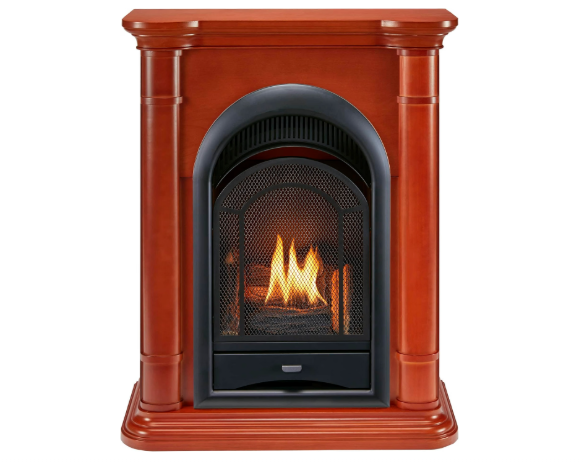
If you want a complete fireplace without building a wall, this system arrives with a furniture-grade mantel in an apple spice finish, lightly distressed on the edges, plus four ceramic fiber logs and a mesh screen.
The 10,000 BTU dual fuel burner runs on natural gas or liquid propane and heats up to 500 square feet. A thermostat cycles it on and off, and battery-assisted piezo ignition includes a built-in pilot oxygen depletion sensor.
Practical Impressions: It suits a den, office, or smaller living room where gentle heat and a finished mantel matter more than high output.
Feature Spotlight:
- Mantel and logs included
- Pilot oxygen depletion sensor
Main Advantages:
- No wall framing needed
- Modest output for small rooms
- Thermostat-controlled comfort
Fits Best With:
- Rooms up to 500 square feet
- Natural gas or propane supply
- Ceilings at least 42 inches above
Limits To Keep In Mind: Its output suits small spaces only. It still needs a gas connection by a licensed pro and at least 42 inches of ceiling clearance.
4. Buck Stove Vent Free Fireplace With Variable Speed Blower
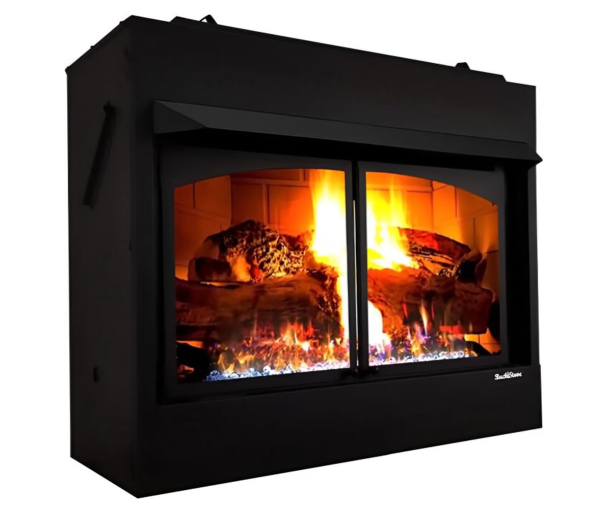
Built for framed walls, this unit is designed for a wood-framed cavity in new construction or a remodel, or for an empty mantel cabinet. It comes in 36 and 42 inch viewing window sizes.
The maker lists 40,000 BTU of output and includes a variable speed blower, which makes it a natural zero clearance fireplace with blower option. A standing pilot ignition can work with a remote or thermostat, and a 2-year factory warranty applies after registration.
Practical Impressions: It fits larger rooms in new builds where you want strong heat and a blower to move it.
Feature Spotlight:
- Variable speed blower included
- Standing pilot with remote or thermostat option
Main Advantages:
- High output for open spaces
- Blower spreads warmth faster
- Two viewing sizes available
Fits Best With:
- Wood-framed wall cavities
- Empty mantel cabinets
- Remote or thermostat controls
Limits To Keep In Mind: Owner feedback is very limited so far. The listing names natural gas in its title but mentions propane too, so confirm the fuel version with the seller.
Direct Vent or Vent-Free, Which Zero Clearance Setup Suits You?
Zero clearance describes the box. Venting describes where the combustion air comes from and where the exhaust goes, and it changes everything about installation and code.
| Setup | How It Vents | Main Trade-Off |
|---|---|---|
| Direct vent | Sealed glass, pipe to outside | More install work |
| Vent-free | Exhaust stays in the room | Code limits, air quality |
| B-vent | Vertical flue, room air | Lower efficiency |
A zero clearance direct vent gas fireplace pulls outside air through a sealed system and sends exhaust back out, which keeps combustion byproducts out of your living space. A zero clearance vented gas fireplace of this kind costs more to install but suits tight, modern homes well.
Vent-free units, including every product above, release combustion byproducts into the room. They install more easily but face code restrictions in some areas, so a zero clearance gas fireplace direct vent model is often the safer route where codes or health concerns rule out vent-free.
Insert or Built-In Firebox, What Really Changes
The gas insert vs zero clearance question comes up often, because the two look alike once installed. The difference is what they go into.
A gas fireplace insert slides into an existing masonry or factory-built fireplace and uses that structure. A zero clearance fireplace brings its own engineered box and goes into a newly framed wall or cabinet.
If you already have a working fireplace, an insert usually means less construction. If you have no fireplace at all, a zero clearance unit is the path that does not require a chimney and hearth.
An empty ventless gas fireplace box, like the ProCom firebox above, needs a separate burner and logs. If you are comparing the best ventless gas fireplace insert options instead, a ventless gas insert with its own firebox and logs saves a step.
Many vent-free products, like the Duluth Forge model above, blur the line by shipping as an insert with a zero clearance firebox. Read each listing to see whether it needs an existing opening or a framed one.
Natural Gas or Propane for Your New Fireplace
A natural gas zero clearance fireplace makes sense when a gas line already reaches the room. You avoid tank refills and usually pay less per unit of heat.
Propane suits rural homes and cabins without a gas main. Shoppers looking for the best ventless propane fireplace often choose dual fuel units, which can be set up for either gas during installation. A propane vent free fireplace insert with a dual fuel burner keeps your options open if a gas line arrives later.
Dual fuel burners still need to be configured for one fuel by a qualified installer. Vent-free products generally cannot be swapped between fuels casually, so settle the fuel before ordering.
Whatever you choose, match the BTU rating to the room. A burner larger than the space needs wastes fuel and can make a vent-free room uncomfortable.
Slim, Modern, and Frameless Gas Fireplace Styles
Depth often decides what fits. Going by the listed specifications, the ProCom firebox measures about 19 inches deep while the Duluth Forge insert runs about 29.5 inches, so a slim ventless gas fireplace can save real wall space.
A modern ventless fireplace usually trades traditional logs for cleaner lines. If your room calls for a contemporary ventless gas fireplace or a modern zero clearance gas fireplace, look at linear burners, clean-face trim, and glass media instead of traditional logs.
Frameless gas fireplaces hide the metal surround so the opening looks like a clean cut in the wall. Many of these are direct vent models, and a shallow direct vent gas fireplace can fit where a deep firebox will not.
For a thin profile on propane, look for units marketed as a slim propane fireplace or low profile propane fireplace, and always confirm the framing depth in the manual before building.
Installing a Zero Clearance Gas Fireplace Step by Step
Zero clearance gas fireplace installation is a planning job first and a construction job second. Use these steps as an overview of how to install a zero clearance fireplace, then follow the manual for your exact model.
- Confirm code: Check that local code allows your venting type and room.
- Pick the location: Consider gas access, venting route, and furniture layout. A zero clearance corner fireplace needs a corner-rated unit or cabinet.
- Frame the opening: Build to the manual’s exact dimensions and clearances.
- Run the gas line: A licensed professional should connect and leak-test it.
- Install venting if needed: Direct vent units need their listed vent kit and termination.
- Set the unit and finish: Use only finish materials and mantel depths the manual allows.
A zero clearance corner gas fireplace follows the same rules, but corner framing and mantel depth need extra care. Professional installation is strongly recommended for any gas appliance.
Replacing an Old Zero Clearance Fireplace Safely
Factory-built fireplaces are tested as complete systems. That means replacing zero clearance fireplace parts or swapping the box is not a simple drop-in job.
When you replace zero clearance fireplace units, the old firebox, chimney pipe, and framing may not match the new unit’s listing. Many installers remove the full system and frame for the new model.
If the old unit was wood burning, you cannot simply set a gas burner inside without confirming the manufacturer approves it. Have a certified installer inspect the old system before deciding.
Safety Checks Before Lighting a Vent-Free Unit
A zero clearance box protects the framing, but it does not make the air in your room safe on its own. Vent-free appliances release combustion byproducts into the living space.
The U.S. Environmental Protection Agency lists unvented gas heaters as a carbon monoxide source and recommends keeping gas appliances properly adjusted.
- Local rules: Some states and towns restrict vent-free units, especially in bedrooms and bathrooms.
- CO alarm: Install a working carbon monoxide alarm. An oxygen depletion sensor watches oxygen, not carbon monoxide.
- Room size: Follow the manual’s BTU and room volume limits.
- Fresh air: Follow the maker’s ventilation guidance during use.
- Professional gas work: Leave connections and leak tests to licensed pros.
For a deeper look at vent-free safety questions, our separate guide covers common concerns in detail.
Heat Output, Efficiency, and Blowers Explained
Vent-free units are often marketed as highly efficient because the heat stays in the room. That is why many people searching for an energy efficient gas fireplace start with ventless models.
Efficiency is only part of the picture. A unit that is too large for the room can overheat it and raise moisture and combustion byproducts, so right-sizing matters more than raw output.
A blower pushes warm air out of the firebox and into the room. If your model supports one, adding a blower can spread heat further, as long as you use the maker’s approved kit.
Wood Burning or Gas Zero Clearance Options Compared
Zero clearance fireboxes also come in wood burning versions, and readers searching for the best zero clearance wood burning fireplace often compare them with gas.
Wood units need a listed chimney system, regular cleaning, and fuel storage. Gas units offer instant flame and thermostat control with far less upkeep.
Learning how to install a zero clearance wood burning fireplace involves the same framing discipline plus a full chimney run. If you want low maintenance and simple control, gas is usually the easier choice.
Maintenance That Keeps Burners and Pilots Healthy
Keep the burner, logs, and firebox free of dust, pet hair, and debris. Arrange logs exactly as the manual shows, since misplaced logs can disturb the flame and raise soot or odor.
Have a qualified technician inspect the burner, pilot, gas connections, and sensors every year. If a pilot that won’t stay lit becomes a pattern, have the unit checked rather than forcing it.
When replacing logs, choose a set certified for your burner. A quality gas log set that matches your firebox keeps both the look and the combustion right.
Common Mistakes People Make With Vent-Free Fireplaces
- Skipping code checks: Some areas ban or limit vent-free units.
- Oversizing the burner: Too much BTU for the room causes stuffiness and wasted fuel.
- Relying on the ODS alone: It does not detect carbon monoxide, so add an alarm.
- Ignoring mantel clearances: Zero clearance applies to framing, not decor above.
- DIY gas connections: Leaks and incorrect pressure are serious hazards.
- Using uncertified logs: Mismatched logs can affect flame and emissions.
Who Should Choose a Vented or Electric Model Instead
Vent-free is not right for every home. People with asthma, allergies, or breathing sensitivities may be more comfortable with a direct vent unit that keeps exhaust outside.
If you want a fireplace for a bedroom, a very small room, or an area where code restricts vent-free units, a direct vent model is usually the better route.
For homes with no gas at all, a gasless fireplace such as an electric unit avoids combustion entirely. It gives flame effects and modest heat with a simple plug-in setup.
Frequently Asked Questions About Zero Clearance Fireplaces
Can a zero clearance gas fireplace touch drywall or wood framing?
Zero clearance units are built so certain parts of the firebox can sit at or near combustible framing, but only where the manual allows. Other areas, such as the top, vent pipe, and front opening, often require specific distances. Mantels, shelves, and decorative trim above the opening have their own minimum spacing too. Always follow the exact clearance diagram for your model, and have the framing checked by your installer or local inspector before closing up the wall.
Which brands make the most realistic gas fireplaces?
Realism depends more on design than brand name. The most realistic gas fireplace setups usually combine well-shaped ceramic fiber logs, ember beds, and burners that create varied, dancing flames. Vent-free units tend to have smaller, bluer flames because of how they burn, while direct vent models can produce taller, more yellow flames. Look at the log detail, flame height, and firebox liner in photos and videos, and choose a log set certified for your burner.
Is a ventless gas fireplace insert allowed in bedrooms?
Often not. Many codes limit or prohibit vent-free appliances in bedrooms and bathrooms, and some only allow small wall-mounted units with low input ratings. Rules vary by state and town, so check with your local building department before buying. If your plan includes a bedroom, a direct vent fireplace that draws air from outside and vents exhaust outdoors is usually the safer and more widely accepted choice.
Do I need a blower on a zero clearance fireplace?
A blower is not required, but it helps move warm air out of the firebox and into the room, especially in larger spaces. Some models include one, while others accept an optional kit. If you are comparing the best freestanding ventless gas fireplace with blower options or built-in units, check whether the blower needs a nearby outlet and whether the maker approves the kit for your exact model before installing it.
How long does a zero clearance gas fireplace last?
Lifespan depends on build quality, use, and maintenance. Annual professional inspections, clean burners, correctly placed logs, and prompt repair of pilot or sensor problems all help a unit last longer. Watch for warning signs such as rust in the firebox, cracked components, persistent odor, or soot on logs or glass. If major parts are no longer available, replacing the system may be safer than repairing it piece by piece.
Can I install a zero clearance fireplace myself?
Some homeowners handle framing and finishing, but gas connections, leak testing, and venting should be done by licensed professionals. Many areas require permits and inspections for gas appliances, and incorrect installation can create fire or carbon monoxide hazards. Hiring a certified installer also helps protect warranty coverage, since manufacturers such as Buck Stove note that installation must follow local and state codes for warranty eligibility.
Picking the Right Firebox for Your Room and Code
A zero clearance gas fireplace suits homeowners who want real flame in a room with no chimney and are willing to follow code, clearances, and professional gas work. It is less suited to bedrooms, very small rooms, or homes with breathing concerns where vent-free units may not be appropriate.
The best zero clearance gas fireplace is the one your code allows and your room can handle. Use a simple rule. If vent-free is allowed and you want flexibility, choose an empty firebox or a complete insert sized to the room. If codes or health come first, choose a direct vent model instead.
For a custom build where you control the logs and finish, the ProCom Universal Ventless Firebox is a sensible place to start.
