
Cold Air Coming In Through Gas Fireplace Causes and Fixes

Disclosure: As an Amazon Associate, I earn from qualifying purchases. Learn more
Cold air coming in through a gas fireplace usually comes from one of three places: gaps in the wall enclosure or gas line opening, a glass panel that is not fully latched or sealed, or air pressure changes in the house. Sometimes it is not a leak at all, just cold surfaces and natural convection around a metal firebox.
You may notice it as a chilly stream near the lower grille, a cold floor in front of the unit, or a draft that gets worse on windy nights. Because every gas fireplace handles air differently, the fix depends on your venting type and where the air shows up. Covering openings at random can cause trouble. This guide helps you find the likely source, try safe checks, and know when a technician needs to step in.
Is It a Real Draft or Just a Cold Firebox
Before you hunt for a leak, find out whether air is actually moving. Many drafts reported at a gas fireplace turn out to be convection, where air cooled by a cold surface sinks and slides out along the floor.
A metal firebox or chase on an exterior wall can sit well below room temperature overnight. Room air that touches it cools, gets heavier, and drops toward the lower grille.
A true air leak behaves differently. It tends to feel steady, it changes with wind or exhaust fan use, and you can feel moving air rather than just a cold surface.
Both problems feel like cold air at your feet, which is why the next sections sort them apart before you try any fix.
Which Gas Fireplace Venting Type You Have Matters
Gas fireplaces move air in different ways, so a fix that suits one type can be wrong for another. The model label or manual usually names your type.
- Direct vent: A sealed combustion chamber draws air from outdoors and sends exhaust outdoors through a dedicated pipe. The sealed glass front keeps that air separate from your room.
- B-vent or natural vent: It burns room air and sends exhaust up a vertical flue, so the flue is an open path to the outdoors.
- Vent-free: It has no flue and releases combustion byproducts into the room, so its required openings must never be sealed.
- Vented gas logs in a masonry fireplace: The chimney and damper do most of the airflow work, which is covered later in this guide.
For background on how these systems exit a home, this overview of venting options without a chimney explains the main designs.
Common Reasons Cold Air Gets Around a Gas Fireplace
When air really is moving, these are the usual suspects and what each one tends to involve.
- Open gas line or wiring hole: The access opening where the gas line and wiring enter the control area is often left unsealed, which lets air pass from the chase into the room.
- Missing air barrier or insulation in the chase: A framed chase on an exterior wall or a cantilevered projection can leave the cavity open to outdoor air.
- Unsealed vent shield: If the insulating shield around the vent is not airtight, or the vent is not sealed to it, air can flow into the enclosure and then into the room.
- Glass panel not sealed: A worn gasket or latches that were never fully engaged can break the seal on a direct vent unit.
- Damaged vent connection or termination: A loose joint or damaged exterior termination can change how air moves through the appliance.
- Worn damper in an older masonry fireplace: Rust or warping keeps a damper from closing fully.

How to Trace Cold Air Without Taking Anything Apart
Do these checks with the fireplace off and cool. You are gathering clues, not repairing anything.
- Note the timing. Does the cold air show up all day, only on windy nights, or when a range hood or bath fan runs?
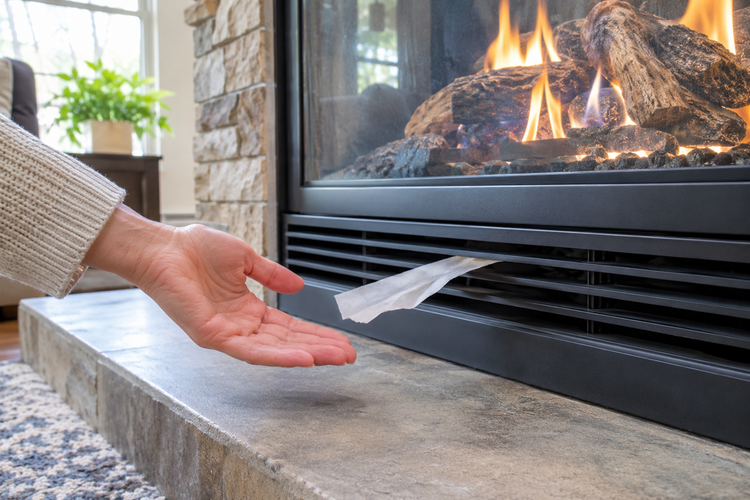
- Check the location. Feel the lower grille, the control compartment area, the trim edges, and the wall around the surround. Use the back of your hand or a thin strip of tissue, and keep any open flame away from a gas appliance.
- Compare cold surfaces with moving air. A cold tile with no air movement points to convection. Air you can actually feel moving points to a leak.
- Run a simple pressure test. Turn off exhaust fans and the dryer and see whether the draft eases, then run them one at a time to see which one makes it worse.
- Look outside. The exterior termination should be intact and unobstructed, with no visible gaps in the trim around it.
- Write down the model number. It lets a technician pull the exact installation manual.
Cold air settles at the lowest point of a cavity, so the coldest spot is not always the leak itself. A technician may open the enclosure, or an energy auditor can use a blower door test and a thermal camera to follow the air back to where it enters.
A Quick Rule for Matching Fireplace Drafts to Causes
Use your trace notes to match what you felt to the likeliest source. Treat the table as a starting point, not a diagnosis.
| What You Notice | Most Likely Source |
|---|---|
| Cold floor, no moving air | Cold firebox and convection |
| Steady stream at lower grille | Enclosure or gas line gap |
| Worse when fans run | Negative house pressure |
| Worse on windy days | Termination or enclosure leak |
| Cold air at glass edges | Glass seal or latches |
| Cold air from the old flue | Worn or open damper |
If air moves, suspect a leak or a pressure problem. If only surfaces feel cold, suspect convection and thin insulation around the enclosure. When two rows fit, start with the one that matches the timing you noted.
Sealing the Gas Line Opening and Surrounding Chase
The gas line opening is the most talked-about leak point, but sealing it is not a casual caulk job. The opening can sit close to hot components, and the sealing material has to suit the fireplace’s clearance rules.
Blocking one path can also change where air goes. When other fuel-burning appliances share the house, redirected air can affect how they vent, so a technician should confirm the result.
The chase deserves equal attention. A cantilevered or exterior-wall chase may lack an air barrier or insulation in its ceiling, walls, or floor, and cold air then reaches the unit from the cavity.
A fireplace technician or insulation contractor can seal from attic, crawl space, or exterior access using manufacturer-approved sealants and insulation rated for use near the appliance. Repairs are easiest while the walls are open and much harder once the finishes are in.
Wind and Pressure Pulling Air Through the Fireplace
Warm air rises and leaks out through the upper parts of a house. Replacement air is drawn in low through any opening it finds, and a fireplace can be one of them.
Official combustion appliance guidance from a U.S. Department of Energy program notes that a naturally drafted fireplace with a cool chimney can be overpowered by something as modest as a kitchen or bath exhaust fan.
Strong wind can also push air down a vertical flue or press on an exterior termination, which makes small leaks easier to feel. If you suspect downdrafts, stopping chimney downdrafts covers the usual causes.
Sealed combustion units are far less sensitive to house pressure than units that burn room air, but they cannot make up for a leaky enclosure. If the draft clearly tracks with fan use, an HVAC professional can check make-up air and house pressure. Cracking a window can help confirm the cause, but it is a test, not a lasting fix.
Gas Logs in an Older Masonry Fireplace
An old wood-burning firebox fitted with gas logs keeps its flue and damper, which means a direct channel to the outdoors sits above the logs. A damper that is rusted, warped, or stuck partly open lets cold air slide down into the room.
It is tempting to close it tight, but the right setting depends on the log set and local code. Pilot flames and burners can need the flue open for exhaust, so read the instructions and see this guide on closing the flue safely before changing anything.
A damper in poor shape can be repaired or replaced by a chimney professional. A properly fitted chimney cap also keeps rain and animals out and can reduce wind effects at the top of the flue.
What Not to Block When Cold Air Bothers You
Stopping a draft by covering every opening can create a worse problem than the draft. These are the usual mistakes.
- Covering the outdoor intake or exhaust termination. Direct vent units need both clear to burn and vent properly.
- Sealing cooling louvers. Some units rely on them for heat management, so check the manual first.
- Packing foam or loose insulation near hot parts. Combustible material near the burner, glass, or vent is a fire risk.
- Leaving the glass front off. A sealed unit depends on its approved glass assembly.
- Using improvised plugs or covers. Anything stuffed into an opening can be forgotten at the next lighting, and it does not fix the leak itself.
- Sealing the openings of a vent-free unit. The air it needs must stay available.
Apply one rule to any temporary fix: nothing may sit in the path of the intake, the exhaust, or the burner. If you cannot confirm that, leave it alone and ask a technician.
When a Cold Draft Calls for a Technician
Many drafts come from enclosure gaps that are a comfort issue rather than a hazard. Some signs point to the fireplace itself and need a professional soon.
- Cold air around or through the glass edges, or a panel that looks loose.
- A damaged vent pipe, a loose connection, or a damaged or blocked exterior termination.
- Changed flame behavior, soot, or condensation on the glass.
- A draft that gets sharply worse with wind, or after a remodel or a new exhaust fan.
- A carbon monoxide alarm that has sounded, or a gas smell.
Fuel-burning appliances with defective or blocked venting can produce carbon monoxide, which is why consumer product safety tips stress regular checks of flues and vents.
Give the technician your model number, the venting type, where and when you feel the air, and any recent changes to the house. That shortens the search considerably.
If you smell gas, do not operate electrical switches. Leave the building and call your gas utility from outside. If a carbon monoxide alarm sounds, move everyone outdoors and call emergency services. Do not use the fireplace again until it has been checked.
Frequently Asked Questions
Can it be too cold outside for a gas fireplace to work?
Gas fireplaces are normally installed to run through winter, but severe cold combined with wind, ice, or snow can cause trouble at the exterior termination. A blocked or iced-over termination can disturb how the unit vents, so keep it clear as the manual directs. A very cold exterior wall also makes the area around the fireplace feel colder. If the flame looks different on cold, windy days, stop using the unit and call a technician.
Why does my gas fireplace not heat the room well?
A draft is only one possible reason. The unit may be small for the room, the controls or blower may need adjusting, or cold air spilling from the enclosure may be offsetting the heat the fireplace produces. Compare the rated output with the size of the room, check the blower and controls against the manual, and fix any air leaks first. If the room stays cool, a technician can test the burner and gas pressure.
Will a carbon monoxide alarm warn me about a drafty fireplace?
Not directly. An alarm detects carbon monoxide, not air movement, so a draft alone will not set it off. Alarms still matter near any fuel-burning appliance, because defective venting or pressure problems can push exhaust into the home. Building science guidance calls for alarms that meet the UL 2034 standard outside each sleeping area, and the maker’s instructions cover placement near appliances. Test the alarm on a schedule and replace it when it expires.
Do gas inserts leak cold air differently than built-in units?
They can. Many gas inserts are direct vent units set inside an existing firebox, so cold air often enters around the trim or surround panel, or through an old flue that was not blocked off properly. A built-in unit more often leaks through the chase or the gas line opening. The first clue is where you feel the air. Have an installer check the surround seal and the liner connection rather than covering the unit.
How often should a gas fireplace be inspected?
Safety agencies recommend a professional inspection of fuel-burning appliances, chimneys, flues, and vents once a year, ideally before the heating season starts. The visit can catch worn glass gaskets, loose vent connections, and blockages that also cause drafts or poor burning. Between visits, keep the area around the unit clear, watch the flame for changes, and note any new drafts so the technician knows where to start.
Bringing It All Together
Cold air at a gas fireplace comes from convection around a cold enclosure, from true leaks at the gas line opening, chase, glass, or vent, or from wind and pressure pulling air through the house. Sorting those apart first saves time and keeps you from covering openings the appliance needs.
Fixes fall into a few groups: sealing the enclosure with approved materials, correcting glass or vent problems, easing pressure sources like exhaust fans, and repairing an older damper. For prevention, keep intakes and exhaust clear, schedule a yearly inspection, and have gaps sealed while the walls are still open during any remodel.
