Is Stainless Steel Safer Than Non-Stick for Everyday Cooking?
Disclosure: As an Amazon Associate, I earn from qualifying purchases. Learn more
Yes, stainless steel is generally safer than non-stick cookware because it does not rely on chemical coatings that degrade under heat or wear. It remains stable at high temperatures and does not release fumes or coating particles during normal cooking.
Many people face confusion when replacing cookware or setting up a kitchen. Non-stick pans feel convenient, while stainless steel pans appear heavier and less forgiving. The real concerns usually center on chemical exposure, heat safety, and long-term health effects.
You may wonder whether scratched non-stick pans pose a risk or if stainless steel pans can leach metals into food. These questions become even more complicated when ceramic and cast iron options are added to the mix.
What Safety Means in Cookware Materials
Cookware safety is less about fear and more about material stability under heat and how surfaces change over time. Stainless steel cookware is made from metal alloys designed to stay structurally stable even at high temperatures. Non-stick cookware depends on a surface coating that can weaken with heat, scratches, or age.
Safety also involves durability. A stainless steel frying pan may discolor but remains usable for decades. A non-stick pan slowly loses its coating, and once that surface is damaged, its safety profile changes. This difference is why people often ask if stainless steel is healthier than non-stick.
Cooking style matters too. High heat searing, acidic sauces, and long simmering place stress on cookware. Stainless steel handles these conditions without releasing coatings or fumes. Safety is not only about the material itself, but also about how forgiving it is during everyday cooking.
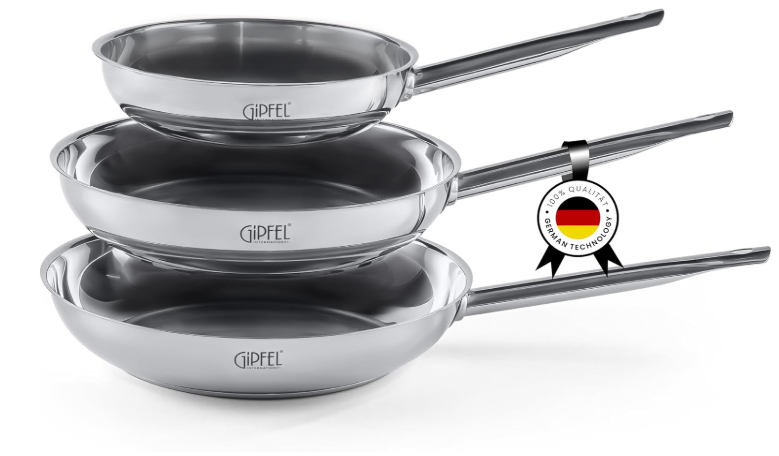
GIPFEL INTERNATIONAL 3 Piece Stainless Steel Frying Pan Set for Safer Cooking
If you are deciding whether stainless steel is safer than non-stick for daily use, this tri-ply stainless steel frying pan set offers a practical answer. The multi-layer construction supports even heat distribution without relying on chemical coatings, making it suitable for high-heat cooking and long-term use. Compatibility with induction, gas, electric, and ceramic stoves adds flexibility, while oven-safe performance supports healthier cooking methods. The three pan sizes also cover everyday needs without switching materials.
GIPFEL INTERNATIONAL 3 Piece Stainless Steel Frying Pan Set is a smart option for health-focused kitchens that value durability and coating-free cooking → View on Amazon
Why Non-Stick Cookware Raises Safety Concerns
Non stick cookware concerns come from coating behavior under stress.
Cause: Non stick pans rely on chemical coatings to prevent sticking.
Effect: When overheated, these coatings can break down and release fumes.
Cause: Scratches from metal utensils or abrasive cleaning.
Effect: The coating becomes unstable and may flake over time.
Cause: Extended use beyond recommended temperatures.
Effect: Faster coating degradation and reduced lifespan.
- Suggested Reading: Should You Use a Neretva Bread Maker and What to Expect
Is Stainless Steel Pan Toxic or Reactive?
Stainless Steel Composition
Stainless steel cookware is made from iron combined with chromium and nickel. Food-grade alloys like 18 8 and 18 10 stainless steel cookware are designed specifically for cooking safety.
Metal Transfer Into Food
Small amounts of nickel or chromium may transfer into food, especially when cooking acidic dishes. These amounts are extremely low and considered safe for the general population. This answers the common question of whether stainless steel pan toxic concerns are valid for daily use.
Who Should Take Extra Care
People with severe nickel sensitivity may prefer nickel-free stainless steel or cast iron. For most households, stainless steel is safe to eat from and does not release chemicals when heated.
Stainless Steel vs Ceramic vs Nonstick Safety
| Feature | Stainless Steel | Ceramic Nonstick | Traditional Non Stick |
|---|---|---|---|
| Coating Free | Yes | No | No |
| Heat Tolerance | Very High | Moderate | Low to Moderate |
| Durability | Long Term | Short to Medium | Short to Medium |
| Risk When Scratched | Minimal | Increased | Increased |
| Acidic Food Safety | High | Moderate | Moderate |
| Maintenance | Moderate | Easy at First | Easy |
How to Cook Safely With Stainless Steel
- Preheat the pan before adding oil
- Use medium or medium-high heat for most cooking
- Add oil once the pan is hot, then add the food
- Allow food to release naturally before flipping
- Avoid sudden temperature changes to prevent warping
When used correctly, stainless steel frying pans offer reliable cooking without coatings, making them a safer long-term option.
When Non-Stick Cookware
Non-stick cookware can still be useful in specific situations. Cooking eggs, pancakes, or delicate fish at low heat benefits from a nonstick surface. For quick meals with minimal oil, it can feel convenient.
Problems arise when nonstick pans are used for high-heat searing, oven cooking beyond limits, or aggressive utensil use. In those situations, stainless steel or cast iron performs better. Safety improves when cookware is matched to the task rather than used universally.
Common Mistakes That Reduce Cookware Safety
- Overheating empty non-stick pans
- Using metal utensils on coated surfaces
- Cooking acidic foods for too long in damaged pans
- Ignoring heat guidelines
- Replacing cookware only when visibly ruined
These habits increase risk regardless of cookware type, though stainless steel is more forgiving.
How to Prevent Health Risks From Any Cookware Checklist
- Match cookware to cooking style
- Avoid overheating pans
- Replace damaged non-stick cookware promptly
- Use appropriate utensils
- Clean gently without harsh abrasives
- Rotate cookware materials instead of relying on one pan
Good habits reduce risk more than any single material choice.
Stainless Steel or Cast Iron for Long-Term Cooking
Both stainless steel and cast iron are widely used for long-term cooking. Cast iron offers natural nonstick performance when seasoned and adds iron to food. Stainless steel provides consistency, easier maintenance, and compatibility with acidic foods.
For most kitchens, stainless steel is easier to manage daily, while cast iron suits slower, high-heat cooking. Safety-wise, both are excellent when used properly.
Practical Takeaway for Safer Cookware Choices
Stainless steel is safer than non-stick for most everyday cooking because it does not rely on coatings, tolerates high heat, and remains stable over time. Nonstick cookware can still be used carefully for specific foods, but it requires more attention to heat and wear. Choosing cookware based on cooking habits, maintaining it properly, and understanding material limits creates a safer and more reliable kitchen without unnecessary worry.
Discover New Articles: See Our Latest Updates
