
Ninja FlexFlame Grill Review – Pros and Cons You Should Know

Disclosure: As an Amazon Associate, I earn from qualifying purchases. Learn more
A versatile outdoor grill should do more than cook burgers and steaks over direct heat. It should also handle slower smoking, roasting, and other cooking styles without making every meal feel like a complicated setup.
The Ninja FlexFlame brings these functions together in one propane-powered system, combining traditional grilling with electric temperature controls and convection airflow. That combination gives you more ways to prepare food, from seared meats and grilled vegetables to smoky dishes that need gentler heat.
However, having several cooking modes does not automatically make a grill suitable for every backyard or cooking routine.
The Ninja FlexFlame Grill combines propane heat, electric-powered convection, and woodfire smoking for versatile outdoor grilling, roasting, griddling, and pizza cooking.
For Versatile Outdoor Cooking
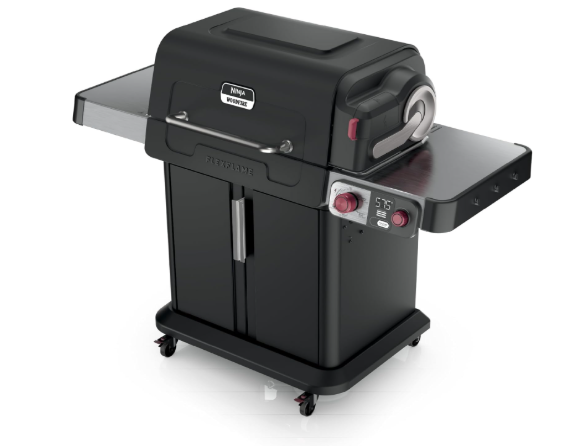
Ninja FlexFlame Grill
- Five cooking functions
- Digital temperature control
- Woodfire smoking technology
- 424-square-inch cooking area
Heat distribution, available cooking space, pellet use, setup requirements, and cleanup all matter when deciding whether it fits your needs. This review looks at how the grill handles its different cooking functions and what to consider before choosing it.
What Defines A Multi Function Propane Grill
A multi-function propane grill combines a conventional gas burner system with features that extend beyond direct grilling. Depending on its design, it may support indirect cooking, roasting, smoking, griddling, or high-temperature baking.
The main appeal is flexibility. Instead of keeping separate appliances for every outdoor cooking method, you can use one cooking chamber for several tasks. That can be useful when storage space is limited or you regularly prepare different foods for a group.
However, a longer feature list does not automatically mean every function performs like a dedicated appliance. A grill designed to sear quickly may have different temperature limits and airflow behavior from a smoker built for long, low-temperature cooking.
Think about the cooking methods you will use most often. If burgers, vegetables, and occasional roasting make up most of your routine, a conventional propane grill may cover your needs without extra complexity. You can also compare the layout and cooking style with a kettle grill design before deciding how much versatility matters.
How Does Convection Change Grill Cooking Results
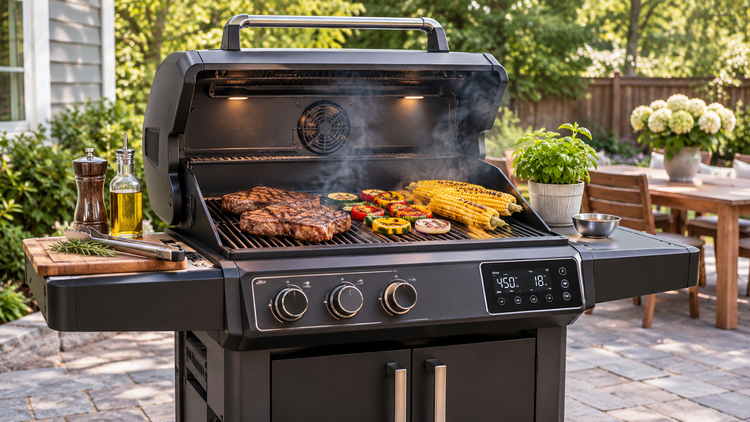
Traditional gas grills rely mainly on heat rising from burners and warming the cooking chamber. A convection-assisted grill adds a fan that moves heated air around the food when the lid is closed.
Moving air can help reduce temperature differences across the cooking area and encourage more consistent browning. It can also shorten cooking times, although the result depends on the food, load size, outside conditions, and selected temperature.
There is a trade-off: a powered fan adds sound and another component that depends on electricity. Some designs pause airflow when the lid opens, so opening the lid frequently can interrupt the cooking environment.
For covered roasting and larger cuts, circulating heat may be useful. For quick grilling where you want direct access to the food, the fan may matter less than burner control, grate layout, and how easily you can manage hot and cool zones.
Grill Smoking And Roasting Serve Different Purposes
Grilling usually uses direct or indirect heat to cook food relatively quickly. Smoking introduces wood combustion or smoldering pellets to add smoke compounds while food cooks, often over a longer period.
Roasting uses the enclosed cooking space to surround food with heat. A convection fan can support this method by moving hot air around the food, helping the surface brown while the center cooks.
Some outdoor grills combine these methods, but the results are not automatically interchangeable with those from a dedicated smoker, oven, or griddle. A compact pellet box, for example, may need frequent attention and may not create the same smoke profile as a larger smoking chamber.
If you are comparing fuel and smoke methods, remember that burning wood in a charcoal grill is a different setup from using a built-in pellet smoking system. This guide to burning wood in a charcoal grill covers that separate cooking question.
Does A Five In One Grill Fit Your Routine
Before choosing a multi-function grill, use this quick three-question check. It helps separate useful features from functions that may rarely leave the control panel.
- Which two cooking methods will you use most? Choose around your regular meals rather than occasional experiments.
- Can your outdoor space support the setup? Consider the grill footprint, safe clearances, propane storage, and access to a suitable electrical outlet.
- Are you comfortable with extra upkeep? Fans, electrical controls, pellet compartments, grease trays, and removable cooking plates can add cleaning and maintenance tasks.
If your answers point toward frequent grilling and roasting, a multi-function design may be practical. If you mainly want long, low-temperature barbecue, compare its smoking method with a dedicated smoker before treating the extra function as a substitute.
It is also worth considering how often you will use optional accessories. A grill may advertise griddling or pizza cooking while requiring separate plates or stones to make those methods possible.
Ninja FlexFlame Grill Outdoor Cooking System Review
The Ninja FlexFlame Grill combines propane burners with electric-powered convection and woodfire smoking technology. Its five cooking functions cover grilling, smoking, roasting, griddling, and pizza preparation, although the pizza stone and griddle accessories are sold separately.
The digital controls allow temperature adjustments from 200°F to 600°F, while the 424-square-inch cooking surface accommodates larger meals. Its three-burner design and circulating hot air provide flexibility for different outdoor cooking styles.
In-Use Impressions: Users frequently appreciate its cooking versatility, even heat circulation, quick heating, and smoky flavor. However, some report reliability concerns, inconsistent temperatures, and occasional ignition difficulties.
Feature Spotlight:
- Five-function outdoor cooking system
- Digital temperature adjustment from 200°F to 600°F
- Ninja WoodFire smoking technology
Practical Gains:
- Handles several cooking methods in one appliance
- Circulates heated air around food
- Provides a large main cooking surface
- Supports both fast and low-temperature cooking
Designed Around:
- Outdoor propane grilling setups
- Standard 20-pound propane tanks
- Three-prong outdoor electrical extension cords
- Outdoor cooking with compatible Ninja accessories
Worth Checking: Electricity is required for its electronic features and fan. Additional accessories are sold separately, and reported reliability concerns make proper inspection and maintenance important.
What Grill Capacity Matches Your Typical Meals
Cooking area matters more than a headline capacity claim if you regularly prepare several types of food at once. Look at the usable grate dimensions, the number of burners, and whether the layout leaves room to move food between hotter and cooler areas.
The listed PG301BK configuration pairs three burners with 424 square inches of primary cooking space and a digital temperature range of 200°F to 600°F.
Large meals also need room for indirect cooking. If the grates are crowded, food can block airflow and make it harder to manage different cooking temperatures at the same time.
Consider your usual serving size rather than the largest meal you might prepare once a year. A grill that fits your regular routine is easier to use and maintain than one that takes up outdoor space for capacity you rarely need.
How Should You Set Up An Outdoor Grill Safely
Plan the location before connecting fuel or electricity. A propane grill belongs outdoors, away from the house, deck railings, overhanging branches, and other combustible surfaces. Keep children and pets away from the active cooking area.
For a grill that also uses powered controls or a fan, check the outlet location and extension-cord requirements before assembly. The FlexFlame instruction booklet specifies a grounded, outdoor-rated three-prong extension cord with an appropriate rating; keep cords away from hot surfaces and walking paths.
- Assemble the grill on a stable, level surface.
- Check the hose, regulator, and propane connections for visible damage.
- Use the fuel type and regulator specified by the manufacturer.
- Keep the lid open during the prescribed ignition procedure.
- Complete the manufacturer’s first-use burn-off instructions before cooking food.
- Keep the grease tray correctly installed and clear of excess buildup.
For general propane grill precautions, follow the NFPA grilling safety guidance. If you smell gas, do not continue trying to light the grill. Follow the manufacturer’s emergency instructions and contact the appropriate gas or fire service if the odor persists.
How Do You Clean And Maintain Grill Components
Grease management is a central part of grill maintenance. Fat and cooking residue can collect beneath the grates, around flame tamers, and in the grease tray. Leaving that buildup in place can increase flare-up and fire risks.
Let the grill cool as directed before removing parts for cleaning. Empty and clean the grease tray regularly, and follow the appliance manual for the correct method for grates, burners, and any pellet box.
Do not assume every removable component can be cleaned with the same product. The FlexFlame instruction booklet gives specific care directions for its pellet box and smoke housing, including using soap and water rather than general-purpose cleaning chemicals.
Inspect burner ports and screens for debris, and check the hose and electrical cord for wear. If a part is damaged or the grill behaves abnormally, stop using it until the cause has been addressed according to the manufacturer’s guidance.
Which Grill Problems Deserve Attention First
Uneven browning: Food may be positioned over different heat zones, the grill may be overloaded, or airflow may be restricted. Try smaller batches and check whether the cooking method calls for the lid to remain closed.
Ignition trouble: A burner may not be lighting correctly, or the ignition sequence may not have been followed. Turn off the controls and gas supply, allow the grill to cool as directed, and consult the manual rather than repeatedly attempting to ignite it.
Unexpected flare-ups: Grease accumulation, excess fat, or blocked drainage can contribute. Stop cooking if flames become unsafe, and inspect the cooled grill and grease management parts before using it again.
Weak or inconsistent smoking: Pellet quantity, airflow, temperature, and the design of the smoke compartment can all affect the result. A multi-function grill may not reproduce the same low-and-slow conditions as a dedicated smoker.
Electrical interruption: A powered grill may lose fan or control functions if its electrical supply is interrupted. Do not bypass safety features or use a damaged cord; check the manual and have faults assessed before restarting.
What Food Safety Rules Apply To Grill Cooking
Appearance alone cannot confirm that meat is safely cooked. Use a food thermometer to check the internal temperature at the appropriate location, especially when cooking thick cuts, poultry, or ground meat.
The USDA recommends 145°F for whole cuts of beef, pork, lamb, and veal, followed by a three-minute rest. Ground meats should reach 160°F, while poultry should reach 165°F.
Keep raw meat and its juices separate from cooked food, clean utensils and preparation surfaces, and refrigerate leftovers promptly. A hot grill does not prevent cross-contamination during preparation or serving.
For the full temperature guidance, refer to the USDA’s safe cooking temperature chart. Use those food-safety targets regardless of the grill’s displayed chamber temperature or selected cooking mode.
Frequently Asked Questions About Grill Cooking
Can A Propane Grill Work Without Electricity?
Some propane grills use a simple manual ignition system and can operate without an electrical connection. Others rely on powered controls, fans, displays, or electronic ignition, so propane alone is not enough. Check the specific model’s instructions before planning its location. If a grill requires electricity, use only the outlet and outdoor-rated cord arrangement specified by its manufacturer, and never bypass an electrical safety feature.
Does A Convection Grill Cook Food Faster?
Moving hot air can help transfer heat around food and may shorten cooking time compared with a similar grill without forced airflow. Actual results depend on the grill design, food thickness, amount of food, lid position, and outside temperature. Faster cooking does not mean every item will finish evenly without attention. Check food doneness with a thermometer rather than relying only on a timer or the grill’s displayed temperature.
Can A Multi Function Grill Replace A Dedicated Smoker?
That depends on how often you smoke food and what kind of result you expect. A grill with a small pellet compartment can add smoke while also providing conventional gas heat, but its smoke output, pellet capacity, and lowest stable cooking temperature may differ from a dedicated smoker. If long smoking sessions are your main priority, compare those practical limits before treating a combined grill as a full replacement.
Do Griddle Plates And Pizza Stones Come With Every Grill?
No. Some multi-function grills advertise griddling and pizza cooking as available modes while selling the required plates or stones separately. Check the included-parts list for the exact package rather than assuming every pictured accessory is in the box. Also consider storage space for removable parts and the extra cleaning they require. Optional accessories can change the real setup you need for the cooking methods you plan to use.
How Often Should You Check A Propane Grill Hose?
Inspect the hose and connections regularly for cracking, brittleness, visible damage, or signs of leakage. The NFPA recommends checking the tank hose for leaks before the first use each year with a light soap-and-water solution; bubbles can indicate escaping gas. Follow the grill manual for the correct procedure. If you smell gas or identify a leak, stop using the grill and follow the relevant emergency guidance instead of attempting to cook.
Making A Practical Ninja FlexFlame Grill Decision
A useful Ninja FlexFlame grill review comes down to more than its five cooking modes. Consider how well the grill’s heat system matches your usual meals, whether you have safe outdoor space and suitable power, and how much maintenance you are willing to handle.
The reviewed model may suit cooks who want several methods in one outdoor unit and do not mind its electrical and accessory requirements. Those who mainly want quiet, simple grilling or dedicated low-and-slow smoking may prefer a more specialized setup. Match the grill to the cooking you actually do, not every function listed on its feature panel.
