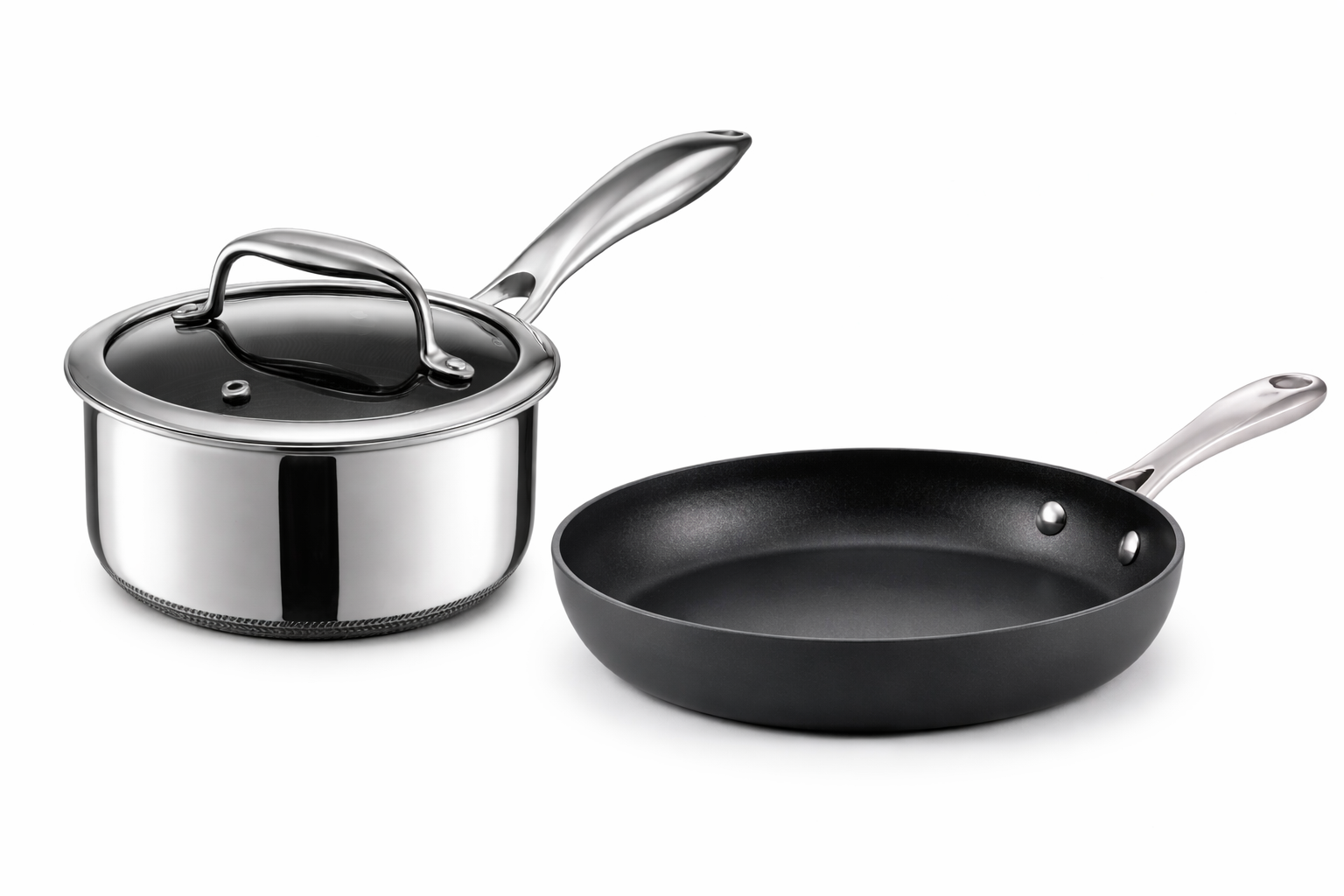
Skillet Or Saucepan: Make The Right Choice
Disclosure: As an Amazon Associate, I earn from qualifying purchases. Learn more
A saucepan is best for boiling, simmering, and cooking with liquids. A skillet is best for searing, frying, and browning with direct surface heat.
When comparing these two essentials, confusion usually comes from overlap. Both can cook vegetables, reheat leftovers, and handle simple meals. The difference shows up in performance. You may be deciding whether to save cabinet space or build a practical skillet and saucepan set for daily cooking.
The choice usually depends on cooking method, meal size, and texture preference. If you value crust and caramelization, one stands out. If you rely on soups, grains, sauces, steaming, candy making, or reheating liquids, the other becomes essential. Here is a clean, practical breakdown.
Saucepan Vs Skillet Structural Differences
| Feature | Saucepan | Skillet |
|---|---|---|
| Side Height | Tall and straight | Low and sloped |
| Base Width | Smaller cooking base | Wide cooking surface |
| Primary Heat Style | Moist heat cooking | Dry heat cooking |
| Best For | Boiling and simmering | Frying and searing |
| Lid Usage | Common and functional | Optional |
| Food Movement | Stirring liquids | Tossing and flipping |
The difference between a skillet and a saucepan begins with shape. A saucepan traps moisture and reduces evaporation. That makes it ideal for soups, rice, pasta, oatmeal, custards, sauces, steaming vegetables, and melting chocolate.
A skillet spreads food across a larger surface. This encourages evaporation and browning. It works better for stir fry, grilled sandwiches, fajitas, pancakes, shallow frying, and pan-roasted meats.
Structure directly influences cooking results.
Best Saucepan Reviews & Recommendations
If you are leaning toward a saucepan or skillet for sauces, grains, and small-batch cooking, the right saucepan makes all the difference. These options focus on even heat distribution, durable construction, and strong Compatible With versatility across modern cooktops.
Cuisinart 1.5 Quart Saucepan w Cover 719-16 is a trusted choice for precise simmering and classic stainless performance → View on Amazon
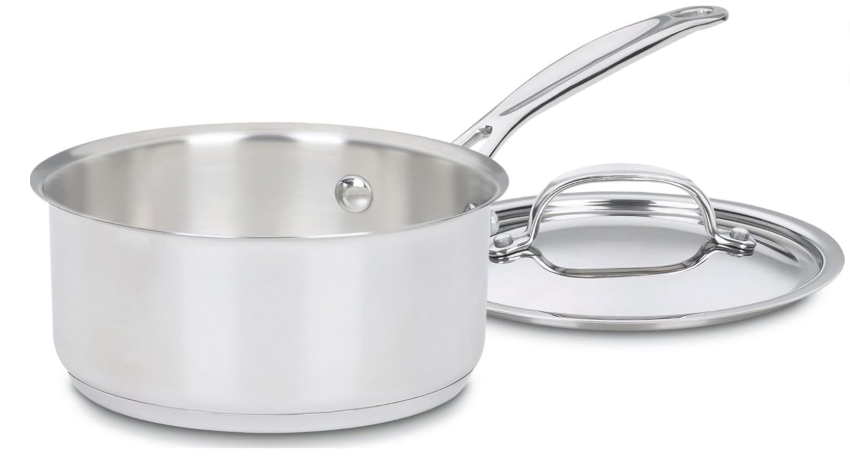
Built from stainless steel with an aluminum encapsulated base, this compact saucepan delivers steady heat for sauces, oatmeal, rice, and reheating leftovers. Key features and benefits include tight-fitting lid control, drip-free pouring rim, and durable mirror finish construction. Compatible With gas, electric, glass ceramic, and induction cooktops.
HexClad Hybrid Nonstick 1 Quart Saucepan is a premium pick for hybrid durability and easy cleanup → View on Amazon
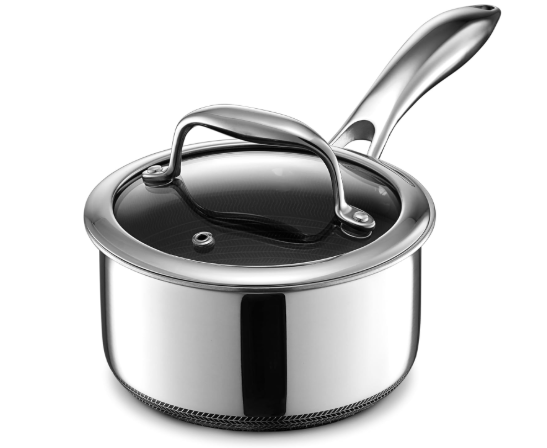
This saucepan combines stainless steel strength with hybrid nonstick performance. Key features and benefits include scratch resistant surface, stay cool handle, a tempered glass lid, and oven safety up to high temperatures. Compatible With gas, electric, ceramic, and induction cooktops, making it highly versatile for modern kitchens.
Best Skillet Reviews & Recommendations
If your cooking routine involves eggs, sautéed vegetables, grilled sandwiches, or crisp protein finishes, choosing the right skillet matters. These skillets stand out for heat response, surface performance, and broad Compatible With support.
SENSARTE Nonstick Frying Pan Skillet 9.5 Inch is a smart option for lightweight daily cooking and healthy nonstick results → View on Amazon
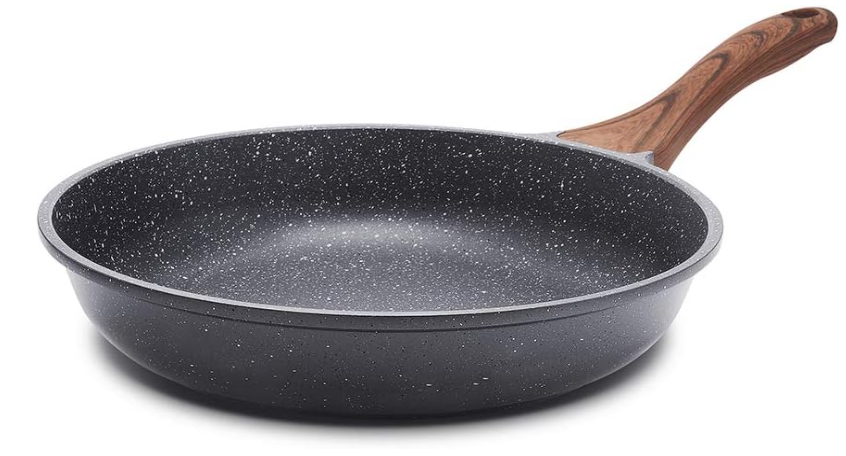
Featuring a Swiss granite coating, this skillet supports low oil cooking and smooth food release. Key features and benefits include PFOA-free construction, a comfortable grip handle, quick heat response, and multiple size options. Compatible With gas, electric, and ceramic cooktops, ideal for everyday stovetop use.
All-Clad HA1 Expert Hard Anodized 10 Inch Skillet is a high-performance choice for serious searing and long-term durability → View on Amazon
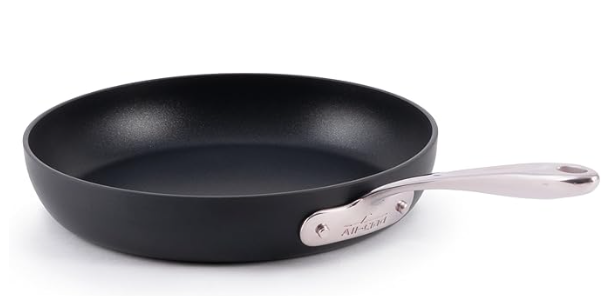
Crafted with hard-anodized aluminum, this skillet delivers even heating and reliable browning. Key features and benefits include oven safety up to 500°F, dishwasher-safe convenience, and sturdy riveted handle design. Compatible With gas, electric, and induction cooktops, supporting versatile kitchen setups.
Saucepan Vs Frying Pan Vs Pot
Saucepan
Deep and compact. Designed for boiling pasta, cooking grains, heating milk, preparing gravy, blanching vegetables, and reducing sauces.
Frying Pan Or Skillet
Wide and shallow. Built for direct contact cooking such as eggs, burgers, sautéed greens, tortillas, and shallow frying.
Pot
Larger and taller than both. Ideal for soups, stocks, chili, and full family pasta meals.
When comparing a saucepan vs skillet, and a pot, the deciding factors are portion size and moisture control. Most kitchens rely on a skillet and a saucepan daily, while a pot handles high-volume cooking.
When To Choose A Saucepan Or Skillet For Everyday Cooking
If you cook breakfast daily, especially eggs, pancakes, or breakfast sausage, a skillet becomes your primary pan. The flat base ensures even cooking and quick flipping.
If you prepare boxed mac and cheese, ramen, oatmeal, or homemade sauces, a saucepan handles liquid-heavy tasks better.
Cooking for two? A small skillet and saucepan set gives flexibility without overcrowding cabinets.
Making stir-fry or fajitas? Choose the skillet.
Simmering marinara for 20 minutes? Choose the saucepan.
If you have limited space, ask yourself what you cook most often. That simple self-check removes confusion in the saucepan or skillet debate.
Difference Between a Frying Pan and a Saucepan In Heat Performance
| Cooking Factor | Saucepan | Frying Pan |
|---|---|---|
| Browning Strength | Moderate | Strong |
| Moisture Retention | High | Low |
| Evaporation Speed | Slower | Faster |
| Oil Spread | Concentrated area | Wide coverage |
| Texture Outcome | Softer finish | Crisp exterior |
The difference between a frying pan and a saucepan becomes clear in texture. Skillets create crust and caramelization. Saucepans preserve moisture and support gentle simmering.
For delicate sauces, rice, quinoa, boiled eggs, or pudding, depth is beneficial. For steak, shrimp, hash browns, or grilled sandwiches, surface area delivers better results.
Saucepan Vs Saute Pan Vs Skillet
Saucepan
Pros
Excellent for liquids
Compact storage
Precise simmer control
Cons
Limited browning surface
Saute Pan
Pros
Wide base with taller sides
Supports mixed techniques
Good for shallow braising
Cons
Heavier and larger footprint
Skillet
Pros
Strong searing ability
Fast evaporation
Easy flipping and tossing
Cons
Less depth for soups
When comparing a saucepan vs saute pan, the saute pan acts as a hybrid. However, many kitchens prefer the simplicity of one skillet and one saucepan for clear cooking roles.
Can You Use A Saucepan Instead Of A Skillet?
Substitution is possible but not ideal. Cooking eggs in a saucepan works, yet the high walls make flipping awkward. Searing meat in a saucepan traps steam and reduces crust development.
Boiling pasta in a skillet works for small portions, but water evaporates quickly and requires closer attention. Occasional substitution is manageable, but performance differences remain noticeable over time.
Skillet And Saucepan Set Selection Guide
Before choosing a skillet and saucepan set, consider:
- Primary cooking method
- Available cabinet space
- Household portion size
- Cooktop compatibility
- Preference for nonstick or stainless steel
- Need for oven-safe capability
- Frequency of high-heat cooking
A 10 to 12-inch skillet paired with a 2 to 3-quart saucepan fits most households. Larger options, such as a 7-quart saucepan and skillet set, suit higher volume cooking.
Saucepan Vs Frying Pan Vs Skillet Texture Results
Saucepan delivers
- Moist texture
- Gentle simmering
- Even heat for grains
- Reduced splatter
Skillet delivers
- Crisp edges
- Caramelized surface
- Faster browning
- Better sauté control
In US kitchens, frying pan and skillet are interchangeable terms. The difference lies in depth versus surface exposure.
Pot Vs Skillet For Larger Meals
Volume Cooking
A pot handles soups, stews, and pasta for multiple servings more efficiently than either a skillet or a saucepan.
Browning Before Simmering
Many recipes require browning in a skillet before transferring to a pot for simmering.
Space Efficiency
If storage is limited, prioritize a medium saucepan and a 10 to 12-inch skillet. Together, they handle most daily recipes.
Frequently Asked Questions
What Is The Difference Between Saucepan And Skillet?
The difference between a saucepan and a skillet is mainly shape and cooking function. A saucepan has tall sides that support boiling, simmering, and liquid retention. A skillet has low sides and a wide base that promote evaporation and browning. If crust and texture matter most, a skillet performs better. If moisture control and simmering matter more, a saucepan is the stronger option.
Is Saucepan Vs Frying Pan The Same Comparison?
In American kitchens, frying pan and skillet are interchangeable terms. So, saucepan vs frying pan is essentially the same comparison as saucepan vs skillet. The key distinction remains depth versus surface area and moist heat versus dry heat cooking.
Which Is More Versatile For Small Kitchens?
A skillet often handles more cooking styles, including sautéing, shallow frying, reheating, and light braising. However, a saucepan remains necessary for boiling and sauces. For balanced versatility in limited space, owning one medium saucepan and one standard skillet works best.
Can A Saute Pan Replace Both?
A saute pan combines a wide base with taller sides. It can replace either pan in certain recipes, especially shallow braising and mixed technique cooking. However, it is heavier and takes more cabinet space. Dedicated pans usually perform their primary tasks more efficiently.
What Size Should Most Households Choose?
For most households, a 10 to 12-inch skillet and a 2 to 3-quart saucepan cover daily cooking needs. Larger families may add a bigger pot for volume meals, but these two sizes handle the majority of common recipes efficiently.
Practical Recommendation
A saucepan controls liquids and simmering. A skillet controls browning and surface heat.
If your meals focus on soups, grains, sauces, and steaming, prioritize a saucepan. If crisp texture, sautéing, and searing dominate your cooking, prioritize a skillet. In most kitchens, keeping both creates a balanced setup that supports nearly every recipe without clutter.
Discover New Articles: See Our Latest Updates
