Saute Pan Vs. Saucier – Pros & Cons

Disclosure: As an Amazon Associate, I earn from qualifying purchases. Learn more
If you stand at the stove asking whether the Made In 3.5 Quart Stainless Steel Saute Pan or the Made In 3 Quart Stainless Steel Saucier Pan deserves your next purchase, you are really asking about how you stir, sear, and simmer. Both are five-ply stainless clad pans, so heat quality is similar on paper.
What changes is geometry. The saute pan gives you a wide floor and straight walls, while the saucier gives you a curved bowl that follows a whisk. That shapes browning space, splash control, and how easily sauce slides off the pan when you pour.
In this comparison you will see where each pan helps, where it gets in the way, and how to match one to the meals you cook most. A few simple checks will help you decide without second guessing.
The Made In saute pan brings a wide, lidded 5-ply base for searing and braising, while the Made In saucier offers a curved 3-quart bowl for sauces and risotto.
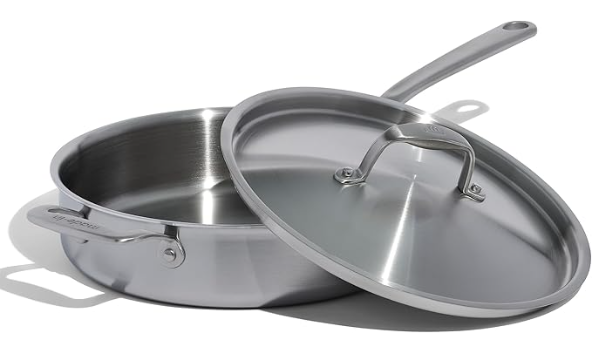
Made In Stainless Saute Pan
- Five-ply stainless clad body
- Lid included
- Crafted in Italy
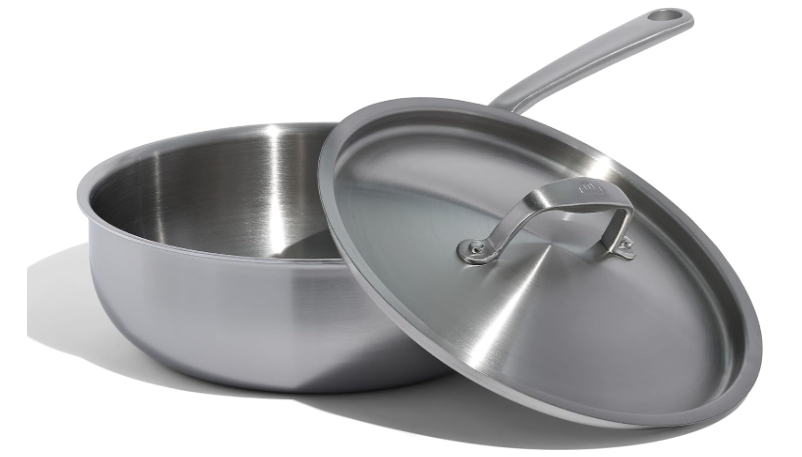
Made In Stainless Saucier Pan
- Curved walls for whisking
- Three quart capacity
- Crafted in USA
Saute Pan and Saucier Shape Differences at the Stove
A saute pan has a flat floor and straight, upright walls. A saucier has a floor that curves into sloped, flared sides, so there is no sharp corner where the wall meets the base.
That one change decides where your food goes. Straight walls hold liquid in a deeper layer, while curved walls let a whisk or spoon touch every part of the pan.
Straight sides also let a lid sit snugly, which helps when you simmer or braise. Flared walls tend to make pouring cleaner, since sauce follows the curve toward the rim.
If you are still sorting out how these shapes compare with other shallow pans, this guide on skillet and frying pan differences adds useful context.
Saucier Capacity Versus Saute Pan Cooking Surface Size
Quart numbers do not tell the whole story. Two pans with similar capacity can offer very different floor space, and floor space controls how much food you can brown at once.
| Spec | Saute Pan vs Saucier |
|---|---|
| Cooking surface | 9.5 in vs 7 in |
| Depth | 2.5 in vs 3.5 in |
| Capacity | 3.5 qt vs 3 qt |
| Handle length | 21 in vs 18.25 in |
| Lid | Included vs not listed |
By those listed diameters, the saucier floor is roughly half the flat area of the saute pan. It holds liquid in a deeper pool, but meat and vegetables crowd sooner.
Crowding matters because food releases moisture, and a packed pan steams instead of browning. A small floor is fine for a portion or two, yet it struggles with a full family dinner.
If you often cook for a crowd, consider larger 5-quart saute pans instead of stretching a smaller pan.
When a Saute Pan Wins for Searing and Browning
Browning is where the wide floor earns its place. These habits help you get the most from it.
- Wide floor: gives each piece room, so moisture escapes instead of steaming the food
- Straight walls: help contain splatter while you turn meat or vegetables
- Preheat first: warm the pan on medium heat, then add oil before the food
- Dry the surface: pat meat dry so it browns rather than boils
- Lid on hand: cover thicker cuts after browning to finish them gently
A brown crust does not prove that meat is done. Use a thermometer and check the USDA safe temperature chart, which lists 145°F with a 3-minute rest for steaks and chops and 165°F for poultry.
Why a Saucier Pan Handles Sauces and Risotto Better
The cornerless curve is the saucier’s main advantage. A whisk or wooden spoon follows the wall all the way to the floor, so thickener has fewer places to settle and scorch.
That matters for cream sauces, custards, and risotto, which need steady motion. Rice moves freely instead of packing into a corner, and eggs and starch stay evenly mixed.
Depth changes the pace of reduction, though. A deeper bowl exposes less surface, so liquid reduces more slowly than it would in a wide pan. If speed matters, a saute pan evaporates liquid faster.
The curve also helps when you finish pasta in sauce. You can toss noodles through the pan and coat them evenly without pushing them into a corner.
Stainless Clad Build Behind Each Saucier and Saute Pan
- Five-ply layers: both listed pans use five layers of metal for even heat
- 430 stainless top layer: makes both pans induction compatible
- Riveted stay-cool handles: stainless steel rivets fasten each handle
- Different origins: the saute pan is crafted in Italy and the saucier in the USA
- Finish: the saucier listing describes a brushed finish
If you cook on induction, a quick check saves guesswork. Department of Energy induction guidance says a flat-bottom pan that a magnet sticks to will work.
Made In 3.5 Quart Saute Pan for Searing
The Made In 3.5 Quart Stainless Steel Saute Pan is one of the best saute pans for searing and pan sauces when you want a wide, shallow cooking floor. Its 5-ply stainless clad body spreads heat across the base, and the 9.5 inch cooking surface gives chicken, chops, or vegetables room to brown.
A lid is included, so you can cover thicker cuts or cook gently after browning. The stay-cool handle is fastened with stainless steel rivets, and the top layer of 430 stainless steel makes the pan induction compatible. It is crafted in Italy.
Everyday Impressions
A shallow 2.5 inch depth and wide floor suit browning, tossing, and covered cooking, while the 21 inch handle gives leverage.
Standout Detail
The wide 9.5 inch cooking surface paired with an included lid is the standout combination.
Main Advantages
- Five layers of metal for even heat
- Includes lid for covered cooking
- Roomy 9.5 inch cooking surface
- Works with induction cooktops
- Stay-cool handle with stainless rivets
Suited For
- Searing meat and browning vegetables
- Pan sauces built on browned bits
- Induction and electric stovetops
- Covered simmering and gentle braising
Three Quart Made In Saucier Pan for Sauces
The Made In 3 Quart Stainless Steel Saucier Pan is one of the best saucier pans for whisking sauces, risotto, and custards, thanks to its curved walls and deeper bowl. Its 5-ply stainless clad construction spreads heat evenly, and the top layer of 430 stainless steel makes it induction compatible.
The stay-cool handle uses stainless steel rivets, and the pan is crafted in the USA with a brushed finish. At about 3.7 pounds, it stays manageable for stirring and pouring.
Everyday Impressions
Its 3.5 inch depth and curved shape suit steady stirring, simmering, and pouring, while the 3.7 pound weight stays manageable.
Standout Detail
A curved interior combined with a deeper bowl keeps liquids moving toward the center during whisking.
Main Advantages
- Five layers of metal for even heat
- Curved walls guide a whisk
- Works with induction cooktops
- Stay-cool riveted handle
- Crafted in the USA
Suited For
- Cream sauces and custards
- Risotto and polenta
- Simmering and gentle reductions
- Any cooktop, including induction
Roomy Saute Pan and Compact Saucier Drawbacks to Weigh
Neither pan is flawless, and knowing the trade-offs keeps expectations realistic.
Saute Pan Pros and Cons
- Pro: wide floor for browning and a lid for covered cooking
- Pro: straight walls hold a deeper layer of food and liquid
- Con: takes more room on the stove and in the cabinet
- Con: corners can catch thickener during whisking
Saucier Pros and Cons
- Pro: curved walls make whisking and pouring easier
- Pro: smaller footprint fits crowded burners
- Con: small floor crowds meat and vegetables quickly
- Con: curved sides do not stack neatly with other pans
If cabinet space is tight, these stackable cookware options can ease the storage problem.
Matching Recipes to Saucier and Saute Pan Strengths
- Weeknight chicken thighs: sear in the saute pan, then cover to finish and check the temperature
- Pan sauce after searing: deglaze in the same saute pan so the browned bits flavor the sauce
- Sauteed vegetables: use the wide floor so pieces brown instead of steaming
- Cream sauce for pasta: whisk it in the saucier, then toss the noodles through the curve
- Risotto or polenta: stir steadily in the saucier so nothing packs into a corner
- Custard or pudding: keep the heat low in the saucier and whisk constantly
If stir-fry is your main goal, this look at wok versus saute pan shows when a wider, shallower pan makes more sense.
Quick Rule for Choosing Between Saute Pan and Saucier
| If you mostly | Pick |
|---|---|
| Sear meat and vegetables | Saute pan |
| Whisk sauces and custards | Saucier |
| Cook for a crowd | Saute pan |
| Make risotto often | Saucier |
| Have limited stove space | Saucier |
| Want a lid included | Saute pan |
A friend once asked me whether one pan could replace the other. My answer was to look at which task you repeat most each week.
If you can own only one, a saute pan usually covers more ground, since you can brown, simmer, and reduce in it. You trade away some whisking comfort.
If sauces, custards, and grains fill most of your menu, the saucier fits those habits more naturally. Owning both makes sense once you cook each style regularly.
Common Mistakes With Stainless Saute Pan and Saucier Care
- Adding food to a cold pan: preheat on medium so food releases more easily
- Using high heat for sauces: cream and egg mixtures scorch or curdle, so keep the flame moderate
- Crowding the floor: too much food at once leads to steaming instead of browning
- Rinsing a hot pan with cold water: let it cool first, since sudden temperature swings can stress the metal
- Scrubbing with steel wool: it can scratch a brushed or polished finish
For everyday cleaning, warm water and mild dish soap with a soft sponge are usually enough. Check the maker’s care notes before using a dishwasher.
Frequently Asked Questions About Saucier and Saute Pans
Is a Saucier the Same as a Saucepan?
No. A saucepan has a flat bottom and tall straight sides, so it holds liquid well but leaves a corner where a spoon can miss. A saucier has a rounded floor and flared walls, which gives a whisk full contact and makes pouring cleaner. Many cooks use a saucepan for boiling and reheating and a saucier for sauces that need steady stirring. Neither has an advantage for every task, so the right pick depends on how often you whisk.
Can You Use Metal Utensils in Stainless Clad Pans?
Stainless steel generally tolerates metal spoons and whisks better than coated surfaces do, since there is no coating to chip. Over time, metal can leave fine scratches on a brushed or polished finish, though these are usually cosmetic. For everyday stirring, wooden or silicone tools keep the interior looking even. Always check the maker’s care notes for your exact pan.
Can You Whisk a Sauce in a Straight Sided Pan?
Yes, but the sharp corner where the floor meets the wall can trap thickener, so you need extra attention. Tilt the pan slightly, run a flat whisk or spoon into the corner on each pass, and keep the heat at medium or lower. Starch and egg based sauces are the most likely to catch there. If you make cream sauces, custards, or risotto often, the curved walls of a saucier remove that corner entirely.
Does a Lid Matter for a Saute Pan or Saucier?
A lid traps steam, which helps thicker cuts finish gently and keeps liquid from reducing too fast. The saute pan covered here includes one, while the saucier listing does not mention a lid. Sauces you whisk or reduce are usually cooked uncovered, so many cooks never miss a saucier lid. If you simmer soups or grains in it, make sure a fitting lid is available before you rely on it.
Can a Saucier Handle Stir Frying?
It can handle small batches, but the smaller cooking floor limits browning. Stir frying works best when food touches hot metal in a single layer, and the listed 7 inch cooking surface fills up quickly. Curved walls do help keep small pieces moving, so a handful of vegetables or cooked rice reheats well. For larger portions, a saute pan or a wok gives food more contact and more room to toss.
Picking the Right Pan for Your Stove Habits
The saute pan suits searing, browning, and covered cooking, thanks to its wide 9.5 inch floor and included lid. The saucier suits whisking, simmering, and pouring, thanks to curved walls that leave no corner for sauce to catch.
Both are five-ply stainless clad pans with induction-compatible construction, so the choice rests on shape and size, not heat quality. Ask which task you repeat most, and let that answer decide.
