
What To Use In An Alcohol Stove And What To Avoid

Disclosure: As an Amazon Associate, I earn from qualifying purchases. Learn more
Denatured alcohol is what to use in an alcohol stove for most trips, with yellow HEET as a close backup. A small blue flame can carry a whole morning, as long as the bottle feeding it is the right one. You are probably standing in a store aisle or packing for a weekend, wondering if the rubbing alcohol under your sink will work.
Short Fuel Answer
A smart choice here is Klean-Strip Denatured Alcohol, a one quart bottle sold as marine stove fuel that burns with a hot, clean flame for simple camp boils → View on Amazon
The answer matters more than it seems. The wrong fuel brings heavy soot, weak boils, and wasted weight, while careless refilling leads to burns from an unseen flame. Some bottles also carry toxic methanol that needs careful handling.
This guide shows which fuels burn hot and clean, which ones to skip, where to find them, and how to refill and store fuel safely, so you can choose once and cook without second guessing. If you are still deciding on the stove itself, it helps to compare alcohol and canister setups first.
Quick Answer on What To Use In An Alcohol Stove
Use denatured alcohol or yellow HEET for everyday cooking. Both light easily, burn with a clean blue flame, and leave little or no soot on your pot.
High proof grain alcohol, around 190 proof, also burns very well. It simply costs more, so most campers save it for travel or for places where other fuels are hard to find.
Isopropyl alcohol is the fallback, not the plan. It lights, but it smokes, coats the pot in black soot, and often struggles to bring water to a full boil.
Gasoline, white gas, kerosene, lamp oil, and lighter fluid never belong in an open alcohol burner. Those fuels behave very differently and can flare far beyond the stove.
How Denatured Alcohol Stove Fuel Actually Burns
Denatured alcohol is ethanol with additives that make it unsafe to drink. Many hardware store brands blend in a large share of methanol, and makers rarely list exact percentages.
That blend matters because both ethanol and methanol burn cleanly in an open burner. You get a blue flame, little smoke, and a pot that wipes clean after cooking.
Going by the listed product description, the quart featured below is sold for marine stoves and glass cleaning rather than thinning paint, which tells you its maker expects it to be burned.
Look for bottles that say denatured alcohol or stove fuel on the front. Avoid versions labeled as low odor paint thinner substitutes, since some contain different solvents and burn poorly.
What Denatured Alcohol Means on a Label
The word denatured only tells you the ethanol was made undrinkable. It does not tell you how much methanol is inside, so treat every bottle as toxic and keep it far from food and drink.
Is Yellow HEET for Alcohol Stove Use Worth It
Yes. The yellow bottle of HEET is a gas line antifreeze made mostly of methanol, and methanol burns cleanly in nearly every alcohol stove design.
Its biggest strengths are price and reach. Auto parts stores and many gas stations stock it, especially in winter, which makes it handy on long hikes through small towns.
The trade off is toxicity. Methanol is a toxic alcohol that can harm you through the skin and its vapor, not only by swallowing. Pour slowly, cap the bottle right away, and wash spills off your hands.
Skip the red bottle. That version contains isopropyl alcohol, which burns smoky and leaves soot just like rubbing alcohol does.
Klean-Strip Denatured Alcohol as Everyday Alcohol Stove Fuel
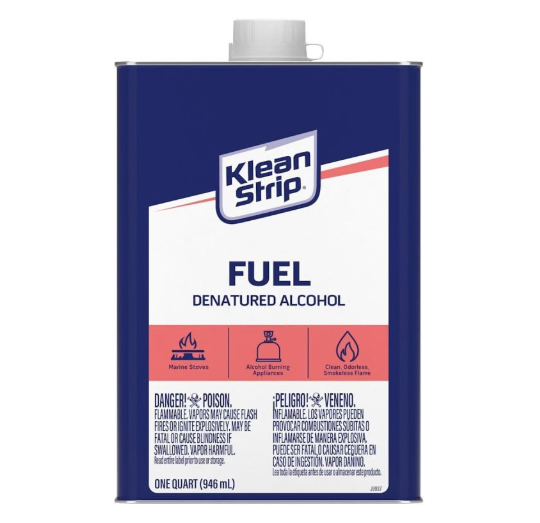
On a cold camp morning, you want one bottle that lights fast and spares your pot. This quart is sold by its maker as a fuel for marine stoves and a glass cleaner, not as a paint thinner.
The listing describes a hot, clean, odorless and smokeless flame, which lines up with what an open burner needs. One quart also lasts many short trips when you decant only what you need into a small fuel bottle.
Feedback Themes: Buyers often describe it as a dependable stove fuel that lights easily and burns cleanly for a long time. Opinions on its smell are mixed.
What Sets It Apart:
- Labeled by the maker for marine stove use
- Also cleans glass around camp or home
Practical Gains:
- Lights quickly in open burners
- Leaves little residue on pot bottoms
- Quart size covers several weekend trips
Pairs Nicely With:
- Brass spirit burners with screw caps
- Soda can and cat food can stoves
- Small labeled fuel bottles for decanting
Fair Warning: Never pour it into a lit or warm stove, since flames can jet back toward you. It can damage some plastics, so keep it off plastic gear.
Can Rubbing Alcohol Run an Alcohol Burner Well
It can run, but rarely well. Common 70 percent rubbing alcohol holds a lot of water, so it sputters, burns weakly, and may never bring a pot to a rolling boil.
Higher strength isopropyl, sold as 91 or 99 percent, burns much better. Even so, it produces a yellow, sooty flame that coats your pot and windscreen in black residue.
Keep rubbing alcohol as an emergency backup, not a planned fuel. If you must use it, expect slower boils, carry a rag for cleanup, and keep the stove well away from tent fabric.
Never dilute any fuel with water to stretch it. Water lowers the heat output and makes the stove harder to light.
Spirit Burner Fuel and the Methylated Spirits Name
A spirit burner is simply another name for an alcohol burner, the kind found in classic brass camp stoves. It burns liquid alcohol, not butane or other gas.
You will often see methylated spirits in guides written outside the US. That term means denatured alcohol, which is mostly ethanol, not pure wood alcohol.
So when a stove manual calls for methylated spirits, a US bottle of denatured alcohol or stove alcohol is the matching fuel.
Grain Alcohol Like Everclear in a Camp Stove
High proof grain alcohol works well. At around 190 proof, it burns hot and clean with very little soot.
Lower proof versions carry more water, so they light poorly and burn weakly. Check the label and skip anything well below 190 proof.
The main drawbacks are cost and access. Some states limit sales of the strongest proof, and because it is drinkable, keep it in a clearly labeled fuel bottle so nobody mistakes it for a drink.
Fuels That Should Never Go Into Your Stove
An open alcohol burner is built for fuels that burn calmly at room pressure. Other liquids can turn a small cook fire into a dangerous one.
- Gasoline: vapors spread and ignite violently around the stove
- White gas or camp fuel: made for pressurized stoves with valves
- Kerosene and lamp oil: heavy, smoky, and hard to light in open cups
- Lighter fluid: flares unpredictably and leaves residue
- Paint thinner blends: mixed solvents with unknown burn behavior
- Red isopropyl antifreeze: sooty flame and weak heat
If a bottle does not clearly say alcohol, denatured alcohol, stove fuel, or methanol, leave it out of your stove.
Best Fuel for Alcohol Stove Use by Situation
The best alcohol stove fuel depends on where you are and what you can buy. This quick table shows how the common choices behave.

For weekend camping, a quart of denatured alcohol from home is the simplest choice.
For long hikes, yellow HEET is easy to resupply in small towns.
For travel abroad, ask for methylated spirits or high proof grain alcohol.
For emergencies only, strong isopropyl will heat water while you accept the soot.
Where to Buy Alcohol Stove Fuel Without Guesswork
Hardware and home improvement stores keep denatured alcohol in the paint aisle, usually in quart and gallon cans.
Auto parts stores and gas stations carry yellow HEET near the motor oil, most often in cold months.
Outdoor and camping shops often sell fuel labeled specifically for alcohol stoves, and marine supply stores stock stove alcohol for boat galleys.
Plan ahead for flights, since fuel is a flammable liquid you cannot carry on a plane. Buy it after you land. If you want more fuel options side by side, a dedicated comparison can help you narrow the bottle.
Refueling Rules That Prevent Flame Jetting Burns
Most serious alcohol stove burns happen while refilling. Alcohol flames can be nearly invisible in daylight, so a stove that looks out may still be burning.
The federal product safety warning describes how flame jetting can occur when liquid fuel is poured near any flame. Flame can travel up the stream and into the bottle.
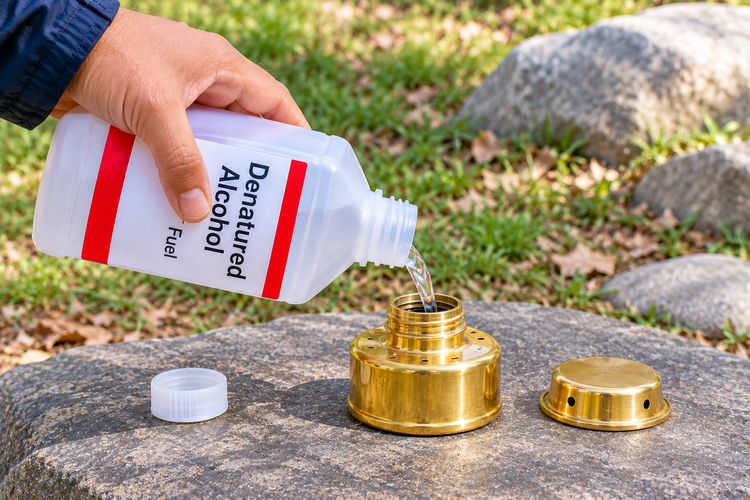
Step 1: Snuff the flame with the stove lid or snuffer cap.
Step 2: Wait until the burner is cool enough to touch.
Step 3: Move the fuel bottle a few feet from any other flame.
Step 4: Pour only the amount you need for the next boil.
Step 5: Cap the bottle and wipe up drips before lighting.
Safe Storage Between Trips
Keep fuel in its original container or a clearly labeled fuel bottle, never a water or drink bottle. Store it upright, capped tight, and away from heat, food, and children.
Where You Cook Matters
Cook outdoors on bare ground, rock, or a stable heat safe base, with nothing burnable nearby. Never cook inside a closed tent, since any flame there brings fire and carbon monoxide risk. Some fire restrictions only allow stoves with a shutoff valve, so check local rules before you light up.
Cold Weather Changes How Alcohol Fuel Lights
Alcohol needs to vaporize before it burns, and cold fuel vaporizes slowly. Near freezing, many stoves take longer to light and bloom.
Carry the fuel bottle inside your jacket so it stays warm. A small priming dish under the burner, or a few drops of fuel lit on top, can help the stove reach full flame.
Expect higher fuel use on cold or windy days, and always use a windscreen. For trips well below freezing, a stove built for freezing trips may serve you better than alcohol.
DIY Soda Can Stove Fuel Tips That Work
Homemade soda can and cat food can stoves run on the same fuels as commercial burners. Denatured alcohol or yellow HEET give them the cleanest burn.
Fill only to the level your design allows, usually well below the rim. Overfilling causes spills and fuel that keeps burning after the pot comes off.
Use a pot stand so the pot never sits directly on the jets, and add a windscreen. Light the stove with a long match, then keep your face and hands away while it blooms.
Treat a homemade stove as an outdoor tool only. Thin aluminum gets hot quickly, so let it cool fully before you touch or refill it.
Trangia Style Burners and the Fuel They Expect
Classic brass spirit burners, like the Trangia design, were built around methylated spirits. In the US, that means denatured alcohol or stove alcohol.
Many of these burners have a screw cap with a seal, so you can store a little fuel inside between meals. A simmer ring narrows the flame for gentler cooking.
Fill them to about two thirds so the fuel has room to heat and vaporize. If you are shopping for a well made burner, pair it with a stable base and windscreen.
Alcohol Stove Fuel Questions People Often Ask
How Much Fuel Does an Alcohol Stove Use per Boil?
Fuel use changes with stove design, pot size, wind, and air temperature, so there is no single number that fits every setup. The easiest way to know is to test at home. Measure a set amount of fuel, boil the water you usually cook with, and note what is left. Repeat outdoors on a breezy day. That gives you a realistic figure for planning, and you can add a small margin for cold mornings or extra hot drinks.
Can You Mix Different Alcohol Fuels Together?
Mixing ethanol and methanol fuels is common, since many denatured alcohol brands already blend them. Adding isopropyl, though, brings soot back into the burn. Never mix alcohol with gasoline, white gas, or kerosene, because the blend can flare unpredictably. Avoid adding water as well, since it lowers heat and makes lighting harder. If you are unsure what a mix contains, it is safer to use a single labeled fuel than to guess at the result.
Does Alcohol Stove Fuel Go Bad Over Time?
Sealed alcohol fuel keeps for a long time, but an open or loosely capped bottle slowly pulls moisture from the air. That added water makes the fuel harder to light and weaker in the burner. Some fuel also evaporates if the cap is not tight. Store bottles sealed, upright, and out of heat and sunlight. If an older bottle lights poorly or burns with a weak flame, replace it rather than trying to make it work.
Why Can I Barely See the Flame on My Stove?
Methanol rich fuels and many denatured alcohol blends burn with a pale blue flame that almost disappears in sunlight. That is normal and a sign of a clean burn, but it makes the stove easy to bump or refill by mistake. Shade the burner with your hand at a safe distance or look for heat shimmer above it. Always assume the stove is lit until you have snuffed it and checked that it is cool.
Is It Safe To Cook Food Over Alcohol Fuel?
Yes, when you cook outdoors with good airflow. Clean alcohol fuels burn mostly to water vapor and carbon dioxide, and the flame heats your pot rather than touching food directly. The real risks are spills, fumes in enclosed spaces, and the toxic nature of methanol before it burns. Keep fuel bottles away from food bags, wash your hands after pouring, and never use a fuel bottle that once held drinks or cooking oil.
Can You Pack Alcohol Stove Fuel on a Plane?
No. Stove fuels count as flammable liquids and are not allowed in carry on or checked bags. An empty, clean stove is usually fine, but leftover fuel smell can still raise questions, so dry it out well before you fly. Plan to buy fuel at your destination. Hardware stores, auto parts stores, and outdoor shops near trailheads usually carry at least one suitable bottle, so you rarely need to bring your own.
Picking Your Fuel With a Clear Head
For most campers, denatured alcohol is the simplest and cleanest fuel to keep on hand. Yellow HEET works just as well when you need an easy resupply, and high proof grain alcohol fills the gap when nothing else is around.
Alcohol stoves still have limits. They burn slower than canister stoves, struggle in deep cold, and need careful refilling every time.
A good rule is simple: choose a clean burning alcohol, refill only a cool stove, and cook outdoors. If you want one bottle to start with, Klean-Strip Denatured Alcohol is a sensible everyday choice.
