
Alcohol or Canister Stove and Which One Fits Your Next Hike

Disclosure: As an Amazon Associate, I earn from qualifying purchases. Learn more
A canister stove wins when you want fast boils, a real simmer, and a valve that shuts the flame off instantly, while an alcohol stove wins when every ounce counts and you are happy to wait a few extra minutes for dinner. One is a tiny gas burner, the other is a quiet cup of flame.
Hikers weigh the alcohol stove vs canister stove question because both fit in a cook pot and both are common choices for ultralight backpacking stoves, yet they behave very differently on cold mornings, windy ridges, and long trails. The deciding factors are total pack weight, boil time, cold and wind performance, fuel resupply, and local fire rules.
This guide compares both systems point by point, shows a reference model of each type, and explains where each one makes sense, from weekend overnights to a full Appalachian Trail thru-hike.
The MSR PocketRocket 2 brings quick canister boils with true flame control, while the REDCAMP Mini Alcohol Stove offers a simple brass burner with a regulator for quiet, low-cost cooking.
For Fast Canister Boils

MSR PocketRocket 2 Canister Stove
- 2.6 oz folding burner
- Simmer to rolling boil
- Isobutane-propane canisters
For Simple Alcohol Cooking

REDCAMP Mini Alcohol Stove
- Brass burner, aluminum stand
- Flame regulator handle
- About 5 oz with stand
How Each Stove Turns Fuel Into Cooking Heat
Alcohol stove. An alcohol stove is an open, unpressurized burner. You pour liquid fuel such as denatured alcohol or methylated spirits into the cup, light it, and the fuel vaporizes and burns through a ring of jets or an open top. There is no valve, pump, or moving part, so almost nothing can break. The trade-off is that most designs burn at one rate until the fuel runs out or you smother the flame.
Canister stove. A canister stove screws onto a sealed, pressurized canister that usually holds a blend of isobutane and propane. Opening the valve releases gas to the burner, and turning the knob raises or lowers the flame. It lights in seconds, adjusts like a kitchen burner, and shuts off the moment you close the valve.
Why this matters. Almost every difference in this comparison, from weight and boil time to fire-ban rules, comes back to one point. An alcohol stove is a passive cup of burning liquid, while a canister stove is a small pressurized gas appliance with a valve.
Side-By-Side Differences Between Both Stoves at a Glance
Use this table as a quick reference before reading the detailed sections that follow.
| Factor | Alcohol Stove | Canister Stove |
|---|---|---|
| Stove weight | Very light, often a few ounces or less | Light burner, plus a heavier canister |
| Fuel container | Any small leak-proof plastic bottle | Steel canister, carried out even when empty |
| Boil speed | Slower | Faster |
| Flame control | Limited, depends on the design | Fine control from simmer to full boil |
| Cold weather | Harder to light, needs warm fuel | Output drops as canister pressure falls |
| Wind | Needs a good windscreen | Also loses heat, but recovers faster |
| Shut-off | Smother the flame or let it burn out | Close the valve instantly |
| Fire restrictions | Often not allowed when bans start | Usually allowed if it has an on/off valve |
| Fuel resupply | Hardware stores, gas stations, outfitters | Outdoor shops and some general stores |
| Visibility of flame | Nearly invisible in daylight | Clearly visible blue flame |
The pattern is simple. Alcohol saves weight and money and almost never fails, while a canister saves time, cooks better, and stays legal in more places during dry seasons.
MSR PocketRocket 2 Ultralight Canister Stove Review
The MSR PocketRocket 2 is a clear example of a modern upright canister stove. It weighs a listed 2.6 ounces and folds to roughly 2 x 2 x 3 inches, small enough to ride inside a mug with a fuel canister.
MSR rates it to boil one liter of water in about 3.5 minutes, and the valve adjusts from a gentle simmer to a rolling boil. It runs on self-sealing threaded isobutane-propane canisters that are sold in many countries, and it needs no priming, preheating, or pumping. Serrated pot supports hold a wide range of pot sizes, and a lightweight protective case is included.
Trail Notes: Screw it onto a canister, open the valve a little, light it, and then turn the flame up or down to match what you are cooking.
Burner Details:
- Folding arms that collapse around the burner
- Serrated supports for small and mid-size pots
- Self-sealing threaded canister connection
Why Hikers Pick It:
- Very fast boils for coffee and freeze-dried meals
- Simmering that alcohol stoves rarely match
- Instant shut-off with the valve
Pairs Nicely With:
- Solo and duo backpacking trips
- Fast-and-light weekend overnights
- Trips during fire restrictions that allow valved stoves
Before You Pack: Canister pressure drops in freezing weather, so keep the canister warm before cooking and avoid using an oversized pot that traps heat over the canister.
REDCAMP Mini Alcohol Stove With Windscreen Stand Review
The REDCAMP Mini pairs a brass burner with an aluminum stand that doubles as a windscreen base and pot support. The full set weighs about 5 ounces (145 grams) and measures roughly 3 x 3 x 1.8 inches, and it comes with a velvet storage bag.
Its flame regulator with a foldable handle lets you narrow the flame or slide it fully closed to put the stove out, which is more control than many plain alcohol burners offer. A rubber seal is designed to limit leaks and evaporation, and combustion holes around the burner improve airflow. REDCAMP lists about 50 minutes of burn time per 100 ml of alcohol and backs the stove with a 365-day limited warranty.
Trail Notes: Fill the burner, set it on flat bare ground inside the stand, light it, and use the regulator handle to lower the flame or snuff it out.
Burner Details:
- Brass burner with a side combustion ring
- Sliding regulator that also closes the flame
- Aluminum stand with built-in pot support
Why Hikers Pick It:
- Quiet cooking with no moving parts
- Cheap fuel sold in many places
- Regulator adds basic heat control
Pairs Nicely With:
- Car camping and base camps
- Emergency kits stored with spare fuel
- Short backpacking trips in mild weather
Before You Pack: The stand adds weight compared with minimalist can stoves, and the flame is hard to see in daylight, so always check whether it is still burning before you touch it.
QMFEQGI Windproof Mini Alcohol Stove Kit Review
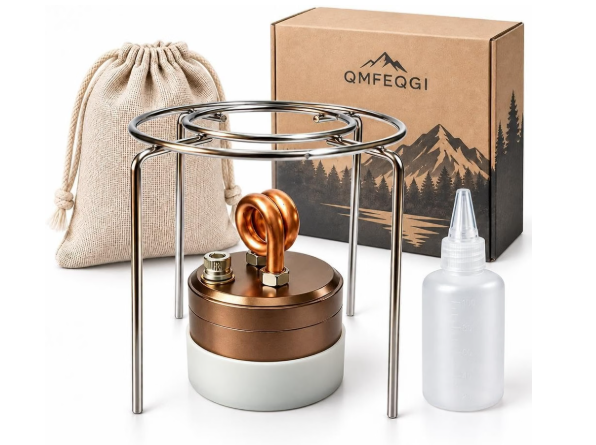
The QMFEQGI kit combines an aluminum alcohol burner with a stainless steel windproof stand that measures about 4.33 x 4.33 x 2.76 inches. The stand holds the pot above the flame and shields the burner from side gusts.
The maker recommends filling the burner about one-third full with high-concentration alcohol (it lists 95 percent alcohol) and putting the flame out by covering the burner. That simple design keeps setup quick, and the stainless stand is a sensible upgrade over a loose burner sitting on rocks.
Trail Notes: Set the stand on bare, level ground, fill the burner to about one-third, light it, and cover it fully when you are done cooking.
Burner Details:
- Aluminum burner body
- Stainless steel stand with wind protection
- Compact square footprint
Why Hikers Pick It:
- Very simple setup with no parts to wear out
- Stand improves stability on uneven ground
- Works with commonly sold stove alcohol
Pairs Nicely With:
- Weekend camping trips
- Backup stove for a vehicle kit
- Simple boil-only meals
Before You Pack: This is a newer listing with limited buyer feedback so far, and the published weight details are inconsistent, so weigh it yourself if every ounce matters.
Pack Weight on Short Trips and Long Ones
Weight is the reason most hikers look at alcohol stoves in the first place. A simple alcohol burner can weigh an ounce or less, and fuel rides in a thin plastic bottle. A canister burner like the PocketRocket 2 is light too, but the canister is the hidden cost. A small canister still weighs several ounces even when it is completely empty, and you have to carry that steel out.
Short trips favor alcohol. For a weekend, you only pack the fuel you need, so an alcohol setup is usually lighter overall.
Longer stretches narrow the gap. Alcohol holds less heat energy per ounce than isobutane, so each boil burns more fuel by weight. Over many days without resupply, the extra alcohol starts to cancel out the savings from the lighter burner. Where that crossover falls depends on how many hot meals and drinks you make each day and how efficient your windscreen and pot are.
Count the whole kit. Compare stove, windscreen, pot stand, fuel bottle or canister, and the fuel itself. Comparing only the burners gives a misleading answer.
Boil Time, Fuel Burn, and Real Flame Control
Speed. Canister stoves are clearly faster. Going by the listed specifications, the PocketRocket 2 is rated to boil a liter in about 3.5 minutes, while the REDCAMP lists roughly 50 minutes of burn time from 100 ml of alcohol, which shows how gently alcohol burns. Expect an alcohol stove to take noticeably longer for the same pot, especially in cool air.
Fuel burn. Alcohol burns cooler and holds less energy per ounce, so more of it goes into every boil. A canister stove turned down to a moderate flame is very efficient, while running it wide open wastes fuel for only a small gain in speed.
Cooking control. A canister valve lets you simmer rice, fry an egg, or keep a sauce warm. Most alcohol stoves are built for boiling water, although regulator rings like the REDCAMP’s or a simmer cap can soften the flame a bit. If you mostly rehydrate meals, this difference matters less. If you cook real food on the trail, it matters a lot.
Cold Mornings, High Camps, and Winter Trips
Canister stoves in the cold. Gas pressure drops as the canister cools, so the flame weakens near and below freezing. Isobutane-propane blends handle cold better than plain butane, and you can help by sleeping with the canister in your bag, keeping it in a jacket pocket before cooking, and setting it on a foam pad instead of snow. At altitude, canister stoves often run well, and the main problem is the cold that comes with height.
Alcohol stoves in winter. Cold alcohol vaporizes slowly, which makes it hard to light and slow to reach full flame. Warm the fuel bottle in a pocket, prime the burner if its design needs it, and expect longer boils. Many alcohol stoves also struggle on snow because they lose heat to the ground, so a thin insulating base helps.
The honest answer. For regular winter camping or snow melting, neither is ideal. Liquid fuel stoves are usually the better tool, which the alternatives section below explains.
Wind Exposure and the Windscreen Question
Wind steals heat from both stoves, but alcohol suffers more because its flame is soft and spreads out. A good windscreen is not optional with alcohol. Cone-style systems, such as the Ti-Tri Sidewinder from Trail Designs, wrap tightly around the pot and burner to trap heat and support the pot at the right height, which can make a big difference in fuel use.
With canister stoves, a windscreen helps too, but be careful. Fully enclosing an upright canister stove can trap heat around the canister and cause it to overheat. Follow the stove maker’s guidance, use a partial screen, or simply cook behind a rock, pack, or tree.
Whichever stove you carry, turning your back to the wind and cooking in a sheltered spot is the cheapest windscreen there is.
Fuel Cost, Resupply, and Travel Abroad
Alcohol fuel. Denatured alcohol stove fuel is sold in paint and hardware aisles, and many hikers also use yellow-bottle methanol fuel-line antifreeze or high-proof grain alcohol. Abroad, look for methylated spirits, alcool à brûler, or similar names. It is cheap per refill and easy to carry in a small bottle. For safe bottle and fuel choices, see this guide to the best alcohol stove fuel and bottles.
Canister fuel. Isobutane-propane canisters with the common threaded valve are sold in outdoor shops in many countries, but small towns may stock only bulky propane cylinders for car-camping stoves, or none at all. Canisters cost more per boil, and partly used ones pile up at home.
Flying. You cannot fly with either fuel. Plan to buy canisters or alcohol at your destination, and pack a stove only after cleaning out all fuel residue and smell.
Alcohol stove vs propane for car camping. For drive-in sites, a two-burner propane stove or a canister stove beats alcohol on convenience and speed. Alcohol makes more sense as a lightweight backup or emergency option.
Fire Restrictions and Safe Handling Rules
Fire bans. When fire danger rises, land managers often limit stoves to models with a shut-off valve. For example, the Humboldt-Toiyabe National Forest explains that portable stoves need a contained fuel source and an on/off switch under its restrictions, and it notes that California requires a campfire permit for any portable stove. Most alcohol stoves have no valve, so they are often not allowed once restrictions start. Always check current rules with the local ranger district before your trip.
Alcohol safety. The flame can be nearly invisible in daylight. Never refill a stove that might still be lit or hot, keep the fuel bottle well away from the flame, use the stove on bare, level ground, and keep the pot stable so burning fuel cannot spill.
Canister safety. Check the threads and seal before screwing on a canister, never leave a lit stove unattended, and let everything cool before you disconnect it.
Never cook inside a tent. The CPSC warns that people die every year from carbon monoxide from camping stoves and heaters used inside tents, campers, and vehicles. That warning covers both stove types. Cook outside, well away from the tent wall.
Thru-Hike Choices for the Appalachian Trail and Beyond
Long-distance hikers argue about this comparison more than anyone. On the Appalachian Trail, both fuels are commonly found in trail towns. Alcohol is sold in hardware stores and general stores, and canisters are stocked by outfitters along much of the route, although small stops can run out.
Why some thru-hikers pick alcohol. The burner is nearly indestructible, can be replaced cheaply, and lets you carry exactly the fuel you need between towns. A broken stove is rarely a crisis, since basic can stoves are easy to improvise.
Why many switch to canisters. Faster boils at the end of a long day, a hot coffee in a minute or two, and fewer worries during dry-season restrictions. On trails that cross fire-prone regions, the valve can decide the matter for you.
A practical approach is to start with the system you already own, then change in a trail town if your habits or the local rules make the other one easier.
Liquid Fuel, Storm Cookers, and Integrated Systems
White gas vs isobutane. Liquid fuel stoves burn white gas from a refillable bottle that you pressurize with a pump. They are heavier and need priming, but they hold pressure in deep cold, melt snow well, and suit groups and expeditions. If winter is your season, browse these liquid fuel backpacking stoves.
Denatured alcohol vs white gas. Alcohol is simpler, quieter, and safer to spill, while white gas burns much hotter and works far better below freezing. They sit at opposite ends of the weight and power scale.
Trangia-style storm cookers. These kits pair an alcohol burner with nested pots and a sturdy windshield. They are heavier than ultralight setups but very stable and wind-resistant, which is why they remain common in Europe and on canoe trips.
Kojin-type and cone alcohol stoves. Designs like the Trail Designs Kojin use an open, wicking burner with a lid that can store leftover fuel, and they pair with cone windscreens for better efficiency.
Integrated canister systems. Jetboil-style units join the burner, pot, and heat exchanger into one piece. They boil faster and resist wind better than an open burner, but they weigh more than a simple alcohol kit, which is the core of the alcohol stove vs Jetboil debate.
Lighting and Using Each Stove Safely
Using an alcohol stove.
- Place the stove and stand on bare, level ground, away from dry grass and leaves.
- Pour only the fuel you need for this boil, then cap and move the fuel bottle away.
- Light the fuel with a long match or lighter, keeping your hand to the side.
- Wait for the jets to bloom if your burner has them, then set the pot on the stand.
- Put the flame out with the regulator, snuffer, or cover, and let the stove cool before packing.
Using a canister stove.
- Check the canister threads and the stove’s seal, then screw the stove on by hand without overtightening.
- Unfold the pot supports and set the canister on a flat, stable surface.
- Open the valve slightly, light the burner, and adjust the flame to suit your pot.
- Close the valve fully when cooking is done, and let the burner cool.
- Unscrew the stove only when cool, and store the canister away from heat.
Cleaning, Storage, and Long-Term Care Tips
Alcohol stoves. There are no fuel lines or tanks to clean. Let the burner cool, burn off or pour back any leftover fuel only where your stove’s design allows, and wipe off soot. If you use fuel that leaves residue, a soft brush clears the jets. Store the stove dry, and keep fuel in a clearly labeled, leak-proof bottle away from food.
Canister stoves. Keep the burner head free of dirt and food spills, and check the rubber O-ring or seal inside the connector for cracks before each trip. Store canisters in a cool, dry place out of direct sun. Do not try to refill disposable canisters. When a canister is empty, follow your local recycling rules, since some areas accept fully emptied steel canisters.
A quick check before every trip prevents most trailside surprises with either stove.
Matching Each Stove to Your Style of Trip
Choose an alcohol stove if you hike mostly in mild weather, take short trips, boil water for freeze-dried meals, enjoy simple gear, and rarely travel during fire restrictions.
Choose a canister stove if you want fast boils, need to simmer real food, hike in cool shoulder seasons, cook for two, or often visit areas that limit stoves to valved models.
Choose liquid fuel if you camp in deep winter, melt snow for water, or cook for groups.
Many hikers end up owning both. They take the alcohol stove on easy summer overnights and switch to the canister stove for colder trips or dry seasons.
Common Questions on Alcohol Stove vs Canister Stove
Can You Use an Alcohol Stove Inside a Tent?
No, it is not a safe practice. Alcohol stoves burn with a nearly invisible flame, can spill burning fuel if knocked over, and produce carbon monoxide like any fuel-burning stove. Federal safety officials warn against using camping stoves inside tents, campers, and vehicles because of carbon monoxide poisoning. Cook outside on bare ground, well away from your tent. For indoor emergency cooking, choose equipment the maker specifically approves for indoor use and follow its ventilation instructions.
Is an Alcohol Stove Lighter than a Jetboil-Style System?
Usually yes, especially on short trips. A simple alcohol burner and windscreen weigh far less than an integrated canister system, and you carry only the fuel you need in a light bottle. An integrated system includes a heavier pot with a heat exchanger plus a steel canister. On longer trips the gap shrinks, because the canister setup burns less fuel per boil. If speed and wind resistance matter more than ounces, the integrated system is the easier choice.
What Fuel Works Best in a Backpacking Alcohol Stove?
Denatured alcohol is the most common choice, and methylated spirits fill the same role in many other countries. Some hikers use yellow-bottle methanol fuel-line antifreeze or high-proof grain alcohol, which burns cleanly but costs more. Avoid isopropyl alcohol, because it burns with a sooty, yellow flame that blackens pots. Always check your stove maker’s recommendations, carry fuel in a clearly labeled, leak-proof bottle, and keep it well away from food and drinking water containers.
Do Canister Stoves Work Below Freezing?
They work, but output drops as the gas pressure falls in the cold. Isobutane-propane blends perform better than plain butane, and keeping the canister warm makes a big difference. Sleep with it in your sleeping bag, keep it inside your jacket before cooking, and set it on a foam pad instead of snow. Some stoves use an inverted canister design for cold weather. For long trips in deep cold, a liquid fuel stove is usually more dependable.
Are Alcohol Stoves Allowed During Fire Bans?
Often they are not. Many fire restriction orders allow only stoves that have a shut-off valve or on and off switch, so the flame can be stopped immediately. Most alcohol stoves cannot be turned off that way, which places them in the prohibited group once restrictions start. Rules differ between forests, parks, and states, and some areas also require a permit for any portable stove. Check current orders with the local ranger station before every trip during the dry season.
Which Stove Is Easier for a First Backpacking Trip?
A canister stove is usually easier for beginners. It lights in seconds, shows a clearly visible flame, adjusts like a home burner, and turns off with the valve. That makes cooking simpler and safer while you learn camp routines. Alcohol stoves are not hard to use, but the nearly invisible flame, slower boils, and need for a good windscreen take some practice. Many people start with a canister stove and try alcohol later for lighter trips.
Final Verdict on Choosing Your Backpacking Stove
An alcohol stove is the lighter, simpler, and cheaper path for mild-weather trips, short overnights, and hikers who mostly boil water. A canister stove is the faster, more controllable, and more widely permitted option, and it copes better with cool weather and real cooking.
For most hikers, the overall pick is the MSR PocketRocket 2. It is tiny and light for a canister stove, boils quickly, simmers well, and its valve keeps you within the rules on many trips when fire restrictions are in place. If you want the lightest, quietest setup for easy summer trips, a simple alcohol stove still earns its place in your pack as a dependable second stove.
