
Best Chimney Caps for Preventing Downdraft (Updated)

Disclosure: As an Amazon Associate, I earn from qualifying purchases. Learn more
For most homes troubled by wind-driven smoke, the best chimney cap to prevent downdraft is a wind directional or vacuum-style cap sized exactly to your flue, since it turns gusts into upward pull instead of letting them push down the chimney. Wind should help the fire breathe.
The trouble is that caps are not one size or one style. A cap built for a 6-inch single wall stove pipe will not fit a square clay flue tile, and a cap that helps with wind will not fix a house that is pulling air down the chimney. Getting the type and fit right matters more than any brand.
Below you will find five caps for different chimney types, how to measure your flue, the causes of downdraft a cap cannot solve, and maintenance that keeps rotating caps working.
The FAMCO Wind Directional Chimney Cap uses a rotating hood and wind vane to create a partial vacuum in single wall pipe, while the RDP Round Base Chimney Vacuum Cap changes wind direction with a fixed galvanized shape.
For Windy Stove Pipes
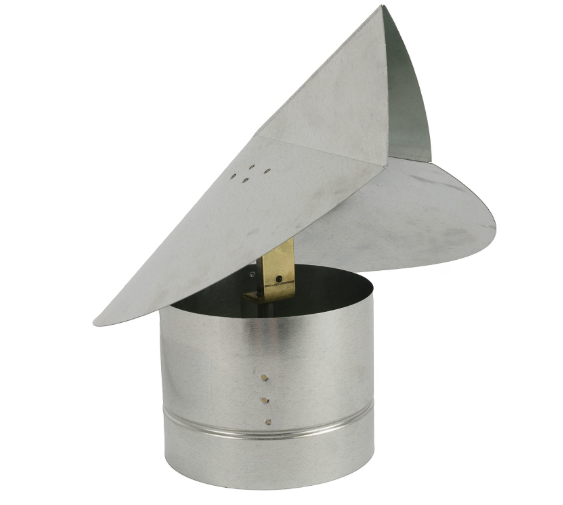
FAMCO Wind Directional Chimney Cap
- Rotating hood with vane
- 26-gauge galvanized steel
- Fits single wall pipe
For Fixed Vacuum Draft

RDP Round Base Chimney Vacuum Cap
- No moving parts
- Galvanized steel
- Draw bolt collar
Why Downdrafts Happen and How a Cap Helps
A downdraft happens when air pushes down the chimney instead of rising. Wind blowing across the top, nearby trees or rooflines, a cold flue, and a house that pulls air from the chimney can all cause smoke to puff back into the room.
Wind-related downdrafts are where a cap helps most. Wind directional caps turn their open side away from the wind, and vacuum caps reshape airflow so passing wind pulls smoke upward. Our guide on whether a chimney cap reduces draft explains why a correctly chosen cap usually improves draft rather than restricting it.
Most caps also keep rain, leaves, and animals out of the flue, which protects the chimney between uses.
To choose the caps below, we weighed downdraft design, chimney type and fit, material, mesh, warranty, brand track record, recent buyer demand, and customer feedback, then matched each cap to the flue it suits.
1. FAMCO Wind Directional Chimney Cap for Single Wall Stove Pipes
FAMCO’s cap separates the wind as it flows over the top while a wind vane keeps the rotating hood in position. Air moving past the hood creates a partial vacuum in the flue, which FAMCO says improves draft and helps prevent downdrafts.
It is built from heavy-duty 26-gauge galvanized steel and slips around the outside diameter of single wall pipe. FAMCO offers a separate adapter for double or triple wall pipe, and the cap is also sold in 304 stainless steel.
Fit Notes: Order the size that matches your pipe, and plan a yearly check so the hood keeps turning freely.
Design Features:
- Wind vane steers the rotating hood
- Partial vacuum effect in the flue
- Adapter available for multi-wall pipe
Draft Benefits:
- Strong help in gusty sites
- Simple slip-on fit
- Stainless option available
Fits These Flues:
- Single wall stove pipe
- Double or triple wall with adapter
- Chimney and building vents
Install Note: This cap has no built-in bird screen. FAMCO advises high-temp anti-seize on the rotating bracket and annual creosote cleaning.
2. RDP Round Base Chimney Vacuum Cap for Fixed Draft Help
The RDP vacuum cap uses its shape rather than moving parts. By changing the direction of passing wind, it creates a partial vacuum that increases updraft and helps prevent wind-caused downdrafts.
It is made from heavy-duty galvanized steel in the USA and mounts over single wall pipe with a draw bolt collar for a secure fit. RDP recommends ordering the same size cap as your pipe.
Fit Notes: With nothing to rotate or seize, it suits owners who prefer a set-and-forget cap.
Design Features:
- Fixed vacuum-style shape
- Draw bolt mounting collar
- Range of pipe sizes
Draft Benefits:
- No moving parts
- Secure collar fit
- Durable galvanized build
Fits These Flues:
- Single wall pipe
- Wood and other fuel vents
- Windy rooftops
Install Note: The collar is sized to your pipe. Measure carefully, since it is not meant to stretch across sizes.
3. Chimcare 6-Inch Wind Directional Cap for Wood Stove Pipes
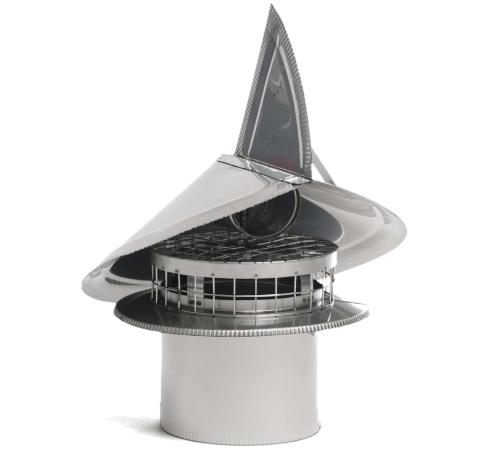
Chimcare’s 6-inch cap uses a wind vane that turns the hood away from the wind, so moving air draws smoke up the pipe instead of puffing it back into the room.
It fits round single wall metal pipe, round insulated double wall pipe, and round clay flue with a wall of 1 inch or less, measured at a 6-inch inside diameter. Welded 304 stainless steel and a spark arrestor mesh keep out sparks, birds, and debris, and Chimcare backs it with a limited lifetime warranty.
Fit Notes: Measure the inside diameter of the pipe first. Chimcare notes it is not for air cooled double or triple wall pipe.
Design Features:
- Wind vane rotating hood
- Welded 304 stainless steel
- Spark arrestor mesh
Draft Benefits:
- Rust-resistant build
- Keeps animals and debris out
- Limited lifetime warranty
Fits These Flues:
- 6-inch single wall pipe
- Solid pack insulated pipe
- Round clay flue with thin wall
Install Note: Pick the air cooled version instead if your chimney is Class A air cooled pipe.
4. Chimcare Masonry Flue Tile Cap for Brick Chimneys

This Chimcare cap brings the same wind vane rotating hood to masonry chimneys. Air moving past the hood pulls smoke up and out, helping stop smoke and cold air from blowing back into the fireplace on windy days.
It is made for single-flue masonry chimneys with a square or rectangular clay flue tile. Chimcare advises measuring the outside length and width of the tile above the crown and choosing the closest size within about 1.5 inches. The base bolts over the tile with no mortar or drilling into the crown.
Fit Notes: This listing covers an 18 by 18 inch tile, and Chimcare sells other sizes, so match your measurement before ordering.
Design Features:
- Wind vane rotating hood
- Bolt-on base with no drilling
- Welded 304 stainless with mesh
Draft Benefits:
- Made for clay flue tile
- Simple bolt-on install
- Limited lifetime warranty
Fits These Flues:
- Masonry chimneys
- Square or rectangular clay tile
- Wood-burning fireplaces
Install Note: Measure the tile itself, not the brick crown, and confirm the size before buying.
5. Chimcare 12-Inch Air Cooled Pipe Cap for Class A Chimneys
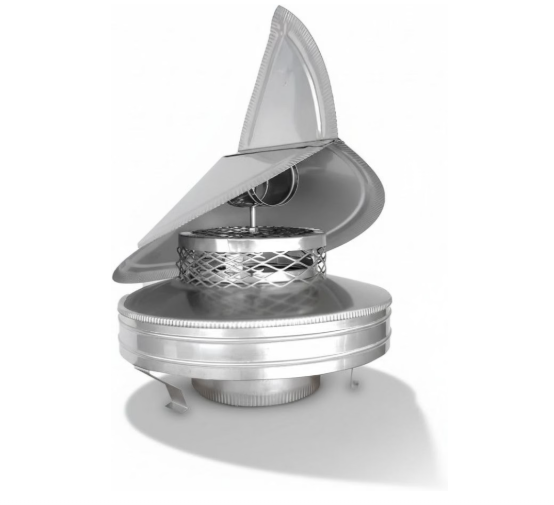
Air cooled chimneys need a cap that fits both walls, and this Chimcare model is built for round double wall air cooled Class A pipe. The 12-inch size refers to the inside flue diameter, so Chimcare asks you to measure both the inside and outside of the pipe.
The cap sits on the outer wall while an inner collar drops into the flue opening, with no special tools needed. A wind vane hood, welded 304 stainless steel, and spark arrestor mesh round it out.
Fit Notes: It solves a common fit problem, since many stove pipe caps will not seat properly on air cooled pipe.
Design Features:
- Made for double wall air cooled pipe
- Inner collar drops into the flue
- Wind vane rotating hood
Draft Benefits:
- Proper fit on Class A pipe
- No special tools
- Mesh keeps out animals
Fits These Flues:
- Air cooled Class A chimneys
- Factory-built fireplaces
- Wood stove chimneys
Install Note: Chimcare notes it is not for triple wall, single wall, or insulated pipe.
Wind Directional, Vacuum, and Standard Caps Compared
Wind directional caps. A vane turns the hood so its open side faces away from the wind. They help most in gusty, changing winds, but they have moving parts that need yearly care.
Vacuum caps. A fixed shape redirects wind to create upward pull. There is nothing to rotate, so maintenance is minimal, though they may help less in very turbulent sites.
Standard rain caps. A flat or conical top with mesh keeps out rain and animals. They protect the flue but are not designed to stop wind-driven downdrafts.
If wind is the problem, choose a directional or vacuum design rather than a basic rain cap. When shoppers search for an anti downdraft chimney cap, they usually mean one of the first two designs. In the UK, the same part is often called an anti-downdraught cowl, so either term leads to the same type of product.
Measuring Your Flue for the Right Cap Fit
Single wall pipe. Measure the outside diameter or the nominal pipe size, such as 6 inches, and match the cap to it.
Solid pack insulated pipe. Some caps fit this pipe directly, while others need an adapter. Check the listing.
Air cooled Class A pipe. Measure both the inside and outside diameter. These chimneys need a cap made for air cooled pipe.
Masonry with clay tile. Measure the outside length and width of the flue tile where it sticks up above the crown, not the brick.
Multiple flues. Flues set close together may need a multi-flue cap instead of a single-flue model.
How to Pick the Best Chimney Cap to Prevent Downdraft
Design first. For wind problems, pick a wind directional or vacuum cap rather than a plain rain cap.
Material. Stainless steel resists rust longer than galvanized steel, which can be a good value in drier climates. Going by the listed specifications, the Chimcare caps use welded 304 stainless steel, while the FAMCO and RDP models in this guide use galvanized steel.
Mesh. A spark arrestor screen keeps embers in and animals out. Some directional caps skip it, so check before buying.
Fit and install. Choose a cap made for your exact chimney type. A loose cap can blow off and leave the flue open.
Warranty. A longer warranty is a good sign the maker expects the cap to last on an exposed roof.
Other Causes of Downdraft a Cap Cannot Fix
Negative house pressure. Kitchen and bath fans, dryers, and tight construction can pull air down the chimney. Opening a window slightly near the fireplace while it starts often helps.
A cold flue. Cold air sitting in the chimney resists rising. Warming the flue before lighting helps, as our guide to starting a fireplace fire explains.
A short chimney or nearby obstructions. Chimneys that sit lower than nearby rooflines or trees may need a professional to assess height.
Wet wood. Damp wood burns cool and smoky. The EPA’s wood-burning guidance recommends burning dry, seasoned wood. For a full checklist, see our guide on stopping downdraft in a chimney.
When a cap is not enough. If downdraft continues with the right cap, the next steps are usually a flue extension, sometimes called a stretcher, that raises the chimney top above nearby turbulence, or an electric chimney fan or draft inducer mounted at the top that pulls smoke out mechanically. Both need correct sizing and are best planned with a chimney professional.
Installing a Chimney Cap Safely on Your Roof
Most caps slip over a pipe or bolt onto a flue tile, but the work happens on a roof. Use a secure ladder, wear shoes with good grip, and avoid wet, icy, or windy days.
Make sure the fireplace or stove is cold and has not been used for at least a day, so the flue and cap are safe to touch.
Tighten every clamp, collar, or bolt so the cap cannot shift in strong wind. If the roof is steep or high, hiring a chimney professional is the safer choice.
Maintaining Rotating Caps So They Keep Turning
A directional cap only works if the hood rotates freely. Creosote and rust can lock it in place, and a stuck hood facing the wind can make downdraft worse.
Check the cap at least once a year. Clean off creosote, inspect the pivot, and apply high-temperature anti-seize where the maker recommends it.
The Chimney Safety Institute of America recommends an annual inspection by a certified sweep, which is a good time to have the cap checked. Our chimney inspection guide covers what that visit includes.
Signs Your Chimney Cap Needs Attention
- Smoke returning on windy days after the cap had been working well.
- A hood that no longer turns or squeals and clunks in the wind.
- Rust streaks or holes on a galvanized cap.
- A clogged mesh screen packed with creosote or leaves, which can choke draft.
- A loose or tilted cap after a storm.
Any of these call for cleaning, repair, or replacement before the next fire.
Chimney Cap Questions Homeowners Often Ask
Will a Chimney Cap Stop Downdraft Completely?
A well-chosen cap can greatly reduce wind-driven downdraft, but it cannot fix every cause. If smoke spills because the house pulls air down the chimney, the flue is cold, the chimney is too short, or the wood is wet, a cap alone will not solve it. Start with the right cap for windy conditions, then address house pressure, warm the flue before lighting, burn dry wood, and ask a chimney professional about height if problems continue.
Do Wind Directional Chimney Caps Make Noise?
They can. Because the hood rotates with the wind, some caps clunk, squeal, or rattle during strong gusts, especially when the pivot gets dry or coated with creosote. Cleaning the cap and applying high-temperature anti-seize where the maker recommends usually quiets it. If noise is a dealbreaker, a fixed vacuum-style cap has no moving parts, though it may offer less help in very turbulent wind.
Can I Use a Wind Directional Cap on a Gas Fireplace?
Only if the appliance maker allows it. Gas fireplaces and inserts usually vent through specific, listed termination caps, and swapping in a different cap can affect venting and safety. Check your gas appliance manual and consult a qualified installer before changing anything at the top of the vent. The caps in this guide are generally designed for wood-burning chimneys, stove pipes, and similar flues.
Do I Need a Chimney Cap with Spark Arrestor Mesh?
Mesh is a smart addition for wood-burning chimneys because it helps keep embers from escaping and stops birds and animals from nesting in the flue. Some areas with wildfire risk require spark arrestors, so check local rules. Mesh does need occasional cleaning, since creosote and leaves can clog it and reduce draft. Some directional caps skip the mesh, so confirm before you buy.
How Long Does a Chimney Cap Last?
It depends on material, climate, and fuel. Stainless steel caps resist rust and often last many years, while galvanized steel caps can rust sooner, especially in wet or coastal climates or when exposed to acidic flue gases. Rotating caps also wear at the pivot. Inspect the cap yearly, clean off creosote, and replace it when you see rust-through, a stuck hood, or a loose fit.
Our Overall Pick and Final Advice
The right downdraft cap starts with your chimney type. Single wall stove pipes, air cooled Class A chimneys, and masonry flue tiles each need a cap built for them, and a wind directional or vacuum design does far more against gusts than a plain rain cap.
For most windy stove-pipe setups, our overall pick is the FAMCO Wind Directional Chimney Cap. Its vane-steered hood creates a partial vacuum that helps pull smoke upward, it slips onto single wall pipe, and an adapter covers multi-wall pipe. Whatever you choose, measure carefully, keep rotating parts clean, and have the chimney inspected every year.
