
Easy Options to Start a Fire in a Fireplace Without Kindling!

You can start a fire in a fireplace without kindling by splitting a few logs into thin pieces, using tightly twisted newspaper, or adding a natural fire starter, fatwood, or pine cones under dry, seasoned wood. The top-down method also cuts the amount of kindling you need to almost nothing.
Running out of kindling usually happens at the worst time, on a cold evening when the woodpile holds only full-size logs. The good news is that a fire needs small, dry fuel that catches fast, not kindling in particular, and several household items fill that role.
The bigger risk is reaching for the wrong substitute. Below you will find safe swaps, two reliable ways to build the fire, and the materials that should never go in a fireplace, so your fire catches quickly and burns cleanly.
Is Starting a Fire Without Kindling Safe and Practical
Yes, as long as you replace kindling with something that does the same job. Kindling bridges the gap between a quick flame and a log that needs steady heat to ignite. Any dry, thin, clean-burning fuel can fill that gap.

Problems start when people swap in fuels that flare, melt, or smoke heavily, such as liquids, plastics, or glossy paper. Those can send sparks out of the firebox, release toxic fumes, or build up creosote in the chimney.
The safe approach is simple. Use dry wood, give the fire plenty of air, and choose a substitute from the list below rather than whatever happens to be nearby.
Checks to Make Before You Light the Fireplace
A few minutes of preparation matter more when you are working without kindling, because a weak start leaves little room for error.
- Dry, seasoned wood. Wood should read below 20 percent moisture. Wet logs smoke and refuse to catch, as our guide on burning wet wood explains.
- A clear hearth. Move decorations, blankets, paper, and furniture at least three feet from the opening.
- A clean, open chimney. Blockages such as nests or heavy soot cause smoke to roll back into the room. Book a professional chimney inspection once a year.
- The damper fully open. Open it before lighting and leave it open until the fire is completely out.
- A thin ash bed. Leave about an inch of old fireplace ash under the grate to insulate the base of the fire, and clear out anything deeper.
- Screen and alarms ready. Keep a metal screen in place and make sure smoke and carbon monoxide alarms work.
Kindling Substitutes You Probably Have at Home
Each of these works by doing what kindling does, catching fast and burning long enough to heat the surface of a log.
1. Split a Log Into Thin Strips
This is the closest thing to real kindling. Use a hatchet or kindling splitter to split one dry log into pieces about as thick as your thumb. Softwoods such as pine catch faster than oak or maple. Even five or six thin strips make a big difference.
2. Twisted Newspaper Knots
Roll a sheet of plain newspaper into a long tube, then tie it into a loose knot or twist it tightly. A knot burns longer than a crumpled ball, giving logs more time to catch. Use plain newsprint only, not glossy inserts.
3. Natural Fire Starters
Store-bought starters made from wax and wood fiber act as tinder and kindling at once. One or two placed under split wood can light a fire by themselves. Choose products labeled for indoor fireplaces and follow the package directions.
4. Fatwood Sticks
Fatwood is resin-rich pine heartwood. The resin catches easily and burns hot for several minutes, so a couple of sticks can light larger split wood. Use it sparingly, since it burns intensely.
5. Dry Bark
Loose bark that falls off your firewood often catches quickly, especially birch bark with its papery layers. Gather only dry pieces and tuck them under the smallest logs.
6. Pine Cones
Dry pine cones burn for a short time with a bright flame. Pair two or three with newspaper knots so the flame lasts long enough to reach the wood.
7. Dry Twigs From the Yard
Small, dead twigs that snap cleanly work as natural kindling. Skip green twigs, which bend instead of breaking and hold moisture.
8. Plain Paper Tubes
Tightly rolled plain printer paper, paper towel, or uncoated book pages work like newspaper. Avoid glossy, colored, or coated paper, which gives off fumes when burned.
Combine two of these, such as newspaper knots with fatwood, for the most reliable start.
How to Build a Top-Down Fire With Little Kindling
The top-down method flips the usual stack. Large logs sit on the bottom, smaller pieces go on top, and paper or a fire starter sits at the very top. New Hampshire’s environmental services department notes that a fire built this way burns from the top down, hotter and cleaner.
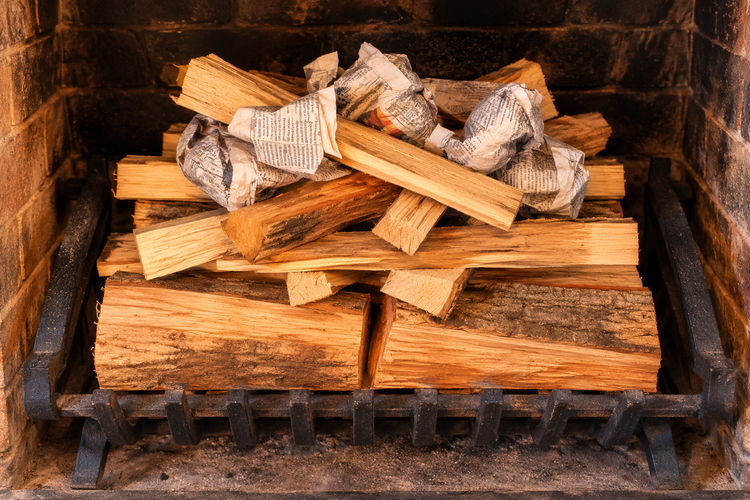
It suits a kindling shortage because the first flame only has to light small split pieces resting on a hot base, not a pile of bare logs.
Bottom layer. Place two or three of your largest split logs side by side on the grate, close but not touching.
Middle layer. Lay smaller split logs across them in the opposite direction.
Top layer. Add your thinnest split strips, then newspaper knots, a fire starter, or fatwood, and light the top.
The fire works downward on its own, warming the flue as it goes, so you rarely need to rearrange it.
Classic Bottom-Up Method Using Paper and Split Logs
If you prefer the traditional stack, it still works without kindling when you build it with care.
Clean the grate. Remove leftover ash and charred chunks beyond a thin base layer.
Lay the paper. Place four or five newspaper knots, or a natural starter, under the center of the grate.
Add thin pieces. Lean your smallest split strips or twigs over the paper in a small teepee.
Add logs with gaps. Set two medium logs on top at a slight angle, leaving space for air to flow between them. Our guide on stacking wood in a fireplace covers other layouts.
Light and watch. Light the paper in a few spots and add larger logs only once the medium logs are burning well.
Materials You Should Never Use to Start a Fire
Official fire safety guidance commonly advises never using flammable liquids to start or speed up a fireplace fire, and the EPA’s wood-burning guidance names gasoline, kerosene, and charcoal starter specifically.
- Flammable liquids. Gasoline, lighter fluid, kerosene, and alcohol can cause a sudden flare-up.
- Cardboard and trash. They burn too fast and can lift burning pieces into the chimney.
- Glossy or colored paper. Magazines and wrapping paper release fumes from inks and coatings.
- Plastics and synthetic fabric. They melt instead of burning cleanly and give off toxic smoke.
- Treated or painted wood. Pressure-treated lumber, plywood, and particle board release harmful chemicals.
- Charcoal. Burning charcoal indoors can produce dangerous carbon monoxide.
Oily snack foods such as chips also flare and smoke, so leave them in the kitchen.
Why the Fire Will Not Catch and Quick Fixes
The wood is too wet. Hissing, steam, and heavy smoke mean the logs hold moisture. Switch to drier wood and split it smaller.
The logs are too large. Without kindling, a full-size log cannot catch from paper alone. Split one log into thin strips to bridge the gap.
There is not enough air. Logs packed tightly smother the flame. Open gaps between them and confirm the damper is fully open.
The flue is cold. Cold air sitting in the chimney can push smoke into the room. Hold a lit roll of newspaper near the open damper for a few seconds to warm the flue before lighting, and see our tips on stopping chimney downdraft if it keeps happening.
Starting a Fireplace Fire Without a Store-Bought Starter
You do not need a commercial product if you have newspaper and a dry log. Paper knots provide the first flame, and thin split strips carry it to the larger wood.
For lighting, long fireplace matches or a long-reach lighter keep your hand away from the opening. In an open fireplace, a professionally installed natural gas or propane log lighter is another option that removes the need for paper or kindling altogether.
Survival techniques such as friction fire or improvised chemical reactions do not belong in a home fireplace. They are slow, unpredictable, and riskier than a simple match and dry fuel.
Keeping the Fire Going Once It Catches
A fire started without kindling can stall in the first ten minutes, so feed it gradually. Add one or two medium logs once the first pieces burn steadily, rather than loading the grate all at once.
Keep gaps between logs so air can reach every surface. If the flames shrink, open the space slightly with a poker instead of adding more paper.
Keep the screen closed, stay in the room, and make sure the fire is fully out before you go to bed or leave the house. Store cooled ashes in a covered metal container outdoors.
Fireplace Fire Questions When Kindling Runs Out
Can You Start a Fire with Just Newspaper and Logs?
Yes, but it works best when at least one log is split into thin pieces. Newspaper burns for only a minute or two, which is rarely long enough to ignite a full-size log on its own. Twist the paper into tight knots so it burns longer, use dry seasoned wood, and keep gaps between logs for airflow. The top-down method also helps, because the paper only has to light the smallest pieces sitting on top.
Is It Safe to Use Cardboard to Start a Fireplace Fire?
It is better to avoid it. Cardboard burns fast and hot, and lightweight pieces can lift up the chimney while still burning, which raises the risk of a chimney fire. Printed or coated cardboard also releases fumes from inks and glues. Fire safety and air quality agencies list cardboard among materials not to burn in a fireplace. Plain newspaper, a natural fire starter, or split wood strips are safer choices for the first flame.
Do Fire Starter Cubes Work Without Kindling?
Many do. Natural fire starters made from wax and wood fiber burn for several minutes, long enough to ignite small split wood and sometimes medium logs. Place one or two under the thinnest pieces you have, light them, and leave the damper fully open. Results depend on how dry your wood is, so pairing a starter with a few thin strips split from a log gives the most reliable start. Follow the package directions for indoor use.
Should the Damper Stay Open Until the Fire Is Out?
Yes. Open the damper fully before you light the fire and keep it open until the fire and embers are completely out. Closing it too early traps smoke and can push carbon monoxide into your home. Coals can stay hot for many hours, so avoid closing the damper while any embers remain. Once the ashes are cold, you can close it to stop drafts and keep warm room air from escaping up the chimney.
Can a Gas Log Lighter Replace Kindling?
In an open wood-burning fireplace, a natural gas or propane log lighter can light logs without paper or kindling. It sends a controlled flame under the grate until the wood catches, then you turn it off. It must be installed by a qualified professional and used exactly as the manufacturer directs. It does not replace dry wood, a clean chimney, or an open damper, and it is not meant to keep running for the whole fire.
Bringing It Together for a Warm, Safe Hearth
A fire without kindling fails for the same few reasons every time: wet wood, logs too large to catch, or too little air. Fix those and almost any small, dry, clean fuel can take kindling’s place.
Split a log into thin strips, use twisted newspaper or a natural starter, and try the top-down stack for a steadier start. Keep liquids, plastics, cardboard, and glossy paper out of the firebox. As a simple rule, if it would not burn cleanly in the open air, it does not belong in your fireplace.
