
6 Best Ash Buckets for Fireplaces, Fire Pit or Stoves Use (Updated)

Disclosure: As an Amazon Associate, I earn from qualifying purchases. Learn more
Cold ash can hide warm embers for days, so where it goes matters as much as how you scoop it. For most homes, a metal ash bucket with a tight-fitting lid and a protective bottom is the right choice, and the Plow & Hearth bucket is the safest all-round place to start.
Maybe you clean a wood stove every few days, or you only scoop out the fireplace a few times a winter. Either way, you need a bucket that holds the right amount of ash for your firebox, carries comfortably, and will not scorch your hearth or floor. A raised or double bottom helps with that last part.
Below, you will find six buckets in different sizes, with and without tool sets, plus clear steps for emptying and storing ashes the way fire safety agencies recommend.
The Plow & Hearth Ash Bucket pairs a double steel bottom with a snug lid, while the Panacea Ash Bucket with Shovel keeps the bucket, lid, and shovel together for weekly cleanouts.
For Floor Protection
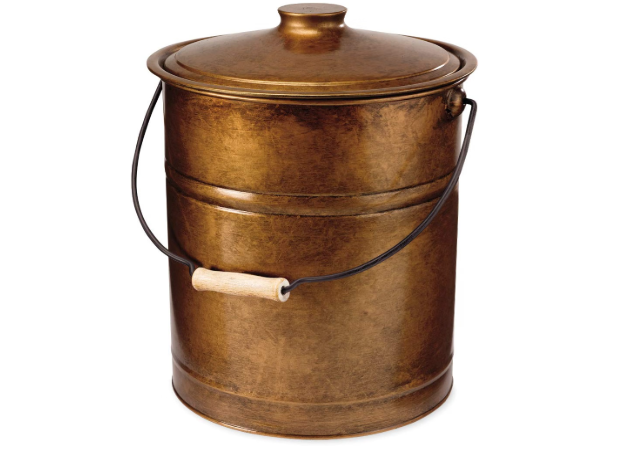
Plow & Hearth Ash Bucket
- Double-layer steel bottom
- Tight-fitting lid
- 28-gauge galvanized iron
For All-in-One Cleanup
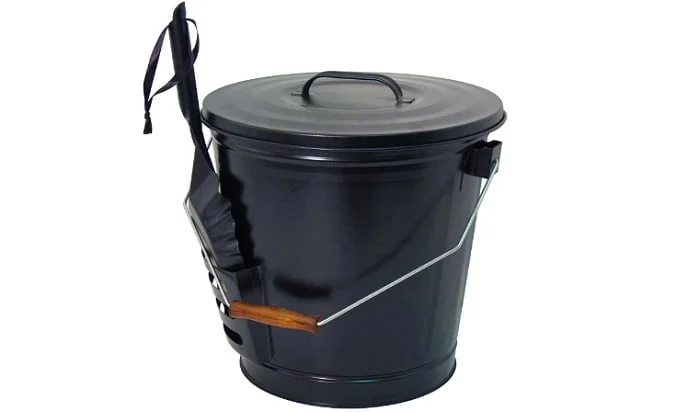
Panacea Ash Bucket with Shovel
- Side pocket for shovel
- Powder-coated steel
- Shovel included
Why a Metal Ash Bucket Beats Makeshift Containers
Ash that looks cold can still hold live embers deep inside. A paper bag, cardboard box, or plastic pail can catch fire or melt when one of those embers wakes up, which is why fire departments warn against them.
A metal ash bucket with a lid solves that problem. Metal does not burn, and a snug lid starves hidden coals of oxygen while keeping wind from blowing sparks or dust around.
A good bucket also makes cleanup tidier. You scoop ash straight from the firebox into a container built for it, carry it by a handle that stays cooler than the body, and set it down without worrying about the floor underneath. The six picks below cover small stoves, busy fireplaces, and owners who want a full tool set.
1. Plow & Hearth Ash Bucket for Fireplace Ash With Lid
Floor protection is where this bucket stands out. It has a double-layer steel bottom that the maker says protects floors against burn-through, and it is built from 28-gauge galvanized sheet iron.
A tight-fitting, lightweight lid keeps up to three gallons of ash contained, and a wooden grip handle makes carrying more comfortable. At 13 inches tall and 10 inches across, it fits beside most hearths. The listed variation has a copper finish.
Practical Impressions: It suits owners who clean out a fireplace or stove often and want extra protection under the bucket.
Standout Features:
- Double-layer insulated steel bottom
- Wooden grip handle
Everyday Benefits:
- Helps keep heat away from floors
- Lid keeps ash and dust contained
- Slim footprint beside the hearth
Pairs Nicely With:
- Fireplaces and wood-burning stoves
- Fire pits and outdoor cleanouts
- Storing pellets or kindling when empty
Good To Know: It holds three gallons, so large fireplaces may need more frequent trips. No shovel is included.
2. Panacea Ash Bucket with Shovel for Everyday Hearth Cleanup
If you want the bucket, lid, and shovel to live together, this set keeps it simple. A side pocket holds the shovel, so the whole kit moves as one unit.
The bucket and shovel are heavy-duty, powder-coated steel in black. The bucket measures 12.5 inches across and 13 inches tall, and the shovel is 14.25 inches long, which is long enough to reach the back of most fireboxes.
Practical Impressions: It works well as an everyday cleanup kit for owners who want fewer separate tools on the hearth.
Standout Features:
- Built-in shovel pocket
- Lid included with the set
Everyday Benefits:
- Shovel stays with the bucket
- Lid limits ash spills
- Simple black finish fits most hearths
Pairs Nicely With:
- Fireplaces and wood stoves
- Weekly hearth cleanouts
- Outdoor fire pits
Good To Know: The bottom is a single layer, so set it on stone, brick, or concrete when it holds warm ash.
3. Pure Garden Ash Bucket and Shovel for Large Loads
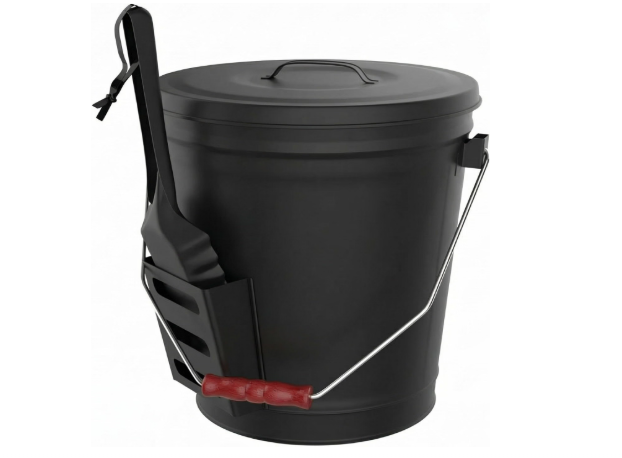
Bigger cleanouts call for more room, and this 4.75-gallon bucket gives you plenty. A raised bottom with thermal insulation helps limit heat transfer, and the maker recommends setting it on stone, slate, or similar surfaces.
The heat-resistant wooden grip handle protects your hands, the tight lid fits securely for carrying, and a matching shovel is included. It works for wood stoves, pellet stoves, fire pits, and camping trips.
Practical Impressions: It fits households that burn often and want fewer trips outside with ash.
Standout Features:
- Raised, insulated bottom
- Large 4.75-gallon capacity
Everyday Benefits:
- Fewer trips during heavy burning weeks
- Wooden grip stays comfortable
- Secure lid for carrying
Pairs Nicely With:
- Wood and pellet stoves
- Large fireplaces and fire pits
- Camping and bonfire cleanup
Good To Know: A full bucket of ash gets heavy, so carry it with two hands and avoid overfilling.
4. Amagabeli Garden & Home Ash Bucket for Big Cleanouts
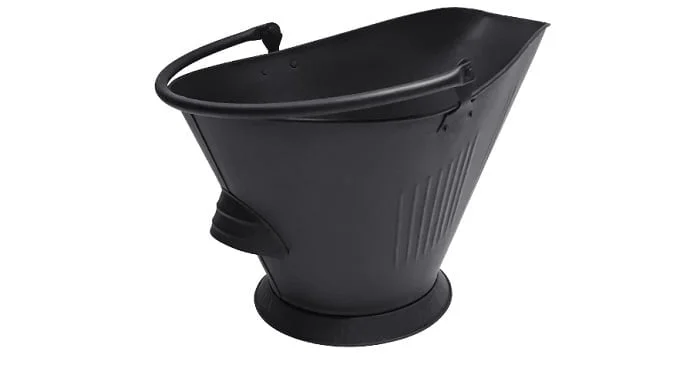
Who it suits most is the owner who wants a large, plain steel pail beside the hearth. This 5-gallon bucket uses an all-steel build with a classic black finish.
A wide top makes filling easy, and a flexible handle helps when you carry it outside. When it is not holding ash, it doubles as storage for kindling, logs, or pellets, indoors or out.
Practical Impressions: It works best as a roomy carrier and storage pail for owners who already have a lidded can outdoors.
Standout Features:
- Wide, easy-fill opening
- Large 5-gallon size
Everyday Benefits:
- Holds a full cleanout in one load
- Doubles as kindling storage
- Simple all-steel design
Pairs Nicely With:
- Fireplaces and wood stoves
- Fire pits and outdoor furnaces
- A separate lidded metal ash can
Good To Know: No lid is included. Fire safety guidance calls for a lidded metal container, so pair it with one before storing warm ash.
5. Mind Reader Fireplace Ash Bucket for Small Stoves
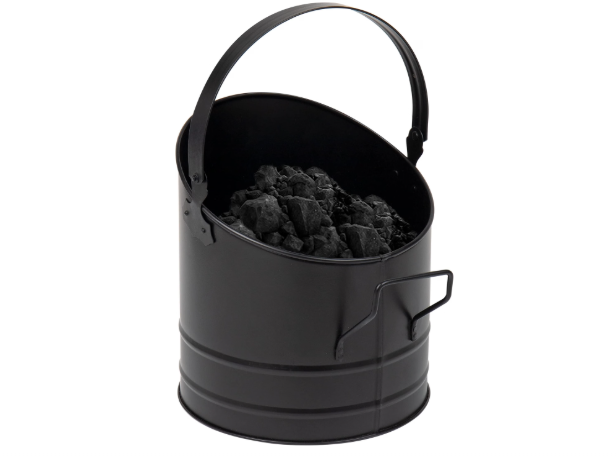
Compact stoves and small hearths do not need a big pail, which is where this 1.5-gallon bucket fits in. It measures about 9 by 9 by 10.5 inches, so it tucks into tight spaces.
The black metal construction gives it a farmhouse look, and two side handles make it easier to carry with both hands. Emptying and wiping it clean is quick.
Practical Impressions: It suits small stoves, inserts, or occasional fires where only a little ash builds up.
Standout Features:
- Two carry handles
- Compact farmhouse design
Everyday Benefits:
- Small footprint on the hearth
- Easy two-handed carrying
- Quick to empty and wipe
Pairs Nicely With:
- Small wood stoves and inserts
- Occasional fireplace use
- A separate lidded outdoor ash can
Good To Know: The listing does not mention a lid, and its small size fills fast. Move ash into a lidded metal can for cooling.
6. BRIAN & DANY Ash Bucket Set With Broom and Lid
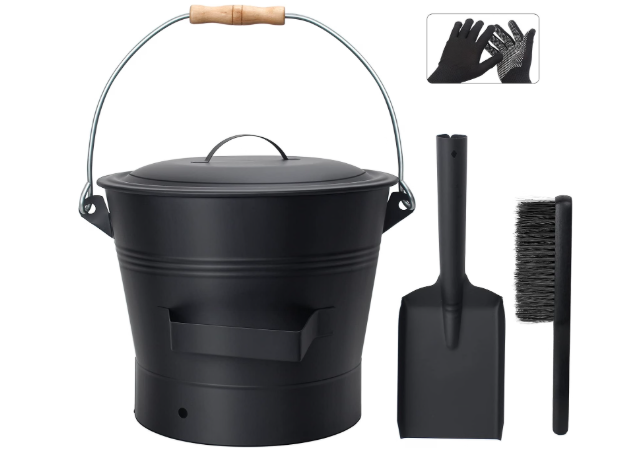
A full cleanup kit comes in one box here: a 2.6-gallon bucket with a tight-fitting lid, a shovel, and a wooden hand broom.
A side pocket keeps the shovel with the bucket, wooden handle grips make carrying easier, and the 11.1-inch opening is easy to fill. The maker lists a load capacity of up to 25.6 pounds and use with stoves, fire pits, pizza ovens, and grills.
Practical Impressions: It is a handy all-in-one set for owners who want every basic cleanup tool in one place.
Standout Features:
- Shovel, broom, and lid included
- Side pocket for the shovel
Everyday Benefits:
- No separate tools to buy
- Lid keeps ash contained
- Wide opening for easy filling
Pairs Nicely With:
- Wood stoves and fireplaces
- Pizza ovens and grills
- Fire pits and outdoor hearths
Good To Know: At 2.6 gallons it suits regular small cleanouts rather than large fireplaces burning daily.
Features to Check Before Choosing an Ash Bucket
A few details separate a bucket you trust from one that becomes a worry. Check these before you buy:
- All-metal body: steel or galvanized iron, never plastic or wood
- Tight-fitting metal lid: it keeps oxygen out and ash in
- Raised or double bottom: it reduces heat reaching the surface below
- Comfortable handle: a wooden grip or two side handles for steady carrying
- Included tools: a shovel, and sometimes a broom, if you do not already own them
- Right capacity: enough room for one cleanout without overfilling
Capacity is easy to get wrong. This quick guide matches size to how you burn:
| Bucket Size | Fits Best |
|---|---|
| About 1.5 gallons | Small stoves, inserts, occasional fires |
| 2 to 3 gallons | Most fireplaces used a few times a week |
| 4.5 to 5 gallons | Daily burning or large fireboxes |
Lid or No Lid for a Metal Ash Bucket
A lid is not a nice extra. Fire safety guidance calls for ashes to go in a metal container with a lid, because the cover cuts off air to any live coals and keeps wind from scattering embers.
Some buckets in this list, like the Amagabeli and Mind Reader models, do not include a lid. They still work well for carrying cooled ash or storing kindling, but warm ash should go into a lidded metal can for cooling.
A practical setup many owners use is a small bucket or scoop for the firebox, plus one larger lidded metal ash can that stays outside. That way the hot part of the job never happens indoors for long.
Steps to Empty Fireplace Ashes Safely
Emptying ashes takes only a few minutes when you follow the same routine each time:
- Wait: let the fire die out completely, and give the ash time to cool in the firebox if you can
- Prepare: set the metal bucket on the hearth and keep the lid nearby
- Scoop slowly: use a metal shovel and move gently to keep fine dust down
- Close the lid: cover the bucket as soon as the ash is inside
- Carry it outside: take the bucket straight out, holding it by the handle
- Add water if needed: wetting the ash helps put out any coals that are still alive
The federal fire safety tips sum it up simply: ashes go in a metal container with a lid, and that container goes outside at least 10 feet from your home. Smoldering ash also gives off carbon monoxide, which is one more reason this guide on fireplace carbon monoxide risks is worth a read.
Where to Keep a Full Ash Can Until It Cools
Once the lid is on, location matters more than anything else. Keep the can outdoors, at least 10 feet from the house and from decks, fences, garages, and woodpiles.
Set it on a non-combustible surface such as concrete, stone, brick, or bare soil. Avoid wooden decks, dry grass, and porches, even if the bucket has a protective bottom.
Give the ash plenty of time before you throw it out. Some local agencies, such as this county ash safety notice, suggest letting ashes cool for at least seven days before disposal.
Safety Details That Protect Floors and Hands
Heat travels through metal, so the bottom and handle design make a real difference while you carry and set down the bucket.
Going by the listed specifications, the Plow & Hearth bucket uses a double-layer steel bottom, while the Pure Garden bucket has a raised bottom with thermal insulation, and both pair it with a wooden grip handle.
Even with those features, set any bucket holding warm ash on stone, brick, or concrete rather than wood or carpet. Heavy gloves add another layer of protection when the handle or rim feels warm.
Mistakes That Turn Fireplace Ashes Into Fire Hazards
- Dumping ash straight into a trash can: hidden embers can ignite the trash
- Using paper, cardboard, or plastic containers: they burn or melt
- Storing the bucket in a garage, mudroom, or on a deck: keep it outside and away from the house
- Adding other trash to the ash can: paper or lint gives embers fuel
- Using a household vacuum on ashes: a regular vacuum is not built for ash or hidden heat
- Leaving the lid off: air and wind can bring coals back to life
If you prefer a vacuum for fine dust, only use one designed for ash, and only once everything is fully cold. This roundup of a dedicated ash vacuum explains what to look for.
Shovels, Brooms, and Fireplace Tool Kit Add-Ons
A bucket is only half the job. You also need a way to get ash out of the firebox cleanly, which is why several picks here include a shovel or broom.
If your bucket comes without tools, a long metal shovel keeps your hands farther from the firebox. Pairing the bucket with a sturdy ash shovel makes cleanouts faster and less dusty.
A full fireplace tool kit, often sold as a fire poker set with a brush and tongs, keeps those fireplace utensils together on the hearth. Keep the set close to the bucket so the cleanup routine stays in one spot.
Good Uses for Cooled Fireplace Ashes
Once ashes are completely cold, they do not have to be trash. Small amounts of wood ash are often added to compost piles or garden beds, and some people sprinkle a little on icy walkways for grip.
Only reuse ash from clean, untreated firewood. Ash from painted wood, treated lumber, cardboard, or charcoal briquettes can contain residues you do not want in a garden.
When in doubt, let the ash sit in the lidded metal can until it is fully cool, then bag it for regular trash pickup.
Who Can Skip a Dedicated Ash Bucket
Not every home with a fireplace needs one. If you have a gas or electric fireplace, there is no ash to remove, so a bucket only makes sense as decor or kindling storage.
Owners who light a wood fire once or twice a year might get by with one sturdy lidded metal can stored outside, using a shovel to fill it directly.
Anyone burning wood weekly or more should keep a proper ash bucket at the hearth. The time saved and the lower fire risk make it worth the small space it takes.
Cleaning and Storing Your Ash Bucket Between Seasons
When the burning season ends, empty the bucket completely and brush out the remaining dust outdoors.
Wipe the inside with a damp cloth and let it dry fully before storing, since moisture mixed with ash can speed up rust. Check the lid fit and handle rivets, and replace a bucket with holes, deep rust, or a warped bottom.
Store it in a dry spot. Many owners keep it next to the hearth year-round to hold kindling or pellets until the next cold snap.
Ash Bucket Questions Readers Often Ask
Can you put hot ashes in a galvanized bucket?
Galvanized steel and iron buckets are among the most common ash containers, and several picks here use them. The key is how you use the bucket, not just the metal. Let ashes cool in the firebox first when you can, close the lid right away, and carry the bucket outside to a non-combustible surface. Avoid setting a bucket of warm ash on wood, carpet, or vinyl flooring, even if the bucket has a protective bottom.
How long do fireplace ashes need to cool?
Longer than most people think. Embers buried in an ash pile can stay hot for days, which is why some fire agencies suggest waiting at least a week before disposal. Keep the ashes in a lidded metal can outside during that time. Wetting them down and stirring can speed cooling. Before you throw them out, carefully check for warmth with your hand held above the ash, not inside it.
How often should you empty the ash bucket?
Empty it after each cleanout into your outdoor lidded can, rather than letting ash pile up next to the hearth. Never fill a bucket to the rim, since a full load is heavy and harder to carry steadily, and the lid may not seal properly. If you burn daily, a larger bucket such as a 4.5- to 5-gallon model cuts down on trips during the coldest weeks.
Can a regular vacuum clean up fireplace ash?
A standard household vacuum is not a good choice. Fine ash can clog filters and damage the motor, and any hidden spark can start a fire inside the canister or bag. If you want to vacuum, use a vacuum made specifically for ash and only when the ash is completely cold. For most cleanouts, a metal shovel, a small broom, and a lidded bucket work well.
Can an ash bucket also hold pellets or kindling?
Yes, many makers list storage as a second use. Plow & Hearth and Amagabeli both mention holding pellets, wood, or kindling when the bucket is empty. Just keep the jobs separate. Never store fuel in a bucket that still holds ash, and never put warm ash back into a bucket full of kindling. Some owners keep two buckets so one is always ready for ash.
Picking the Ash Bucket That Fits Your Hearth
Most fireplace and wood stove owners are best served by a metal bucket with a tight-fitting lid and a protective bottom, sized for one cleanout. Choose a larger bucket if you burn daily, a compact one for small stoves, and a set with tools if you are starting from scratch.
Keep the limits in mind. No bucket makes it safe to store warm ash indoors, and buckets without lids are best for carrying cooled ash or kindling. A simple rule works: lidded metal bucket at the hearth, lidded metal can outside, and at least 10 feet between that can and your home.
For an all-round choice, the Plow & Hearth Ash Bucket combines a snug lid, a double steel bottom, and a comfortable handle.
