
5 Best Butane Torch Lighter Picks, Updated

Disclosure: As an Amazon Associate, I earn from qualifying purchases. Learn more
For most kitchens and craft benches, the best butane torch lighter is a refillable model with a safety lock, an adjustable flame, and a continuous-flame mode, so you can work one-handed without holding the trigger. A small flame can do careful work.
The trouble is that most torches look alike on a shelf. The details that matter show up in use: how easily it refills, whether you can see the fuel level, and how steady the flame stays through a full batch of desserts or a soldering job.
Below you will find five torches for different tasks, how to choose one, safe refilling steps, and fixes for a torch that sputters or will not light. A quick safety section covers storage in homes with children.
The Sondiko S907 Fuel Gauge Torch lets you see fuel through a clear window and lock the flame with one thumb, while the RAVS Dual Flame Torch Lighter switches between a precise jet and a softer flame.
For Fuel-Aware Cooking

Sondiko S907 Fuel Gauge Torch
- Visible fuel gauge
- One-hand flame lock
- Fits all small butane tanks
For Flexible Flame Work

RAVS Dual Flame Torch Lighter
- Two flame modes
- Metal body
- Wide copper anti-tip base
What a Refillable Butane Torch Does Better Than a Match
A butane torch produces a focused, adjustable jet that reaches temperatures a match or standard lighter cannot. That makes it useful for caramelizing sugar, browning meringue, and searing without a broiler.
Control is the main advantage. A flame dial lets you go from a soft flame for melting cheese to a hard jet for small soldering jobs, and a continuous-flame mode frees your thumb for longer tasks.
Refillable torches also cut waste. One small butane canister can refill a torch many times, and adapters let most models work with long or short canister nozzles.
To choose the torches below, we compared each listing’s flame modes, top temperature, refill fit, fuel visibility, safety lock, base stability, and build material, then matched each torch to the tasks it suits best.
1. Sondiko S907 Fuel Gauge Torch for One-Handed Control
Sondiko places the flame regulator and flame lock button under your thumb, so you can adjust and lock the flame without a second hand. A transparent fuel gauge on the bottom has a MAX line to help you avoid overfilling.
It holds about 10 g of gas, which the maker rates at 20 to 50 minutes per fill, and it fits any brand of small butane tank, with a red adapter included for short nozzles. Piezo ignition works at any angle, and the flame reaches up to 1,300°C (2,372°F).
Workflow Notes: The fuel window takes the guesswork out of long dessert batches or resin work, since you can top up before the flame fades.
Build Highlights:
- Transparent fuel gauge with MAX line
- Thumb-reach regulator and flame lock
- Red adapter for short-nozzle tanks
Practical Perks:
- No surprise empty tank mid-task
- True one-handed operation
- Wide butane tank compatibility
Useful For:
- Crème brûlée and sous vide searing
- Jewelry and small soldering
- Resin art bubbles
Refill Reminder: Sondiko warns not to exceed 5 seconds of filling time. Follow the refill steps in the manual exactly.
2. RAVS Dual Flame Torch Lighter for Precise or Broad Heat
The RAVS torch has two flame modes you switch with a knob, plus a separate dial to set flame size. The precise jet heats small areas fast, while the softer flame spreads heat for wider jobs. Maximum temperature reaches 1,300°C (2,372°F).
Its metal body feels sturdier than plastic torches, the ergonomic handle gives a comfortable grip, and a wide copper base resists tipping on the counter. RAVS also offers one year of technical support.
Workflow Notes: Switch to the soft flame for melting and toasting, then back to the hard jet for searing or small solder joints.
Build Highlights:
- Two switchable flame modes
- Separate flame size dial
- Wide copper base
Practical Perks:
- Flexible heat for different foods
- Stable when set down
- Sturdy metal construction
Useful For:
- Creme brulee and meringue
- Small welding and jewelry work
- Arts and crafts
Refill Reminder: Turn off the flow regulator before refilling, and use pure, high-quality butane as the maker advises.
3. KinetiFire All-Metal Culinary Torch for High Heat
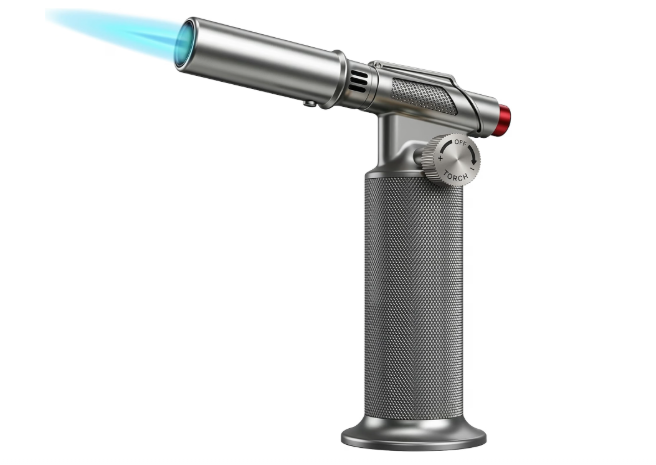
KinetiFire builds this torch around a commercial-grade all-metal body rated to deliver up to 1,350°C (2,462°F), the hottest listed flame among the dual-mode and fuel-gauge torches here. A continuous flame mode keeps the jet burning without constant trigger pressure.
An extended nozzle with an integrated hand-protection shield keeps fingers away from radiant heat, and a widened, weighted base helps the torch stand upright after use. It refills with standard long-nozzle butane canisters.
Workflow Notes: The adjustment dial moves from a gentle flame for browning meringue to a concentrated jet for searing and soldering copper wire.
Build Highlights:
- All-metal construction
- Integrated hand guard
- Weighted anti-tip base
Practical Perks:
- Higher top temperature
- Less finger strain on long jobs
- Stands securely when idle
Useful For:
- Searing and caramelizing
- Copper wire soldering
- Resin bubble clearing
Refill Reminder: The listing names long-nozzle canisters for refills. Check your butane canister’s nozzle before you buy.
4. TBTeek Kitchen Butane Torch for Simple Everyday Tasks

The TBTeek torch keeps things simple. A safety lock prevents accidental ignition, the ergonomic shape keeps your hand back from the flame, and the aluminum alloy body resists wear.
Three butane adapters come in the box, so it works with long or short canister nozzles. The flame adjusts up to 1,371°C (2,500°F), and continuous flame mode starts by pressing the ignition and rotating the lock clockwise.
Workflow Notes: It covers kitchen basics like caramelizing, melting cheese, and lighting a grill, with adapters that remove refill guesswork.
Build Highlights:
- Safety lock against accidental ignition
- Three adapters for any canister
- Continuous flame mode
Practical Perks:
- Fits almost any butane canister
- Light and easy to hold
- Simple controls
Useful For:
- Baking and caramelizing
- Bar cocktails
- Camping and small DIY jobs
Refill Reminder: After each use, turn the flame valve to its lowest setting and engage the safety lock, as the maker advises.
5. Sondiko Dual Flame Torch Lighter for Fuel-Saving Soft Heat
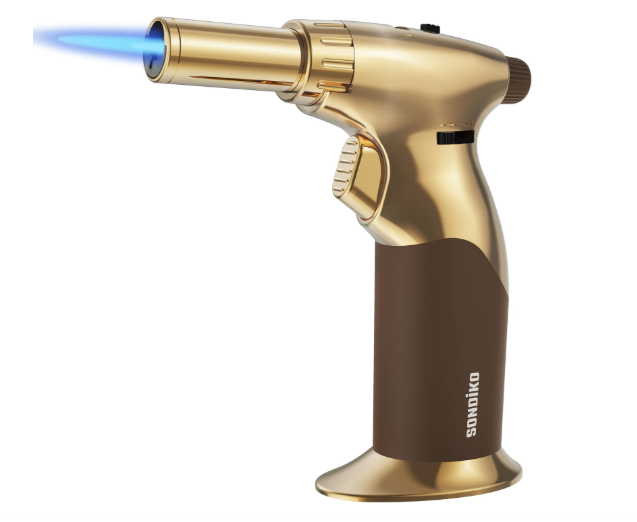
This Sondiko torch offers hard and soft flame modes. The hard flame concentrates heat for intense jobs, while the maker notes the soft flame is better for saving butane during gentler work.
Piezo ignition works at any angle, even upside down, and an adjustable regulator takes the flame up to 1,300°C (2,372°F). Continuous flame mode starts with a twist of the safety lock, and a red adapter lets it fill from short-nozzle canisters.
Workflow Notes: Use the soft flame for toasting breadcrumbs or melting cheese, and switch to hard flame for searing steak or glazing ham.
Build Highlights:
- Hard and soft flame modes
- Upside-down piezo ignition
- Red adapter for short nozzles
Practical Perks:
- Stretches each butane fill
- Works at awkward angles
- Light, easy-to-hold body
Useful For:
- Glazing and searing
- Lighting fireplaces and candles
- Crafts and jewelry work
Refill Reminder: Like other refillable torches, it ships without butane. Buy a quality canister separately.
Kitchen, Craft, and Outdoor Uses for a Torch
In the kitchen. Caramelize sugar on crème brûlée, brown meringue, melt cheese, blister peppers, or finish a sous vide steak with a quick sear.
At the craft bench. Solder small jewelry pieces, pop bubbles in resin, or heat-shrink tubing. Flame control matters most here.
Outdoors. A torch lights charcoal, fire pits, and camp stoves quickly, even in light wind, which makes it a handy partner for car camping stoves. Our guide on starting a fire pit without lighter fluid shows how a torch fits into a cleaner start.
For lighting a gas range or grill burner, a long-reach lighter is often safer. See our picks for stove lighters.
How to Choose the Best Butane Torch Lighter
Flame control. A good dial lets you move from a soft flame to a focused jet. Dual-mode torches add a dedicated soft setting for gentle work.
Temperature. Going by the listed specifications, the torches in this guide reach between 2,372°F and 2,500°F, which covers kitchen work and light soldering.
Refill fit. Check whether the torch takes long-nozzle canisters only or includes adapters for short nozzles.
Safety lock and base. A lock prevents accidental ignition, and a wide base keeps a hot torch upright on the counter.
Fuel visibility. A clear fuel window helps on long jobs. Camping cooks who use butane stoves may also want our guide on propane in a butane stove before mixing fuels.
Refilling a Butane Torch the Safe Way
Step 1. Let it cool. Make sure the torch is off and cool, and work away from any flame, pilot light, or spark.
Step 2. Close the valve. Turn the flame or gas regulator to its lowest or off position before filling.
Step 3. Fill upside down. Hold the torch inverted, press the canister nozzle straight into the fill valve, and fill for only the time your manual allows. Fill times differ between brands, so follow your torch’s instructions rather than a general rule.
Step 4. Wait before lighting. Let the gas settle for a few minutes so the fuel can stabilize before ignition.
Step 5. Test outside the work area. Light the torch pointed away from you and anything that can burn, and check for a steady flame.
Fuel Quality and Its Effect on Torch Performance
Butane quality affects how a torch lights and burns. Refined butane with fewer impurities tends to burn cleaner and is less likely to leave residue in the nozzle and valve.
Lower-quality fuel can cause a sputtering or weak flame and lead to clogging over time, especially in torches with fine nozzles.
Several makers in this guide specifically recommend pure, high-quality butane. Sticking with a refined canister helps keep the flame steady for precision tasks.
Why a Torch Sputters or Will Not Light
Air in the tank. Trapped air can block a full fill. Some manuals describe bleeding the tank before refilling, so check yours.
Cold fuel. Butane loses pressure in the cold. Warm the torch to room temperature in your hand, never over heat.
Too much gas flow. A regulator set too high can blow out the flame at ignition. Turn it down, light, then increase.
Dirty nozzle. Residue can choke the flame. Clean the nozzle as the manual directs once the torch is cool.
Empty or overfilled tank. Check the fuel level, and avoid overfilling, which can cause flaring.
Safe Storage Around Kids and Heat
Butane torches count as multi-purpose lighters. The Consumer Product Safety Commission lists micro-torches in this group and requires these lighters to be child-resistant, after documenting fires started by young children.
Child resistance is a backup, not a lock. The U.S. Fire Administration advises never leaving lighters where children can reach them.
Store the torch with its safety lock on and the flame valve closed, in a cool, dry cabinet up high. Keep it and spare butane canisters away from stoves, heaters, and direct sun.
Let the nozzle cool before putting the torch away. The metal tip stays hot for a while after the flame goes out.
Cleaning and Caring for a Torch Nozzle
Wipe the body with a dry cloth after cooking to remove grease and sugar. Never submerge a torch in water.
If the flame becomes uneven, clean the nozzle only when the torch is cool and empty of flame, using the method your manual describes.
Check the safety lock and ignition button regularly. A sticky button or lock that does not engage is a sign to stop using the torch.
Use one brand of quality butane when possible, and store the torch upright so the base and nozzle stay protected.
Torch Lighter Questions Readers Often Ask
Can You Use Any Brand of Butane in a Torch Lighter?
Most refillable torches accept any brand of small butane canister, but nozzle shape matters. Some torches fill directly from long-nozzle canisters and include an adapter for short nozzles, while others list long-nozzle canisters only. Check the listing or manual before buying fuel. Choose a refined butane canister when possible, since several makers recommend pure fuel to reduce clogging and keep the flame steady during precise work.
How Long Does a Full Butane Torch Last?
It depends on tank size, flame setting, and how long you run it. For example, the Sondiko S907 holds about 10 grams of gas, which the maker rates at roughly 20 to 50 minutes per fill. A soft flame or lower setting stretches fuel, while a hard, full jet uses it faster. Keep a spare canister on hand for long baking sessions or soldering projects so you are not caught mid-task.
Is It Safe to Refill a Butane Torch Right After Using It?
Let the torch cool first. Refilling a hot torch near a recent flame raises the risk of igniting escaping gas. Turn the flame valve off, move away from stoves, candles, and pilot lights, and fill only for the time your manual allows. After filling, wait a few minutes before lighting so the fuel can settle. Light it pointed away from your body and anything that can burn.
Can You Bring a Butane Torch Lighter on a Plane?
The Transportation Security Administration lists torch lighters as not allowed in carry-on or checked bags. That includes jet, blue flame, and culinary-style torch lighters, and the same caution applies to butane refill canisters, which have their own restrictions. Rules can change, so check the TSA’s current guidance before you travel. If you need a torch at your destination, buying one there is usually simpler than trying to pack it.
Why Does My Torch Flame Look Yellow Instead of Blue?
A blue, steady flame usually means clean burning, while a yellow or orange flame can point to impure fuel, a dirty nozzle, low gas pressure, or the torch being too cold. Try a refined butane canister, let the torch warm to room temperature, and clean the nozzle as the manual describes once it is cool. If the flame stays yellow or sputters, stop using it and contact the maker.
Our Overall Pick and Final Advice
A good butane torch lighter comes down to steady flame control, an easy refill, and a safety lock you will actually use. Dual-mode torches suit cooks who switch between gentle and intense heat, while all-metal builds suit heavy use.
For most readers, our overall pick is the Sondiko S907 Fuel Gauge Torch. Its clear fuel window, thumb-reach flame lock, and fit with any small butane canister make it the easiest to live with for both desserts and small craft jobs. Whichever torch you choose, refill it cool and away from flames, and store it locked and out of children’s reach.
