
Best Chef Pans for Home Cooks and Pros (Updated)

Disclosure: As an Amazon Associate, I earn from qualifying purchases. Learn more
The pan that never leaves your stovetop says more about how you cook than any recipe card. For most home cooks, the best chef pan is a 12-inch model with flared sides, built with either easy-release nonstick for everyday meals or uncoated stainless steel for searing and pan sauces.
You might be torn between one versatile pan and a full set, or between the nonstick you already know and the stainless steel that chefs tend to use. The right pick depends on your cooktop, how often you sear, and how much weight and upkeep you are willing to handle. Below, you will find chef-style pans in stainless, nonstick, ceramic, and cast iron, plus clear advice on sizing, materials, and care so your choice keeps working for years.
The All-Clad HA1 Chef’s Pan brings easy-release nonstick and induction-ready heat, while the Cuisinart Chef’s Classic Skillet suits cooks ready to learn uncoated stainless searing.
For Everyday Searing

All-Clad HA1 Chef’s Pan
- 12-inch flared design
- Tempered glass lid included
- Oven safe to 500°F
For Stainless Learners

Cuisinart Chef’s Classic Skillet
- Aluminum encapsulated base
- Riveted stay-cool handle
- Broiler-capable stainless build
What a Chef Pan Is and Why Cooks Love It
A chef pan combines a wide, flat cooking floor with flared or gently rounded walls that sit taller than a regular skillet. That shape lets you sear, toss, and then simmer in sauce without switching pans.
The sloped walls make stirring easy and help liquids reduce faster, while the extra depth keeps splatter in check. A straight-sided sauté pan holds more liquid for its width, and a saucier is rounder and deeper still. If those two confuse you, this quick look at the sauté pan versus saucier shows where each shape shines.
Names vary between brands. Some call a deep 12-inch skillet a chef pan, while others use the label for a rounded 3 to 5 quart pot with a long handle. It also differs from a wok pan, which has a smaller flat base and tall curved walls built for fast stir-frying over strong gas heat.
How We Picked These Chef Pans for Home Cooks
Every pan here was chosen from its listed specifications and the maker’s own care guidance, not from hands-on testing claims. The goal was a short list that covers the main materials chefs and home cooks rely on.
- Shape and size: chef pan profiles or deep chef-style skillets around 10 to 12 inches
- Material: a spread of stainless steel, PTFE nonstick, ceramic nonstick, and cast iron
- Heat limits: clear oven ratings for the pan, handle, and lid
- Cooktop fit: induction compatibility noted wherever the listing confirms it
- Brand record: established cookware makers with consistent owner feedback themes
Standard frying pans that only carry a chef label in their marketing were left out, so each pick truly handles searing, simmering, and saucing.
1. All-Clad HA1 Chef’s Pan for Everyday Searing
Hard-anodized aluminum paired with a stainless-steel base gives this 12-inch pan even heat and induction compatibility, while the PTFE nonstick surface lets eggs, fish, and sauces release cleanly.
The flat base, wide mouth, and flared sides make tossing vegetables easy, and the tempered glass lid helps you simmer without splatter. The pan moves from stovetop to an oven up to 500°F, though the lid tops out at 350°F.
Real-Use Fit: It suits cooks who want a low-fuss nonstick pan that still works on induction and can finish dishes in the oven.
What Sets It Apart:
- Double-riveted stainless steel handles
- Scratch-resistant hard-anodized exterior
- Works on any stovetop, induction included
Core Strengths:
- Easy release with less oil
- Wide surface for one-pan dinners
- Lid holds in moisture while simmering
Suited To:
- Eggs, fish, and stir-fried vegetables
- Induction, gas, and electric cooktops
- Silicone, nylon, or wooden utensils
Before You Choose: Nonstick coatings wear with time, so hand washing and soft utensils help it last. Keep the glass lid under its 350°F oven limit.
2. Cuisinart Chef’s Classic Skillet for Stainless Beginners
If you want to learn stainless steel cooking without a big spend, this 10-inch skillet is a sensible start. An aluminum encapsulated base spreads heat across the floor of the pan, and the mirror-finish cooking surface does not react with acidic foods.
With no coating to chip, you can build browned bits for pan sauces, then finish in the oven or under the broiler, with an oven rating up to 500°F.
Real-Use Fit: It works best for cooks ready to preheat properly and use a little oil, since uncoated steel rewards patience.
What Sets It Apart:
- Drip-free rim for neat pouring
- Lifetime warranty listed by the maker
Core Strengths:
- Builds fond for deglazed sauces
- No coating that can flake off
- Riveted handle stays cool on the stovetop
Suited To:
- Searing chicken thighs and pork chops
- Induction, gas, electric, and glass cooktops
- Pan sauces and sautéed vegetables
Before You Choose: Food sticks if the pan is underheated or dry. At 10 inches it is small for families, and careless dishwasher loading can mark the polish.
3. Calphalon Signature Chef Pan With Lid for Families

Family-size cooking gets easier with this 12-inch covered chef pan. It pairs a hard-anodized body with a sear-capable nonstick that the maker rates as safe for metal spatulas, spoons, and whisks.
The cast stay-cool stainless handles give a secure grip when the pan is full, and the lid supports braises and simmered sauces. It is listed as dishwasher safe with a 500°F maximum temperature, and a full lifetime warranty backs it.
Real-Use Fit: It matches busy households that cook larger portions and do not want to baby a nonstick surface.
What Sets It Apart:
- Metal-utensil-safe nonstick surface
- Full lifetime warranty
Core Strengths:
- Browns and sears despite the coating
- Room for family-size portions
- Dishwasher-safe cleanup after long dinners
Suited To:
- Braises, stews, and simmered sauces
- Weeknight stir-fries and sautés
- Gas and electric ranges
Before You Choose: Its listed weight of 2.63 kg makes it heavier than basic nonstick pans, so a two-handed lift helps when it is full.
4. Utopia Kitchen Cast Iron Skillet for High Heat

Cast iron holds heat like few other materials, and this 12-inch skillet arrives pre-seasoned with vegetable oil so you can start cooking right away.
Use it on the stovetop, in the oven, on a grill, or over a campfire. The heavy, heat-retaining body keeps temperature steady when cold steaks or potatoes hit the surface, and the seasoning improves as you keep cooking with fat.
Real-Use Fit: It fits cooks who sear often and do not mind the weight or the drying and oiling routine after each wash.
What Sets It Apart:
- Listed as PFAS-free cookware
- Works indoors and outdoors
Core Strengths:
- Strong searing and deep browning
- Natural release that builds with use
- Large 12-inch cooking surface
Suited To:
- Steaks, cornbread, and roasted vegetables
- Oven, grill, and campfire cooking
- Cooks who enjoy seasoning their pans
Before You Choose: It is heavy for one-handed lifting and rusts if left wet. Skip the dishwasher, avoid soaking, and set it down gently on glass cooktops.
5. GreenPan Bobby Flay Tri-Ply Chef’s Pan for Sauces

Sauce lovers will appreciate this 3.75-quart pan. It uses uncoated tri-ply stainless steel with an aluminum core for steady searing and browning, and its deeper, rounded shape suits dishes you stir often.
A long stay-cool silicone grip keeps the handle comfortable, the chip-free rim protects the edge, and a glass lid helps with braising and simmering. It is induction suitable, dishwasher safe, and rated metal-utensil safe.
Real-Use Fit: It suits home cooks who make sauces, risotto, and small braises more often than big batches of fried food.
What Sets It Apart:
- Chip-free rim design
- Long chef-style handle with silicone grip
Core Strengths:
- Even heat from an aluminum core
- Deep sides keep splatter contained
- Glass lid lets you watch food
Suited To:
- Pan sauces, risotto, and reductions
- Induction, gas, and electric cooktops
- Small braises for two or three
Before You Choose: Its oven rating stops at 392°F, lower than many stainless pans. Delicate foods need a little oil to avoid sticking on bare steel.
6. TECHEF CeraTerra Ceramic Chef Pan for Big Batches

Big batches are where this 5-quart, 12-inch chef pan earns its keep. Forged, heavy-gauge aluminum spreads heat evenly, and the ceramic nonstick coating is listed as free of PFOA, PTFE, PFAS, cadmium, and lead.
A wide flat bottom and gently sloping sides handle sautéing, frying, and simmering, and the included cover helps with one-pan meals. It works on all cooktops, including induction, and goes in the oven up to 450°F.
Real-Use Fit: It is a sensible choice if you want nonstick convenience without PTFE and often cook family-size meals.
What Sets It Apart:
- Made in Korea
- Ceramic coating inside and out
Core Strengths:
- Deep 5-quart capacity
- Easy release with gentle utensils
- Double-riveted stay-cool handle
Suited To:
- Curries, chili, and one-pan pasta
- Induction, gas, electric, and ceramic stoves
- Batch cooking for four or more
Before You Choose: Ceramic nonstick usually loses its slickness sooner than PTFE. Avoid metal tools, high empty-pan heat, and abrasive pads to extend its life.
[MORE PRODUCT REVIEWS HERE]
Which Pans Do Professional Chefs Actually Reach For
Ask what pans chefs recommend and the answer is usually a material, not a brand. Restaurant lines lean on clad stainless steel for searing and pan sauces, carbon steel for fast high-heat cooking, and simple aluminum nonstick for eggs and delicate fish.
Chefs pick these for durability and predictable heat, and they treat nonstick pans as replaceable tools because heavy service wears coatings quickly. Uncoated pans, by contrast, can handle metal tools, high heat, and years of scrubbing.
For a home kitchen, the same logic works well. One uncoated pan for browning and one nonstick pan for breakfast cover most of what professional chef cookware does, without filling your cabinets.
Stainless Steel, Nonstick, Carbon Steel, or Cast Iron
Each material changes how a chef pan heats, how much care it needs, and how long it lasts. This quick reference shows the main trade-offs.
| Material | Strengths | Trade-Offs |
|---|---|---|
| Clad stainless | Searing, sauces, very long life | Sticks without good preheating |
| PTFE nonstick | Easy release, simple cleanup | Coating wears, lower heat limits |
| Ceramic nonstick | PTFE-free easy release | Slickness fades sooner |
| Carbon steel | Light, fast heating, seasons well | Rusts if wet, dislikes acid early on |
| Cast iron | Heat retention, deep browning | Heavy, slow to heat, needs drying |
Stainless and nonstick are the most common pairing in home kitchens. If you are weighing coated against bare metal, this breakdown of ceramic and stainless compared covers heat, care, and lifespan in more detail.
Carbon steel pan sets exist, but most cooks do better starting with a single 10 or 12-inch pan to learn the seasoning routine before buying more.
Picking the Right Chef Pan Size and Depth
Size decides whether food browns or steams. Crowded pans trap moisture, so a pan that is too small for your usual portions will never give you a good sear.
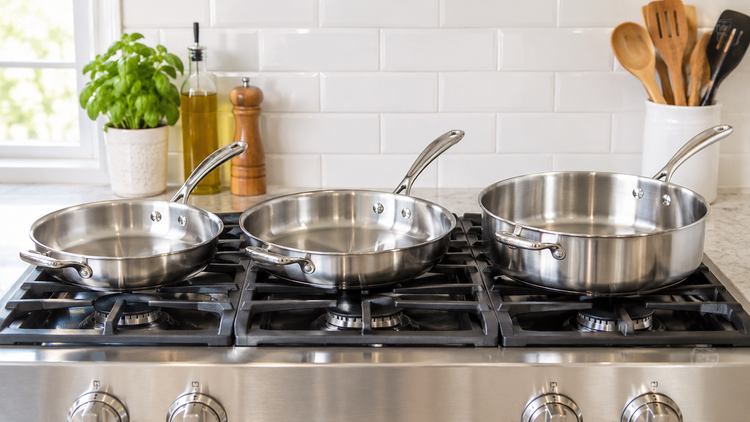
- 10 inches: one or two people, eggs, small sautés
- 12 inches: three to four people, chicken pieces, full stir-fries
- 3.5 to 4 quarts: sauces, risotto, and small braises
- 4.5 to 5 quarts: chili, curries, and one-pan pasta for a family
Most makers measure across the top rim, so the flat cooking floor is noticeably smaller than the listed size. Also match the base to your largest burner, since a pan much wider than the flame heats unevenly at the edges.
Single Chef Pan or a Full Pots and Pans Set
Many of the best pots and pans for home chefs are bought one piece at a time. Sets look like good value, but they often include small pans you rarely use and skip the large sizes you need most.
A practical core for most kitchens looks like this:
- One 12-inch chef pan or deep skillet for searing and sautéing
- One 10-inch nonstick pan for eggs and delicate foods
- One 3-quart saucepan for grains and sauces
- One large stockpot for pasta, stock, and soup
A chef pots and pans set makes sense when you are equipping a first kitchen from scratch and every piece in the box matches how you cook. Otherwise, building piece by piece lets you choose the right material for each job.
Matching Your Chef Pan to Your Cooktop
Your stove can rule out a pan before material or price matters. Induction needs a magnetic base, so check for an induction-ready listing or test the bottom with a fridge magnet.
Glass and ceramic tops want a flat, smooth base for good contact and to avoid scratches. Lift heavy cast iron rather than sliding it. Gas ranges work with almost any pan, but long metal handles can warm up when they sit over a neighboring burner.
Going by the listed specifications, the All-Clad HA1, Cuisinart Chef’s Classic, and TECHEF CeraTerra all confirm induction compatibility, which makes them easy picks if you plan to switch stoves later.
Handles, Lids, and Weight Shape Pan Comfort
A pan you dread lifting is a pan you stop using. Riveted stainless handles are the most durable, while silicone grips feel cooler but usually lower the oven rating.
Lids matter more than they seem. A snug lid turns a chef pan into a braiser, and glass lets you check progress without losing steam. Glass lids often carry a lower oven limit than the pan itself, so check both numbers before roasting.
Weight is a trade-off. Heavier pans hold heat better, but a full 12-inch pan in cast iron or thick nonstick is easier to manage with a helper handle or two hands.
Everyday Dishes a Chef Pan Handles Well
The mix of a wide floor and taller walls lets one pan cover a surprising range of meals:
- Sear then simmer: brown chicken thighs, add stock and herbs, and cover to finish
- One-pan pasta: cook noodles straight in sauce with room to stir
- Stir-fries: spread vegetables in one layer so they stay crisp
- Breakfast hash: potatoes, sausage, and eggs without crowding
- Quick extras: toast nuts, warm tortillas, or reduce a fruit sauce
Mistakes That Shorten the Life of Your Pan
Most worn-out pans fail from habits, not defects. These are the ones worth avoiding:
- Preheating nonstick empty on high heat, which damages the coating faster
- Plunging a hot pan into cold water, which can cause warping
- Using metal tools on coated pans unless the maker rates them as safe
- Soaking cast iron or carbon steel, which strips seasoning and invites rust
- Relying on aerosol cooking sprays, which leave a sticky film on nonstick
- Stacking pans without protection, which scratches cooking surfaces
Cleaning and Seasoning Each Pan Material Properly
Let any pan cool slightly before washing. Then follow the routine for its material.
Stainless steel: wash with warm soapy water. For stuck-on bits, simmer a little water in the pan, then scrub. A paste of a nonabrasive cleaner removes rainbow discoloration, and a gentle stainless scrubber helps without scratching the polish.
Nonstick and ceramic: use a soft sponge and mild soap. Hand washing protects the coating even when the label allows the dishwasher.
Cast iron and carbon steel: wipe out food while warm, rinse with hot water, dry fully, and rub in a thin layer of oil. These cast iron care basics from a university extension explain how to rebuild seasoning in the oven when it wears thin.
Who Should Skip a Dedicated Chef Pan
A chef pan is not a must-have for every kitchen. If you already own a deep 12-inch skillet and a straight-sided sauté pan, a chef pan mostly duplicates what you have.
Cooks who mainly make eggs and quick breakfasts may be happier with a light 10-inch nonstick pan. Small cooktops with tight burner spacing can struggle to fit a wide 12-inch pan next to a stockpot.
If lifting heavy cookware is hard for you, skip cast iron and thick 5-quart models. A lighter stainless or aluminum nonstick pan around 10 inches is easier on the wrists.
Is Nonstick Cookware Safe for Daily Cooking
Many cooks worry about coatings, so the facts help. According to the FDA notes on nonstick coatings, the polymer used on nonstick pans is bonded to the pan at very high temperatures, and studies show only negligible amounts migrate to food.
Safe use still matters. Stay within the maker’s temperature limit, avoid heating an empty coated pan on high, and replace a pan once the coating flakes or is deeply scratched.
If you prefer to skip PTFE entirely, ceramic nonstick, stainless steel, and cast iron are the common alternatives. This guide to ceramic pan safety covers what to watch for with coated ceramic options.
Common Questions About Chef Pans and Care
What is the difference between a chef pan and a sauté pan?
A sauté pan has straight vertical walls and a flat base, so it holds more liquid for its diameter and works well for shallow frying and lidded braises. A chef pan has flared or rounded walls, which make stirring and tossing easier and help liquids reduce faster. If you mostly sear and then simmer in sauce, either shape works. If you toss vegetables or reduce pan sauces often, the sloped walls of a chef pan feel more natural in daily use.
Do professional chefs use nonstick pans?
Yes, though usually for specific jobs. Many restaurant kitchens keep inexpensive aluminum nonstick pans for eggs, omelets, crepes, and delicate fish, and they replace them often because busy service wears the coating down. Searing, pan sauces, and high-heat work go to stainless steel or carbon steel instead. At home you can follow the same split, with one nonstick pan for breakfast and fragile foods and one uncoated pan for anything that needs real browning.
What size chef pan suits a family of four?
A 12-inch pan, measured across the rim, is the usual choice for four people because it fits several chicken pieces or a big batch of vegetables without crowding. For saucy dishes like chili or pasta cooked in sauce, look for 4.5 to 5 quarts of capacity. Keep in mind that the flat cooking floor is smaller than the rim measurement, so check the base size when the listing provides it, especially if you sear large cuts of meat.
Can a chef pan go in the oven?
Most can, but the limit comes from the weakest part. Uncoated stainless and cast iron often handle 500°F or more, while nonstick coatings, silicone grips, and glass lids carry lower ratings. In this list, for example, one pan’s glass lid is rated to 350°F even though the pan itself handles 500°F, and a silicone-gripped stainless pan stops at 392°F. Check the listed rating for the pan, the handle, and the lid separately before roasting.
Is carbon steel a good chef pan for beginners?
Carbon steel can work for beginners who enjoy a little maintenance. It is lighter than cast iron, heats quickly, and builds a slick seasoning over time, which is why so many chefs use it for searing and eggs. The trade-off is care. It rusts if left wet, needs drying and a thin coat of oil after washing, and acidic sauces can strip young seasoning. If you prefer wash-and-go cookware, stainless steel or nonstick is easier.
How long does a nonstick chef pan usually last?
It depends on the coating, the heat you use, and your habits. PTFE nonstick used with moderate heat and soft utensils often stays slick for several years, while ceramic coatings tend to lose their release sooner. Signs it is time to replace a pan include flaking, deep scratches, or food sticking even with oil. Hand washing, skipping aerosol sprays, and stacking with a pan protector all help a coated surface last longer.
Choosing the Chef Pan That Fits Your Kitchen
If you want one pan that handles most nights with little fuss, a 12-inch nonstick chef pan with a lid is the easiest place to start. Choose uncoated stainless if you sear often and want a pan that can last for many years, or cast iron if heat retention matters more to you than weight.
Every material has limits. Nonstick coatings wear out, stainless asks for proper preheating, and cast iron needs drying and oiling. A simple rule helps here: pick the material whose care routine you will actually follow.
For an all-round pick, the All-Clad HA1 Chef’s Pan balances easy release, induction compatibility, and a lid for simmering.
