
Is Big Buddy Heater Safe Indoors and What the Manual Says

Disclosure: As an Amazon Associate, I earn from qualifying purchases. Learn more
Yes, the Big Buddy heater is certified for indoor use, but only in a ventilated space, while someone is awake and watching it, and with the clearances and fuel rules in its manual. It is not a heater to run in a closed room or overnight.
Most people asking this are planning for a power outage, an off-grid cabin, an ice shanty, or a cold garage. The label says indoor safe, yet the manual adds conditions that many buyers never read, from vent openings at the ceiling and floor to which propane cylinders may come inside.
Indoor-Certified Propane Heater
Mr. Heater Big Buddy NF Heater
Designed and approved for indoor and outdoor use, this propane heater gives 4,000, 9,000, or 18,000 BTU of radiant heat with a low-oxygen shutoff and tip-over protection. Use it awake, with vents open, as the manual directs.
Below you will find how the heater works, what its safety sensors do and do not cover, the exact ventilation and clearance rules, where indoor use is not allowed, and safer habits for emergency heating.
Quick Verdict on Big Buddy Indoor Safety
The Big Buddy is one of the few portable propane heaters designed and approved for indoor and outdoor use. Its low-oxygen safety shutoff and tip-over switch are real safety features, and they are why it carries an indoor-safe label.
That label has limits. Mr. Heater’s manual describes it as an unvented heater that uses the oxygen in the room, permits indoor use in recreational enclosures with a window or roof vent, and allows emergency indoor heating with disposable 1 lb cylinders.
So the honest answer is conditional. Used awake, with the required vent openings, proper clearances, and a carbon monoxide alarm, it can be used indoors. Used in a sealed room, while sleeping, or with a 20 lb tank inside, it is not safe.
How the Big Buddy Heater Works Indoors
Propane flows from a cylinder through a regulator to the burner, where it mixes with air and lights. The flame heats a ceramic tile that radiates warmth toward people and objects in front of it.
Going by the listed specifications, the heater runs at 4,000, 9,000, or 18,000 BTU, so the low setting uses far less fuel and adds far less moisture and combustion gas to the room.
The safety shutoff turns the heater off when there is not enough fresh air, and the manual says not to relight until fresh air is provided. Repeated shutoffs call for service, never tampering. Our Mr. Heater troubleshooting guide covers common shutoff causes.
Mr. Heater Big Buddy NF Indoor Safety Features Reviewed
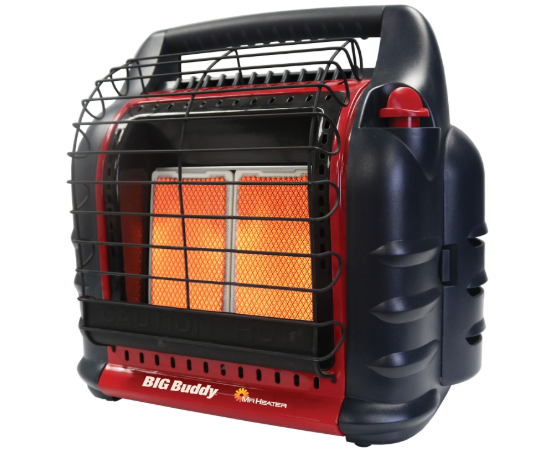
The Big Buddy NF emits 4,000, 9,000, or 18,000 BTU per hour of radiant heat across low, medium, and high settings, and the listing rates it for about 450 square feet. It is listed as designed and approved for both indoor and outdoor use.
Safety comes from an automatic low-oxygen shutoff and tip-over protection. The listing also warns that unauthorized accessories are prohibited, can cause serious injury, and void the warranty, so stick to Mr. Heater hoses and filters.
In Practice: Start on low in smaller spaces and step up only as needed. The manual limits bedroom use to low or medium and bathroom use to low.
Safety Hardware:
- Low-oxygen safety shutoff
- Tip-over protection switch
- Three output levels up to 18,000 BTU
What It Does Well:
- Strong heat without electricity
- Built-in shutoffs for two key hazards
- Portable for cabins and outages
Works In:
- Ventilated cabins and hunting blinds
- Ice fishing shanties
- Emergency heating with 1 lb cylinders
Manual Must-Know: Indoors, the manual requires vent openings of 18 square inches at both the ceiling and floor, and it must never run while you sleep.
Ventilation Rules From the Owner’s Manual
Ventilation is the condition that makes indoor use acceptable, so it deserves exact numbers rather than “open a window a little.”
- Vent area. The manual calls for at least 18 square inches of opening, about 4.25 by 4.25 inches, at the ceiling and at floor level.
- Clear heater slots. Keep the vents at the top and bottom of the heater unblocked.
- No other fuel burners. Do not run other fuel-burning appliances in the same space.
- Altitude. Above about 7,000 feet, the heater may burn less brightly and shut off more easily.
- A CO alarm. Keep a battery-powered carbon monoxide alarm working in the space.
Two openings matter because warm air and combustion gases rise out the top while fresh air enters low, keeping oxygen levels steady.
Where Indoor Use Is Allowed and Where It Is Not
Allowed with venting. The manual permits indoor use in small recreational enclosures with a window or roof vent, such as cabins, fishing huts, trailers, tents, truck caps, and vans.
Emergency home heating. It may be used for emergency indoor heating with disposable 1 lb cylinders, under strict conditions such as permanent heat being out of service and the heater never left unattended.
Not allowed. Mr. Heater notes that Massachusetts and Canada do not allow propane heaters indoors, and the manual says it is not for use in a dwelling home in California.
Never indoors. Refillable cylinders up to 20 lb are allowed only when the tank sits outdoors with an approved hose. A 20 lb tank should never be brought inside.
Real Indoor Risks Even With Safety Sensors
Carbon monoxide. The safety shutoff reacts to low oxygen, not to carbon monoxide directly. Poor combustion can still create CO, which has no color or smell. The CDC’s carbon monoxide guidance stresses battery-powered CO alarms for any home with fuel-burning appliances. Our article on carbon monoxide from fireplaces explains the symptoms.
Moisture. Burning propane releases water vapor. In a small, closed space, that can lead to condensation on windows and walls.
Fire. The radiant face gets very hot. Bedding, curtains, or clothing too close can ignite even if the heater never tips.
Leaks. A damaged cylinder, regulator, or hose can leak propane. Any gas smell means shut off the cylinder, get everyone out, and ventilate.
Clearances, Settings, and Placement for Safer Use
The manual lists minimum clearances to anything that can burn: 30 inches above, 24 inches in front, 6 inches on the sides, and 0 inches behind.
Set the heater on a level, stable surface, away from walkways where it could be kicked or knocked. Keep children and pets well back, since the tip-over switch does not replace supervision.
Room limits also apply. For emergency home use, the manual allows only the low setting in a bathroom and low or medium in a bedroom.
Attach or detach 1 lb cylinders only outdoors, away from flames, with the heater cool. The Consumer Product Safety Commission adds broader winter advice on keeping heaters clear of anything that can burn.
Sleeping, Tents, and Overnight Use Explained
The manual is direct on this point: never operate the heater while sleeping, and never leave it unattended while it burns. That rules out running it all night in a bedroom, cabin, camper, or tent.
Tents are listed among permitted recreational enclosures, but only with ventilation and someone awake. Warm the tent before bed, shut the heater off, and rely on a sleeping bag rated for the temperature.
Small spaces fill with water vapor and combustion gases faster than large rooms. Even with vents open, the low setting and short sessions are the safer approach in tight quarters.
Big Buddy Strengths and Limits for Indoor Heating
Strengths
- Heat without electricity, useful during outages and off-grid trips.
- Two built-in shutoffs for low oxygen and tipping.
- Three output levels to match space size and conserve fuel.
- Portable design with a carry handle for moving between spaces.
Limits
- Requires ventilation at the ceiling and floor whenever used indoors.
- Not for sleeping or unattended use under any setup.
- Adds moisture and combustion gases to the space.
- Fuel limits indoors, since only 1 lb cylinders may sit inside.
Radiant heat stays mostly in front of the unit. Our guide to stove fans for Buddy heaters looks at ways to spread warmth further.
Safer Indoor Heating Alternatives to Consider
If you need heat while sleeping or in a closed room, an electric heater avoids combustion entirely.
Oil-filled radiators give quiet, steady warmth and suit bedrooms.
Ceramic heaters warm a small room quickly and are light to move.
Infrared heaters warm people and objects directly, which works well for one seated spot.
During an outage, a portable power station can run a low-wattage electric heater for a short time without fumes. For more on staying fed and warm when the grid fails, see our guide to emergency cooking stoves and outage safety.
Questions People Ask About Indoor Buddy Heaters
Does a Big Buddy Heater Produce Carbon Monoxide?
Any appliance that burns propane can produce carbon monoxide, especially if combustion air is limited or the burner is dirty or damaged. The Big Buddy’s safety system shuts the heater off when fresh air runs low, which reduces the risk, but it does not measure carbon monoxide itself. Keep the required ceiling and floor vents open, keep the burner clean, and run a battery-powered carbon monoxide alarm in the same space every time.
Can You Use a 20 lb Propane Tank with a Big Buddy Indoors?
Only if the tank stays outside. The manual allows a remote refillable cylinder of up to 20 lb when the cylinder is located outdoors and connected with an approved Mr. Heater hose and fuel filter. It states that a refillable cylinder must never be brought indoors, even for storage. Inside the space, only disposable 1 lb cylinders may be attached, and they should be connected or removed outdoors with the heater cool.
How Long Does a 1 lb Cylinder Last in a Big Buddy?
The manual gives a range of roughly 1.5 to 6 hours per disposable 1 lb cylinder, depending on the heat setting. Low lasts longest, while high burns through fuel fastest and requires two 1 lb cylinders. Cold weather lowers cylinder pressure and can shorten run time further. For long outages, plan fuel by the hours you expect to run it, store spare cylinders safely outdoors, and never refill disposable cylinders.
Why Does My Big Buddy Keep Shutting Off Indoors?
The most common reason is the safety system detecting too little fresh air, which is a signal to open more ventilation before relighting. Other causes include high altitude above about 7,000 feet, a tilted surface triggering the tip-over switch, low cylinder pressure in cold weather, or a dirty pilot assembly. If it keeps shutting off after you add fresh air, have it serviced instead of trying to bypass the shutoff.
Is a Big Buddy Heater Safe to Use in a Garage?
It can be used in a garage with care, and Mr. Heater notes that California allows Buddy heaters in places like a garage, though not in dwellings. Provide the required vent openings, keep the heater well away from gasoline, solvents, paint, and other flammable vapors, and keep it clear of vehicles and clutter. Stay with it while it runs, and turn it off before leaving. Check local rules, since some areas restrict indoor propane heaters.
Making the Call on Indoor Propane Heat
A certified indoor-safe propane heater can be a sound choice for ventilated cabins, ice shanties, work trailers, and short emergency use, because low-oxygen and tip-over shutoffs address two major hazards. Those features work only alongside the manual’s rules.
The limits are firm: provide ceiling and floor vents, respect the clearances, keep refillable tanks outside, run a carbon monoxide alarm, and never sleep with the heater on. A simple rule helps: if you would not stay awake beside it with a vent open, choose an electric heater instead.
