Is a Space Heater Safe in a Child’s Room and How to Use One

Disclosure: As an Amazon Associate, I earn from qualifying purchases. Learn more
A space heater is safe in a child’s room only under strict conditions: it is tested by a recognized laboratory, it sits at least three feet from anything that can burn, and it is switched off whenever your child sleeps. Some safety experts go further and advise keeping heaters out of children’s rooms altogether.
If your nursery runs cold or a bedroom never warms up, a portable heater looks like the quick fix. The trouble is that curious hands, loose bedding, and overnight use turn a small appliance into a real fire and burn risk. Babies and young children also cope with heat less well than adults.
This guide explains what makes a heater safer, how to set one up, what to do when something goes wrong, and when a different way of warming the room is the smarter call.
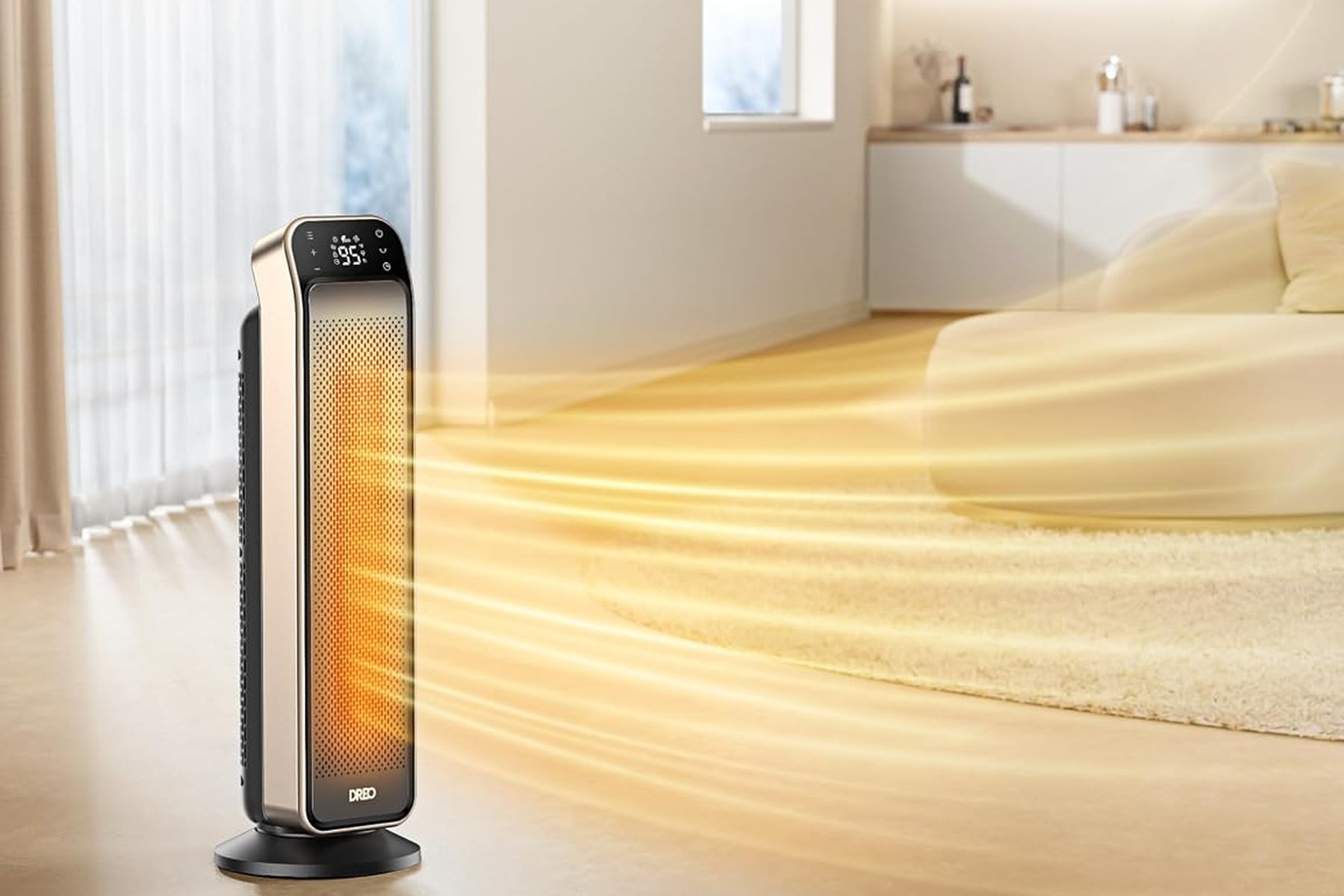
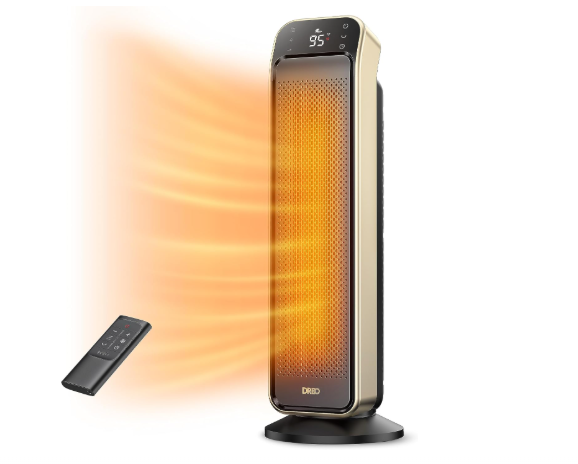
The DREO Tower Space Heater pairs a child lock with tip-over and overheat protection, a digital thermostat, and quiet operation for a larger room or bedroom.
For Larger Bedrooms
DREO Tower Space Heater
- Child lock setting
- Tip-over and overheat protection
- Adjustable digital thermostat
- Quiet 25dB operation
Can a Space Heater Be Safe in a Kid’s Room
It can, but the room matters less than the heater, the setup, and your habits. Safety groups agree on the basics: use a heater tested by a recognized laboratory, with a thermostat, overheat protection, and automatic tip-over shut-off, and place it on a hard, level surface.
Keep anything that can burn at least three feet away, and treat that same distance as a kid-free zone. Plug the heater straight into a wall outlet, never into a power strip or extension cord.
The strictest rule concerns sleep. The Consumer Product Safety Commission says never to leave portable heaters on while sleeping. It also warns against leaving one running unattended in a confined space around infants.
Some consumer testing groups go a step further and say a heater should not go in a child’s room at all. That is a fair position, especially for babies and toddlers who cannot follow rules. If you do use one, treat it as a short, supervised warm-up tool, never an all-night heat source.
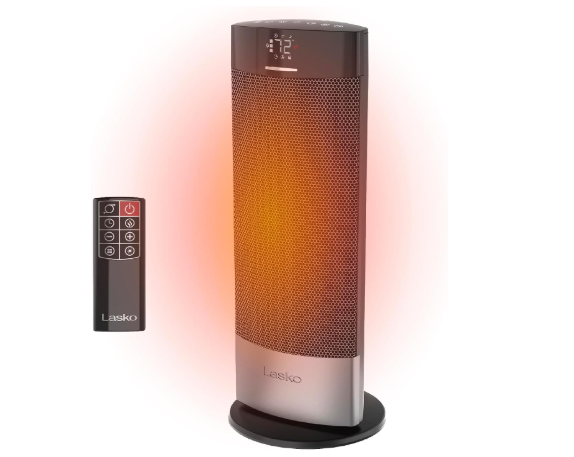
A cool-touch exterior, child lock, overheat protection, and tip-over switch make the Lasko Ellipse Ceramic Tower Heater a practical fit for larger bedrooms, with a remote and timer.
For Kids Rooms
Lasko Ellipse Ceramic Tower Heater
- Cool-touch exterior
- ETL-listed heater
- Remote and 12-hour timer
- Under 40dB operation
Why Heaters and Curious Kids Make a Risky Mix
Federal estimates tie portable heaters to about 1,700 fires, 70 deaths, and 160 injuries a year. Most of those cases start with ordinary habits, not faulty products. Here is how common causes lead to real effects.
- A hot surface within reach. A toddler touches the grille or housing and gets a contact burn in seconds.
- Pushing, climbing, or rough play. The heater tips over. Without automatic shut-off, a running element can end up against carpet or bedding.
- Flammables placed too close. Bedding, curtains, clothes, and stuffed toys can ignite. Heating equipment placed too near combustibles is a common cause of home heating fires.
- Power strips or extension cords. Heaters draw heavy current, so cords and outlets overheat, often out of sight behind furniture.
- A heater left on during sleep. Nobody notices the burning smell, the warm plug, or the first spark.
- A closed, warm room. A heater can raise the temperature faster than a child can react, and federal staff have flagged overheating as a hazard for children.
Distance, tested safety features, wall outlet use, and shut-off habits break most of these chains before they reach the effect.
Safety Features That Actually Matter on a Kid-Safe Heater
Features add layers when something goes wrong, but none replaces supervision.
- Testing laboratory mark: shows the model passed recognized safety testing.
- Tip-over shut-off: cuts power if the unit is knocked over.
- Overheat protection: stops heating when internal temperature climbs too high.
- Thermostat: cycles power to hold a set temperature instead of running at full output.
- Guard over the heating element: limits direct contact with hot parts.
- Child lock: blocks control changes from small fingers, but it does not cool the housing or stop tipping.
Search the model number on the CPSC recall page before the heater goes into a child’s room.
Do Oil, Ceramic, and Infrared Heaters Differ in Safety
Fire safety groups describe four common electric designs. Radiators circulate heated oil or water, fan-forced heaters blow air over metal coils, ceramic heaters warm air over a ceramic element, and infrared heaters use bulbs. They differ in how they make heat, not in whether they are automatically safe.
Any type can burn skin or start a fire if it stands too close to bedding or runs while everyone sleeps. Choosing by type alone misses the point. Judge a heater by its tested safety features, a guard over hot parts, and stable footing instead.
Room size matters less than people expect. A larger room does not call for a bigger heater parked closer to the bed, because portable heaters are supplemental heat. If you are weighing heaters sized for large rooms or comparing electric fireplaces versus portable heaters, the same distance and shut-off rules still apply.
How To Set Up a Heater Safely for Kids
Placement fixes more problems than any feature. Follow these steps every time.
- Step 1, pick the spot. Use a hard, level, nonflammable surface such as tile or hardwood. Never use a bed, couch, dresser, or rug.
- Step 2, clear three feet. Measure it. Bedding, curtains, toys, laundry baskets, furniture, and your child stay outside the zone.
- Step 3, use a wall outlet. Skip power strips and extension cords, and keep other devices off the same outlet.
- Step 4, route the cord. Keep it out of walkways and away from cribs and beds, and never run it under a rug.
- Step 5, keep exits open. Stay out of foot traffic and never block a door.
- Step 6, set the controls, then lock them. Choose the thermostat level first, then switch on the child lock.
- Step 7, check alarms. Smoke alarms belong on every level and inside each bedroom. Carbon monoxide alarms belong on every level and outside sleeping areas. Test them monthly.
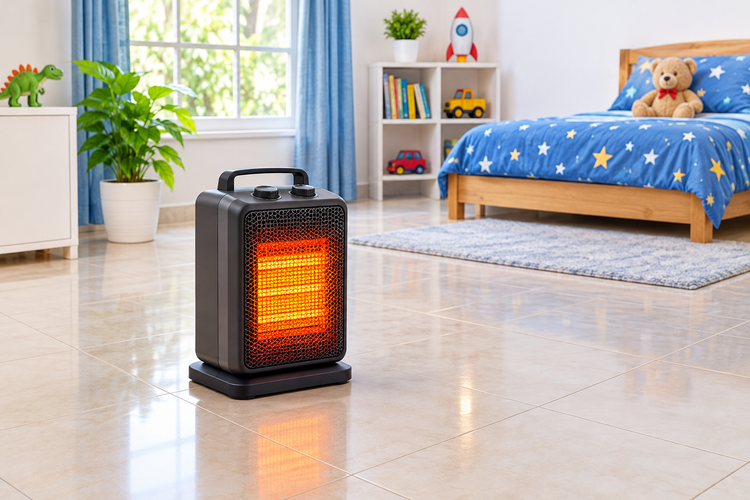
Before each use, inspect the cord and plug for fraying or discoloration, confirm the three-foot zone is still clear, and stay in the room while the heater runs. When you finish, switch it off, unplug it, and let it cool before moving it.
Should a Space Heater Stay On While Kids Sleep
The rule here is simple, and it comes from the safety agencies themselves: do not leave a portable heater running while anyone sleeps. In practice, official safety guidance commonly advises warming the room before bedtime, then switching the heater off and unplugging it.
A cold nursery at midnight. You wake up to a chilly room and reaching for the heater feels logical. A better first move is checking for drafts, adding light layers suited to safe sleep, or raising the central heating.
A toddler who kicks off every blanket. Loose bedding drifts toward the floor, right where the heater sits. A thermostat keeps cycling while fabric slides toward the grille, so keep the heater off during sleep.
An older child who wants it left on. Explain the rule in simple words, warm the room early, and switch the heater off at bedtime. Clear routines tend to stick.
You want the same heat in your own bedroom. The advice does not change. The risk comes from sleeping near a running heater, not from whose room it is.
A thermostat or ECO mode only controls how often the heater cycles. It does not stop a fault, a tip-over, or fabric contact.
Heating a Nursery or Baby Room Without Overheating the Baby
Babies call for extra caution because overheating is a known concern for sleeping infants. Federal health guidance says to dress infants in light sleep clothing and keep the room at a temperature that feels comfortable to an adult, since overheating and SIDS risk are linked.
CPSC staff also found that portable heaters can pose a hyperthermia hazard, especially for children, people with disabilities, and older adults, who may be slower to react to a rising room temperature. The agency advises against leaving heaters running unattended in a confined space around infants.
That makes a nursery a poor place for a portable heater at night. A young baby cannot move away from heat, ask you to turn it off, or kick off a layer.
Use your own comfort as the guide. If the room feels chilly to you, fix drafts first and dress the baby in light sleep clothing instead of adding layers. A baby who feels hot to the touch, sweats, or has flushed cheeks is too warm.
If you warm the nursery before a nap or bedtime, keep the heater well away from the crib. Switch it off and unplug it before the baby goes down, and keep the crib free of loose blankets, pillows, and soft toys.
Fuel-Burning Heaters Are a Different Risk in Bedrooms
Everything above assumes an electric heater. Fuel-burning heaters, such as kerosene or gas models, add carbon monoxide to the list of risks.
CPSC guidance explains that fuel-burning equipment can poison a household when it is badly installed, poorly maintained, vented through a blocked or defective system, or misused. A portable fuel-burning heater must also never be refueled while it is running.
For a child’s bedroom, the simpler answer is to use no fuel-burning portable heater at all, and outdoor patio heaters are not made for indoor use. If a fixed vented heater warms your home, have a professional inspect it every year and keep working carbon monoxide alarms outside every sleeping area.
Mistakes That Turn a Cozy Room Into a Hazard
- Plugging into a power strip or extension cord. Heaters draw heavy current. Plug straight into a wall outlet.
- Drying clothes or towels on the heater. Fabric against a heating element can ignite. Dry laundry elsewhere.
- Parking the heater beside the crib or bed. Closer is not better. Warm the room earlier instead.
- Counting on the child lock alone. It stops button changes, not tipping, touching, or fabric contact.
- Leaving it on during naps or while you are elsewhere. Fires start quietly. Switch it off when you leave or your child lies down to sleep.
- Using an older heater with no laboratory mark. Older units may lack current protections.
- Skipping the recall check. A recalled heater can look completely normal.
- Treating the heater as the only fix. Drafts and weak vents are usually the real problem.
Warning Signs a Heater Should Leave the Room
Heaters usually give hints before a serious failure. Match what you notice with the likely cause.
- Burning or hot plastic smell: dust on the element or an internal fault. Unplug it and stop using it.
- Hot plug, cord, outlet, or faceplate: a loose fit or damaged cord. Unplug it and have the outlet checked.
- Repeated shut-offs: overheat protection tripping, often from blocked airflow. Clear the vents and retest once, then stop if it repeats.
- Scorch marks on the plug or outlet: arcing or overload. Stop using it and call an electrician.
- Buzzing, rattling, or grinding: a loose part or failing fan. Unplug it and contact the manufacturer.
- Housing hotter than usual: poor airflow or an internal fault. Switch it off and inspect it before reuse.
Do not try to repair a heater yourself. Take it out of the child’s room and look up its model on the CPSC recall list.
What To Do If a Child Touches the Heater
Quick, calm action limits the damage. These steps cover a burn or a heater that tipped over.
- Step 1, make the room safe. If the heater tipped or something is smoking, move your child away first, then unplug the heater. If anything is burning, leave the home with your family and call emergency services instead of fighting the fire.
- Step 2, cool the burn. Hold the area under cool running water for about 20 minutes. Skip ice, butter, oils, and creams. Cool the burn, not the child, and keep the rest of the body warm.
- Step 3, cover it loosely. Use clean cling film or a clean, non-fluffy cloth, and do not pop blisters.
- Step 4, get medical advice. Contact a doctor about any burn on a child. Call emergency services if the burn is large, deep, on the face, hands, feet, or genitals, or caused by electricity.
- Step 5, retire the heater. Keep it unplugged until it has been inspected, check it against the recall list, and report a problem at SaferProducts.gov.
Warmer Bedroom Options That Skip the Heater Entirely
If the room stays cold overnight, a heater may not be the right answer. Several safer moves raise comfort without a hot appliance near a sleeping child.
Seal Drafts and Gaps
Cold air often leaks in around windows, door bottoms, and outlets on exterior walls. Weather stripping, a door draft stopper, and window insulation film can make a clear difference. Keep heavy curtains away from any heater you still use.
Dress for the Room, Not the Heater
Fitted pajamas keep small bodies warm without loose fabric. For babies, follow your pediatrician’s safe sleep guidance, use light sleep clothing, and keep loose blankets out of the crib.
Check Central Heating and Vents
Keep vents open and unblocked by furniture. A slightly higher thermostat setting during the coldest hours can warm the whole home more evenly than one portable unit.
Warm First, Then Power Down
If you do use a portable heater, warm the bedroom before bedtime, then switch the heater off and unplug it. Plug-in electric fireplaces are still heaters, so read the electric fireplace safety rules and apply the same distance and shut-off habits.
FAQs About Heaters in Kids’ Rooms
Is a Heater Fine If I Am Home but Not in the Room?
Not really. Safety guidance asks for an alert adult in the room whenever a portable heater runs, and says to turn it off when you leave the area. Being elsewhere in the house means nobody would notice a tipped unit, a burning smell, or a child wandering over to touch it. If you need to step out, even briefly, switch the heater off or take your child with you.
Is It Safe To Use a Space Heater During Bath Time?
Water and electric heaters do not mix. Never touch a plugged-in heater with wet hands or while standing in water, and keep heaters away from sinks, tubs, and splashes. A heater near a child in a wet bathroom adds shock risk on top of burn risk. A safer plan is a closed door, a pre-warmed towel, and a quick bath instead of a running heater.
Can a Space Heater Make a Child’s Allergies Worse?
Heaters that move air can stir up dust, pet dander, and other allergens, which may trigger sneezing or coughing in sensitive children. Dust on the element can also cause a brief burning smell at the start of the season. Vacuum the vents while the unit is unplugged and cool, and keep it off carpet. If a cough or stuffy nose seems worse while it runs, switch it off and ask a pediatrician.
How Do I Check Whether a Heater Has Been Recalled?
Open the recall section of the CPSC website at cpsc.gov/recalls and search for space heaters. Then compare the brand and model number printed on your unit’s label with the listings. If your model appears, stop using it immediately and contact the company for the remedy, which can be a refund, repair, or replacement. Keep the model details somewhere handy so a repeat check at the start of each heating season takes a minute.
Is an Older or Secondhand Heater Safe for a Child’s Room?
It is a weaker choice. Federal guidance notes that older heaters may not meet newer safety standards, and a used unit comes with unknown wear, no manual, and possible cord or plug damage. Skip any heater with a frayed cord, a discolored plug, a missing guard, or no laboratory mark. A newer tested model with tip-over shut-off and overheat protection is the safer pick, if you use a heater at all.
Simple Habits for a Warmer, Safer Bedroom
A heater and a child’s room can coexist, but only with deliberate habits. The main causes of trouble are heat within reach, flammable items too close, cords and strips that overheat, and heaters left running while everyone sleeps. The main fixes are a clear three-foot zone, a hard level surface, a direct wall outlet, and switching the unit off and unplugging it at bedtime. Prevention comes down to routine checks, working alarms, and a recall search each season. For babies, keep the heater out of the sleep routine entirely and let light clothing and sealed drafts do the work.
