Why Cooks Love Saucier Pans? What are They Used For?

Disclosure: As an Amazon Associate, I earn from qualifying purchases. Learn more
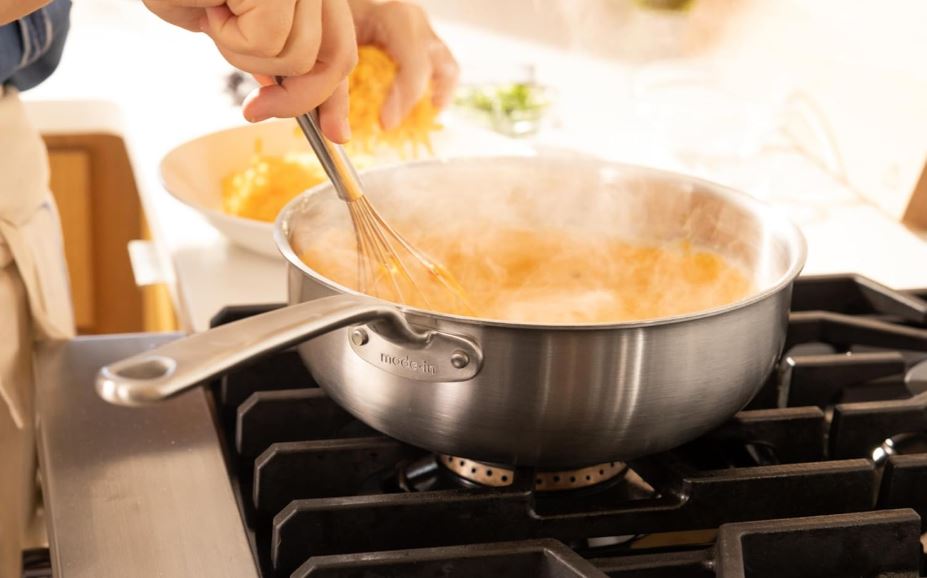
A saucier pan is used for sauces, gravies, custards, risotto, polenta, and reductions, any dish that needs steady stirring and even heat. Its rounded bottom and flared sides let a whisk reach every spot, so nothing sticks in a corner and scorches.
You may already own a saucepan and wonder why another pan matters. The difference shows up with thick, stir-heavy mixtures like pastry cream or cheese sauce, where straight walls trap food and create hot spots. A saucier keeps everything moving, which gives you smoother texture and more control.
Below you will find what sets the shape apart, the everyday and advanced jobs it handles, how it compares with saucepans, saute pans, and Windsor pans, which size to choose, and the care habits that keep stainless steel working well for years.
Saucier Pan Basics and Why Cooks Rely on It
A saucier is a pan with a rounded bottom, gently curved walls, and a wide mouth. There are no sharp corners where the base meets the sides, so a spoon or whisk sweeps the whole surface in one motion.
That shape solves a common problem. In a straight-sided pot, thick mixtures collect in the corners, heat builds there, and you end up with lumps or a scorched patch. In a saucier, food keeps circulating as you stir.
The wide opening also lets steam escape, so sauces reduce faster without cranking the heat. You stay in charge of texture instead of reacting to it.
That is why cooks who make sauces, custards, or risotto keep one close to the stove. It turns stir-heavy recipes into calm, controlled work.
Design Features That Set a Saucier Apart
Curved interior walls remove the corners where food clings, so whisks and spatulas glide without resistance and hot spots are less likely.
A wide cooking surface and flared rim spread liquid out, helping sauces thicken through gentle evaporation rather than hard boiling.
Many sauciers have a rolled or tapered rim that pours cleanly, so sauces land on the plate instead of running down the outside of the pan.
A thick, clad base spreads heat across the floor of the pan. Combined with a comfortable handle angle, it makes long stirring sessions easier on your wrist.
What Is a Saucier Pan Used For Day to Day
Sauces come first. Cream sauces and cheese sauces stay smooth, tomato sauces reduce without sticking, and gravy thickens evenly while you whisk.
Grains and porridges are a strong fit too. Risotto releases starch evenly with constant stirring, polenta and grits stay creamy, and oatmeal reheats without catching on the bottom.
Egg-thickened recipes such as pastry cream, lemon curd, and stirred custard need steady heat and nonstop motion. The curved walls help keep the eggs from setting in one spot.
Melting and caramel work well because the shape lets you swirl and stir evenly, and you can see color change across the wide surface.
It also handles small pan sauces, butter sauces, and reheating thick soups, anywhere smooth texture matters more than browning.
Made In 3 Quart Stainless Saucier for Everyday Sauce Work
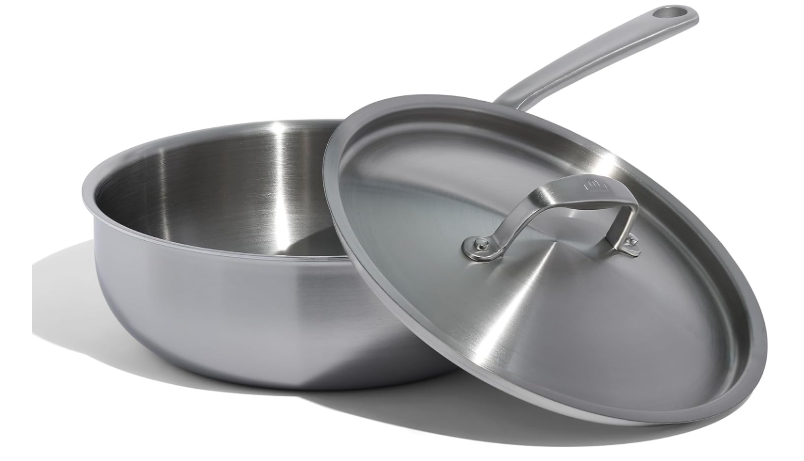
The Made In 3 Quart Stainless Saucier is built from five layers of metal for even heat distribution, with a top layer of 430 stainless steel that makes it work on induction as well as gas and electric cooktops.
It measures 10 inches across the top with a 7-inch cooking surface and about 3.5 inches of depth, a practical size for sauces, grains, and custards for a family. The stay-cool handle is fastened with stainless steel rivets, and the pan weighs about 3.7 pounds.
Use-Case Notes: The flared walls and 3-quart volume suit most home sauce batches, and the clad body responds quickly when you lower the heat during delicate steps.
Design Details:
- Five-ply stainless clad construction
- 430 stainless top layer for induction
- Riveted stay-cool handle
Everyday Benefits:
- Even heat for sauces and custards
- Works on any common cooktop
- Non-reactive surface for acidic sauces
Designed Around:
- Sauces and gravies
- Risotto, grits, and polenta
- Custards and curds
Before You Choose: Stainless steel is not nonstick, so preheat gently and add fat before ingredients. Check the listing for lid details before buying.
How Clad Stainless Construction Improves Heat Control
Stainless steel on its own spreads heat poorly. The Clemson Cooperative Extension cookware guide notes it is usually paired with copper or aluminum to fix that, which is why quality sauciers use clad layers.
A clad body sandwiches a conductive core between stainless layers, so heat moves across the base and up the curved walls. That means fewer hot spots and sauces that reduce steadily instead of racing toward scorching.
The stainless cooking surface is non-reactive, so tomato, wine, and citrus sauces keep their flavor and color. Manufacturers still advise against leaving acidic or salty food sitting in the pan for long periods, since undissolved salt can pit the surface.
Clad stainless also resists warping and handles years of heating cycles, which makes it a long-term piece rather than a replaceable one.
Comparing a Saucier, Saucepan, Saute Pan, and Frying Pan
Saucier. Rounded base, curved walls, wide mouth. Made for whisking, reducing, and stir-heavy dishes like sauces, risotto, and custards.
Saucepan. Flat base, tall straight sides, narrower opening. Better for boiling, simmering soup, cooking grains with little stirring, and heating liquids.
Saute pan. Wide flat base with short straight sides. Made for searing and browning vegetables and proteins with plenty of surface contact.
Frying pan. Flat base with low sloped sides. A saucier can handle a small pan sauce or a quick saute of aromatics, but its curved floor gives less flat contact, so it does not brown or sear as well as a skillet.
Shape guides the job. Whisking thick sauce in a saucepan fights the corners, while reducing a sauce in a saute pan spreads it thin and risks scorched edges.
Windsor Pan or Saucier for Reductions
Windsor pan. Flared, angled sides with a narrower base. The shape encourages fast evaporation and takes up less burner space.
Saucier. Rounded, flowing sides with no corners. The shape favors whisk access and smooth emulsions.
Both handle sauce work, so the choice comes down to technique. If you stir constantly and make egg or cream sauces, the saucier feels easier. If you mostly reduce stocks and wine sauces and want speed, a Windsor pan does that job well.
Many cooks who make a lot of sauces end up keeping one of each.
Step-by-Step Method for Smooth Sauces in a Saucier
- Preheat gently. Warm the pan over medium-low to medium heat, since stainless steel performs best with gradual heating.
- Add fat first. Butter or oil coats the surface and helps prevent sticking before liquids or starches go in.
- Add ingredients slowly while stirring. Steady motion keeps the texture even and stops lumps from forming.
- Adjust the heat as it thickens. Small reductions in temperature keep you in control near the end.
- Finish off the heat when needed. Residual warmth can complete a butter emulsion without breaking it.
For custards, curds, and other egg-thickened sauces, official food safety guidance commonly advises cooking the egg mixture to 160°F, and the Clemson egg handling fact sheet recommends checking it with a thermometer.
Choosing the Right Saucier Size for Your Cooking
Size depends on how many people you cook for and what you make most often.
A 1 to 2 quart saucier suits small batches such as a single-serving custard, a butter sauce, or melted chocolate. It heats fast and is easy to tilt and pour.
A 3 quart saucier is the most flexible home size. It holds a family batch of risotto, gravy, or cheese sauce while leaving room to whisk without splashing.
A 4 quart or larger saucier helps with big batches of polenta, soup, or sauce for a crowd, though it takes more burner space and storage.
If you are comparing models, our roundup of saucier pans worth comparing covers several sizes. Cooking in a small space? A look at compact cookware sets shows how a saucier-shaped pot fits a tight kitchen.
Cleaning and Care for a Stainless Saucier
Let the pan cool before washing, since a sudden temperature change can stress the metal. Warm water and mild dish soap handle routine cleaning.
For stuck-on residue, soak the pan, then use a baking soda paste with a soft sponge. Skip harsh metal scouring pads that scratch the interior.
Dry the pan right away to prevent water spots, and add salt to liquids only once they are hot so undissolved salt does not sit on the surface and cause pitting.
If you cook on a portable burner, our guide to two-burner countertop cooktops explains which surfaces work with stainless pans. With simple care, a stainless saucier keeps performing for years.
Questions Home Cooks Ask About Saucier Pans
Is a Saucier Also a Type of Chef?
Yes. In a classic French kitchen brigade, the saucier is the cook responsible for sauces and often sautéed dishes, a station known for demanding skill. The pan takes its name from that role because it is shaped for the work a sauce cook does all day, such as whisking, reducing, and finishing emulsions. When people search for a saucier, the context usually tells you whether they mean the person or the pan.
Can You Use a Saucier on an Induction Cooktop?
Many can, but it depends on the base. Induction needs a magnetic layer on the bottom of the pan, so check that the listing says induction compatible before you buy. Clad stainless sauciers often use a magnetic stainless exterior for this reason. A quick test at home is to hold a fridge magnet to the base; if it sticks firmly, the pan should work on an induction burner.
Do You Need a Lid for a Saucier?
Not always. Most saucier tasks, such as reducing sauces and stirring risotto, happen uncovered because you want steam to escape. A lid helps when you keep a sauce warm, simmer grains gently, or hold food between steps. Some sauciers come with a lid and others sell it separately, so check the listing. A lid from a saucepan of the same diameter often fits well enough for occasional use.
Is a Saucier Worth It if You Own a Saucepan?
It depends on how you cook. If you often make cream sauces, custards, risotto, polenta, or caramel, a saucier makes those jobs smoother and less likely to scorch. If you mostly boil pasta water, heat soup, or cook rice with little stirring, a saucepan already covers you. Many home cooks find a 2 to 3 quart saucier replaces their most-used saucepan because it handles both stirring and simmering.
Can You Make Caramel in a Saucier?
Yes, and the shape helps. The rounded base lets you swirl sugar evenly, and the wide mouth makes it easy to watch the color change from pale gold to amber. A light-colored stainless interior shows color better than a dark surface. Caramel gets extremely hot, so use a long-handled utensil, add cream or butter slowly while stepping back from steam, and keep children and pets away from the stove.
Key Takeaways on Using a Saucier Well
A saucier earns its place whenever texture depends on steady stirring. The rounded shape prevents the corner buildup that causes lumps and scorching, the wide mouth speeds reduction, and a clad stainless body keeps heat even and responsive.
It is not a replacement for a skillet when you want deep browning, and stainless steel needs gentle preheating and fat to limit sticking. A simple rule helps: reach for the saucier when you will stir more than you will sear, and choose a size that matches your usual batch.
