
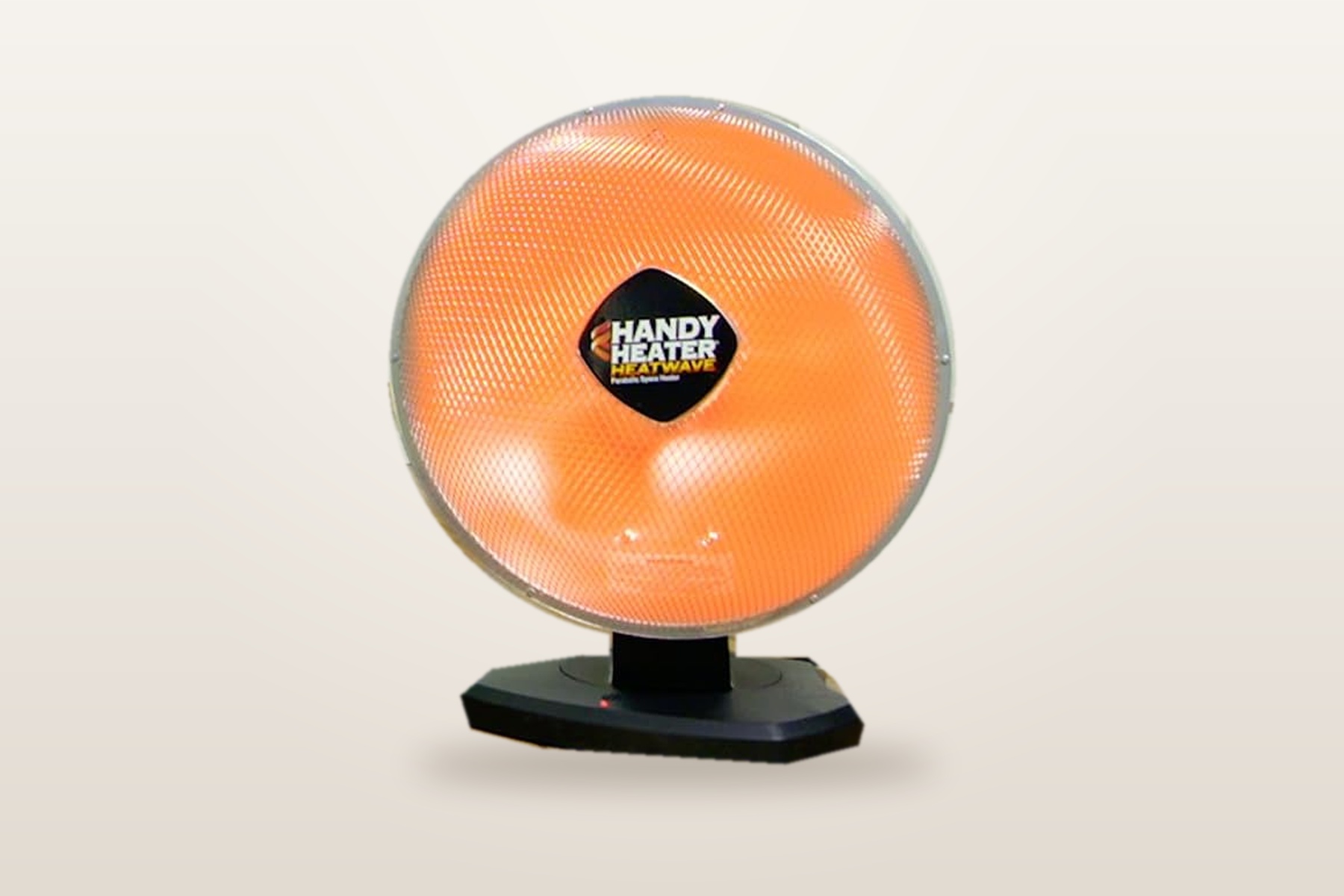
Is the Handy Heater Safe Indoors and What Risks to Know

Disclosure: As an Amazon Associate, I earn from qualifying purchases. Learn more
Yes, the handy heater can be safe for indoor use when it has working tip-over and auto shut-off protection and you follow basic clearance, outlet, and supervision rules. Safety depends far more on how you use it than on the heater alone.
Maybe a family member handed you one before a cold snap, and now you are staring at the box wondering if it is a fire hazard. That hesitation is reasonable. Space heaters of every brand are linked to home fires each year, and small habits decide the outcome. The three concerns people raise most are heat near flammable items, running a heater while asleep, and overloaded outlets or extension cords. This guide walks through what makes any portable heater safer or riskier, what the handy heater offers on paper, and what to do before you switch it on in a bedroom, office, or basement.
What Makes a Handy Heater Safe or Risky at Home
Safety with any portable heater comes down to two things: what the unit is built to do on its own, and what you do around it. The handy heater line is sold as a plug-in electric space heater for indoor use. The Heatwave version described later in this article pairs a ceramic element with a round parabolic dish that pushes warmth forward in a focused beam. That design feels pleasant because the heat lands on you instead of warming the whole room. It also means the area directly in front of the dish gets hot fast.
A heater is safer when it has tip-over protection, auto shut-off, and a cool-touch exterior, sits on a hard flat surface, and has open space around it. It turns risky when a blanket, curtain, or couch cushion ends up in front of that dish, or when it runs for hours while nobody is in the room. Think of a kitchen stove. The appliance is not dangerous on its own, yet a dish towel left on the burner changes everything.
So the answer is conditional. The heater is not a hidden trap, but it is not a device you can set down and forget either. Treat it as a supplemental heat source that needs your attention, a safe distance from anything that burns, and a wall outlet that can carry the load. If any of those three pieces is missing, the risk rises quickly, no matter which brand is on the box.
How the Handy Heater Heatwave Supports Safer Indoor Use
The Handy Heater Heatwave is a parabolic space heater described as a 1500W ceramic electric unit for indoor use. Its 15-inch parabolic dish concentrates radiant warmth in one direction, which suits spot heating in a bedroom, office, living room, basement, or den.
From a safety angle, a few described features stand out. Tip-over protection with auto shut-off adds a backup if the unit is knocked down. A cool-touch exterior is intended to make the outer housing less hot to handle. Two adjustable heat modes let you choose lower output for small rooms. Oscillation spreads warmth across a wider area, and the unit is described as quiet in operation.
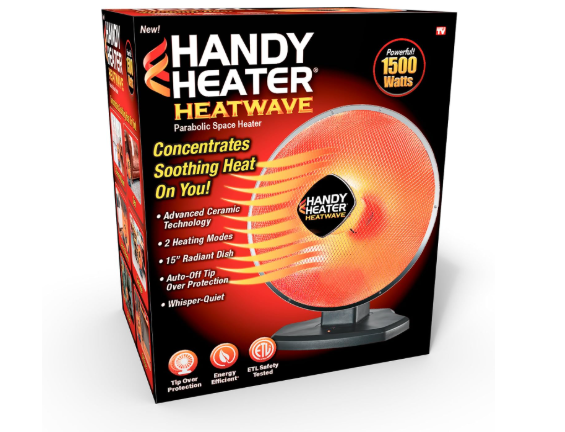
These details are helpful but limited. The product details do not mention a thermostat, a timer, or an independent testing laboratory mark, so verify those on the packaging and in the manual before you count on them. The heater is also described for indoor rooms only, so tents, vehicles, and damp areas fall outside its intended use.
Used with three feet of clear space, a direct wall outlet, and your attention, the Heatwave fits the role of a supplemental heater. Without those habits, no feature list makes up the difference.
Why Handy Heater Safety Worries Keep Coming Up
Most worry around portable heaters has real roots. The U.S. Consumer Product Safety Commission estimates that portable heaters, including electric space heaters, were involved in an average of 1,700 fires each year from 2017 to 2019, with an average of 70 deaths and 160 injuries annually. Those figures cover every brand, so they say more about habits than about one product. Here is how common causes lead to common effects.
Cause: flammable items too close. Drapes, bedding, and sofa arms can ignite when they sit in the path of radiant heat. Effect: a smoldering fire that starts quietly and spreads before anyone notices.
Cause: extension cords and power strips. A 1500 watt heater pulls roughly 12.5 amps on a standard 120 volt outlet, which leaves almost no spare capacity on that circuit. Effect: a cord or plug that overheats, melts, or trips the breaker.
Cause: running while you sleep or leave the house. Nobody is watching if a pet bumps the unit or a cord shifts. Effect: a small problem grows with no one around to stop it.
Cause: dust buildup and worn cords. Lint on a ceramic element can burn off with a sharp smell, and frayed insulation can spark. Effect: odors, tripped breakers, or in worse cases an electrical fault.
Notice the pattern: almost every cause is something you control. Safety features such as tip-over protection act as a backup, not a replacement for good placement and attention.
Handy Heater Safety Features and What Each Does
A feature list only helps when you know what each item does and what it cannot do. The table below uses the details described for the Heatwave parabolic model and adds what you still need to handle yourself.
| Feature | What It Does | What You Still Do |
|---|---|---|
| Tip-over auto shut-off | Cuts heating if the unit falls | Set it on a flat, hard surface |
| Cool-touch exterior | Designed to keep the outer housing comfortable to touch | Keep the front dish clear and untouched |
| Two heat modes | Lets you pick lower or higher output | Start low in small rooms |
| Oscillation | Sweeps warmth from side to side | Check nothing sits in the sweep path |
| 1500W ceramic element | Produces the heat | Plug into a wall outlet only |
| Parabolic dish | Focuses heat in one direction | Never block or cover the dish |
Two things deserve attention. The product details do not mention a thermostat, a timer, or a listing from an independent testing laboratory, so check the packaging and manual for those marks before you rely on the unit. Fire safety groups advise choosing heaters with a lab seal, a thermostat, and overheat protection.
Also remember that a cool-touch housing protects the outside only. The front of the dish is where the heat comes out, and it should never be touched, covered, or blocked.
Handy Heater Fire Hazard Signs and Their Likely Causes
Not every smell or click means danger, but some signs deserve an immediate unplug. Use the table to match what you notice with the likely cause and the sensible next move.
| What You Notice | Likely Cause | What To Do |
|---|---|---|
| Light dusty smell in the first minutes | Dust or residue burning off the element | Ventilate the room and stay nearby |
| Lingering plastic or electrical smell | Overheating cord, plug, or housing | Unplug at once and stop use |
| Warm or discolored plug or outlet | Loose connection or overloaded circuit | Unplug and have the outlet checked |
| Breaker trips again and again | Too many devices on one circuit | Use a less crowded outlet |
| Heater shuts off by itself | Safety feature reacting to a tilt or fault | Move it to flat ground; stop if it repeats |
| Scorched look on nearby fabric | Items placed too close | Clear the area and stop use until checked |
| Crackling or popping sounds | Damaged wiring or a loose part | Unplug and do not use again |
A simple rule helps. Normal behavior is steady, quiet warmth from the front of the dish. Anything that smells like melting plastic, looks discolored, or feels hot at the plug is not normal. Before the cold season, it is also smart to check the CPSC recall page for your model.
If you ever see smoke or flames, leave the room, close the door behind you if it is safe to do so, and call 911. Do not try to carry a burning heater outside.
- Read More: Best Personal Heaters for Home and Office
How to Set Up Your Handy Heater Safely Indoors
Setting up well takes about two minutes and removes most of the risk before the heater ever warms up. Follow these steps in order.
Inspect the heater and cord. Look for cracks in the housing, bent prongs, or frayed insulation. If anything looks damaged, do not plug it in.
Choose a hard, flat floor spot. Avoid beds, couches, stacked boxes, and thick rugs, because an unstable base is how tip-overs happen.
Clear the space around it. Keep curtains, bedding, paper, clothing, and furniture at least three feet from the heater on every side, including the back.
Plug straight into a wall outlet. Skip extension cords and power strips, and avoid sharing that outlet with another high-wattage device such as a hair dryer.
Aim the dish and pick a mode. Point it toward open floor or the seat you use, not toward a sofa back. Start on the lower heat mode and move up only if you need to.
Check after ten minutes. Gently feel the plug and cord with the back of your hand. Warm is acceptable, but hot means unplug it and stop.
Switch off and unplug when you leave. Do the same before sleep, then let it cool fully before moving or storing it.
Imagine a home office in January. You slide the heater next to your desk, notice a stack of printer paper two feet away, and move it before turning the unit on. That small habit is the difference between a pleasant workday and a near miss.
- Read Also: 5 Best Mica Heaters Guide for Large Rooms
Is a Handy Heater Safe to Leave On Overnight
Picture this: it is 11 p.m., the bedroom feels icy, and falling asleep with a heater humming nearby seems like the obvious fix. This is the scenario behind many close calls, and the guidance is consistent. Turn portable heaters off and unplug them before you go to sleep. Federal product safety officials say never to leave a portable heater on while sleeping.
Here is the reasoning. Tip-over protection and auto shut-off respond to specific events, such as a fall. They do not notice a comforter sliding toward the dish, a cat settling in front of it, or a cord slowly working loose in the outlet. While you sleep, nobody can react in the first minute, and the first minute is when most fires are easiest to stop.
You still have comfortable options. Warm the room first. Run the heater for twenty or thirty minutes while you brush your teeth or read, then switch it off and unplug it. Add a heavier blanket, seal drafts around the window, and wear warm socks. If you wake up cold, you can turn the heater back on while you are awake and watching.
One more habit is worth adopting. Local fire officials suggest sleeping with the bedroom door closed, since a closed door slows smoke and heat and gives alarms and people more time. Test your smoke alarms every month so that habit is backed by a working warning.
Keeping Kids, Dogs, and Cats Safe Near a Handy Heater
Household safety comes down to one idea: build a clear zone around the heater and make it hard to cross.
Children and Toddlers
Fire safety groups recommend a three-foot kid-free zone around space heaters. Toddlers move fast, grab whatever glows, and love pressing buttons. A cool-touch exterior helps on the sides and back, yet the front dish still carries intense heat. Place the unit where small hands cannot reach, and remember that oscillation moves the dish, so the danger area changes while it runs.
Dogs
Dogs lean into warmth and sometimes swing a tail without noticing. A big dog can knock a lightweight heater over in a second. Tip-over protection is a backup, but you can prevent the problem by using a baby gate or arranging furniture so the heater sits behind a barrier.
Cats
Cats chase warm spots and will fall asleep right at the edge of a heat source. Fur and tails near the heating face are a real concern. Give your cat an appealing warm bed elsewhere, such as a blanket-lined basket away from the heater, and do not let it settle within reach of the dish.
Infants and Older Adults
Product safety staff have noted that portable heaters can raise a room’s temperature enough to cause overheating, called hyperthermia. Infants, older adults, and people with limited ability to react to heat are more vulnerable. Do not leave a heater running unattended in a small closed space around them.
Common Handy Heater Mistakes That Raise Fire Risk
Most heater accidents repeat the same handful of errors. Check yourself against this list.
- Using an extension cord or power strip. A 1500 watt heater can overload the thinner wiring in those products. Use a wall outlet directly.
- Placing it on a bed, couch, or table. Soft or raised spots make tipping and ignition far more likely. Use the floor.
- Drying clothes or shoes near it. Fabric draped near a heating face can scorch or ignite. Dry laundry somewhere else.
- Blocking the dish with furniture. Even a chair pushed close for convenience can trap heat. Keep the front open.
- Trusting auto shut-off as a babysitter. It reacts to tipping, not to a sliding blanket. You are still the main safeguard.
- Using it near water. Bathrooms, laundry sinks, and damp basements mix moisture and electricity. Keep it in dry rooms.
- Ignoring worn cords or odd smells. Small warnings often come before bigger faults. Stop using the unit and have it checked.
- Skipping the manual. Different models in the same product family can differ, so read the instructions for the unit you actually own.
Picture a college student who props the heater on a dresser to warm a desk area, then drapes a damp towel nearby to dry. Two mistakes in one corner, and neither feels risky in the moment. That is exactly why a written list beats a mental one.
Handy Heater Safety in Bedrooms, Garages, Tents, and Cars
Where you place the heater changes the risk, so match the room to the product.
Bedrooms and dens. The product details describe bedrooms, offices, and dens as suitable indoor spaces. Use it while you are awake, keep bedding and clothes well back, and switch it off before sleep.
Basements. These work if the floor is dry and the unit stays away from stored boxes, laundry, and anything combustible. Avoid damp patches near floor drains or leaks.
Garages and workshops. Fuel cans, paint, solvents, sawdust, and rags make these rooms risky for any space heater. If you must warm a workspace, clear a wide zone first and keep every flammable item well out of the heater’s reach.
Tents. Nothing in the product details suggests tent use. Fabric walls sit close to a heat source and ignite easily, and the space is small and cluttered. Skip it.
Cars and trucks. A vehicle accessory socket supplies only a small fraction of 1500 watts, and the interior is full of fabric and plastic. This is not a use the heater is described for.
A good test is simple: if the product details do not describe the setting, treat the setting as outside the intended use.
Handy Heater Safety Checklist Before Every Use
Run through this short list each time you switch the unit on. It takes under a minute.
- Model and recall check. Confirm the model name on the unit and look it up on the CPSC recall page at the start of each cold season.
- Cord and plug condition. No cracks, bent prongs, or frayed spots.
- Surface. Hard, flat, level floor, away from thick rugs.
- Clearance. Nothing flammable within three feet on any side.
- Outlet. Plugged directly into a wall outlet, with no strip or extension cord.
- Circuit load. No other heavy appliance running on the same circuit.
- Aim. Dish pointed toward open space, not toward bedding or furniture.
- People and pets. Kids and animals kept outside the safety zone.
- Attention. You are in the room and awake.
- Alarms. Smoke alarms tested this month, and carbon monoxide alarms on every level if you have fuel-burning appliances elsewhere in the home.
- Exit plan. Heater is not in a walkway or near a door.
- Switch-off plan. You know when you will unplug it, before leaving or before sleeping.
- Learn More: Best Heater and Fan Combo
Handy Heater Safety FAQs
Does the Handy Heater Use a Lot of Electricity?
A 1500 watt heater running at its highest setting uses 1.5 kilowatt hours of electricity for every hour it operates. That is high compared with a lamp or a laptop, though it is typical for a full-size electric space heater. Your actual cost depends on your local electric rate and how long you run it, so any specific figure would be a guess. What helps most is using it as spot warmth. Because the parabolic dish sends heat forward, you can aim it at your desk or reading chair, choose the lower heat mode when the room allows, and switch it off when you step away. Running it all day in a large room is where both the electric bill and the load on your circuit climb.
Is the Handy Heater Battery Operated?
The Heatwave parabolic model described here is a 1500 watt electric heater, and the product details do not mention battery operation. A heater with that output is built to draw power from a wall outlet, because batteries cannot sustain that level of heat for any useful time. Searches often ask about cordless or battery versions, and products sold under similar names can differ, so check the label, manual, and model name on the exact unit you own. During a power outage, avoid improvised power sources indoors. Gasoline generators belong outside only, placed well away from the home, since they can produce dangerous carbon monoxide.
Does the Handy Heater Really Work in a Large Room?
It works best as focused, supplemental warmth rather than whole-room heating. The parabolic dish concentrates radiant heat in the direction it faces, so you feel warmth on your skin quickly if you sit within its reach, even when the air across the room stays cool. In a small bedroom or home office that can feel comfortable. In a large open living area, expect warmth near the dish and a cooler far corner. Oscillation spreads the heat across a wider arc, which helps when two people share a space, but it does not change the fact that 1500 watts has limits. If your goal is heating an entire floor, a central system is the better tool.
Why Does the Handy Heater Smell Like Burning?
A light, dusty smell during the first few minutes is common with many electric heaters, because dust or residue on the heating element burns off. The same thing can happen after months in storage. Run the heater briefly in a ventilated room, stay nearby, and see whether the smell fades within a few minutes. A smell that lingers, turns sharp, or reminds you of melting plastic is a different story. Unplug the unit right away, let it cool, and look at the cord, plug, and outlet for discoloration. Do not run it again until you know the cause, and contact the manufacturer if you cannot find one.
Is the Handy Heater Safe During Pregnancy or With Health Conditions?
No heater comes with a special rule for pregnancy, so the useful question is how to avoid overheating and fire risk. Sit at a comfortable distance, avoid letting the dish blow on your skin for long stretches, and do not run it for hours in a small closed room. Safety officials note that portable heaters can cause hyperthermia, and infants, older adults, and people who cannot easily react to heat are more vulnerable. If you are pregnant or have a condition affected by heat, ask your doctor what is sensible for you, use the lower heat mode, and make sure you can move away easily when you feel too warm.
Bottom Line on Handy Heater Safety
The handy heater can be a reasonable choice for focused indoor warmth when you treat it as supplemental heat and handle the basics yourself. Most heater fires trace back to a short list of causes: flammable items too close, extension cords or power strips, overnight operation, and damaged cords. The fixes are just as short. Give it three feet of clear space, a hard flat surface, and a direct wall outlet, and switch it off and unplug it whenever you leave or sleep. The Heatwave’s described tip-over auto shut-off and cool-touch exterior add a layer of backup, though they do not replace attention. Details such as a thermostat or a testing laboratory mark are worth confirming on your own unit. Keep kids and pets outside the safety zone, and let any change in smell, heat, or sound decide when to stop.
Discover New Articles: See Our Latest Updates
