5 Best Stock Tank Heaters for Ice-Free Winter Water

Disclosure: As an Amazon Associate, I earn from qualifying purchases. Learn more
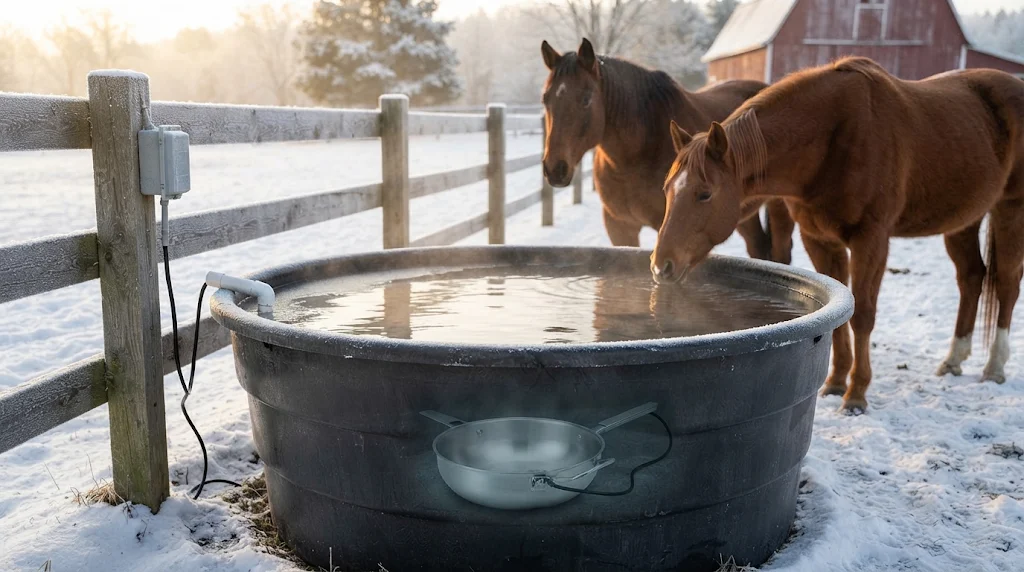
Winter can turn a water trough into a block of ice faster than most chores get done. Keep it open with steady heat, and for most tanks the Farm Innovators Submergible De-Icer is the quick pick, sinking out of reach with 1500 thermostat-controlled watts and a listing that rates it safe for plastic.
Your choice depends on three things: your tank size and material, how hard your winters freeze, and whether your animals tend to play with or chew on equipment.
Picture two horses sharing a 100-gallon Rubbermaid tank in a cold northern pasture. A 1500-watt sinking or drain-plug heater keeps that water open. For a few goats drinking from a small trough in a milder area, a 500-watt unit usually does the job with less power.
The Farm Innovators Submergible De-Icer sinks out of reach with 1500 thermostat-controlled watts, while the API Floating De-Icer keeps a surface patch open in troughs up to 300 gallons.
For Deep Winter Freezes
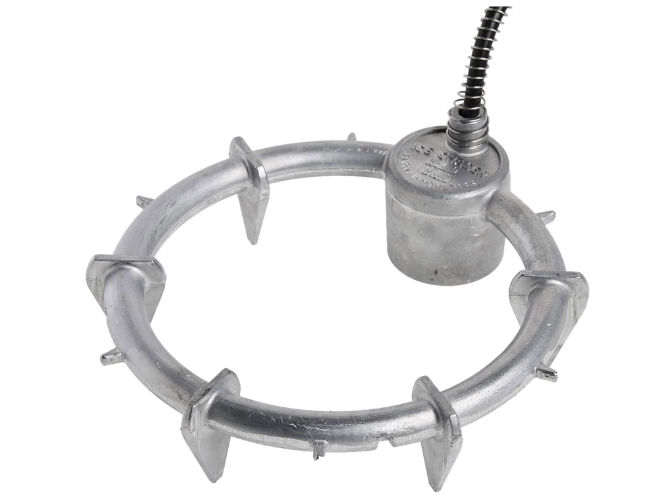
Farm Innovators Submergible De-Icer
- 1500 watts of heat
- Safe for plastic tanks
- Anti-chew cord protector
For Large Trough Surfaces
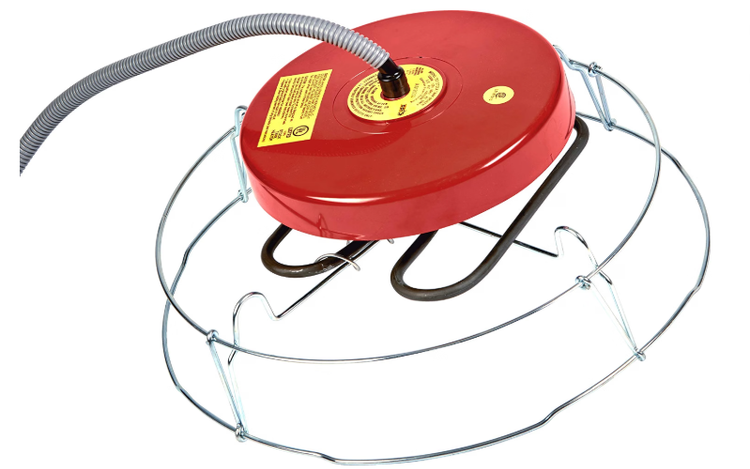
API Floating De-Icer
- Enclosed floating design
- Rated for 100-300 gallons
- 6-foot anti-rub cord
Why a Stock Tank Heater Pays Off in Winter
Animals drink less when water is ice-cold or frozen over, and that can affect their health and condition through the winter. A heater keeps water liquid and accessible without anyone breaking ice twice a day.
It also saves time and effort. Chopping ice in the dark before work gets old quickly, and the open hole often refreezes within hours in hard cold.
Most modern de-icers use a built-in thermostat, so they only run when the water gets close to freezing. That keeps power use reasonable compared with heating water around the clock.
Five Stock Tank De-Icers Reviewed for Winter Water
Each pick below is an electric de-icer built for livestock water, covering sinking, floating, drain-plug, and convertible styles so you can match the heater to your tank and your animals.
1. Farm Innovators Submergible De-Icer for Plastic Tanks
Farm Innovators designed this de-icer to sit beneath the water, where its patented Ice Chaser cast aluminum body moves heat through the tank. At 1500 watts, it has the most power on this list.
The thermostat switches the heater on only when the water needs it, which keeps it from running nonstop. It is listed as safe for plastic, making it a strong pick among stock tank heaters for plastic tanks, and an anti-chew protector covers the cord.
Practical Impressions
This is the heater for big troughs in places where winter means weeks below freezing. It stays out of sight under the water, away from curious noses.
Key Highlights
- Patented Ice Chaser cast aluminum design
- Anti-chew cord protector
Main Advantages
- 1500 watts handles large tanks
- Runs only when water needs heat
- Rated safe for plastic tanks
Works Well With
- Plastic, poly, and metal stock tanks
- Cattle and horse water troughs
- Farm and job site water containers
Limits To Keep In Mind
At 1500 watts it draws a full circuit’s worth of power, so use a dedicated outdoor outlet. No UL or ETL mark appears on the listing.
2. API Floating De-Icer for Big Water Troughs
API takes the floating route, keeping its 1500-watt element inside a rugged, enclosed float with a guard. The listing recommends it for 100 to 300 gallons, so it fits most full-size troughs.
As a floating stock tank de-icer, it keeps the surface open where animals drink. A built-in thermostat saves power when water is warm enough, and it is compatible with rubber, foam, and plastic tanks. The anti-rub cord runs 6 feet.
Practical Impressions
It works well in big troughs where you want a visible open patch of water and an easy heater to lift out and check.
Key Highlights
- Enclosed float with a protective guard
- Recommended for 100 to 300 gallons
Main Advantages
- Keeps the drinking surface ice-free
- Thermostat saves power in milder spells
- Safe for rubber, foam, and plastic tanks
Works Well With
- Full-size stock tanks and troughs
- Rubber and structural-foam tanks
- Herds that drink at the surface
Limits To Keep In Mind
The 6-foot cord is short, so plan outlet placement carefully. No UL or ETL mark appears on this listing.
3. SLASHCOOL Stock Tank De-Icer for Small Troughs
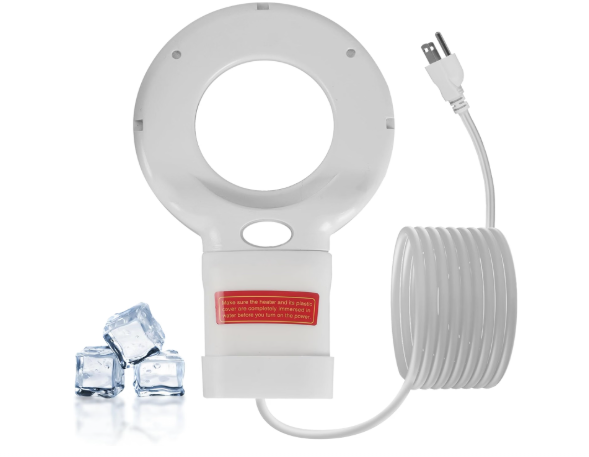
SLASHCOOL keeps things modest with a 500-watt submergible de-icer, a sensible size for smaller troughs or areas with milder cold. Lower wattage also means a lighter load on outdoor circuits.
Its cast aluminum body carries a Teflon coating meant to resist mineral buildup and corrosion. The thermostat controls when it heats, and at 1.94 pounds it is easy to move between containers. The listing strongly recommends a GFCI outlet.
Practical Impressions
It suits small herds, goats, chickens, or horses watered from smaller containers, where a big 1500-watt unit would be overkill.
Key Highlights
- Teflon coating resists mineral buildup
- Thermostatic control saves electricity
Main Advantages
- Low 500-watt power draw
- Light and easy to move
- Corrosion-resistant coated body
Works Well With
- Small troughs and large buckets
- Livestock and wildlife water
- GFCI-protected outdoor outlets
Limits To Keep In Mind
500 watts may struggle in large tanks during deep cold. No UL or ETL mark appears on the listing.
4. Sxmprail Drain Plug Tank Heater for Rubbermaid Tanks
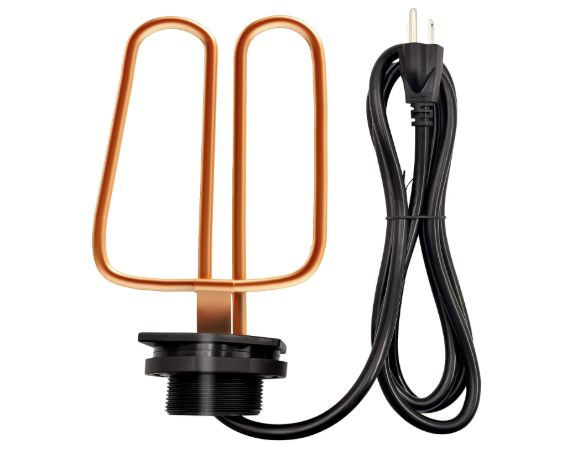
Sxmprail mounts through the drain plug opening, so the heater sits flush with the tank wall instead of hanging inside. Animals cannot grab, chew, or toss it, and the water area stays clear.
As a stock tank heater for Rubbermaid tanks, it is listed as compatible with those drain holes, though the listing asks you to check your hole size first. It runs at 1500 watts with an internal thermostat and weighs 1.7 pounds.
Practical Impressions
It fits owners who have lost floating heaters to playful horses and want a tidy setup that stays put all winter.
Key Highlights
- Mounts through the tank drain plug hole
- Internal thermostat sensor
Main Advantages
- Nothing floating for animals to grab
- 1500 watts for large tanks
- Keeps the water area uncluttered
Works Well With
- Rubbermaid stock tanks
- Tanks with a matching drain plug
- Horses that play with heaters
Limits To Keep In Mind
The listing explains how to activate its internal thermostat correctly, so follow those setup steps. No UL or ETL mark appears on the listing.
5. Farm Innovators Convertible De-Icer for Flexible Setups
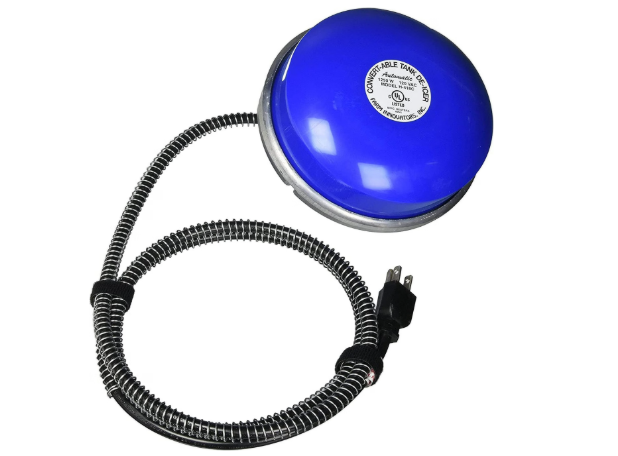
Flexibility is the point of this Farm Innovators model. Leave the ring on and it floats, or lift the ring off and it sinks to the bottom as a submergible de-icer.
The 1250-watt cast aluminum body pairs with a self-regulating thermostat that brings the element on only as the water cools. It is rated for plastic buckets and poly troughs as well as metal tanks, and a heavy-duty guard covers the full cord.
Practical Impressions
It suits owners who move one heater between a stock tank and other containers, or who want to try both styles.
Key Highlights
- Removable ring switches floating or sinking use
- Full-length anti-chew cord guard
Main Advantages
- Two heating styles in one unit
- Rated safe for poly troughs
- Thermostat limits wasted power
Works Well With
- Plastic buckets and poly troughs
- Galvanized metal tanks
- Mid-size tanks in cold areas
Limits To Keep In Mind
Its 1250 watts sits a step below the 1500-watt picks, so very large tanks in deep cold may need more. No UL or ETL mark is listed.
Sinking, Floating, and Drain Plug Heaters Compared
All three styles keep water from freezing, but they sit in different places and suit different animals.
| Heater Style | How It Works | Best Fit |
|---|---|---|
| Sinking or submergible | Rests on the tank floor and warms water from below | Large tanks, animals that play with heaters |
| Floating | Floats at the surface and keeps a drinking patch open | Large troughs, easy checks |
| Drain plug | Mounts through the tank’s drain hole | Rubbermaid and similar tanks |
| Convertible | Floats with a ring or sinks without it | Mixed containers |
| Low-wattage utility | Small submergible unit for small volumes | Buckets, small troughs, mild winters |
Sinking heaters stay out of sight and away from curious mouths. Floating heaters are easy to check and keep a surface patch open. Drain plug heaters leave nothing inside the tank for animals to grab, but they only fit tanks with the right opening.
How Many Watts Your Stock Tank Really Needs
Wattage should match both the size of the tank and the cold you face. A small trough in a mild winter needs far less heat than a 300-gallon tank on an open, windy hill.
- Buckets and small troughs, mild winters: around 250 to 500 watts
- Mid-size tanks or colder spells: around 1000 to 1250 watts
- Large tanks in hard, extended freezes: 1500 watts
Going by the listed specifications, the API Floating De-Icer is recommended for 100 to 300 gallons, which gives a useful reference point for what a 1500-watt unit is built to handle.
When you are between sizes, go up a step. A thermostat means a stronger heater will not run constantly in milder weather, but an undersized heater cannot keep up when temperatures drop sharply.
Plastic and Rubbermaid Tanks Need the Right Heater
Plastic and rubber tanks can soften or melt if a hot heater rests directly against them. That is why you should only use stock tank heaters for plastic tanks that the maker says are safe for that material.
The Farm Innovators Submergible De-Icer is listed as safe for plastic, and the convertible model is rated for plastic buckets and poly troughs. The API floating model is listed as compatible with rubber, foam, and plastic tanks.
For Rubbermaid stock tanks with a drain plug, a drain-plug heater like the Sxmprail is a tidy option. Measure the drain hole first, since the listing asks you to confirm the size before buying.
Floating Trough Heater or Sinking De-Icer for Horses
Horses are curious, and many will pull a floating heater out of the water, drop it on the ground, or chew on it. For them, a sinking or drain-plug heater usually works better because there is nothing to grab.
A floating trough heater still makes sense for cattle and calmer animals, or in large troughs where you want to see at a glance that the water is open.
Whichever style you choose, protect the cord. Run it through a length of PVC pipe or along a fence line so animals cannot chew it or step on it.
Safe Electrical Setup for Outdoor Water Tank Heaters
Water and electricity need careful handling, so the setup matters as much as the heater itself.
- Use a GFCI-protected outdoor outlet. The SLASHCOOL listing strongly recommends one, and it adds protection for any outdoor water heater.
- Keep the outlet and plug dry. Use a weatherproof outlet cover rated for use while plugged in.
- Avoid long, light extension cords. If you must use one, choose an outdoor-rated cord sized for the heater’s wattage and keep it as short as possible.
- Keep the heater fully submerged if it is a sinking model, and follow the maker’s water level guidance.
- Inspect the cord regularly for chew marks, cuts, or cracking from cold.
If your barn wiring is old or overloaded, have an electrician look at it before winter. Warming the building itself is a separate job, and our guide to heating a barn covers that side.
Signs of Stray Voltage at the Water Tank
Stray voltage happens when electrical current leaks into the water or the tank, often through a damaged cord or poor grounding. Animals feel it before people do.
Watch for animals approaching the tank and then backing off, drinking in short, nervous sips, or avoiding the water altogether. Any of these is a reason to unplug the heater right away.
Check the heater and cord for damage, and test the outlet’s GFCI. If the problem continues with the heater unplugged, have an electrician inspect the circuit and grounding.
Common Mistakes That Leave Stock Tanks Frozen
- Choosing too little wattage: a small heater cannot keep a big tank open in deep cold.
- Letting the water level drop: sinking heaters must stay covered, so refill often.
- Placing the tank in open wind: wind pulls heat away quickly, so a windbreak helps.
- Using a heater not rated for plastic: it can damage poly or rubber tanks.
- Leaving cords exposed: animals chew them, which creates safety risks.
- Forgetting the thermostat setup: some heaters, like drain-plug models, need specific steps to activate it.
Cutting Electricity Use Through a Long Winter
A thermostat does most of the work, but a few habits lower power use further.
Cover part of the tank with a board or insulated lid, leaving an opening for drinking. Place the tank where it gets afternoon sun and some shelter from wind. Insulating the sides of the tank with a skirt or foam board also slows heat loss.
Smaller herds can often use a smaller tank in winter. Less water means less volume to keep open, and a lower-wattage heater may be enough.
Propane and Non-Electric Options for Remote Pastures
Not every pasture has power nearby. Propane trough heaters exist for those spots, though they need careful setup, regular checks, and attention to the maker’s ventilation and safety instructions.
Other non-electric approaches include insulated ball waterers, burying part of a tank to use ground warmth, and simply breaking ice by hand on a schedule. These work in milder climates but rarely match an electric heater in hard, extended freezes.
If power is within reach, running a properly buried, protected line is often simpler in the long run than managing fuel all winter.
Is a De-Icer Enough to Heat a Stock Tank Pool
No. The heaters on this list are built to keep livestock water from freezing, not to warm water for swimming.
A stock tank pool needs a heater designed and rated for pools that people get into. Keep livestock de-icers in animal water only, as their listings describe.
Cleaning and Off-Season Care for Tank De-Icers
Minerals and algae build up on heaters over a season, which can reduce how well heat moves into the water. Unplug the heater, let it cool, and scrub off deposits with a stiff brush.
The Teflon-coated SLASHCOOL is designed to resist mineral buildup, but every heater benefits from a regular clean.
In spring, check the cord closely, dry the heater, and store it indoors away from rodents. Test it before the first freeze so you are not caught off guard in the fall.
Answers to Stock Tank Heater Questions From Owners
Should I unplug the heater when the tank is low?
Yes. A sinking heater that ends up exposed to air can overheat, and that raises the risk of damage to the heater or the tank. Some models include protection against this, but do not rely on it. Unplug the heater before draining or cleaning the tank, refill it to a safe level, and then plug it back in. Checking water levels daily during freezing weather prevents most of these problems.
Why does ice still form around the edges of my tank?
Most de-icers keep an open area around the heater rather than the whole surface. Edge ice usually means the heater is undersized for the tank or the tank sits in strong wind. A windbreak, a partial cover, or insulating the tank sides often helps more than a bigger heater. If the drinking area closes over completely, step up in wattage or move the tank to a sheltered spot.
Can I use a stock tank heater in a bucket?
Some can. The Farm Innovators Convertible De-Icer is rated for plastic buckets, and smaller 500-watt units suit larger buckets and small troughs. Very small buckets may be better served by a heater designed specifically for buckets. Always check that the heater stays fully covered by water, and secure the cord so animals cannot knock the bucket over or pull the heater out.
Will a heater make the water warm for animals?
Not in the sense of warm bath water. These heaters are designed to keep water from freezing, so the water stays cold but liquid. That is usually enough for animals to drink normally. Thermostat settings vary by model, and the listings focus on preventing ice rather than heating to a set temperature. For animals that need warmer water, a heated waterer designed for that purpose is a better choice.
How often should I check a stock tank heater?
Check the water every day in freezing weather, both to confirm it is open and to make sure the level is high enough. Look over the cord and plug at least once a week for chew marks or wear. Pull the heater out every few weeks to clean off minerals and algae. Daily checks also help you spot any animal behavior that might point to stray voltage early.
Can I use one heater for chickens and livestock?
A small 500-watt de-icer can work in a chicken waterer or small trough, but a large 1500-watt heater is too powerful for small containers. Match the heater to the water volume. If you keep chickens through the winter, our guide to heating a chicken coop covers keeping the birds comfortable. For dogs living outside, a dog house heater solves a different part of the cold weather puzzle.
Choosing Your Tank Heater With a Simple Rule
A stock tank heater makes sense anywhere water freezes for days at a time and animals depend on a trough. It will not warm water for comfort, and it needs a safe, protected electrical setup to work well.
A simple rule helps. Choose a sinking or drain-plug heater for horses and animals that play with equipment, a floating heater for calm herds and large troughs, and match wattage to your tank size and coldest weeks.
For most tanks, the Farm Innovators Submergible De-Icer is a calm, dependable place to start, with plenty of power and a design that stays out of reach.
