
6 Best Cast Iron Wood Burning Stoves Guide (2026)

Disclosure: As an Amazon Associate, I earn from qualifying purchases. Learn more
A cast iron wood burning stove heats a room by absorbing the fire’s heat and slowly radiating it back out. That heavy metal is the big draw, because the stove warms up gradually and keeps giving off heat after the flames die down. It will not heat a cold room in minutes, though, and the material alone does not decide how much heat you get.
Before you compare models, know your room size, where the stove will be installed and vented, and how dry your firewood will be. This guide covers what a cast iron stove does well, what to check before buying, and how to install, clean, and maintain one safely.
Fast Stove Verdict
Cabins and small living rooms that need steady heat suit the Comfort Glow Cast Iron Wood Stove, which fits 22-inch logs and heats up to 900 square feet → View on Amazon
Portability sets the Guide Gear Outdoor Wood Burning Stove apart, since its pipes and legs pack inside the firebox for camping and backyard use → View on Amazon
Our Choice
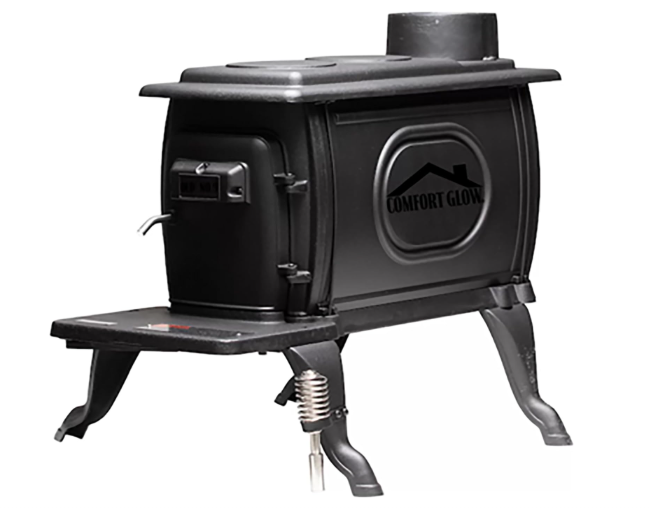
Comfort Glow Cast Iron Wood Stove
- Heats up to 900 square feet
- Fits 22-inch logs
- Integrated cooking surface
Solid Pick
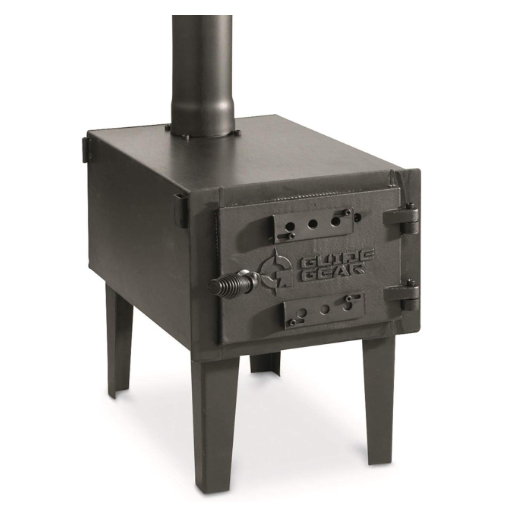
Guide Gear Outdoor Wood Burning Stove
- Galvanized steel firebox
- Five interlocking stove pipes
- Packs down inside itself
Top 6 Cast Iron Wood Burning Stove Review
If you’re looking for an efficient and reliable cast-iron wood-burning stove, then you should consider getting one of these stoves.
1. US Stove Log Wood Cast Iron Stove

This US Stove is a great choice for those who want a stylish and practical stove. This well-crafted cast iron stove is designed to heat up quickly and efficiently, reaching the desired temperature in just two minutes.
With an EPA-certified wood-burning stove providing a clean-burning heating solution, this stove is durability defined.
The Cast iron logwood stove is a rustic, heavy-duty, cast-iron constructed, wood stove that is ideal for any rugged outdoorsman or those looking for a reliable cost-efficient heating solution.
With its 2-Piece safety handle, this stove remains cool while the stove is burning while heavy-duty cast iron construction provides classic style with modern technology.
The US Stove Company has an unequaled life expectancy, making it the perfect choice for those who demand the best in reliability and performance.
This stove is not approved for use in mobile or modular homes, not approved for mobile or modular homes.
Why We Like-
- Heats up 54, 000 BTUs
- Classic style with modern technology
- Heats up to 900 Sq. Ft.
- The 2-Piece safety handle remains cool
- Integrated 6. 25-inch cooking surface
- Its heats well
Why Don’t Like-
- You may get smoke early on
- Very heavy to use outdoor
2. Guide Gear Large Outdoor Wood Stove

This large outdoor wood stove produces an even greater heat output than the original guide gear stove, making it perfect for larger groups. It’s easy to set up.
The 5/8″ x 1/8″ fiberglass gasket creates an airtight seal, improving its heat output and burning efficiency.
The tough galvanized steel, high-temperature finish, and cast iron-hinged door make this model durable for seasons of reliable use. Also, all the parts come conveniently shipped inside the firebox, making it extremely portable
With its 5/8″ x 1/8″ fiberglass gasket that creates an airtight seal, this large stove produces better heat output and burning efficiency than traditional wood stoves. Also, the cool-touch coiled handle makes opening the door much easier.
Why We Like-
- Great for use in cold weather
- Large firebox that produces an even greater heat output
- Cast iron hinged door for seasons of reliable use
- Gasket and damper improve heat output and burning efficiency
- Extension of burn time by adding an adjustable damper
- Cool-touch coiled handle
- Easy to assemble and easy to set up
Why Don’t Like-
- Legs are weak to some
3. ZhoneQingXninRED Hearth Pedestal Wood Burning Stove

Latest Alternative: The featured product is no longer available. We now recommend the Single Burn Rate Stove
The wood burning stove is an excellent choice for those who want a durable and reliable wood-burning stove. With its welded body and ash box, this stove is easy to operate and maintain.
This is a high-temperature resistant wood burning stove and adopts zero-expansion, high-temperature resistant glass-ceramic, which has good transparency, high heat transmission rate, and will not deform after long-term use.
The Cast iron wood stove is perfect for heating your home up in the winter. With a large fire-viewing window, excellent flame viewing degree, and high heat radiation value, this stove is perfect for heating up your home in the winter.
This stove is made of high-quality and strong cast iron which makes it durable and long-lasting.
The stove has a secondary burn design that allows you to stoke the stove full of wood at night and shut the damper down to get a nice even burn. With its heat output and efficiency, this stove is perfect for anyone who wants an easy and efficient wood-burning stove.
Why We Like-
- Heat-resistant and non-toxic
- Excellent flame viewing degree and heat radiation value
- Excellent transparency and high heat transmission rate
- Heat-resistant paint and glass
- Durable and high-quality wood-burning stove
- Heating Area 30-40 Square Meters
Why Don’t Like-
- Chimney pipes become extremely hot
4. YYOBK Multifunction Camping Tent Stoves

Latest Alternative: The featured product is no longer available. We now recommend the Indoor Wood-Burning Heating Stove
This stove is the perfect choice for those who want a powerful camping stove that is easy to use and has a variety of cooking methods.
The strong firepower and efficient burning rate make this stove the perfect choice for outdoor camping.
The YYOBK Multifunction camping tent stove’s strong firepower and high efficiency make it perfect for creating warmth and heat for outdoor camping and travel spaces.
This camping stove can quickly reach high temperatures with less heat loss. It’s an easy-to-use and portable stove.
You use natural fuel sources, such as firewood, wood chips, stalks, etc. However, it is better not to use it in confined spaces.
Why We Like-
- Multi-fuel natural fuel, suitable for charcoal
- High heat output, high firepower, and high efficiency
- Cook any ingredients you want to cook.
- High efficiency for quick and easy warmth and heat.
- Portable and foldable stove legs are designed
- Cooking any ingredients you want to cook
Why Don’t Like-
- It is not perfect for indoor use
5. HEARTLAND Sweetheart Cook Stove

A wood burning stove that is both stylish and functional, available in several colors to match any decor. The cast iron construction ensures durability and longevity, while the large firebox allows for improved efficiency.
The perfect solution for your cooking needs, this heartland sweetheart wood cook stove provides the best. With options for hot water needs, this stove is both practical and stylish.
This cast iron wood burning stove is the perfect way to keep your home warm and cozy all winter long. With a large firebox for improved efficiency and a top or front fuel loading option, this stove is sure to meet all your needs.
Why We Like-
- Solid cast iron construction
- Has an ash pan for easy cleanup
- Easy use to cook and heat water
- Many colors are available to choose from
- Warms 1500 sq/ft
- Upper warming cabinet
- Large firebox for improved efficiency
Why Don’t Like-
- No
6. Lineslife Rocket Wood Burning Stove

Looking for a wood burning stove that is both durable and efficient? Look no further than our rocket stove! Made of 0.5 cold-rolled sheets, our stove is lined with refractory metal for ultimate durability.
The best cast iron wood burning stove on the market is the one from Rocket Stove. It is made of premium materials, is a double-door design, is environmentally and energy-efficient is convenient and portable and can be used for multiple purposes.
ThisLineslife Rocket Stove wood burning stove is made of premium materials and features a double-door design for improved airflow and efficiency. It’s perfect for camping, cooking, or emergency preparedness. It’s also portable and easy to carry with you.
Additionally, our stove is equipped with a durable oxford storage bag, making it convenient and portable for any camping or outdoor activity.
Why We Like-
- Made of 0.5 cold-rolled sheets for durability
- Has a double-door design
- Is environmental and energy-efficient
- Convenient and portable
- Can support a flat, bbq set, round-bottomed pan, or dutch oven
- Has a durable six-pronged cast iron stovetop
- Comes with a storage bag
Why Don’t Like-
- Nothing noticeable
Are Cast Iron Wood Burning Stoves More Efficient Than Steel Stoves?
Many buyers comparing the best cast iron wood burning stoves often wonder how they perform against steel stoves. The biggest difference lies in heat retention and heat distribution. Cast iron takes longer to heat up, but once hot, it holds and radiates warmth steadily for a longer period. This makes it ideal for maintaining consistent room temperatures during extended burns.
Steel stoves, on the other hand, heat up faster but also cool down more quickly once the fire fades. Cast iron models are often preferred for stable, long-lasting radiant heat, especially in colder climates. However, both materials can be highly efficient when paired with modern combustion systems, proper airflow control, and seasoned firewood.
Why Choose a Cast Iron Wood Burning Stove for Heating?
Cast iron is the traditional material for wood stoves, and its main advantage is heat storage. The thick metal takes longer to warm up than thin steel, but it keeps radiating warmth for a while after the fire burns down.
That slow, steady output suits living rooms, cabins, and workshops where you want gentle, even warmth instead of a sudden blast. Because the stove stays hot long after the fire dies, it also needs the clearances and hearth protection the manual calls for.
Cast iron also has a classic look, and cast panels can carry decorative detail that makes the stove a focal point. Many models have a flat top that can hold a kettle or pot, and a wood stove steamer can add moisture to dry winter air.
It is durable, but not indestructible. Cast iron is more brittle than steel, so overfiring, sudden temperature swings, or a hard knock can crack a panel. Build moderate fires and respect the maker’s limits.
Emissions depend on the stove, not just the material. Look for an EPA-certified model, because certification means the stove was tested against emission limits. Burn only seasoned firewood, and never burn trash, treated wood, or any fuel the manual does not list.
Related: Best Multi-Fuel Camping Stove Reviews for Any Budget
What to Check Before Buying a Cast Iron Wood Stove
Start with the space. A stove that is too small for the room runs cooler than you want, while an oversized one tempts you to smolder the fire, which wastes wood and builds creosote. Treat the maker’s heating-area range as a guide rather than a promise, since insulation, climate, and layout all change the result.
Check the heat output rating, listed in BTU, against your room and your climate. Maker ratings are maximum figures, and real-world heat varies with the wood, the draft, and how well your home holds warmth.
Look for EPA certification. It means the model was tested for smoke emissions, and certified stoves generally burn cleaner than older uncertified ones. Efficiency varies by model, so treat very high efficiency claims with caution and compare certified figures when the label lists them.
Think about weight and floor support. Cast iron stoves are heavy, and the floor or hearth must carry the load and meet clearance rules. Check the weight and the required hearth protection before you order.
Finally, confirm where the stove can go. Some models are approved only for certain installations, and many are not approved for mobile homes, so read the listing and the manual before you buy.
Installing a Cast Iron Wood Stove the Safe Way
A wood stove is a heating appliance, so installation should follow your stove’s manual and your local building and fire codes. Many areas require a permit or inspection, and a certified installer is the safest route for most homeowners.
- Choose the location. Keep the clearances to walls, ceiling, and furniture that the manual lists.
- Prepare the floor. Use a non-combustible hearth pad that meets the manual’s size and rating.
- Plan the chimney. Use a chimney system rated for wood stoves, with the flue size the stove needs. Have an existing masonry chimney inspected first.
- Connect the stovepipe. Use rated stovepipe, secure every joint as instructed, and keep connectors the specified distance from combustibles.
- Add alarms. Install working smoke and carbon monoxide alarms in the room and near bedrooms.
- Light a small first fire. Watch the joints for leaking smoke, and follow the maker’s break-in directions.
If smoke spills into the room, the cause is usually a draft or flue problem. Our guide to stove smoking with closed door explains the usual fixes.
Are Cast Iron Wood Stoves Worth Buying for Heat?
Yes, for the right home. Cast iron stoves have heated homes for generations, and their main strengths are steady radiant heat, a sturdy build, and a classic look.
Their weak point is speed. The thick metal heats slowly, so a cast iron stove suits long, steady heating better than quickly warming a cold room.
Heat output is not unusually high because of the material. Output depends on the firebox size, the air control, the wood, and the draft. Cast iron mainly changes how the heat is delivered, which is gently and for longer.
Cast iron can rust if moisture sits on bare metal, and panels can crack from overfiring or hard knocks, so care matters. If you want gentle, long-lasting warmth and can look after the stove, it is a good fit.
Cleaning a Cast Iron Wood Burning Stove the Right Way
Clean the stove only when it is fully cool, and never spray water or vinegar inside the firebox. Wet cleaning can promote rust on cast iron and can damage firebrick and gaskets.
- Check the ash is cold. Let the stove cool completely first.
- Remove the ash. Use a metal shovel and bucket, such as one of the best ash shovels, and leave a thin bed of ash on the firebox floor.
- Brush the firebox. Brush the baffle and flue collar with a stiff brush, and vacuum only with a vacuum made for ash.
- Clean the glass. Once it is cool, wipe it with a damp cloth dipped in cool ash, or use a stove glass cleaner.
- Wipe the outside. Use a dry cloth, and touch up the exterior only with stove polish or high-heat paint that the maker approves.
Put cold ashes in a covered m
Cleaning a Cast Iron Wood Burning Stove the Right Way
Clean the stove only when it is fully cool, and never spray water or vinegar inside the firebox. Wet cleaning can promote rust on cast iron and can damage firebrick and gaskets.
- Check the ash is cold. Let the stove cool completely first.
- Remove the ash. Use a metal shovel and bucket, such as one of the best ash shovels, and leave a thin bed of ash on the firebox floor.
- Brush the firebox. Brush the baffle and flue collar with a stiff brush, and vacuum only with a vacuum made for ash.
- Clean the glass. Once it is cool, wipe it with a damp cloth dipped in cool ash, or use a stove glass cleaner.
- Wipe the outside. Use a dry cloth, and touch up the exterior only with stove polish or high-heat paint that the maker approves.
Put cold ashes in a covered metal container, and keep it outdoors on a non-combustible surface, well away from the house, until you dispose of them.
Keeping a Cast Iron Wood Stove in Good Shape
A well-kept cast iron stove can last for many years, but regular upkeep decides how long and how safely it runs.
Each season, inspect the stove for cracked panels, loose bolts, and rust spots. Check the door seal too, since a worn gasket lets in extra air and makes the fire harder to control. When it is time to replace it, see our guide to the best wood stove door gasket.
Have the chimney and stovepipe inspected and swept by a qualified professional at least once a year, and more often if you burn a lot. Creosote buildup in the flue is a leading cause of chimney fires.
Avoid overfiring. Packing in too much wood or leaving the air controls wide open can overheat the stove and crack cast iron, so follow the maker’s loading limits.
In the off-season, keep the stove and the room dry, and let any cleaning moisture dry completely so bare metal does not rust.
How Dry Should Firewood Be for a Wood Stove?
Dry wood is the cheapest upgrade for any wood stove. Wet firewood burns cooler, makes more smoke, and leaves creosote in the chimney.
Firewood should generally be seasoned until its moisture content is about 20 percent or lower. Split wood often needs six months to a year or more to season, depending on the species and your climate.
A moisture meter is the most reliable check. Split a piece, test the freshly exposed face, and look for cracks at the ends, lighter weight, and a hollow sound when two pieces knock together.
A colleague once asked me why the glass kept clouding up with a brand-new fire. Damp wood is often the cause.
Stack firewood off the ground with a cover on top and the sides open to airflow. Bring a few days’ supply indoors before use so surface moisture can dry.
Who Should Skip a Cast Iron Wood Burning Stove?
A cast iron stove is a strong match for some homes and a poor match for others.
Best for:
- Cabins, workshops, and living rooms that benefit from slow, steady radiant heat
- Households that can inspect the chimney and maintain the stove every year
- Homes that want backup heat during a power outage
Skip if:
- You do not want to tend a fire, load wood, and clear ash regularly
- You have no dry place to store firewood
- Dry indoor air bothers you, since a wood stove humidifier helps but adds upkeep
- Someone in your home is sensitive to wood smoke or has a lung condition
FAQs
Which Firewood Species Burn Best in a Cast Iron Stove?
Dense hardwoods such as oak, maple, and ash generally burn longer and give steadier heat than softwoods. Softwoods like pine light easily, so they work well as kindling, but they burn faster and can leave more residue. Whatever the species, the wood must be properly seasoned. Choose firewood that is cut to fit your firebox and split to a manageable size so the stove burns evenly.
Can You Cook on a Cast Iron Wood Stove?
Often yes, but only if the stove has a flat cooktop and the maker says cooking is allowed. Use sturdy pots and pans, keep handles away from the hottest area, and never place plastic or non-stick items directly on a very hot surface. Remember that stovetops get extremely hot, so keep children and pets away. Check the manual before you rely on your stove as a cooker.
How Long Does a Fire Last in a Cast Iron Stove?
Burn time depends on the firebox size, the wood, and how you set the air control. A well-loaded stove often burns for several hours, and the thick cast iron keeps radiating warmth after the flames die down. Reload when only a bed of coals remains, rather than waiting for the stove to go cold, so each new fire catches quickly and burns cleanly.
Can You Leave a Wood Stove Burning Overnight?
Many people do, but only with care. Load dry wood onto a hot bed of coals, then set the air control as the manual describes, without choking the fire into a smolder. A smoldering fire makes more smoke and creosote. Keep a working carbon monoxide alarm nearby, keep the area around the stove clear, and never leave the door open.
How Do You Keep Children and Pets Safe Around a Wood Stove?
The surface can stay hot long after the fire is out, so create a clear safety zone of about three feet around the stove. A sturdy hearth gate or screen helps keep little hands and paws away. Teach children that the stove is not a toy, never leave them unsupervised near it, and keep fire tools and fuel out of reach.
Does a Cast Iron Wood Stove Need Seasoning Like Cookware?
No. Seasoning is a process for cast iron cookware, not for heating stoves. A new stove cures its paint during the first few small fires, so follow the maker’s break-in instructions and expect some odor at first. For upkeep, keep the stove dry, check for rust, and use only the stove polish or high-heat paint that the manufacturer app
Read More:
