
Best Fire Pit and Fireplaces Gloves for Hot Logs (Updated)

Disclosure: As an Amazon Associate, I earn from qualifying purchases. Learn more
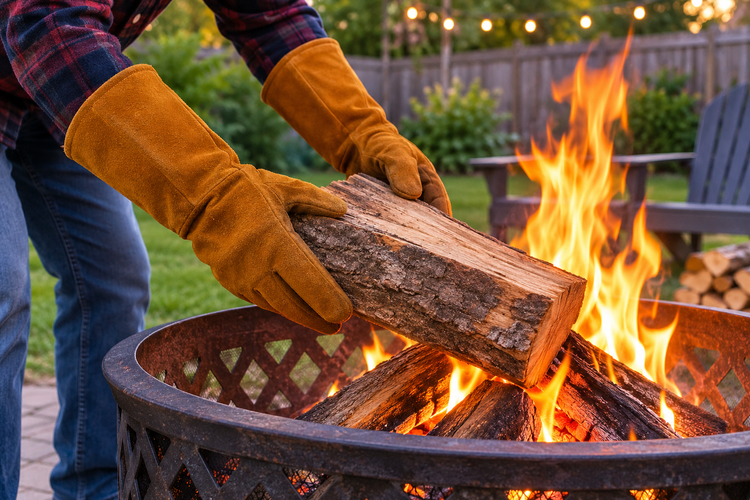
For most homes, the RAPICCA Fireplace Fire Pit Gloves are the easiest pick, with insulated leather and long sleeves that cover your forearms while you move logs. A good pair turns a hot chore into a calm one.
You might be shifting a burning log in a backyard fire pit, opening a wood stove door, or sliding a cast iron pan off the coals. Ordinary work gloves or oven mitts are not built for that. The details that matter most are how much heat the glove can handle for brief contact, how far it covers your forearm, and whether you can still grip a log or a tool.
Below are quick picks, detailed reviews, and practical advice on materials, sizing, safe use, and care, so you can pair the right gloves with good fire handling tools.
The RAPICCA Fireplace Fire Pit Gloves add a foil-lined, double-padded build for logs and coals, while the WZQH Leather Fireplace Gloves pair thick cowhide with a long protective sleeve.
For Fire Pit Log Handling

RAPICCA Fireplace Fire Pit Gloves
- Fire resistant leather shell
- Insulating aluminum foil layer
- 16-inch length, long sleeve
For Wood Stove Tending
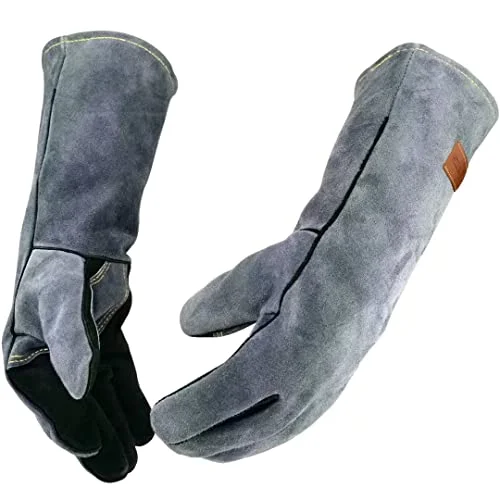
WZQH Leather Fireplace Gloves
- 1.2mm split cowhide leather
- Flame retardant thread stitching
- Rated to 932°F by maker
How These Fire Pit Gloves Were Selected
Every pair here was checked against its current product listing, and only gloves available now made the list. Several models from the earlier version of this guide are no longer sold, so they were replaced with current options that fit the same job.
Heat protection. We favored leather shells with an insulating layer or lining, because bare leather alone gets hot quickly.
Forearm coverage. Long cuffs of around 16 inches ranked higher, since reaching over a fire exposes your wrists and forearms.
Real demand and brand track record. We weighed steady buyer interest and long-standing listings, then removed grill and oven gloves that are not built for logs and open flames.
Review of the Best Fire Pit and Fireplace Gloves
The gloves below are ordered by brand track record, buyer demand, and how well each design fits fire pit and fireplace use.
1. RAPICCA Fireplace Fire Pit Gloves With Insulated Lining
Built in three layers, these gloves combine a fire-resistant leather exterior, an insulating aluminum foil middle layer, and a soft flame-retardant cotton liner. Double leather padding reinforces the fingers, palms, elbows, and backs.
The 16-inch length with 7.5-inch sleeves covers your forearms when you reach over a fire pit, feed a wood stove, or move burning logs. RAPICCA rates them to 932°F for brief contact.
Practical Impressions
They suit people who handle logs and grates often and want the forearm coverage of a long cuff.
What Sets It Apart
- Foil insulation layer between leather and liner
- Double leather padding at stress points
- 7.5-inch protective sleeve
Practical Gains
- Covers hands and forearms near open flames
- Soft cotton liner for comfort
- Helps guard against sparks and embers
Designed Around
- Fire pits and campfires
- Wood stoves and fireplaces
- Cast iron cooking over coals
Before You Choose
Heat ratings describe short contact, not holding burning wood. The thick build limits fine finger control for small tasks.
2. WZQH Leather Fireplace Gloves for Wood Stove Work
If you feed a wood stove every evening, these gloves are worth a close look. The outer shell is 1.2mm genuine split cowhide, a thickness that resists heat, wear, punctures, and oil.
Inside, a laminated aluminum foil and flame-retardant cotton layer sits over a soft cotton lining, all sewn with flame-retardant thread. A 16-inch length with a 7.5-inch sleeve protects your forearms from hot coals and open flames.
Practical Impressions
They fit cooks and fire tenders who want thick cowhide with a similar long-cuff design.
What Sets It Apart
- Laminated foil and flame-retardant cotton layer
- Flame-retardant thread stitching
- Reinforced double stitching on the palm
Practical Gains
- Thick leather for heavy handling
- Long sleeve for forearm coverage
- Breathable cotton lining
Designed Around
- Wood stoves and log burners
- Grills, smokers, and fire pits
- Forge and camping tasks
Before You Choose
The listing shows sizes, so check the size chart before ordering. Like any leather glove, avoid wearing them wet near heat.
3. TOPDC Leather Welding Gloves for Heavy Fire Duty
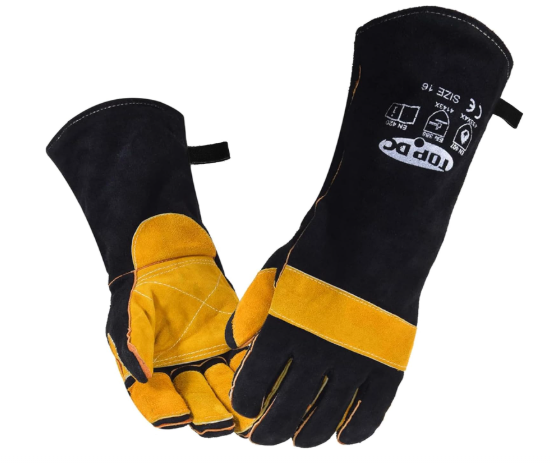
For heavy-duty protection, TOPDC uses 100% split cowhide with Kevlar stitching and double leather reinforcement on the fingers, palms, elbows, and backs.
An aluminum foil layer in the palm adds insulation where you grip hot items, and a full cotton lining helps with heat, sparks, and comfort. The 16-inch design and 1.2mm leather suit long sessions at a fire pit or wood stove, and the maker rates them to 932°F.
Practical Impressions
They work well for people who want welding-grade reinforcement for rough fire and yard tasks.
What Sets It Apart
- Kevlar thread stitching
- Foil insulation in the palm
- Double leather at stress points
Practical Gains
- Resists abrasion, tears, and punctures
- Full cotton-lined interior
- One pair suits fire and welding jobs
Designed Around
- Fire pits and wood stoves
- Welding and grinding
- Moving rough firewood
Before You Choose
Welding gloves are stiffer than softer fireplace gloves. Expect a short break-in period before they feel flexible.
4. QeeLink Leather Welding Gloves for Flexible Fire Tasks
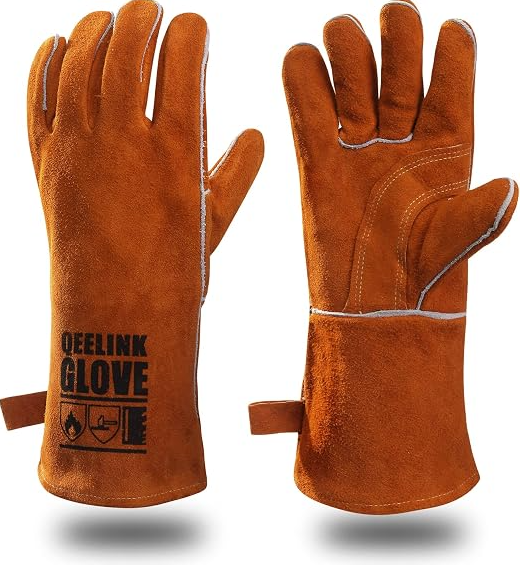
Softer than many stiff welding gloves, the QeeLink pair uses US split leather with a full cowhide back that runs to the cuff. QeeLink lists CE EN388 and EN407 certificates, standards covering mechanical risks and heat and flame.
A reinforced wing thumb helps you grip logs and tools, while a cotton liner and canvas cuff add insulation and absorb sweat. Locked stitching with Kevlar thread adds strength.
Practical Impressions
They suit people who want more finger movement for kindling, tools, and general fire chores.
What Sets It Apart
- Wing thumb design for flexibility
- EN388 and EN407 certified per the maker
- Kevlar thread with locked stitching
Practical Gains
- Easier grip on smaller items
- Comfortable cotton liner
- Useful for yard and workshop jobs
Designed Around
- Fireplaces and fire pits
- Welding and general work
- Gardening and camping
Before You Choose
The cuff is canvas rather than leather, and the length is not listed, so forearm coverage may be shorter than 16-inch gloves.
5. Rocky Mountain Goods Fireplace Gloves in Pigskin Leather
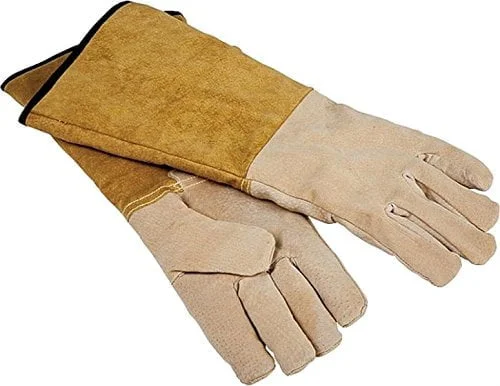
Designed specifically as fireplace gloves, this pair uses high-grade pigskin leather in an extra-long 16-inch cut that reaches nearly to the elbow.
The unisex design fits a range of hands, a hang strap makes storage near the hearth easy, and Rocky Mountain Goods backs the gloves with a lifetime warranty. They also work for camping, grilling, and smoking meat.
Practical Impressions
They suit households that want a simple, classic fireplace glove that hangs neatly by the hearth.
What Sets It Apart
- Pigskin leather construction
- Hang strap for storage
- Lifetime warranty from the maker
Practical Gains
- Long cuff close to the elbow
- Unisex fit for shared use
- Simple design for quick wear
Designed Around
- Indoor fireplaces
- Fire pits and campfires
- Grilling and smoking
Before You Choose
The listing does not describe an insulating liner or a heat rating, so treat these for brief contact and lighter fire tasks.
Why Fireplace and Fire Pit Gloves Matter
Heat and spark protection. Moving logs, adjusting a grate, or opening a stove door puts your hands close to flames and radiant heat. A dedicated glove lowers the risk of burns from brief contact and flying sparks.
Better grip on rough wood. Leather grips bark and split logs better than bare hands and protects against splinters.
Forearm coverage. Long cuffs shield the part of your arm most exposed when you reach over a fire.
Cleaner hands. Gloves keep soot and ash off your skin when you handle wood or clean out the firebox. When you do clean up, store cooled ashes properly, ideally in a metal ash bucket with a lid.
Heat Ratings Explained and What 932°F Really Means
Many fire gloves list a rating such as 932°F. That number is a maker’s claim about short contact with hot surfaces, not a promise that you can hold burning wood or live coals for long.
Going by the listed specifications, the RAPICCA and WZQH gloves are both rated to 932°F and both pair a 16-inch length with a 7.5-inch sleeve, while the Rocky Mountain Goods listing gives no temperature rating at all.
Contact heat versus radiant heat. A glove that handles a hot log for a moment can still let radiant heat build up if you hold your hand near the flames. Heat passes through any glove with time.
Practical rule. Use gloves for quick moves, then step back. If your hands start to feel hot, put the item down and let the gloves cool.
Leather, Aramid, and Silicone Glove Materials Compared
Leather. Split cowhide and pigskin are the classic choice for fire gloves. Federal workplace safety guidance notes that leather gloves protect against sparks, moderate heat, blows, and rough objects, which matches what fireplace work demands.
Insulating layers. Aluminum foil laminates and cotton liners slow the transfer of heat to your skin. Gloves with these layers stay comfortable longer than single-layer leather.
Aramid fibers. Aramid knits resist heat and cuts and are common in grill gloves. They are lighter but usually offer less protection from flying sparks and rough bark.
Silicone grill gloves. Silicone suits wet, greasy food and hot pans, but most silicone gloves are short and not designed for open flames or burning logs.
For fire pits and fireplaces, an insulated leather glove with a long cuff is the most practical choice.
Fireplace Gloves Versus Welding Gloves for Home Fires
Welding gloves and fireplace gloves overlap a lot. Both usually use split leather, and many welding gloves work well for fire pits and wood stoves.
Where welding gloves shine. They often add Kevlar stitching and heavy reinforcement, which helps with rough firewood and frequent use.
Where fireplace gloves shine. Gloves sold for fireplaces often have longer cuffs and softer linings designed for reaching over fires.
What to check. Look at cuff length, lining, and flexibility. A short welding glove with a canvas cuff protects less of your forearm than a 16-inch leather fireplace glove.
Glove Length, Fit, and Grip for Handling Logs
Length. A 14- to 16-inch glove covers the wrist and much of the forearm. Shorter gloves leave skin exposed when you reach in.
Fit. Gloves should be roomy enough to slip off quickly if they get too hot, but not so loose that you lose control of a log. Check the size chart when one is offered.
Grip and dexterity. Thick, padded gloves protect better but make small tasks harder. Reinforced palms and a shaped thumb help with grip.
Comfort. A cotton lining absorbs sweat and makes longer sessions more comfortable, especially when you stand near a fire pit.
Picking Gloves for Wood Stoves and Wood Burners
Wood stoves bring their own risks. Door handles, latches, and the stove top get very hot, and you often load logs through a small opening.
Choose a long cuff. Your forearm passes close to the hot door frame when you load wood, so a 16-inch glove adds real protection.
Keep gloves within reach. A hang strap or hook near the stove means you always grab gloves before touching the handle.
Use tools for coals. Gloves are for brief handling. Use a poker, shovel, or tongs to move embers, and keep the door closed except when loading or stoking.
If you are lighting fires indoors, our guide on starting a fire without kindling covers safe setup.
Safe Habits When Tending a Fire Pit or Fireplace
- Keep anything that can burn at least 3 feet away from the fire, including chairs, blankets, and spare wood.
- Use a glass or metal screen on indoor fireplaces to stop sparks and embers from jumping out.
- Never leave a fire unattended, and put it out before bed or before you leave.
- Store cooled ashes in a metal container with a lid, outside and away from your home.
- Schedule a yearly chimney inspection for indoor fireplaces and wood stoves.
These steps follow the U.S. Fire Administration’s fireplace and wood stove safety tips.
Cleaning and Storing Leather Fireplace Gloves
Let them cool and air out. After use, let gloves cool fully away from the fire before storing them.
Brush off soot and ash. A dry, soft brush removes loose debris. For stubborn marks, wipe gently with a barely damp cloth.
Dry slowly. If gloves get wet, let them air dry at room temperature. Never dry them on a hot stove or right next to the fire, which can stiffen and crack leather.
Keep them free of grease. Oil and food grease soaked into leather can catch fire more easily, so clean off greasy spills and keep a separate pair for cooking if needed.
Store them near the fire, not on it. A hook or hang strap by the hearth keeps gloves dry and easy to grab.
When to Replace Worn Fire Gloves
Heat-resistant gloves do wear out, and a damaged pair can fail when you need it most.
Holes or thin spots. Any hole in the palm or fingers lets heat and embers through.
Scorched or brittle leather. Leather that has hardened, cracked, or charred no longer insulates well.
Loose stitching. Split seams around the thumb or fingers can open up while you hold a log.
Heat comes through quickly. If you feel heat much sooner than before, the lining or padding has likely broken down. Replace the pair.
Mistakes to Avoid With Heat Resistant Gloves
- Using oven mitts or short grill gloves for open flames and burning logs.
- Wearing wet or damp gloves near the fire, since moisture can turn to steam and burn your skin.
- Holding hot coals or burning wood for more than a moment instead of using tools.
- Trusting the heat rating alone and ignoring how hot your hands feel.
- Drying gloves on the stove, which damages leather and shortens glove life.
- Ignoring worn spots and holes until a spark gets through.
Common Questions About Fire Pit and Fireplace Gloves
Are Fireplace Gloves Completely Fireproof?
No glove is completely fireproof. Fireplace gloves are heat resistant and flame resistant, which means they slow heat transfer and resist catching fire during brief contact. Heat still passes through with time, and leather can scorch or char if held in flames. Treat the temperature ratings on listings as guidance for short contact, use tools for embers and coals, and put items down as soon as your hands start to feel warm.
Do Oven Mitts or Grill Gloves Work at Fire Pits?
Oven mitts and many grill gloves are designed for hot pans and grates, not for open flames, sparks, and burning logs. Fabric mitts can scorch, and silicone gloves are usually short, leaving your wrists exposed. Some aramid grill gloves handle heat well but offer less protection from rough bark and flying embers. For fire pits and fireplaces, insulated leather gloves with a long cuff are the safer choice.
Can You Pick Up Hot Coals with Fireplace Gloves?
Avoid it whenever you can. Even well-insulated gloves only protect for brief contact, and coals hold intense heat that soaks through quickly. Use a shovel, poker, or tongs to move embers and coals. If you must touch something hot, make it a quick move, then let the gloves cool. Never handle coals with damp gloves, because moisture can turn to steam inside the glove and cause burns.
Do Fireplace Gloves Need to Be 16 Inches Long?
Not always, but longer gloves protect more. A 16-inch glove covers the hand, wrist, and much of the forearm, which is the area most exposed when you reach over a fire pit or into a wood stove. Shorter gloves can be fine for quick jobs like opening a stove door, but they leave more skin exposed. If you tend fires often, a long cuff is worth having.
Can Leather Fireplace Gloves Get Wet?
They can get wet, but do not use them near the fire until they are fully dry. Water in the leather or lining can turn to steam when heated and burn your hands. Let wet gloves air dry slowly at room temperature, away from the stove or fireplace, since fast drying with high heat makes leather stiff and cracked. Once dry, flex them gently to soften the leather again.
How Do You Know Which Size Fireplace Glove to Buy?
Check the maker’s size chart when one is listed, measuring around your palm and the length of your hand. Fire gloves should leave a little room so you can slip them off quickly if they get hot, without feeling so loose that you lose grip. Many fireplace gloves come in one size or a unisex fit, which suits most adult hands but can feel large on smaller hands.
Choosing the Right Gloves for Your Fire
The best fire gloves combine a leather shell, an insulating layer, and a long cuff that protects your forearms. Welding-style gloves add extra reinforcement for rough firewood, while softer gloves with a shaped thumb give better grip for small tasks. No glove makes it safe to hold burning wood or coals for long, so pair any choice with tools and good fire habits.
A simple rule helps: pick a 16-inch insulated leather glove if you tend fire pits or wood stoves often, and a lighter pair only for quick jobs. For most homes, the RAPICCA Fireplace Fire Pit Gloves are the overall pick, with layered insulation and long sleeves for logs, grates, and coals.
