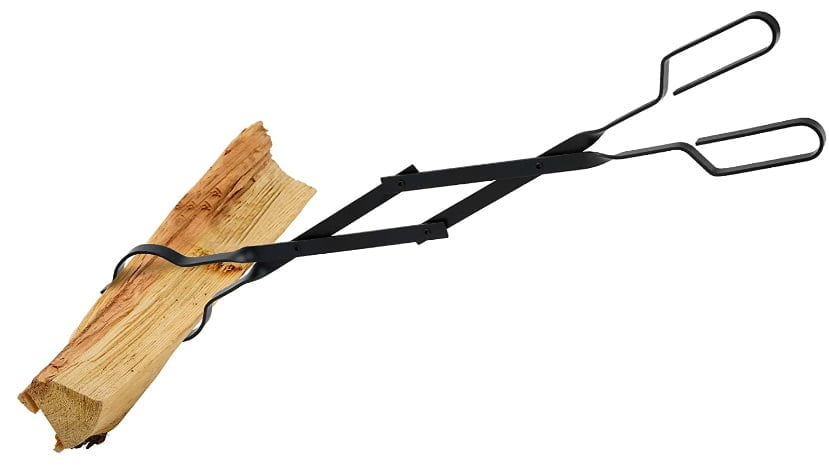
Best Campfire Tongs for Safe Log Handling (Updated)

Disclosure: As an Amazon Associate, I earn from qualifying purchases. Learn more
For most campfires and fire pits, the best campfire tongs are a sturdy scissor-style pair between 26 and 40 inches long, with a serrated or curved grip that holds split logs firmly. Fire likes to be fed, not wrestled.
Reaching in with a stick, a too-short grill tool, or bare gloves puts your hands and face right over the heat. Good tongs let you move logs from a safe distance, rebuild a collapsing fire, and pull wood apart when it is time to put it out.
Below you will find six tongs for different fires, how length, material, and grip shape change the way each one handles, and the safe-use and fire-out habits that matter as much as the tool.
The Camp 36-Inch Fire Tender Tongs give long reach with deluxe gripping handles, while the Stanbroil 26-Inch Campfire Tongs keep a simple powder-coated steel build for everyday fire pits.
For Long-Reach Tending

Camp 36-Inch Fire Tender Tongs
- 36-inch length
- Deluxe scissor action
- Grips large outdoor logs
For Backyard Fire Pits

Stanbroil 26-Inch Campfire Tongs
- 26-inch steel build
- Powder-coated surface
- Scissor-shaped grip
What Good Campfire Tongs Do for Fire Safety
Tongs put distance between you and the flames. Instead of leaning over the fire ring, you can lift, turn, and place logs from where you stand, which keeps sleeves, hair, and hands away from heat and sparks.
They also give you control. A firm grip lets you rebuild a fire that has collapsed, nudge a log toward the center so it burns evenly, and pull pieces apart when you want the fire to die down.
When it is time to go to bed, tongs help spread unburned wood so water can reach every ember. That makes them a safety tool as much as a convenience.
To choose the tongs below, we compared each listing’s length, material, grip shape, handle design, and stated uses, then matched each pair to the type of fire it suits best.
1. Camp 36-Inch Fire Tender Tongs for Long-Reach Tending
At 36 inches, these scissor tongs keep you well back from a roaring campfire. The maker describes the deluxe gripping handles as built for big outdoor fire logs, which suits wide fire rings where wood sits deep in the flames.
The pair weighs about 3.3 pounds, enough heft to feel solid when you lift a heavy piece, and the polished finish gives it a clean look.
Handling Notes: The long reach helps when the fire is hot and tall, and the scissor action lets you open wide for thick split logs.
Notable Details:
- 36-inch overall length
- Scissor tongs with deluxe gripping handles
Why It Works:
- Keeps hands far from heat
- Handles big outdoor logs
- Solid weight in the hand
Built For:
- Large campfire rings
- Bonfires
- Backyard fire pits
Heads Up: The extra length makes it bulkier to pack. Measure your gear bin or truck box before you buy.
2. Stanbroil 26-Inch Campfire Tongs for Everyday Fire Pits
Simplicity is the appeal here. Stanbroil builds these 26-inch tongs from steel with a black powder-coated surface, and the scissor shape helps you grip a log and set it exactly where you want it.
The shorter length is easy to handle with one hand and stores without trouble next to a fire pit or hearth.
Handling Notes: The 26-inch size feels balanced for small and medium fires, where you need control more than long reach.
Notable Details:
- 26-inch steel log grabber
- Powder-coated black finish
Why It Works:
- Easy one-hand control
- Stores in tight spaces
- Durable steel build
Built For:
- Backyard fire pits
- Indoor fireplaces
- Campfire rings
Heads Up: At 26 inches, you stand closer to the heat. Wear gloves and keep long sleeves away from tall flames.
3. Three Oaks 26-Inch Log Grabber for Gripping Heavy Split Wood

The Three Oaks grabber stands out for its hole-design tips, which the maker says help you grip heavy wood securely. Smooth scissor action opens and closes easily, so you can pick up a log and move it across the fire in one motion.
It is made of iron with a rust-resistant finish and weighs about 1.4 pounds, light enough to carry to a patio, porch, or campsite.
Handling Notes: It works well for shuffling wood from one side of a fire to the other, and for loading wood stoves and backyard fire pits.
Notable Details:
- Hole-design tips for a secure grip
- Smooth scissor open-and-close action
Why It Works:
- Secure hold on heavy logs
- Light and easy to carry
- Works on many fire types
Built For:
- Wood-burning stoves
- Backyard fire pits
- Smokers and outdoor ovens
Heads Up: Keep the pivot clean and dry after use, since ash and moisture can make scissor tongs stiff over time.
4. Kingson Arc Design Fire Tongs for Fireplaces and Fire Pits

Kingson pairs an arc and scissor design with wrought iron, so the tongs can wrap around thick logs and still pinch small pieces at the tip. The sanded black powder-coat finish looks tidy enough to keep beside a living room hearth.
The maker angled the middle rivet points to give more gripping power with less effort, which helps when you hold a log steady for a moment before placing it.
Handling Notes: The curved jaws grip round and split logs alike, and the tip handles small kindling-size pieces well.
Notable Details:
- Arc and scissor jaw design
- Wrought iron with powder coat
- Angled rivets for added grip
Why It Works:
- Grips thick and thin wood
- Hearth-friendly appearance
- Less hand strain
Built For:
- Indoor fireplaces
- Wood stoves
- Outdoor fire pits
Heads Up: Wrought iron can rust if left outside. Bring it in after use and store it dry.
5. CKLT 40-Inch Heavy Duty Tongs for Big Bonfires
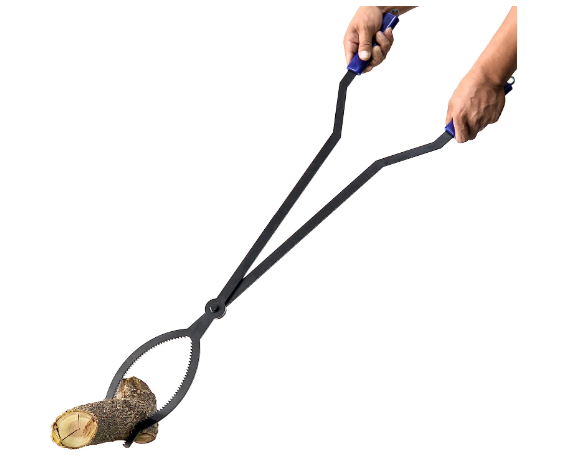
The CKLT tongs offer the most reach in this guide at 40 inches, and the maker says they hold heavy logs without bending. Serrated scissor jaws bite into bark so a log does not slip as you lift it.
They are made of heavy-duty manganese steel with a powder-coated surface and need no assembly. Six-inch thickened rubber handles are listed as heat tolerant and give a firmer, more comfortable grip.
Handling Notes: The long reach and serrated jaws make it easier to rebuild a big bonfire without stepping into the heat.
Notable Details:
- 40-inch length for large fires
- Serrated jaws for a firm bite
- Thick rubber handles
Why It Works:
- Maximum distance from heat
- Secure grip on heavy logs
- Comfortable handle feel
Built For:
- Bonfires
- Large fire pits
- Campfire rings
Heads Up: The 40-inch length takes more room to store and can feel long in a small fireplace.
6. AGM 26-Inch Fireplace Tongs for Compact Cast Iron Strength

Built from cast iron with a powder-coated finish, the AGM tongs feel rigid in the hand, and the maker says they will not easily bend or deform even at 500°F. Curved jaw ends help clamp wood blocks more completely.
A thicker handle makes two-handed control easier, the rivets are listed as firm with no loose slide, and the tongs close flat to hang on a hook or stand in a corner.
Handling Notes: The curved ends and rigid build give steady control when you set a log in a tight fireplace.
Notable Details:
- Cast iron with powder coat
- Curved jaw ends for clamping
- Firm rivets with thick handles
Why It Works:
- Rigid, steady grip
- Easy to hang and store
- Works with two hands
Built For:
- Indoor fireplaces
- Small fire pits
- Wood stoves
Heads Up: Cast iron is heavier than steel and can crack if dropped on stone. Hang it rather than tossing it in a bin.
Types of Fire Tongs and Where Each One Shines
Scissor log tongs are the most common style. Two long arms cross at a pivot, so squeezing the handles closes the jaws around a log. They suit campfires, fire pits, and fireplaces.
Spring-loaded grabbers use a lever or trigger to close three or more prongs. They work with one hand, though the jaws may not open as wide as scissor tongs.
Fireplace tool-set tongs are usually shorter and match a poker, shovel, and brush. They suit indoor hearths, where you need precision more than reach. If you light a hearth fire often, our guide on starting a fireplace fire without kindling pairs well with a good set.
Cooking tongs are built for food, not logs. Keep a separate pair for grilling so ash and soot stay off your meal.
How to Pick the Best Campfire Tongs for Your Fire
Length. Bigger fires need more reach. A 26-inch pair suits fireplaces and small fire pits, while 36 to 40 inches keeps you back from a tall campfire or bonfire. Going by the listed specifications, the tongs in this guide range from 26 to 40 inches.
Grip shape. Serrated or curved jaws hold bark and round logs better than flat jaws. Hole-design tips help with heavy split pieces.
Handle. Thick or rubber-wrapped handles are easier on the hands during long fires.
Weight. Heavier tongs feel stable with big logs, while lighter ones are easier to carry to a campsite.
Good tongs work best when the fire is built well to begin with. Our tips on arranging logs for steady burning help you handle less wood in the first place.
Steel, Wrought Iron, or Cast Iron Material Compared
Steel, including manganese steel, is strong for its weight and resists bending. A powder coat adds rust protection.
Wrought iron is tough and has a classic hearth look. It needs to be stored dry, since bare spots can rust.
Cast iron is rigid and heavy, which gives a steady feel in a fireplace. It is more brittle than steel and can crack if dropped on stone or concrete.
Whatever the metal, check the pivot rivet. A tight, solid joint matters more than the material for day-to-day grip.
Warning Signs of Poorly Made Fire Tongs
Flimsy tongs are more than annoying. Thin metal can bend under a heavy log, letting it drop back into the fire and throw sparks toward you.
Watch for a loose or wobbly pivot, jaws that do not meet evenly, and handles that flex when you squeeze. Each of these can let a log twist out of the grip.
Coatings that flake after a few fires are another sign of a weak finish, and bare metal underneath will start to rust.
If a pair bends or the pivot loosens, replace it rather than forcing it through another season.
Using Tongs Safely Around an Open Fire
Stand to the side of the fire rather than downwind, so smoke and sparks blow away from you. Grip the handles firmly and lift logs low and slowly instead of swinging them.
Wear heat-resistant gloves and avoid loose sleeves. Even with long tongs, radiant heat builds quickly near a big fire.
Keep the fire small and add wood only as needed. Smokey Bear’s campfire safety guide also advises staying with the fire at all times and watching children and pets closely.
Never toss logs into the fire from a distance, which can scatter embers. If you are starting a backyard fire, our guide to lighting a fire pit without lighter fluid covers safer starts.
Putting Out a Campfire With Tongs and a Shovel
Tongs help most at the end of the night. Use them to spread unburned logs apart so they stop feeding each other and water can reach every side.
Then follow the drown, stir, and feel method. The U.S. Forest Service’s Gila National Forest guidance recommends bringing at least six gallons of water and a shovel, dousing the fire, stirring the ashes, and repeating until everything is cool to the touch.
Turn logs with the tongs to wet the undersides, and check for hidden embers under ash and rocks. If any heat remains, add more water and stir again.
A fire that smokes heavily while burning often points to damp wood. See our tips on reducing fire pit smoke for fixes.
Cleaning and Storing Your Tongs to Prevent Rust
Let the tongs cool fully, then brush off ash and soot with a stiff brush. Wipe them with a damp cloth if needed and dry them right away.
Work the pivot open and closed a few times to clear grit, and add a drop of high-heat oil if the action feels stiff.
Store tongs indoors or in a covered spot. Hanging them on a hook keeps the jaws aligned and stops them from bending under other gear.
Before each season, check the rivet, jaws, and coating. Touch up small rust spots with fine steel wool and a light coat of oil.
Campfire Tong Questions Campers Often Ask
Can You Use Kitchen Tongs for a Campfire?
It is not a good idea. Kitchen tongs are much shorter than fire tongs, which puts your hand close to the flames, and many have plastic or silicone parts that can soften or melt near high heat. Their thin metal can also bend under the weight of a log. Kitchen tongs are fine for turning food on a grate set over the fire, but use a long, sturdy pair of fire tongs for moving logs and embers.
Do You Need Gloves When Using Fire Tongs?
Gloves are a smart addition even with long tongs. Radiant heat from a large fire can make handles warm and your hands uncomfortable, and sparks can land on bare skin. Leather or other heat-resistant gloves give better grip and protection. Avoid thin synthetic gloves that can melt. Pair gloves with closed-toe shoes and fitted sleeves, and keep a bucket of water and a shovel nearby whenever the fire is burning.
Are Fireplace Tongs the Same as Campfire Tongs?
They do the same job but are built for different spaces. Fireplace tongs are often shorter, around 26 inches, and may come as part of a matching tool set for an indoor hearth. Campfire tongs tend to be longer, sometimes 36 to 40 inches, to keep you back from bigger outdoor flames. Many 26-inch tongs work in both places, but long campfire tongs can feel awkward in a small fireplace opening.
Can Campfire Tongs Be Used for Cooking Food?
Log tongs are not meant for food. They carry ash, soot, and residue from firewood, and their wide jaws are clumsy for small items like sausages or vegetables. Some people use them to move a cast iron pot or grill grate, but only if the jaws grip securely and the item is not too heavy. Keep a separate pair of long cooking tongs for food, and wash them like any other utensil.
Why Do My Tongs Keep Dropping Logs?
Slipping usually comes down to jaw shape, grip position, or a worn pivot. Flat, smooth jaws struggle with round or wet logs, while serrated or curved jaws bite into bark better. Grab logs near their center of balance instead of at one end, and lift with both hands on longer tongs. If the pivot has loosened or the arms have bent, the jaws no longer close evenly, and it is time for a new pair.
Bottom Line for Safer Log Handling
Good campfire tongs are about reach, grip, and a solid pivot. Shorter 26-inch pairs suit fireplaces and small fire pits, while 36 to 40 inches is better for big campfires and bonfires. Serrated or curved jaws hold logs more securely than flat ones.
No tool replaces careful habits. Keep the fire small, stay with it, and use your tongs to spread the wood when it is time to drown and stir. A simple rule helps: match the length to the size of your fire, and choose the grip that holds your wood without slipping.
