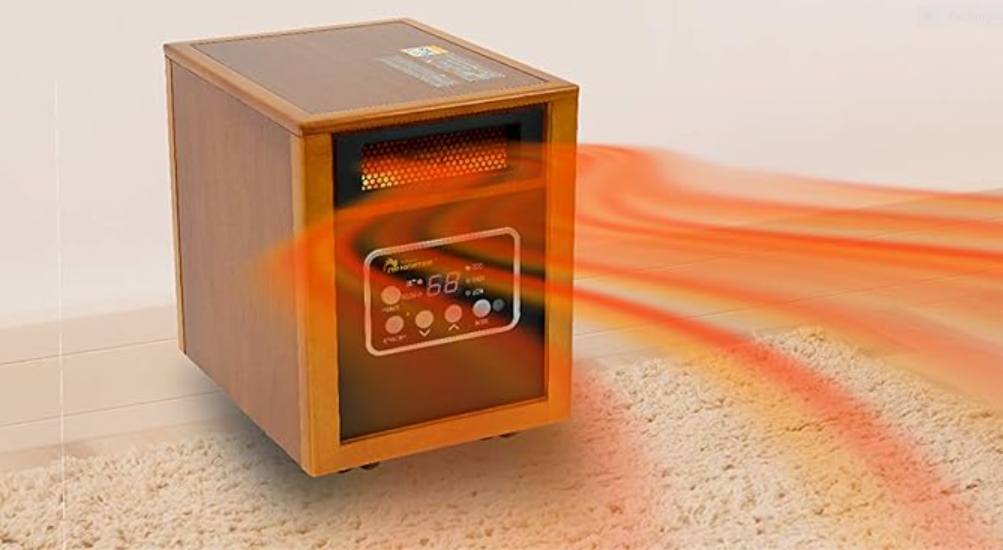
4 Best Infrared Space Heater Picks for Every Room (Updated)

Disclosure: As an Amazon Associate, I earn from qualifying purchases. Learn more
Warmth that lands on your skin first feels like a slow sunrise in a cold room. For most homes, the Dr Infrared DR-968 is the safest quick pick, while a smart panel or a wall-mount model makes more sense if floor space or app control matters more to you.
The real decision comes down to three things: how big your room actually is, which safety features you need around kids or pets, and where the heater can sit with proper clearance. A 1,500-watt infrared unit can make a large living room comfortable where you sit, but it will not replace a furnace in a drafty open floor plan.
Picture a chilly basement den or a big living room where the vents never quite reach your couch. Below are four well-built options, honest sizing advice, and the placement and safety habits that make radiant heat work.
The Dr Infrared DR-968 pairs quartz and PTC heat for large living rooms, while the Ballu Mica Panel adds app scheduling and wall mounting for smart homes.
For Large Living Rooms
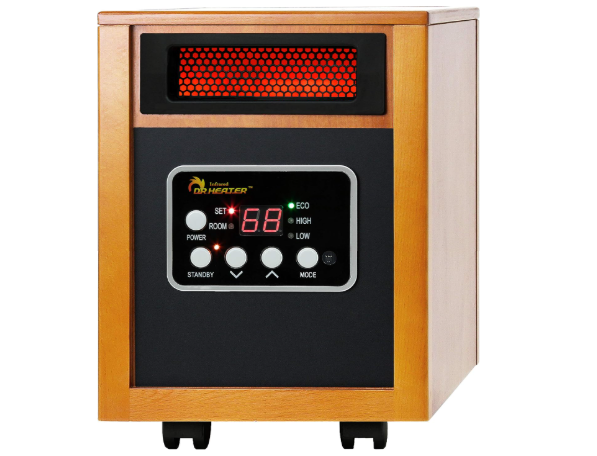
Dr Infrared DR-968
- Quartz tube plus PTC heat
- 39 dB low-noise blower
- Caster wheels and remote
For Smart Home Setups
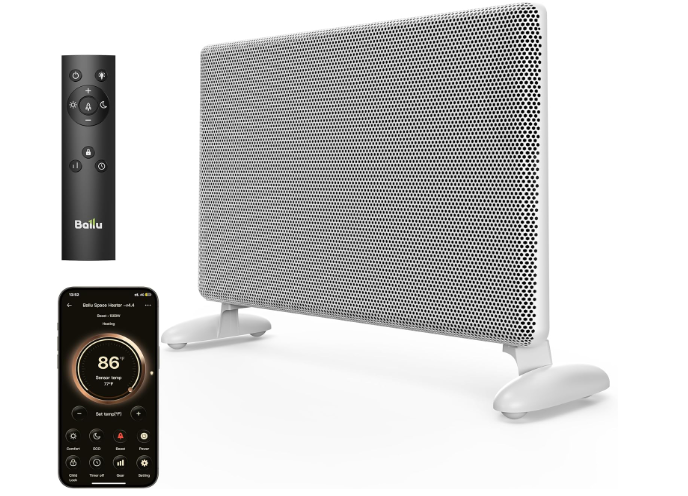
Ballu Mica Panel Heater
- WiFi app and Alexa control
- Stand or wall mounting
- Programmable thermostat schedule
How these infrared heaters earned a spot here
Every heater on this list is a 1,500-watt plug-in model built for indoor use, so each one runs on a standard household outlet. We focused on dual safety protection, meaning an automatic overheat shutoff plus a tip-over switch or a cool-touch housing.
Next came control. A real thermostat matters more than raw power, because it lets the heater cycle down once your room is warm instead of running flat out all evening.
We also looked at how each design fits a room. A rolling cabinet suits people who move heat from the living room to the bedroom, while a panel or wall-mount unit suits a space where the floor is already crowded.
Finally, every pick had to match the search behind this guide: radiant infrared heat for a home, not a patio torch or a fuel-burning shop heater. Product details come only from each listing, and limits are called out honestly in every review.
Our four infrared heater picks reviewed in detail
1. Dr Infrared DR-968 for Large Room Comfort
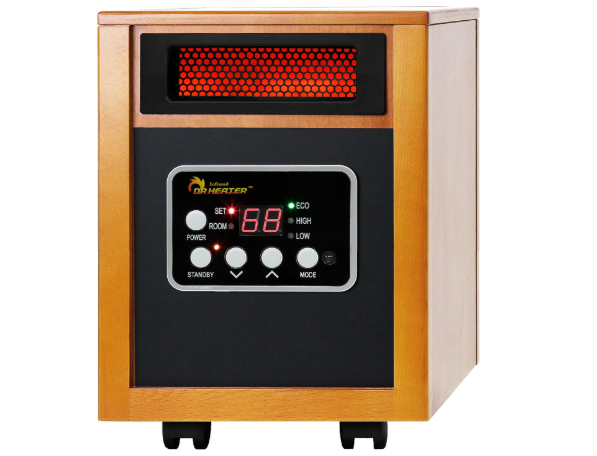
This cabinet heater pairs an infrared quartz tube with a PTC element, so you get radiant warmth plus a gentle push of heated air from a high-pressure, low-noise blower rated at 39 dB.
The electronic thermostat runs from 50 to 85 degrees, and an auto energy-saving mode with high and low settings keeps it from running at full draw all night. A 12-hour shutoff timer, IR remote, caster wheels, and a lifetime filter round out the package.
Real-Use Fit: It suits a living room or basement den where you want steady warmth near seating without a loud fan.
Feature Spotlight:
- Dual quartz and PTC heating system
- Tip-over and overheat protection
- Six-foot power cord
Core Strengths:
- Quiet enough for evening TV or reading
- Rolls easily between rooms on casters
- Thermostat holds a set comfort level
Suited To:
- Large living rooms and family rooms
- Finished basements with decent insulation
- Homes needing one portable zone heater
Before You Choose: It weighs 19 pounds and draws 12.5 amps, so give it a dedicated wall outlet on a circuit without other big loads.
2. Ballu Mica Panel Heater With Smart Infrared Control
If you like setting a schedule and forgetting it, this panel fits your routine. You can adjust it with the remote, the digital control panel, or the WiFi app, which also supports voice control through Alexa.
Inside the all-metal body, mica panels and an all-aluminum heating element spread far-infrared warmth across a 180-degree area, and the listing notes a 10-second heat-up. It stands on the floor or mounts on a wall.
Real-Use Fit: It works well in a large room where you want hands-off scheduling and a slim profile instead of a bulky cabinet.
Feature Spotlight:
- Programmable thermostat with app scheduling
- Exposed temperature sensor for steadier readings
- Whisper-quiet mica panel heating
Core Strengths:
- Schedules warmth before you arrive
- Frees floor space when wall mounted
- Quiet running suits bedrooms and offices
Suited To:
- Smart homes using Alexa routines
- Large bedrooms and home offices
- Rooms where floor space is tight
Before You Choose: App and voice features depend on a stable WiFi connection, and a mica panel warms more gently than a fan-assisted cabinet.
3. Lifeplus Infrared Quartz Heater for Basements and Dens
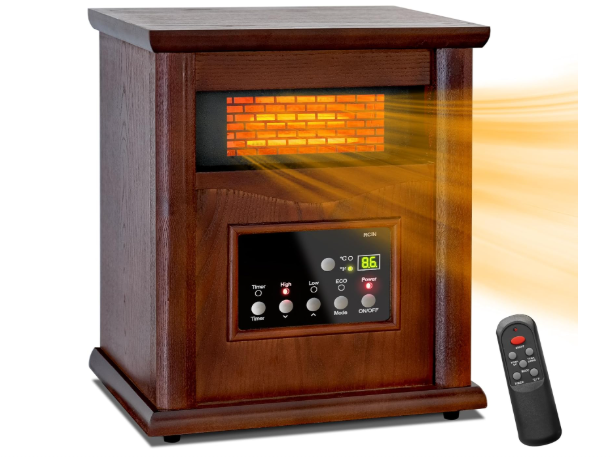
A walnut-brown cabinet makes this one look more like an end table than an appliance. Inside, an infrared quartz element offers three power levels, high, low, and eco, so you can trim energy use on milder nights.
An LED screen with an adjustable thermostat shows exactly what you set, and the remote handles temperature and a 1 to 12 hour timer. A child lock keeps small hands from changing settings.
Real-Use Fit: It fits a den, bedroom, or basement corner where looks and quiet running matter as much as heat.
Feature Spotlight:
- Three heat modes including eco
- Child lock on the controls
- Automatic overheat and tip-over shutoff
Core Strengths:
- Clear digital readout for precise settings
- Low-noise operation for sleep-friendly rooms
- Furniture-style cabinet blends into decor
Suited To:
- Basements and family dens
- Households with young children
- Rooms where appearance matters
Before You Choose: The listing gives no official square-foot rating, so expect it to warm your seating area rather than an entire open floor.
4. Heat Storm Phoenix Infrared Space Heater for Wall Use
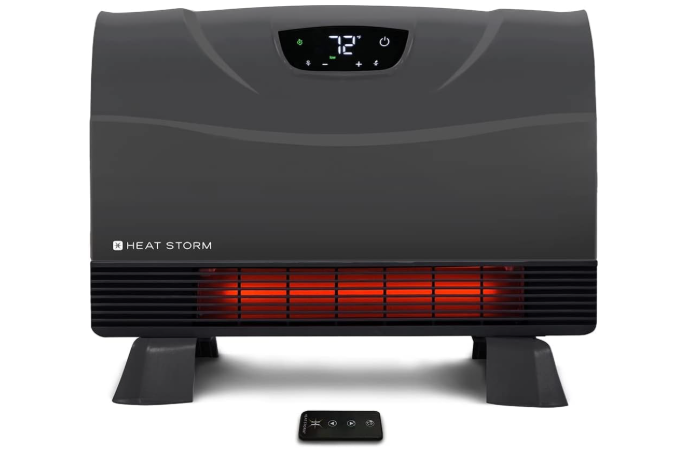
Short on floor space? This compact unit hangs on the wall or stands on removable feet, and it puts out 5,200 BTU at full power with a second 750-watt mode for lighter heating.
Its patented heat exchanger with HMS technology is designed to deliver soft heat without reducing oxygen or humidity, and the listing says the grill stays safe to touch. A built-in thermostat with an LED display and a remote handle the controls.
Real-Use Fit: It makes sense in a bedroom, office, or small den where you would rather keep the floor clear.
Feature Spotlight:
- Floor or wall mounting options
- Safe-to-touch front grill
- One-year manufacturer warranty
Core Strengths:
- Saves floor space when mounted
- Two power modes for flexible use
- Display shows the room temperature
Suited To:
- Bedrooms and home offices
- Small dens and guest rooms
- Second zone beside a larger heater
Before You Choose: The maker positions it for a small room or office, so in a large room treat it as a supporting heater, not the main one.
What makes infrared heat feel different from a regular heater
Most space heaters warm the air first, and that air slowly warms you. An infrared heater works more like sunlight, sending radiant energy that warms the people and objects in its line of sight.
The practical result is that you feel heat quickly when you sit in front of one, even before the thermostat on the wall moves. That is why infrared works so well for spot heating a couch, a desk, or a reading chair.
Many cabinet models, including the most familiar dr infrared heaters, blend radiant quartz heat with a small blower. The blower spreads warmth a bit farther, which helps in bigger rooms where pure radiant heat would only reach the spot directly in front of the unit.
The tradeoff is simple. Radiant heat fades fast once you step out of its path, so where you place the heater matters far more than with an oil-filled or ceramic model.
Can one infrared heater warm a large room
Here is the honest answer: one 1,500-watt heater can make part of a large room comfortable, but it rarely heats the whole space evenly on its own. Every plug-in electric heater on a standard outlet tops out around 1,500 watts, which is roughly 5,100 BTU.
A common rule of thumb is about 10 watts per square foot for a room with average insulation and ceiling height. By that measure, a single 1,500-watt unit covers about 150 square feet as a main heat source, and more as a supplement to central heat.
When people search for an infrared heater for large room use, they usually mean a living room where the furnace already does most of the work. In that case, a well-placed infrared heater simply fills the cold spot where you actually sit.
| Room situation | What to expect from one 1,500W unit |
|---|---|
| Bedroom or office, well sealed | Can serve as the main heat source |
| Large living room with central heat | Comfortable zone around seating |
| Open floor plan or high ceilings | Spot warmth only, consider two units on separate circuits |
| Drafty basement or garage | Warm while close, fades quickly |
If you need more, two heaters placed in different parts of the room usually beat one unit running flat out. Just keep each on its own circuit so you do not trip a breaker.
Features worth checking before you choose one
Power is almost identical across plug-in models, so the details are what separate a good heater from a frustrating one. Start with this checklist:
- Thermostat: A real thermostat lets the heater cycle down once the room is warm, which saves energy.
- Tip-over and overheat shutoff: Both should be standard on any heater you use around kids or pets.
- Safety certification: Look for a UL, ETL, or CSA mark from a recognized testing lab.
- Timer and remote: A shutoff timer helps you avoid leaving the heater on by accident.
- Noise level: Fan-assisted cabinets vary, while panel heaters run almost silently.
- Mounting style: Rolling cabinet, floor stand, or wall mount, depending on your floor space.
Going by the listed specifications, the Dr Infrared DR-968 weighs 19 pounds and rolls on caster wheels, which shows why weight and wheels matter if you plan to move one best portable infrared heater between rooms each day.
Smart features are a bonus, not a requirement. App scheduling is handy, but a simple timer and thermostat cover most of what you need.
Ceramic and oil-filled heaters versus infrared models
All three types turn electricity into heat at about the same rate, so the difference is how that heat reaches you. The Energy Saver guidance on small heaters notes that radiant models are most efficient when you stay in one spot for a short time, while oil-filled convection models hold heat and cycle less.
| Heater type | Works best when |
|---|---|
| Infrared | You want fast warmth where you sit |
| Ceramic fan | You need to warm the air in a small closed room |
| Oil-filled radiator | You want slow, steady, silent background heat |
If you are torn between the other two styles, our breakdown of ceramic and oil heaters compared walks through noise, warm-up time, and room size in more depth.
For a large room you occupy for a few hours at a time, infrared usually feels warmest fastest. For an all-day background chill, an oil-filled radiator can feel more even.
Placement tips for even radiant heat coverage
Because infrared warms what it can see, aim it toward where people actually sit. A heater tucked behind a sofa or facing a wall wastes most of its output.
- Keep three feet of clearance from drapes, furniture, bedding, and anything that can burn.
- Set it on a hard, level surface away from walkways so nobody trips on it or the cord.
- Face it toward seating, slightly angled across the room rather than straight at a wall.
- Plug it straight into a wall outlet, never a power strip, and avoid outlets shared with other heavy appliances.
- Close doors to unused areas so the warmth stays in the room you are using.
Wall-mounted units should follow the maker’s height and clearance instructions exactly, with the cord routed so it does not hang across a path.
Safety rules every infrared heater owner should follow
Infrared heaters avoid the fumes of fuel-burning units, but they still carry burn and fire risks if they are misused. The federal winter heating safety tips keep the core rules simple.
- Keep heaters at least three feet away from drapes, furniture, bedding, and other combustibles.
- Plug directly into a wall outlet, never an extension cord or power strip.
- Turn the heater off when you sleep or leave the room.
- Install working smoke alarms on every level and inside each bedroom.
Cool-touch housings and tip-over switches lower the risk around children and pets, but they do not replace supervision. If a heater is going into a nursery or kids’ room, read our guide on using a space heater in a child’s room first.
Also check the cord and plug now and then. A plug that feels hot or looks discolored is a sign to stop using the heater and have the outlet checked.
Mistakes that make infrared heaters feel weak
When an infrared heater disappoints, the cause is usually setup rather than the heater itself.
Mistake: Pointing it at an empty wall. Fix: Angle it toward the area where you sit, since radiant heat travels in a line.
Mistake: Expecting it to heat a whole open floor plan. Fix: Treat it as a zone heater and close off unused spaces.
Mistake: Running it on a shared circuit. Fix: Give it its own outlet so it does not trip breakers or run at reduced power.
Mistake: Ignoring drafts. Fix: Seal gaps around windows and doors, because cold air pulls warmth away faster than any heater can replace it.
Mistake: Setting the thermostat to maximum. Fix: Pick a moderate setting and let the heater cycle, which keeps comfort steady and uses less power.
Who should skip an infrared space heater
Infrared heat is not the right answer for every situation, and it helps to know that before you buy.
If you need to heat an entire home or replace a failed furnace, a plug-in heater will fall short. It is a supplement, not a central system.
People who want steady overnight warmth in a bedroom may prefer a different approach, since safety agencies advise turning space heaters off while you sleep. Our article on heaters safe to leave running covers the options in more detail.
Very drafty garages, sheds, or rooms with high vaulted ceilings also lose radiant warmth quickly. In those spaces, you may get better results from sealing the room first or using a heater built specifically for that setting.
Where infrared heaters work best around the house
Infrared heaters shine in places where you sit still for a while. A home office near a cold window is a classic example, since the heater warms you without needing to heat the entire room.
Living rooms and family rooms are another strong fit. Point the heater toward the couch during evening TV and turn the central thermostat down a little in the rest of the house.
Finished basements often feel cold even with central heat. A rolling cabinet model gives you a warm zone near the seating area without running the furnace harder for the whole house.
Guest rooms and bonus rooms that sit empty most of the week also benefit. You only heat them when someone is actually using them.
Running costs and what energy savings really mean
Every electric resistance heater, infrared included, turns nearly all of its electricity into heat. No model creates extra heat from the same power, so be wary of claims that sound too good to be true.
The real savings come from zone heating. Warming the one room you use while lowering the central thermostat elsewhere can reduce what you spend overall, especially in the evening.
To estimate cost, multiply the heater’s kilowatts by hours of use and your electricity rate. A 1,500-watt heater on high uses 1.5 kilowatt-hours each hour, while eco or low modes and thermostat cycling bring that down.
Thermostats and timers are what make the biggest difference. A heater that shuts itself off once the room is warm costs less to run than one blasting at full power all night.
Cleaning and care to keep your heater running
A little routine care keeps an infrared heater safe and working well for many seasons.
- Unplug and let it cool completely before any cleaning.
- Vacuum or wipe dust from vents and grills every few weeks during heavy use.
- Clean washable filters on cabinet models as the manual directs, and let them dry fully before reinstalling.
- Inspect the cord and plug for damage, heat marks, or loose fit.
- Store it in a dry place, covered, during the off-season.
Never spray water directly into the heater or use it in damp areas unless the maker specifically rates it for that.
Propane radiant heaters versus electric infrared indoors
You may see a portable radiant propane heater marketed alongside electric models. Both use radiant heat, but they are very different appliances when it comes to indoor safety.
Propane and other lp radiant heaters burn fuel, which means they need fresh air and carry a carbon monoxide risk. Only use one indoors if the maker specifically rates it for indoor use, and keep working carbon monoxide alarms in your home.
Electric infrared heaters produce no fumes, which makes them the simpler choice for living rooms, bedrooms, and offices. Propane units make more sense for power outages, cabins without reliable electricity, or ventilated work areas where an outlet is not available.
If you do use a fuel-burning heater, never refuel it while it is running or hot, and always follow the manual’s ventilation instructions.
Infrared space heater questions answered clearly
Is an infrared heater cheaper to run than a regular space heater?
Not watt for watt. A 1,500-watt infrared heater uses the same electricity as any other 1,500-watt heater. The savings come from how you use it. Because radiant heat warms you directly, you may feel comfortable at a lower setting or for a shorter time. Pairing an infrared heater with a lower central thermostat in unused rooms is where most people see a real difference on their bill. A thermostat and timer on the heater also help keep costs down.
Do infrared heaters dry out the air in a room?
No electric heater adds or removes moisture from the air by itself. Rooms simply feel drier in winter because warmer air holds more moisture, so relative humidity drops as temperature rises. Infrared heaters often feel less drying because many models run without a strong fan blowing hot air across your face. If your home feels dry, a separate humidifier is the reliable fix, since no heater can raise indoor humidity on its own.
How far away should I sit from an infrared heater?
Keep the heater at least three feet from you, furniture, and anything that can burn, which follows federal safety guidance. Beyond that, comfort depends on the model. Fan-assisted cabinets spread warmth farther, while pure radiant panels feel strongest within a few feet. If you feel too hot, lower the setting rather than moving closer or farther repeatedly. Never place the heater where it can touch blankets, clothing, or curtains.
Can I use an infrared heater in a bathroom?
Only if the manufacturer specifically rates that model for bathroom or damp-location use. Most portable infrared heaters are not designed for moisture, and water near electrical parts creates a shock hazard. Bathrooms also tend to have outlets near sinks and tubs. If you need extra warmth there, look for a heater built and certified for bathrooms, or consider a hardwired option installed by a licensed electrician.
Why does my infrared heater keep tripping the breaker?
A 1,500-watt heater draws about 12.5 amps, which uses most of a standard 15-amp circuit. If another appliance, such as a hair dryer, TV setup, or second heater, shares that circuit, the breaker can trip. Plug the heater into an outlet on a less busy circuit and avoid power strips. If it trips even when the heater runs alone, stop using it and have an electrician check the circuit and outlet.
Is a heater with a humidifier or air purifier worth it?
Combination units can be convenient, but they add parts to clean and maintain. A built-in humidifier needs regular emptying and cleaning to prevent buildup, and its output is usually modest. If dry air or allergies are a real concern, a dedicated humidifier or purifier sized for the room tends to work better. For most people, a simple heater with a good thermostat and safety features is easier to live with.
Picking your infrared heater with confidence
Infrared heat suits people who want quick, quiet warmth where they actually sit, in a living room, basement den, bedroom, or home office. It is a smart supplement to central heating, not a replacement for it.
Keep its limits in mind. One 1,500-watt unit warms a zone rather than a whole open floor, drafts weaken it, and it should be turned off when you sleep or leave the room. Placement, clearance, and a dedicated outlet matter as much as the model you choose.
A simple decision rule helps: pick a rolling cabinet if you move heat between rooms, a panel or wall unit if floor space is tight, and add a second heater on a separate circuit before buying something bigger. If you want one dependable all-rounder, the Dr Infrared DR-968 is the calm, sensible place to start.
Read Next: oil-filled radiator safety
