
Is a Space Heater Safe in a Child’s Room and How to Use One

Disclosure: As an Amazon Associate, I earn from qualifying purchases. Learn more
Yes, a space heater can be safe in a child’s room, but only with tested safety features, three feet of clear space, and no use while your child sleeps.
Many families rely on a portable heater when the nursery runs cold or central heating falls short. Curious hands, loose blankets, and quick naps can create fire and burn hazards faster than you expect. You also have to think about overnight use, tip-over accidents, and cords that strain outlets. The answer changes with the heater, the setup, and your nightly routine, so small details deserve attention. This guide covers the risks, the fixes, and the checks that matter, so you can choose a child-safe space heater and use it with confidence instead of guesswork.
Is a Space Heater Safe in a Child’s Room?
A space heater can be safe in a child’s room, but safety depends on the heater, the setup, and your habits far more than the room itself. Official guidance centers on strict conditions. The heater should carry a mark from an independent testing laboratory, include a thermostat, overheat protection, and automatic tip-over shut-off, and stand on a hard, level surface. Anything that can burn, including bedding, curtains, and your child, needs to stay at least three feet away. Fire safety guidance also recommends a three-foot kid-free zone around every portable heater.
Here is the part many parents miss. The Consumer Product Safety Commission and fire safety groups advise turning heaters off when anyone sleeps and when you leave the room. In practice, that means warming the space before bedtime, then switching the heater off and unplugging it. If you need heat through the night, fix the cold source, such as drafts or weak vents, or choose a different heating method.
Think of a stove. It is perfectly safe while you stand there paying attention, but a pot left unattended for hours changes everything. A heater behaves the same way. Supervision, distance, and shut-off habits matter as much as any feature on the box, and no feature replaces them.
DREO 25 Inch Space Heater Features for a Child’s Room
The DREO 25 inch electric space heater is a ceramic model built around several protections that matter in a home with kids. Its listed safety package includes ETL certified 45 degree tip-over protection and overheat protection, a V0 flame retardant housing, a reinforced plug, and a child lock setting that reduces accidental setting changes.
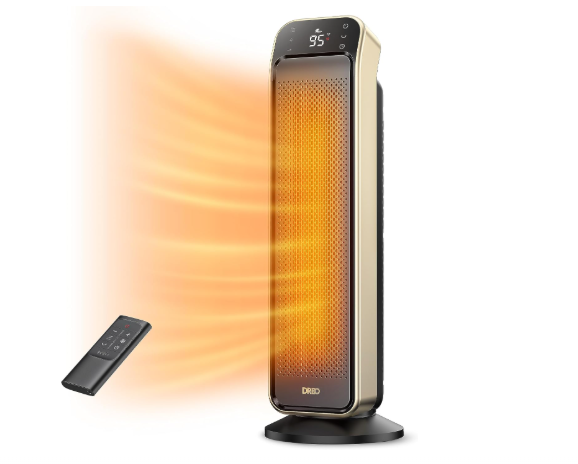
Temperature control comes from a dedicated thermal sensor that adjusts heating automatically in ECO Mode, with settings from 41 to 95 degrees Fahrenheit in 1 degree steps. Four modes, H1, H2, H3, and ECO, let you pick a gentler output, and the unit can also run as a fan to circulate air. A 70 degree oscillation spreads warmth more evenly, and the remote control lets you adjust settings from a safe distance.
Noise is listed as low as 25 decibels, which suits a quiet bedroom. Keep the limits in mind. A child lock and tip-over protection lower risk but do not replace the three-foot clear zone, direct wall outlet use, and turning the heater off during sleep. It is also a portable electric heater, so it works as supplemental warmth rather than a whole-home solution.
Why a Space Heater Gets Risky in Kids’ Rooms
Heaters are not dangerous because they are bad products. They become risky when ordinary child behavior meets a hot appliance. The Consumer Product Safety Commission estimates that portable heaters, including electric space heaters, are involved in an average of 1,600 fires, 70 deaths, and 150 injuries each year. Here is how common causes lead to real effects.
Cause: a hot surface or heating element within reach. Effect: a toddler touches the housing or grille and gets a contact burn in seconds.
Cause: curious pushing, climbing, or rough play. Effect: the heater tips over. Without automatic tip-over shut-off, a running element can end up against carpet or bedding.
Cause: flammable items placed too close. Effect: blankets, curtains, clothing, and stuffed toys can ignite. Fire data shows that heating equipment placed too close to things that can burn is a leading factor in fatal home heating fires.
Cause: power strips, extension cords, or worn plugs. Effect: the cord and outlet overheat because heaters pull heavy current, and that heat builds quietly behind furniture.
Cause: running the heater while everyone sleeps. Effect: nobody notices the burning smell, the warm plug, or the first spark, so a small problem has time to grow.
Every cause has a simple answer. Distance, certified safety features, direct wall outlet use, and shut-off habits break each chain before it reaches the effect.
Child Safe Space Heater Features That Actually Protect Kids
Features do not replace supervision, but they add layers when something goes wrong. Use this table as a quick reference while you compare models.
| Feature | What It Does | Why It Helps Around Kids |
|---|---|---|
| Testing laboratory mark | Shows the model passed recognized safety testing | Older or unmarked units may lack current protections |
| Tip-over shut-off | Cuts power when the unit is knocked over | Limits risk after a bump or push |
| Overheat protection | Stops heating if internal temperature climbs too high | Guards against hidden faults |
| Thermostat | Holds a set temperature by cycling power | Avoids constant maximum output |
| Child lock | Blocks control panel changes | Stops small fingers from switching modes |
| Flame retardant housing | Resists ignition of the outer shell | Adds a buffer if sparks occur |
| Reinforced plug | Handles high current more securely | Reduces heat from loose contact at the outlet |
| Guard over the heating element | Blocks direct access to the hot part | Reduces contact burns |
A child lock protects against accidental button presses, but it does not cool the housing or stop a heater from being pushed. Treat it as one layer, never the only one. The best child safe space heater is not the one with the most buttons. It is the one that combines several of these protections and still gets placed, plugged in, and switched off correctly. Before buying any unit, check the model against current recall lists, especially when the heater is older or secondhand.
Safe Space Heater Distance and Placement in a Child’s Room
Placement fixes more problems than any feature. Follow these steps every time you set up a heater.
Choose a hard, level, nonflammable surface. Tile or hardwood works better than rugs or carpet. Never set a heater on a bed, couch, or dresser.
Clear a three-foot zone. Measure it. Bedding, curtains, toys, laundry baskets, and furniture all stay outside this space, and so does your child.
Plug directly into a wall outlet. Skip power strips and extension cords, and keep other devices off the same circuit when you can.
Route the cord safely. Keep it out of walkways, away from cribs and beds, and never under rugs.
Keep it out of foot traffic. Do not block a door or exit path, and avoid corners where a child could squeeze behind the unit.
Set the controls, then lock them. Pick the thermostat level first, then engage the child lock.
Check your alarms. Smoke alarms belong inside each bedroom, and carbon monoxide alarms belong outside sleeping areas. Test them monthly.
Treat setup as a routine, not a one-time job. Furniture moves, laundry piles grow, and a three-foot zone can shrink without anyone noticing. A quick look each evening keeps the space honest.
- Read Also: Best Salamander Heater Reviewed
Can a Space Heater Run Overnight in a Child’s Room?
Official guidance is consistent. The Consumer Product Safety Commission and fire safety groups advise turning heaters off when you sleep or leave the room. Real life feels more complicated, so consider three common scenarios.
Scenario one: a chilly nursery at midnight. You wake to a cold room and the baby feels cool. Reaching for the heater seems logical. A safer response is to add warmer layers or a wearable blanket, look for drafts, and raise the central heating instead.
Scenario two: a toddler who kicks off every blanket. Loose bedding drifts toward the floor, and that is exactly where heaters sit. Even a thermostat model keeps running while a blanket slides within inches of the grille. Keep the heater off during sleep and rely on warm pajamas.
Scenario three: an older child who asks to keep it on. Explain the rule in simple terms, then warm the room in the evening, switch the heater off at bedtime, and unplug it. Older kids usually accept a clear routine.
A thermostat or ECO setting controls how often the heater cycles, but it does not remove the risk of a fault, a tip, or fabric contact. Warm first, then power down matches safety guidance and still keeps the bedroom comfortable at lights out.
Common Space Heater Mistakes in a Child’s Bedroom
Most heater accidents trace back to habits rather than faulty equipment. These mistakes show up again and again, along with the fix for each.
- Plugging into a power strip or extension cord. Heaters draw heavy current, and cords not rated for that load can overheat. Plug straight into a wall outlet.
- Drying clothes, socks, or towels on the heater. Fabric against a heating element is a fire starter. Dry laundry elsewhere and keep the three-foot zone empty.
- Parking the heater beside the crib or bed for faster warmth. Closer is not better. Warm the room ahead of time instead.
- Counting on the child lock alone. The lock stops button changes, not tipping, touching, or fabric contact. Combine it with smart placement and supervision.
- Using an old or secondhand heater with no safety label. Older units may not meet current safety standards. Choose a model with a testing laboratory mark.
- Skipping the recall check. A recalled heater can look perfectly normal. Check the model before it goes into a kid’s room.
- Leaving it on during naps or while you are elsewhere in the house. Fires start quietly. Switch the heater off whenever you leave the room or your child lies down to sleep.
Fix even two or three of these and the risk drops noticeably. The goal is a routine you can repeat on a tired evening without thinking twice.
Daily Safety Checklist for a Child Safe Space Heater
A short checklist turns good intentions into habits. Run through it each time the heater comes out.
Before turning it on
- Inspect the cord and plug for fraying, cracks, or discoloration.
- Confirm the heater stands on a hard, level surface.
- Check that nothing flammable sits within three feet on any side.
- Plug directly into a wall outlet with no strip or extension cord.
- Select the thermostat setting, then activate the child lock.
While it is running
- Stay in the home and keep your child under watch near the heater.
- Keep blankets, toys, and clothing away from the unit.
- Notice any burning smell, buzzing, or unusual warmth at the plug.
- Keep the path to the door clear.
After use
- Turn the heater off and unplug it before bedtime or when you leave the room.
- Let it cool fully before moving or storing it.
- Wrap the cord loosely instead of pulling it tight.
- Test smoke and carbon monoxide alarms every month.
- Check the model for recalls at the start of each heating season.
Keep a copy of this list near the outlet or inside the closet door so every adult follows the same routine.
Warning Signs a Space Heater Is Unsafe Near Kids
Heaters usually give hints before a serious failure. Match what you notice with the likely cause and the right response.
| What You Notice | Possible Cause | What To Do |
|---|---|---|
| Burning or hot plastic smell | Dust on the element or an internal fault | Unplug and stop using it |
| Plug or cord feels hot | Loose outlet fit or damaged cord | Unplug and have the outlet checked |
| Heater shuts off repeatedly | Overheat protection tripping from blocked airflow | Clear vents and retest once, then stop if it repeats |
| Scorch marks on the plug or outlet | Electrical arcing or overload | Stop using it and call an electrician |
| Buzzing, rattling, or grinding | Loose parts or a failing fan | Unplug and contact the manufacturer |
| Housing feels unusually hot | Poor airflow or internal malfunction | Switch off and inspect before reuse |
Do not try to repair a heater yourself. When a unit shows any of these signs, take it out of the child’s room and look up its model on the Consumer Product Safety Commission recall list. If the problem involves an outlet, such as scorch marks or a warm plate, have a licensed electrician check the wiring before plugging in anything else. Trust your senses. A strange smell or heat in the wrong place is reason enough to power down.
Safer Ways to Warm a Child’s Room Without a Heater
If the bedroom stays cold overnight, a heater may not be the right answer. Several safer moves can raise comfort without placing a hot appliance beside a sleeping child.
Seal Drafts and Gaps
Cold air often leaks in around windows, door bottoms, and outlets on exterior walls. Weather stripping, a door draft stopper, and window insulation film can make a clear difference. Keep heavy curtains well away from any heater if you still use one.
Layer Sleepwear and Bedding Safely
Fitted pajamas and wearable blankets keep small bodies warm without loose fabric. For babies, follow your pediatrician’s safe sleep guidance and keep loose blankets out of the crib.
Adjust Central Heating and Vents
Make sure vents stay open and unblocked by furniture. A slightly higher thermostat setting during the coldest hours can warm the whole home more evenly than a single portable unit.
Warm First, Then Power Down
If you do use a portable heater, warm the bedroom before bedtime, then switch the heater off and unplug it. This approach follows safety guidance and keeps cold spots manageable without adding risk during sleep.
FAQs?
Is a Ceramic Heater Safer Than Other Types for Kids?
The heating method matters less than the safety features and how you use the unit. Fire safety groups describe four common electric types: oil or water filled radiators, fan forced heaters, ceramic heaters, and infrared heaters. Each can be used safely, and each can cause harm when misused. Fan driven models push warmed air outward, while radiators and infrared units radiate heat from surfaces or bulbs that can stay hot to the touch. Whatever you choose, look for a testing laboratory mark, tip-over shut-off, overheat protection, and a thermostat. Then keep a three-foot clear zone around it.
How Far Should a Space Heater Be From a Crib or Bed?
Keep it at least three feet from the crib, mattress, bedding, and anything else that can burn, measured from the front, sides, and back. Taller or more powerful models may call for extra space, so check the manual and follow whichever distance is larger. Never aim the airflow directly at a crib or let a blanket hang over the edge toward the heater. If the layout cannot support a clear three-foot zone, the room is not suited to a portable heater, and another heating method is the safer choice.
Does a Child Lock Make a Heater Safe for Toddlers?
A child lock helps, but it is only one layer. It prevents little fingers from changing temperature, switching modes, or turning the unit on and off through the control panel. It does not cool the housing, stop a child from pushing the heater over, or keep fabric away from it. Think of the lock as protection against accidental button presses, not against curiosity itself. Pair it with tip-over shut-off, a three-foot kid-free zone, and a placement your toddler cannot reach or squeeze behind. If a toddler can reach the heater at all, adjust the layout before relying on the lock.
Do I Need Smoke and Carbon Monoxide Alarms If I Use an Electric Heater?
Yes. Electric heaters do not burn fuel, so they do not produce carbon monoxide themselves, but they can still start fires, and other fuel burning appliances in your home might produce the gas. The Consumer Product Safety Commission advises smoke alarms on every level and inside each bedroom, with carbon monoxide alarms on every level and outside sleeping areas. Test them monthly and replace batteries at least once a year, or choose sealed ten-year battery models. Working alarms give your family early warning if anything goes wrong while a heater is in use.
How Do I Check Whether a Heater Has Been Recalled?
Visit the recall section of the Consumer Product Safety Commission website and search for space heaters, then compare the brand and model number printed on the label of your unit. Recalls matter most for older or secondhand heaters, since earlier designs may lack current safety features. If your model appears on a list, stop using it immediately and contact the manufacturer for the remedy, which can be a refund, repair, or replacement. Keep the model details somewhere handy so a future check takes only a minute.
Smart Heating Habits for a Safer Child’s Room
A space heater and a child’s room can coexist, but only with deliberate habits. The main causes of trouble are heat within reach, flammable items too close, cords and strips that overheat, and heaters left running while everyone sleeps. The main fixes are a clear three-foot zone, a hard level surface, direct wall outlet use, and switching the unit off and unplugging it at bedtime. Prevention comes down to routine checks, working alarms, and a quick recall search each season.
Product guidance fits here as support. A model with tested tip-over protection, overheat protection, a thermostat, and a child lock adds useful layers, yet the placement and shut-off habits above remain the foundation of a calm, warm, and safe bedroom.
- You May Like: 5 Best Wood Pellet Patio Heaters Guide
Discover New Articles: See Our Latest Updates
